
































|
Getting your Trinity Audio player ready...
|
By: Jason Macroomb
Escape from New York, indeed.
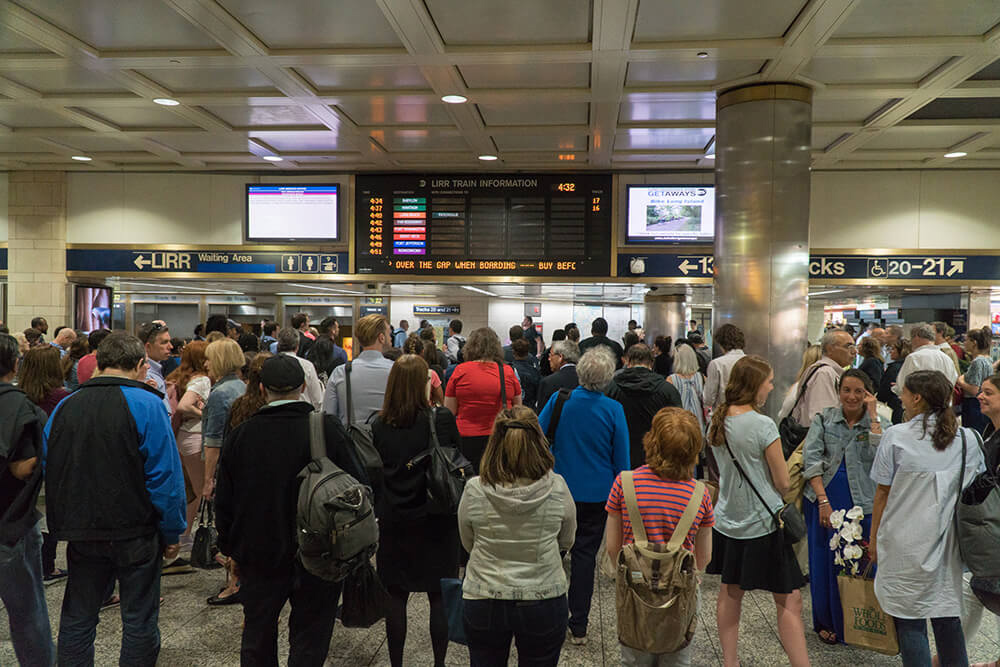
Residents of the New York City area are fleeing in record numbers, according to 2018 census data on migration flows to the 100 largest U.S. metropolitan areas compiled by Bloomberg News.
“New York leads all U.S. metro areas as the largest net loser, with 277 people moving every day—more than double the net exodus of 132 just one year ago. Los Angeles and Chicago were next with triple-digit daily losses of 201 and 161 residents, respectively,” Bloomberg reported.
New York leads all U.S. metro areas as the largest net loser with 277 people moving every day — more than double the exodus of 132 just one year ago. Los Angeles and Chicago were next with triple digit daily losses of 201 and 161 residents, respectively, the news organization said.
“While New York is experiencing the biggest net exodus, the blow is being softened by international migrant inflows. From July 2017 to July 2018, a net of close to 200,000 New Yorkers sought a new life outside the Big Apple while the area welcomed almost 100,000 net international migrants,” Bloomberg added.
On the other hand, seven cities had on average more than 100 new arrivals every day. Dallas, Phoenix, Tampa, Orlando, Atlanta, Las Vegas and Austin saw substantial inflows from both domestic and international migration. “Sun Belt cities Houston and Miami claimed the 8th and 9th spots in the ranking. Seattle was the only cold-weather destination among the top 10,” Bloomberg found. “The migration figures exclude the natural increase in population, which is the difference between the number of live births and the number of deaths.
As the New York Post reported in January, data from the US Census Bureau showed that “more people are leaving the state of New York. Between July 2017 and July 2018, the Empire State lost 180,306 people and gained only 131,746 new residents. A difference of 48,560 abandoned New York — the biggest decrease of any state in the US. The problem is especially acute upstate where 42 out of 50 counties have seen a population decrease since 2010.”
Bloomberg ranked the 100 largest U.S. metropolitan areas based on their net migration data, between July 1, 2017 to July 1, 2018, as a percentage of total base population as of July 2017. Domestic migration refers to people moving within the country (e.g. someone moving from New York City to San Francisco). International migration, including natives previously living outside of the country, refers to people moving to and from the U.S.



