











|
Getting your Trinity Audio player ready...
|
By: Andrew Carlson
In a striking display of communal dissent that underscores deepening tensions within New York City’s civic and Jewish leadership circles, several major Jewish organizations have announced a coordinated boycott of an upcoming Jewish American Heritage Month celebration hosted by Mayor Zohran Mamdani. As reported on Monday by World Israel News, the decision reflects mounting alarm among prominent Jewish voices who contend that the mayor’s public rhetoric on Israel has crossed from political critique into a posture that exacerbates hostility toward Jewish communities.
At the heart of the controversy lies a fundamental dispute over identity, history, and the role of Israel within the broader narrative of Jewish heritage. The UJA-Federation of New York, one of the most influential Jewish philanthropic organizations in the region, issued an unequivocal statement announcing its refusal to participate in the Gracie Mansion event. “We will not be attending the Jewish American Heritage Month celebration at Gracie Mansion being hosted by a mayor who denies a core pillar of our heritage — the State of Israel as the homeland of the Jewish people,” the organization declared, in remarks cited by World Israel News.
This forceful language encapsulates the central grievance articulated by boycott organizers: that recognition of Israel is not merely a political position but an essential component of Jewish identity itself. By framing the issue in these terms, critics have elevated the dispute beyond routine political disagreement, casting it instead as a matter of cultural and historical integrity.
Mark Treyger, chief executive officer of the Jewish Community Relations Council, echoed these concerns in comments reported by World Israel News. His decision to join the boycott carries particular symbolic weight, given his role as a key intermediary between Jewish institutions and the broader civic landscape. “It’s a really telling and concerning sign of where things stand in New York City right now,” Treyger observed, emphasizing that the collective absence of major organizations sends a deliberate and unmistakable message.
Treyger further pointed to a recent social media statement issued by Mayor Mamdani as a catalyst for the escalating tensions. According to World Israel News, the mayor’s post, published shortly before the onset of Shabbat, condemned Israel while expressing support for Palestinians. Critics argue that the timing and content of the message reflected a lack of sensitivity to Jewish religious observance and historical context. “The mayor issued a social media production that omitted significant parts of history. It only inflamed tensions further,” Treyger asserted.
Such criticisms are situated within a broader context of rising concern over antisemitic incidents across New York City. Community leaders have drawn a direct line between public discourse that they perceive as demonizing Israel and an increase in hostility toward Jewish individuals. While the precise causal relationship remains a subject of debate, the perception itself has proven sufficiently powerful to galvanize collective action.
Rabbi Joseph Potasnik, executive vice president of the New York Board of Rabbis, articulated a similar rationale for his decision to abstain from the event. “Jewish heritage should include recognition of the State of Israel,” he stated, according to World Israel News. Potasnik’s remarks highlight the extent to which the controversy has become intertwined with questions of historical continuity and communal self-definition. “Jewish history didn’t end in 1946,” he added, invoking the conclusion of the Holocaust as a pivotal moment that was followed by the establishment of the modern State of Israel.
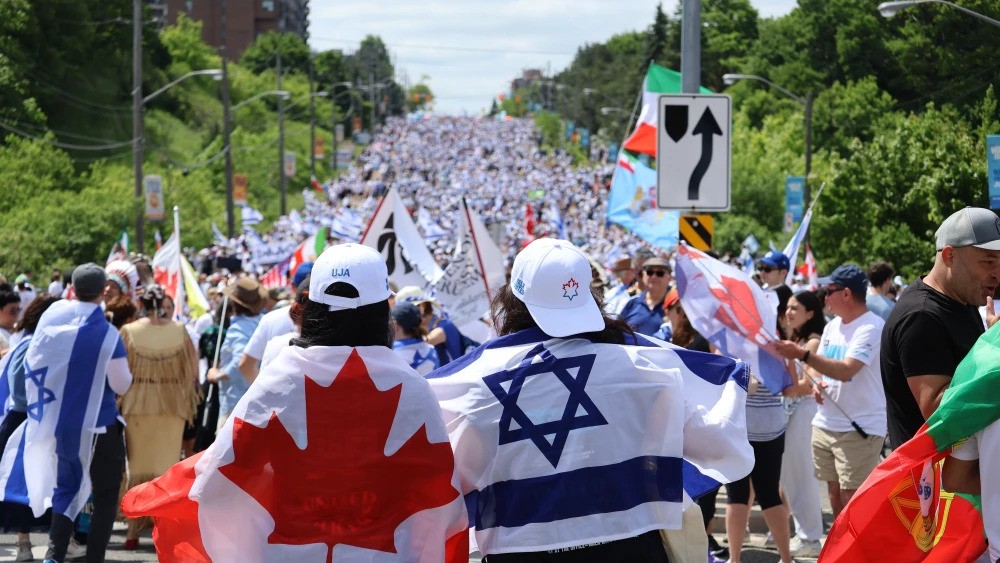
His comments also point toward an alternative form of expression that many within the community are choosing to prioritize. “We will be marching in the Israel Day Parade to express our support for Israel,” Potasnik said, signaling that the boycott is not merely an act of withdrawal but also a redirection of communal energy toward events perceived as affirming core values.
Yet the response within New York’s diverse Jewish population has not been monolithic. As World Israel News reported, Rabbi David Niederman, a prominent leader within the United Jewish Organization of Williamsburg, has opted to attend the mayor’s event. “I am going. It’s right and appropriate,” Niederman stated, offering a perspective that diverges sharply from that of the boycott organizers.
Niederman’s stance is particularly notable given his affiliation with the Satmar Hasidic community, which has historically maintained an anti-Zionist position. This ideological orientation, which rejects the political legitimacy of the modern State of Israel on theological grounds, provides a distinct framework through which the mayor’s actions are interpreted. For Niederman and others who share this perspective, participation in the event does not carry the same symbolic implications as it does for organizations that view Israel as central to Jewish identity.
The resulting divergence illustrates the complexity of Jewish communal dynamics in a city as multifaceted as New York. While a significant portion of the community has rallied around a unified critique of the mayor’s rhetoric, other segments have adopted a more nuanced or divergent approach, reflecting longstanding theological and ideological differences.
For Mayor Mamdani, the boycott represents a significant political and symbolic challenge. The absence of major Jewish institutions from a flagship cultural event risks undermining the very inclusivity that such celebrations are intended to promote. At the same time, the participation of figures like Niederman underscores that the mayor retains support among certain constituencies, complicating any straightforward assessment of the situation.
As the World Israel News report highlighted, the episode serves as a microcosm of broader debates unfolding both within the Jewish community and in the public sphere at large. It raises fundamental questions about the intersection of political expression and cultural identity, the responsibilities of public officials in addressing sensitive historical issues, and the ways in which communal divisions are navigated in an era of heightened polarization.
In the final analysis, the boycott of the Jewish American Heritage Month event is more than a discrete act of protest. It is a manifestation of deeper anxieties about the trajectory of public discourse and the place of Jewish identity within it. Whether it will prompt meaningful dialogue or further entrench existing divisions remains an open question—one that will likely continue to reverberate across New York City’s civic and communal landscape in the weeks and months ahead.



1 Comment
Maxwell
May 18, 2026Even the Satmars should recognize anti Semitism when they see it.