
































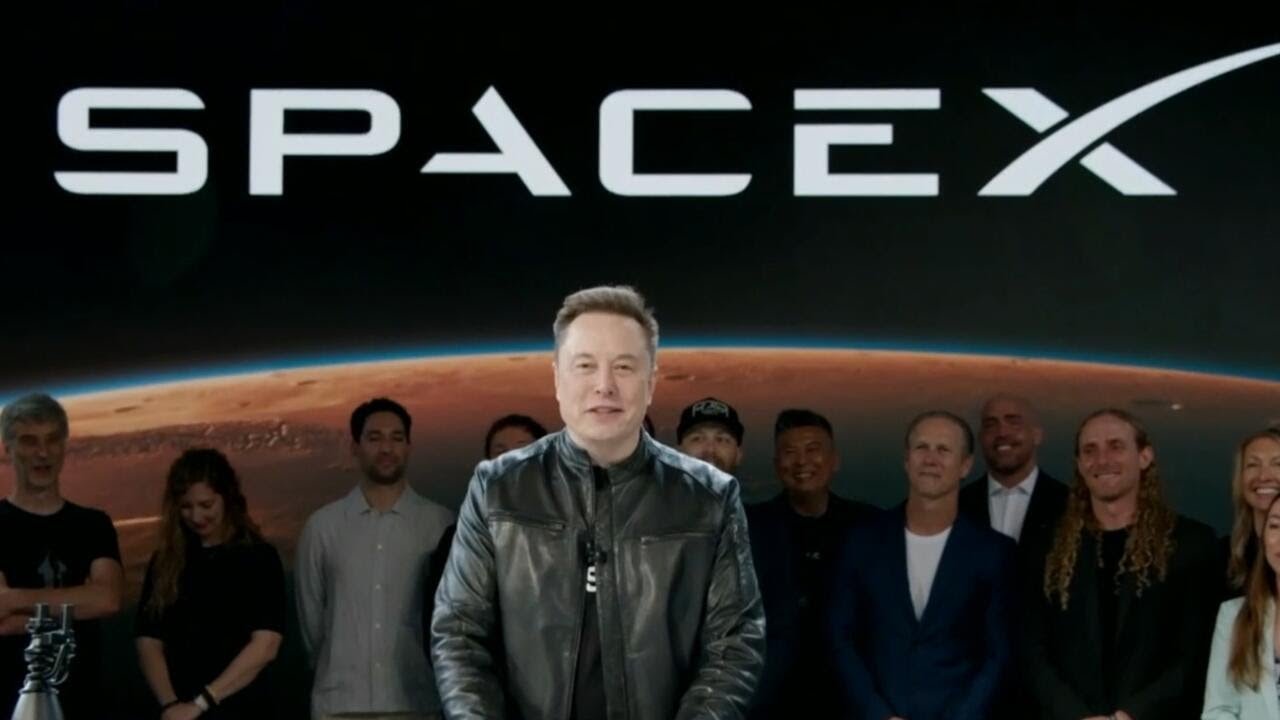
SpaceX IPO Catapults Elon Musk to Unprecedented Trillionaire Status
By: Jerome Brookshire
SpaceX, the aerospace and artificial intelligence powerhouse founded by Elon Musk, officially entered the public markets on Friday in what The New York Times described as the largest initial public offering in financial history, a landmark event that is already reshaping conversations about technology, wealth creation, artificial intelligence, and the future trajectory of global capital markets. According to The New York Times, the company priced its shares at $135 apiece, raising approximately $75 billion and achieving a market valuation of roughly $1.77 trillion, eclipsing all previous IPO records and cementing SpaceX’s place among the most valuable corporations on Earth.
The debut marks the culmination of a remarkable journey that began in 2002 when Musk established SpaceX as a relatively modest private aerospace venture operating from a warehouse in California. More than 2 decades later, the company has evolved into a sprawling technological empire encompassing rocket launches, satellite communications, artificial intelligence infrastructure, social media assets, and ambitious plans for interplanetary exploration.
As reported by The New York Times, investors responded enthusiastically to the offering, viewing SpaceX not merely as a rocket company but as a diversified technology platform positioned at the intersection of some of the most transformative industries of the modern era. The publication noted that the company’s valuation reflects investor confidence in its aerospace operations, its Starlink satellite communications network, and its growing artificial intelligence capabilities following the integration of Musk’s xAI enterprise.
The sheer magnitude of the IPO has astonished even seasoned Wall Street observers. According to The New York Times, SpaceX sold more than 555 million shares at the offering price, generating approximately $75 billion in proceeds and surpassing previous IPO records by a substantial margin. The debut instantly placed SpaceX among the most highly valued public companies in the world.
The implications extend far beyond the company itself. Analysts cited by The New York Times believe the offering could serve as a catalyst for a new generation of technology listings, particularly among artificial intelligence firms that have amassed enormous private valuations while remaining outside the public markets. Companies such as Anthropic and OpenAI have reportedly explored pathways toward public offerings, and the success of the SpaceX debut may encourage additional technology giants to follow suit.
Perhaps no individual stands to benefit more from the offering than Musk himself. According to The New York Times, Musk maintains approximately a 50 percent ownership stake in SpaceX. At the IPO valuation reported by the newspaper, those holdings alone are worth more than $860 billion. Combined with his interests in Tesla and other ventures, the offering has intensified discussion about whether Musk will become the first person in history whose wealth exceeds $1 trillion.
The achievement represents another extraordinary chapter in Musk’s unconventional career. Born in South Africa and educated in the United States, Musk has spent much of the past three decades pursuing ventures that many initially regarded as implausible. From online payments and electric vehicles to reusable rockets and artificial intelligence, he has repeatedly challenged conventional wisdom regarding what private enterprise can accomplish.
SpaceX’s transformation of the aerospace sector is widely regarded as one of the company’s most significant accomplishments. Through the development of reusable rocket technology, the company dramatically reduced launch costs and altered the economics of spaceflight. Its Falcon and Starship programs have enabled both government and private customers to pursue missions that previously would have been prohibitively expensive.
Equally important has been the rise of Starlink. According to The New York Times, the satellite communications network now provides internet connectivity to rural communities, commercial customers, transportation networks, and military users across multiple continents. The success of Starlink has helped diversify SpaceX’s revenue streams and strengthen investor confidence in the company’s long-term prospects.
Yet SpaceX’s appeal to investors extends beyond aerospace. The company’s acquisition and integration of xAI has transformed it into a major participant in the rapidly expanding artificial intelligence sector. As The New York Times reported, the company now combines launch services, satellite communications, artificial intelligence infrastructure, data-center development, and digital communications platforms under a single corporate umbrella.
That breadth has helped fuel extraordinary investor enthusiasm. Market observers have increasingly argued that traditional valuation metrics may be insufficient when analyzing companies operating simultaneously across multiple disruptive industries. In the case of SpaceX, investors appear to be betting not only on current revenues but also on future opportunities in artificial intelligence, advanced communications, and space exploration.
The company’s financial profile reflects both its promise and its challenges. According to The New York Times, SpaceX generated approximately $18.7 billion in revenue last year, representing substantial growth over previous periods. At the same time, the newspaper reported that the company incurred losses exceeding $4.9 billion as it continued investing aggressively in artificial intelligence infrastructure and future technologies.
Such figures underscore a familiar dynamic in modern technology investing. Investors often tolerate significant losses when they believe a company possesses extraordinary long-term growth potential. In SpaceX’s case, many appear convinced that its dominant position in aerospace and emerging role in artificial intelligence justify its premium valuation.
Friday’s debut also carried considerable symbolic significance. For years, Musk resisted taking SpaceX public, arguing that short-term market pressures could interfere with the company’s long-term mission of making humanity a multi-planetary species. The IPO therefore represents a notable shift in strategy, opening ownership of the company to millions of public investors while simultaneously providing additional capital to support future expansion.
During remarks delivered in connection with the public listing and reported by The New York Times, Musk reflected on SpaceX’s improbable rise from startup to global powerhouse. He recalled the company’s early years, when even its founder believed the probability of success was extremely low. Yet he emphasized that pursuing ambitious goals remained worthwhile despite the risks.
Musk reiterated his vision of creating a future in which ordinary people—not merely professional astronauts—can travel to the Moon, Mars, and eventually destinations beyond. He described SpaceX’s mission as transforming ideas traditionally confined to science fiction into tangible realities.
The broader implications of the IPO are likely to be debated for years. Supporters view the offering as evidence that visionary entrepreneurship can generate immense value while driving technological progress. Critics argue that the concentration of wealth represented by the transaction highlights growing economic disparities and raises questions about corporate influence.
Regardless of one’s perspective, the significance of the event is difficult to overstate. The SpaceX offering has already established new benchmarks for public market valuations, investor demand, and wealth creation. It has reinforced Musk’s status as one of the most consequential business figures of the modern era and may accelerate a new wave of technology listings centered on artificial intelligence and advanced innovation.
As trading begins and investors evaluate the company’s future prospects, one reality is already clear: the SpaceX IPO is not merely another Wall Street transaction. It is a defining moment in the evolution of modern capitalism, one that may shape financial markets, technological innovation, and global wealth creation for years to come. According to The New York Times, the offering represents the arrival of a new corporate titan whose influence now extends across aerospace, communications, artificial intelligence, and beyond.



