











Netanyahu Tells Trump: No Israeli Withdrawal From Southern Lebanon Without Hezbollah Disarmament
By: Fern Sidman
The future of southern Lebanon and the broader stability of Israel’s northern frontier may hinge on one of the most contentious and politically explosive issues in the Middle East: the disarmament of Hezbollah.
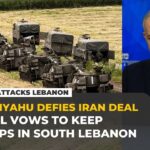
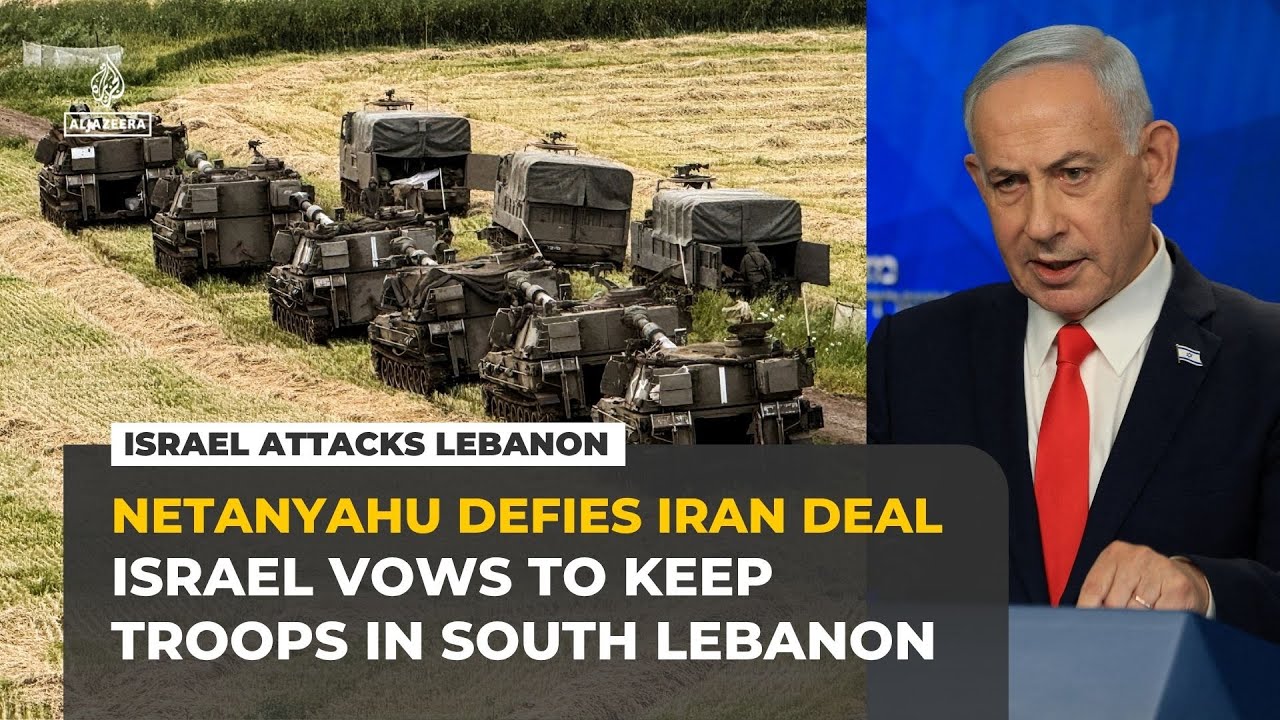
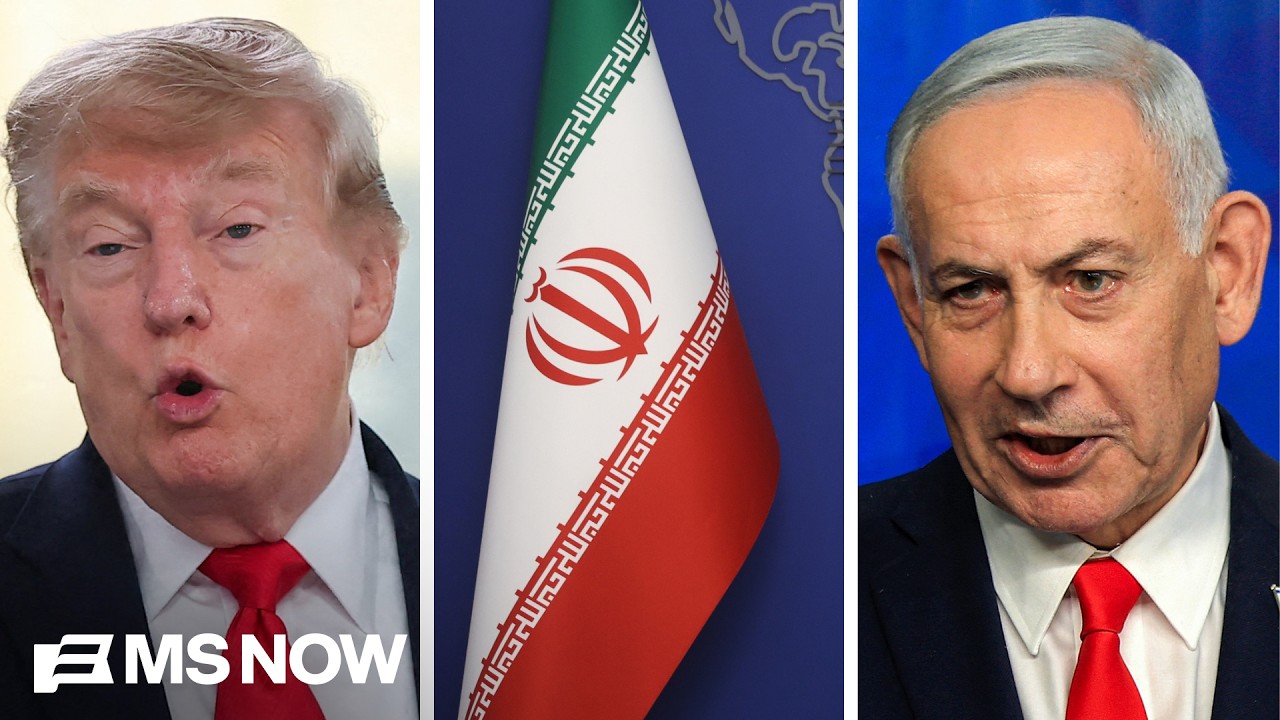
According to a report by Axios on Thursday, Israeli Prime Minister Benjamin Netanyahu has informed President Donald Trump that Israel will not agree to withdraw from southern Lebanon unless Hezbollah is stripped of its weapons and military capabilities. The reported position highlights the profound challenges confronting diplomats seeking to transform recent regional de-escalation efforts into a lasting security arrangement.
The reported message, conveyed amid ongoing diplomatic activity following the recently announced U.S.-Iran memorandum of understanding, underscores how deeply intertwined the region’s security dilemmas have become. While international attention has focused heavily on negotiations involving Iran, Gaza, and broader regional stability, the unresolved question of Hezbollah’s armed presence along Israel’s northern border remains one of the most formidable obstacles to a comprehensive settlement.
Axios reported that Netanyahu made clear to Trump that Israel views Hezbollah’s continued military presence as fundamentally incompatible with any long-term withdrawal arrangement.
The reported position reflects a longstanding Israeli security doctrine that has guided policy toward Lebanon for decades.
Israeli officials have repeatedly argued that Hezbollah’s military infrastructure, missile arsenal, and operational capabilities pose an unacceptable threat to communities throughout northern Israel. From Jerusalem’s perspective, any withdrawal that leaves Hezbollah’s military apparatus intact could simply recreate the conditions that have repeatedly fueled instability, conflict, and military confrontation.
According to the Axios report, Netanyahu’s reported comments came as policymakers continue evaluating the implications of the broader diplomatic framework emerging across the region.
The timing is significant.
Diplomatic efforts aimed at reducing tensions between Iran and the United States have generated renewed discussion regarding the future security architecture of the Middle East. Yet even as negotiators pursue broader understandings, the situation along the Israel-Lebanon frontier remains exceptionally fragile.
The issue of Hezbollah’s disarmament has occupied a central place in regional diplomacy for years.
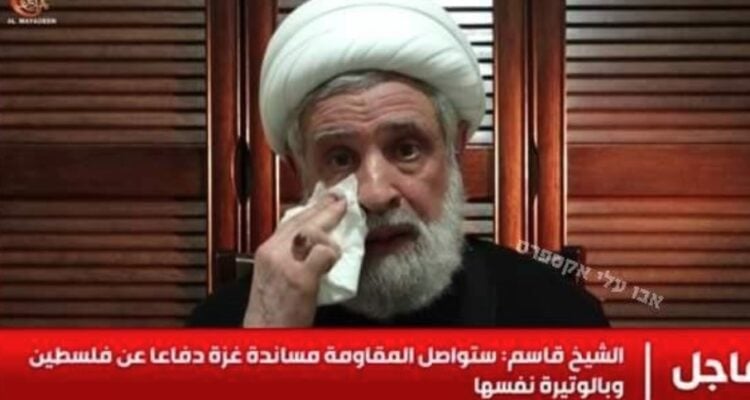
Numerous international resolutions have called for limitations on armed groups operating outside the authority of the Lebanese state. However, Hezbollah has consistently rejected demands that it surrender its weapons, arguing that its military capabilities are necessary to defend Lebanon against external threats.
Lebanese political leaders have historically approached the issue with caution, recognizing the profound domestic sensitivities surrounding Hezbollah’s role within Lebanese society and politics.
As a result, efforts to address the organization’s military status have repeatedly encountered significant obstacles.
The Axios report noted that neither Hezbollah nor Lebanese authorities have publicly indicated any change in their longstanding positions. That reality illustrates the scale of the challenge confronting negotiators.
Israel insists that security cannot be guaranteed without disarmament. Hezbollah maintains that disarmament is not under consideration. Lebanese leaders remain caught between competing domestic and international pressures.
The result is a diplomatic impasse that continues to shape the security environment on both sides of the border.
For Israeli officials, the stakes are exceptionally high. Northern Israeli communities have endured years of uncertainty stemming from tensions along the Lebanese frontier. Periodic escalations, rocket attacks, military exchanges, and threats of broader conflict have reinforced concerns regarding Hezbollah’s growing military capabilities.
Israeli security officials frequently point to the organization’s extensive missile arsenal and sophisticated military infrastructure as evidence that the threat remains substantial.
From Jerusalem’s perspective, therefore, any future arrangement must address not merely the symptoms of instability but its underlying causes. Supporters of Netanyahu’s position argue that a withdrawal absent meaningful security guarantees would be strategically irresponsible. They contend that allowing Hezbollah to retain its military capabilities while expecting long-term stability would amount to little more than postponing future confrontations.
According to this view, disarmament is not an ancillary issue but the central prerequisite for any durable settlement.
Hezbollah has spent decades building its military infrastructure and political influence. Many analysts argue that persuading the organization to relinquish its weapons voluntarily would require a dramatic transformation of the regional political landscape. Others contend that external pressure alone is unlikely to produce such an outcome.
These competing perspectives help explain why the issue remains one of the most sensitive subjects in Middle Eastern diplomacy. The Axios report highlights how the question of Hezbollah’s future has become increasingly intertwined with broader regional negotiations.
The recently announced U.S.-Iran memorandum of understanding was intended, at least in part, to reduce tensions across multiple theaters of conflict. Yet even if progress is achieved elsewhere, unresolved disputes along the Israel-Lebanon border could continue to threaten regional stability.
Diplomats therefore face the difficult task of addressing multiple interconnected crises simultaneously.
The complexity of these negotiations cannot be overstated. Questions involving territorial sovereignty, military deterrence, state authority, and regional influence all converge along the frontier separating Israel and Lebanon.
Each issue influences the others. Progress in one area may facilitate movement elsewhere. Conversely, deadlock on a single issue can impede broader diplomatic efforts.
The reported conversation between Netanyahu and Trump, as described by Axios, illustrates the extent to which security considerations continue to dominate Israeli decision-making. For Israeli leaders, the lessons of past conflicts remain highly relevant. Successive governments have argued that temporary arrangements lacking robust enforcement mechanisms often fail to prevent future hostilities. Consequently, Israeli policymakers have increasingly emphasized structural solutions rather than short-term understandings.
Whether Hezbollah’s disarmament is realistically achievable remains a matter of intense debate. What is clear is that the issue continues to occupy a central place in discussions concerning the future of southern Lebanon. The reported position outlined by Netanyahu suggests that Israel views the matter not as a negotiating detail but as a fundamental requirement.
As diplomatic activity continues, attention will remain focused on whether any framework can bridge the profound divide separating the parties involved. For now, the message reported by Axios appears unmistakable: Israel believes that lasting security along its northern border requires more than ceasefires, confidence-building measures, or temporary understandings.
According to the reported position, it requires the removal of Hezbollah’s military threat altogether.
Whether negotiators can transform that objective into a practical and politically viable reality remains one of the most consequential questions confronting the Middle East today.
The answer may ultimately determine not only the future of southern Lebanon but also the broader prospects for regional stability in the years ahead.