


















|
Getting your Trinity Audio player ready...
|
Media Firestorm Erupts as NYT Blood Libel Op-Ed Triggers Internal Revolt & Legal Threats
By: Pinchas Ahronson
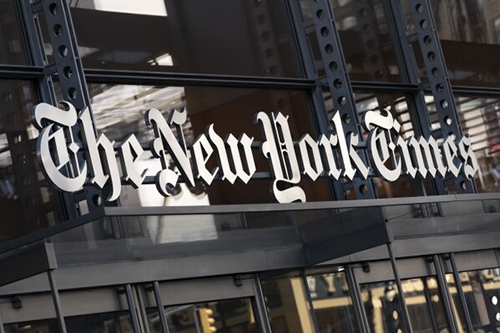
A fierce and deeply polarizing controversy has engulfed The New York Times following the publication of a provocative and highly contested opinion column by longtime columnist Nicholas Kristof, igniting internal discord within the newsroom, sparking public demonstrations, and prompting threats of legal action from Israeli officials.
The column, published on May 10, 2026, under the headline “The Silence That Meets the Rape of Palestinians,” stretched nearly 4,000 words and advanced a series of graphic allegations concerning the treatment of Palestinian detainees in Israeli custody. Among the most incendiary elements were claims—largely attributed to anonymous sources—of sexual abuse, including deeply disturbing assertions involving the use of dogs. The article’s tone, specificity, and reliance on unverified testimony immediately triggered a storm of scrutiny.
Within The New York Times itself, the reaction was swift and, by many accounts, unprecedented in its intensity. Journalists, editors, and staff members reportedly became embroiled in what insiders described as a “civil war” over the legitimacy, sourcing, and editorial judgment behind the piece. The debate centered not merely on the content of the allegations but on the standards of verification applied to such extraordinary claims.
Critics within the newsroom questioned whether the inclusion of “sensational, anonymous accusations” met the paper’s traditional threshold for evidentiary rigor. Others defended the decision to publish, arguing that the gravity of the allegations warranted exposure, even amid evidentiary uncertainty. The internal schism revealed a broader tension within modern journalism: the balance between amplifying alleged abuses and maintaining strict adherence to verifiable fact.
Externally, the backlash was equally fervent. Pro-Israel advocacy groups mobilized quickly, organizing demonstrations outside the newspaper’s headquarters in Manhattan. Protesters denounced the column in unequivocal terms, with many characterizing it as a “modern-day blood libel,” invoking a historically charged accusation that underscored the depth of their outrage.
Chants, placards, and speeches at the rallies reflected a shared conviction among demonstrators that the article had crossed a line from investigative journalism into the realm of dangerous insinuation. One protest organizer declared, “This is not journalism—it is defamation masquerading as moral concern,” encapsulating the sentiment of many who viewed the piece as an egregious departure from responsible reporting.
The controversy quickly escalated beyond the confines of media discourse, drawing a forceful response from the Israeli government. Officials at the Israeli Foreign Ministry issued a sharp condemnation of the column, rejecting its claims as unfounded and inflammatory. According to statements attributed to senior leadership, Prime Minister Benjamin Netanyahu and Foreign Minister Gideon Sa’ar instructed legal authorities to prepare a defamation lawsuit against The New York Times.
In a statement reflecting the government’s position, officials characterized the article as not only inaccurate but also harmful, asserting that it propagated narratives that could incite hostility and undermine Israel’s international standing. The prospect of legal action introduced a new dimension to the controversy, transforming it from a journalistic dispute into a potential international legal confrontation.
Despite the mounting criticism, The New York Times adopted a posture of firm defense. A spokesperson for the publication emphasized the integrity of the reporting process and the credibility of its columnist. “The piece was based on interviews with victims, independently backed studies, and rigorous fact-checking,” the spokesperson stated, underscoring the paper’s confidence in its editorial standards.
This defense, however, did little to quell the broader debate. For many observers, the issue extended beyond a single article to encompass fundamental questions about the responsibilities of major media institutions in an era of heightened geopolitical sensitivity. The reliance on anonymous sources, the presentation of unverified claims, and the potential consequences of such reporting have all become focal points of discussion.
The Kristof column has thus become a flashpoint in a larger conversation about the evolving nature of journalism. On one side are those who argue that exposing alleged abuses, even amid uncertainty, is a moral imperative. On the other are those who contend that the dissemination of unverified and graphic allegations risks eroding public trust and inflaming tensions.
As the controversy continues to unfold, its implications remain far-reaching. The internal divisions within The New York Times highlight the challenges faced by news organizations striving to navigate complex and contentious subjects. The public protests and international reactions underscore the profound impact that journalistic narratives can have on global discourse.
In the words of one critic, “When the stakes are this high, the margin for error is effectively zero.” Whether the publication of the column ultimately advances understanding or exacerbates division is a question that remains unresolved.
What is certain, however, is that the episode has left an indelible mark on the media landscape, serving as a stark reminder of the power—and the peril—of words in an increasingly polarized world.




2 Comments
Maxwell
May 19, 2026“Whether the publication of the column ultimately advances understanding or exacerbates division is a question that remains unresolved.”
An absurd conclusion to an article on the publication of a blood libel.
Mendel Reiner
May 19, 2026You are missing the whole point.
The New York Times, like any media outlet, thrives and survives on publicity, it is their oxygen.
Whether the accusations are true or false is totally irrelevant as long as people are talking about the New York Times.