




|
Getting your Trinity Audio player ready...
|
By: Russ Spencer
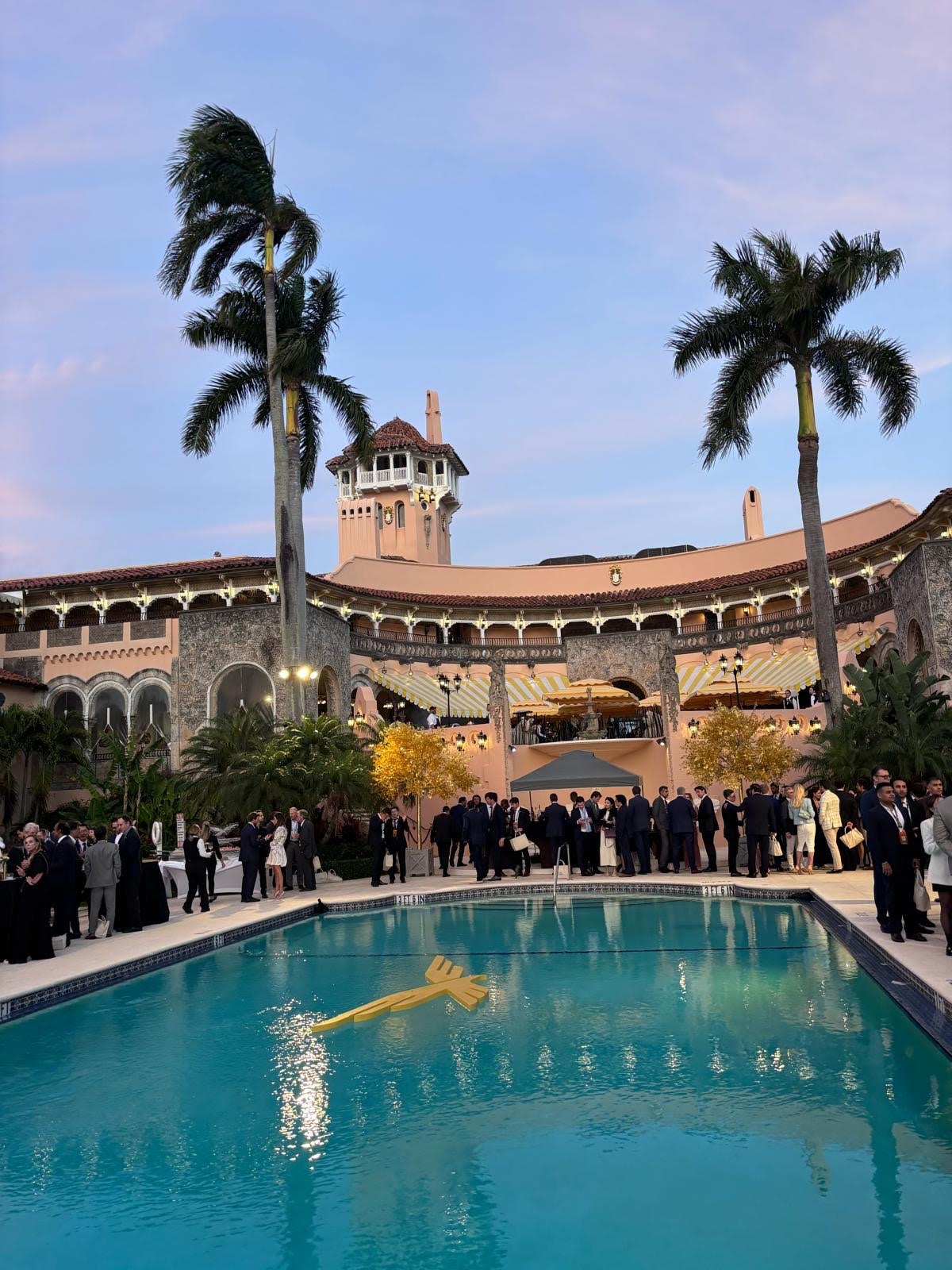
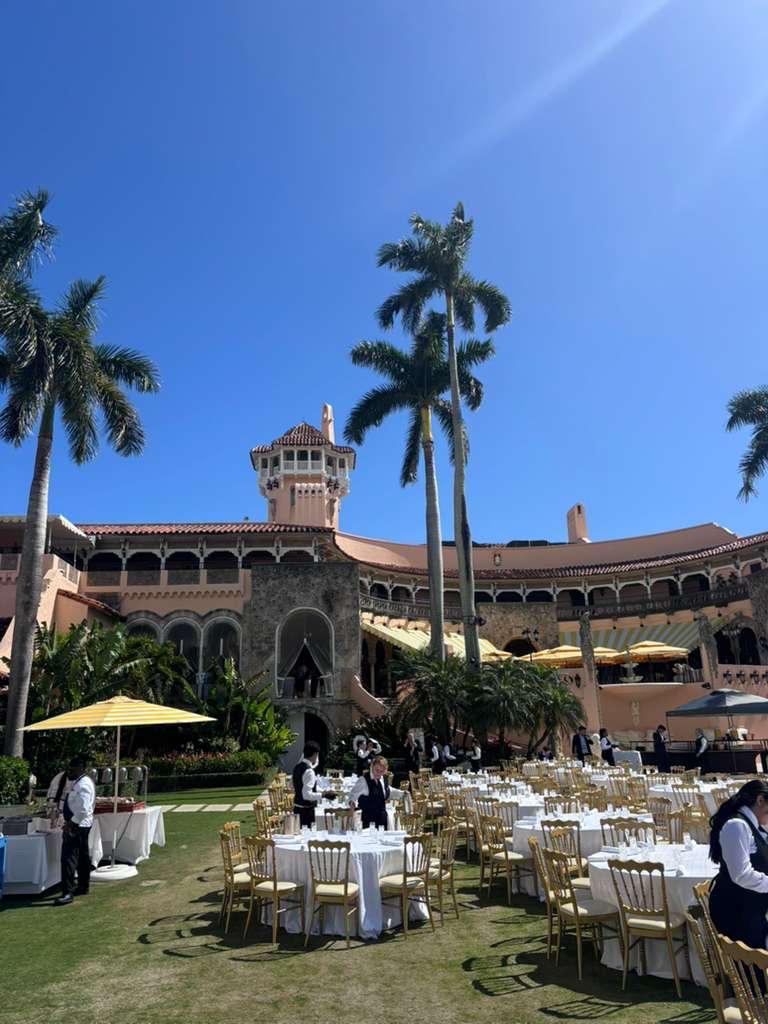
The chandeliers of Mar-a-Lago have long reflected the shifting tides of American politics and power, but on Wednesday they gleamed with a new luster: that of digital ambition. The storied Palm Beach resort became, for an afternoon, the epicenter of an audacious convergence between high finance, federal authority, celebrity culture, and the Trump family’s rapidly expanding cryptocurrency enterprise. As The New York Post reported, Wall Street titans and senior government officials assembled to lend both legitimacy and momentum to World Liberty Financial, the Trump-linked crypto firm that now seeks to redefine how dollars circulate in the digital age.
What unfolded in the gilded ballroom was less a conventional business conference than a declaration of intent. World Liberty Financial, in which the Trump family holds a reported 38 percent stake, used the forum to unveil a partnership with the Apex Group, a global financial services behemoth. The announcement was accompanied by plans to deploy its flagship stablecoin, USD1, to finance a Trump-branded luxury hotel project in the Maldives, complete with floating villas designed to embody a futuristic vision of leisure and liquidity. In a flourish that captured the moment’s theatricality, one speaker described Mar-a-Lago as the “power center of the universe,” a line that The New York Post seized upon as emblematic of the day’s swagger.
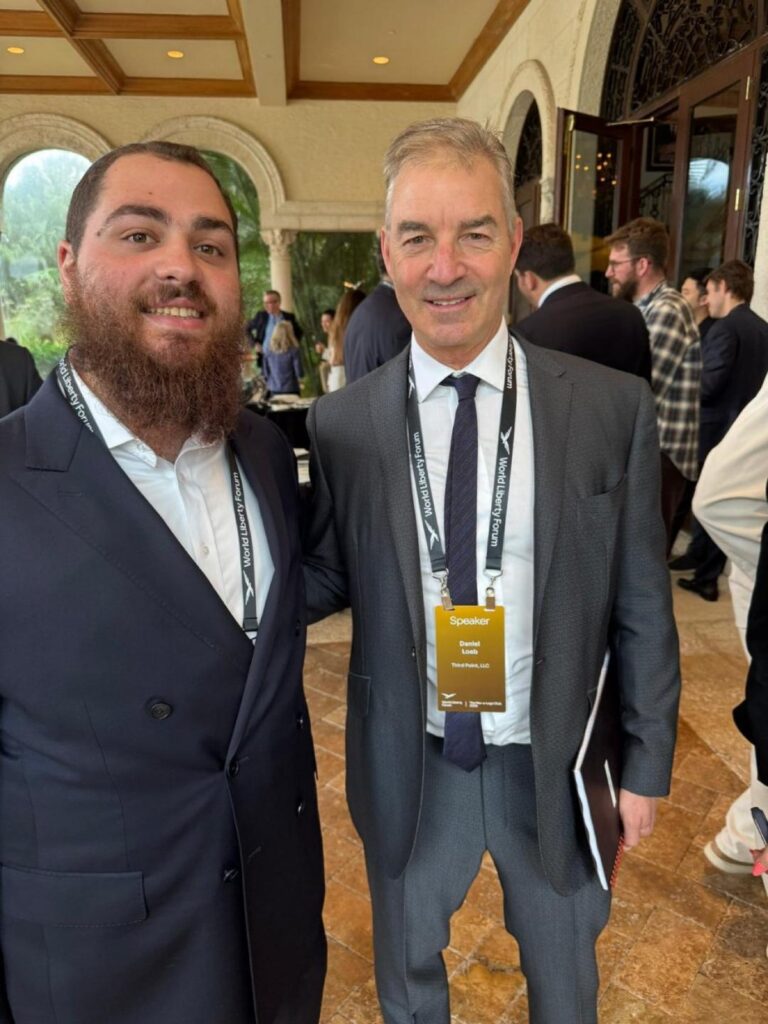
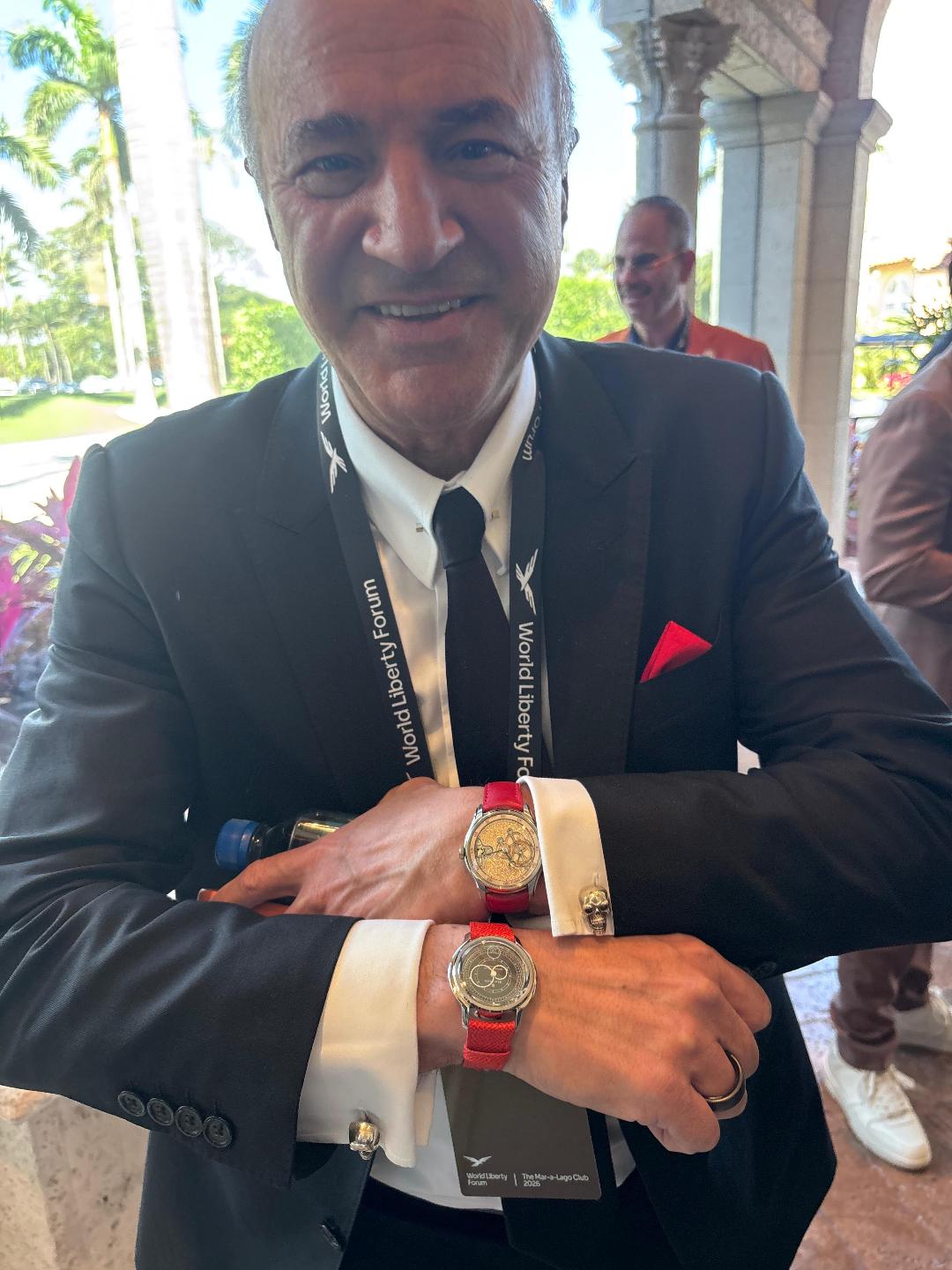
The guest list alone testified to the scale of ambition. According to the information provided in The New York Post, two Senate-confirmed agency heads mingled with the chief executives of both the New York Stock Exchange and Nasdaq. David Solomon of Goldman Sachs and Jenny Johnson of Franklin Templeton, stewards of institutions that manage trillions in assets, shared space with regulators whose decisions shape the very rules governing financial innovation. Also in attendance were Kevin O’Leary of Shark Tank, Daniel Loeb, founder and CEO of Third Point and Gianni Infantino, the president of FIFA.
Republican senators Ashley Moody of Florida and Bernie Moreno of Ohio were present, as were figures from the worlds of technology and venture capital. Even pop culture intruded upon the proceedings, with Nicki Minaj in attendance, her presence later amplified by a personal shout-out from President Trump at a White House event that same day.
The symbolism was unmistakable. The New York Post report noted that this was not merely a gathering of business leaders; it was an orchestrated affirmation that World Liberty Financial has vaulted from a fringe experiment into the mainstream corridors of American power. Zach Witkoff, the company’s chief executive and son of billionaire Steve Witkoff, framed the moment with evangelical fervor. “We are not building this alone,” he told the assembled elite. “We are building it with the institutions in the room.” His words underscored a central thesis of the event: that decentralized finance, long regarded with skepticism by traditional bankers, is now courting—and being courted by—the very establishment it once sought to disrupt.
World Liberty Financial’s origins are inseparable from the political exile of the Trump family from conventional banking. As The New York Post report documented, the firm was co-founded in 2024 by President Trump, Steve Witkoff, their sons, and two business partners after major financial institutions distanced themselves from the family in the wake of January 6, 2021. That rupture with the old order now serves as a narrative of rebirth. Eric Trump and Donald Trump Jr. framed the company’s ascent as a David-and-Goliath saga in which the family, cast out by legacy banks, forged a parallel financial architecture. Eric Trump described the day as “magical,” asserting that traditional banks had “awoken a sleeping giant” they could no longer control. Don Jr. was blunter, declaring that the family had not embraced crypto by choice but by necessity: “We were forced.”
The centerpiece of World Liberty’s offering is USD1, a dollar-pegged stablecoin designed to maintain a constant value while operating on blockchain rails. Unlike volatile cryptocurrencies whose prices swing with speculative fervor, stablecoins promise stability through backing by US Treasury bonds or dollar reserves. The New York Post emphasized that World Liberty seeks to monetize USD1 through the interest earned on those reserves, positioning the token as both a technological innovation and a revenue-generating instrument.
The Apex Group partnership marked a decisive step toward institutional adoption. Apex CEO Peter Hughes told the gathering that his firm had vetted multiple stablecoin providers before settling on World Liberty, citing its “proof of reserve” as a differentiator. If corporate balance sheets embrace stablecoins at scale, Hughes suggested, the market could balloon into the tens of trillions of dollars—a prospect that, if realized, would catapult USD1 into direct competition with incumbents like Tether and USDC.
The regulatory dimension of the event was impossible to ignore. The presence of Michael Selig, chairman of the Commodity Futures Trading Commission, and Kelly Loeffler, administrator of the Small Business Administration, signaled that the Trump administration views crypto not as a pariah but as a strategic frontier. Selig spoke of a “difficult moment” for financial innovation, urging regulators to seize the opportunity to shape emerging markets before states impose a patchwork of rules. The New York Post reported that speakers repeatedly called on Congress to pass the Clarity Act, legislation that would delineate the respective oversight roles of the CFTC and the Securities and Exchange Commission. To proponents, such regulatory clarity is not merely procedural; it is existential, a bulwark against future political shifts that might seek to rein in crypto’s expansion.
Senator Bernie Moreno articulated this strategic logic with unusual candor. In remarks to The New York Post, he argued that dollar-pegged stablecoins could entrench the US currency’s global dominance by facilitating what he termed a “huge dollarization of the world.” In an era when rival powers experiment with alternative payment systems to circumvent the dollar, Moreno contended, digital dollars could become the next instrument of American financial hegemony. His rhetoric framed USD1 not only as a business venture but as a geopolitical asset, a means of projecting US monetary influence into the digital realm.
Yet the spectacle at Mar-a-Lago was shadowed by controversy. Critics have raised alarms about potential conflicts of interest, noting that World Liberty Financial has already generated an estimated $1 billion in proceeds for Trump-associated entities. The New York Post reported that Democrats in Congress have demanded information about the company and signaled that subpoenas could follow should they regain power. Particular scrutiny has focused on foreign investment ties, including a reported $500 million stake acquired by entities linked to Sheikh Tahnoon bin Zayed Al Nahyan of the United Arab Emirates shortly before Trump’s inauguration. Subsequent transactions involving Binance, the world’s largest crypto exchange, and USD1 have only intensified questions about the intersection of presidential power, private profit, and international finance.
World Liberty’s executives sought to counter these critiques by emphasizing transparency. They argued that blockchain technology, by design, allows for verification of reserves and transactions, offering a level of visibility often absent in traditional finance. The New York Post report noted that company representatives framed their stablecoin as a model of compliance in a sector often marred by opacity. Zach Witkoff articulated a grander ambition, casting USD1 as a “faster dollar” capable of preserving the greenback’s primacy in a digitized global economy. If the dollar is to remain the settlement currency of choice, he argued, it must evolve—or risk being supplanted by rival systems.
The day’s proceedings also revealed the extent to which traditional finance is recalibrating its stance toward blockchain. David Solomon of Goldman Sachs was refreshingly candid about his motivations for attending. He told the audience that personal relationships mattered; when “great clients” ask for his presence, he is inclined to oblige. Yet his attendance also signaled that even the most established financial institutions recognize the gravitational pull of digital assets. The New York Post observed that this convergence of Wall Street and decentralized finance represents a cultural shift as profound as any technological innovation.
Amid the high finance and policy debates, the event did not neglect the personal theater that has become synonymous with the Trump brand. Nicki Minaj, ever the showwoman, used her remarks to segue from presidential compliments about her appearance into promotion of her nail company, recounting a recent visit to Trump’s “merch room” near the Oval Office. Such moments, trivial on their face, reinforced the hybrid spectacle of the gathering: part policy symposium, part celebrity showcase, part commercial launch.
The Maldives hotel project added another layer of intrigue. The New York Post reported that the Trump Organization, in partnership with Saudi firm Dar Global, plans to “tokenize” the development, using USD1 to finance construction and operations. The notion of tokenized real estate—where ownership stakes or revenue streams are represented digitally on a blockchain—has long tantalized investors seeking liquidity in traditionally illiquid assets. If successful, the Maldives venture could serve as a proof of concept for integrating crypto finance into luxury real estate, marrying digital innovation with physical opulence.
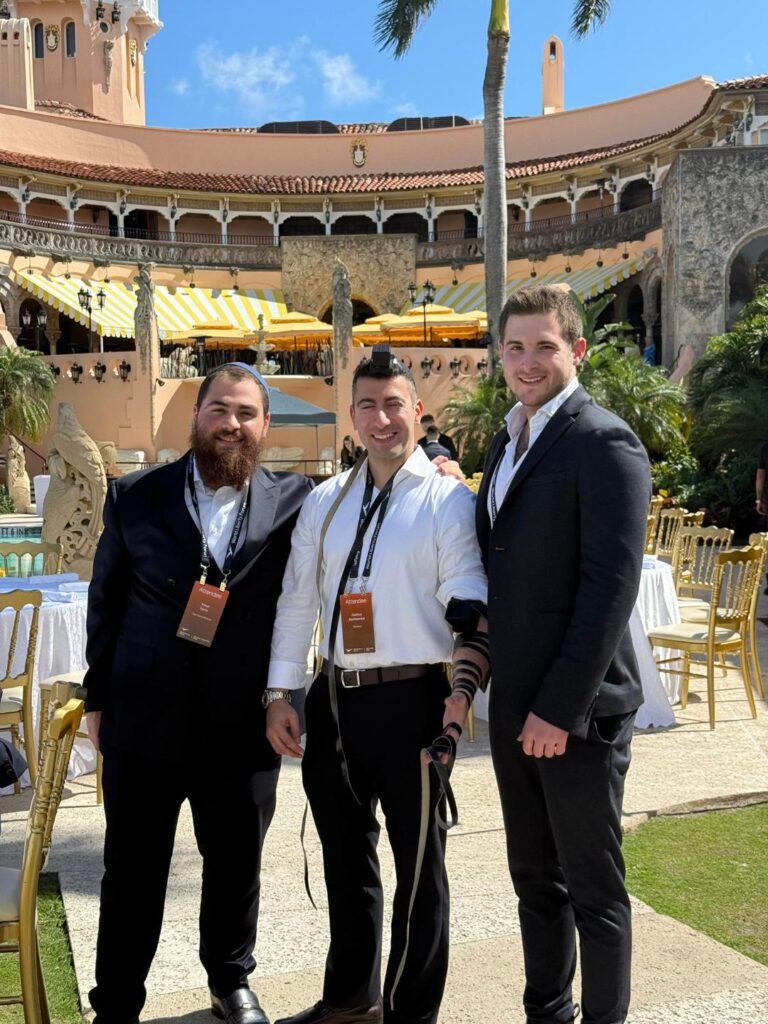
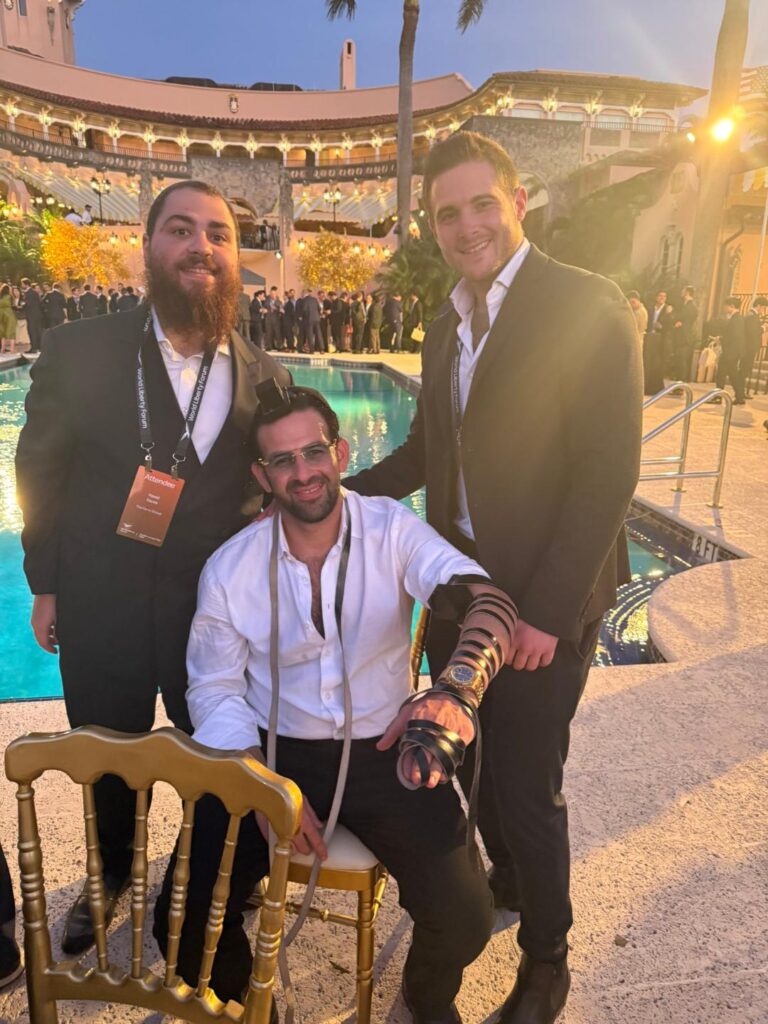
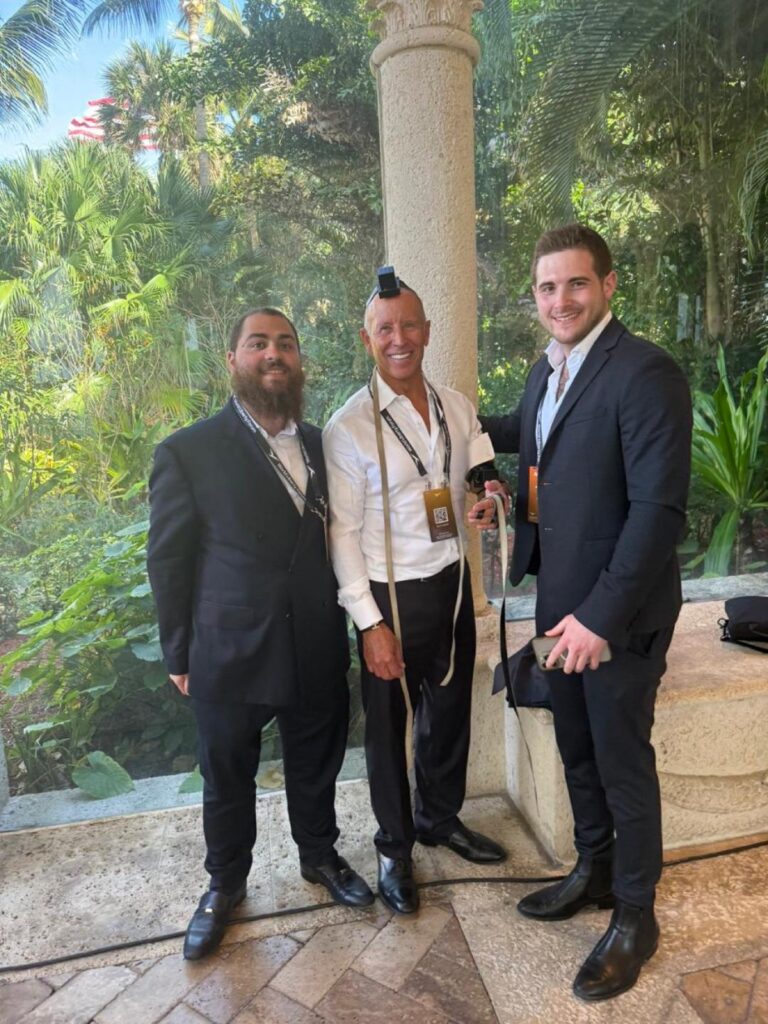
Even religious observance found a place in the proceedings. For Orthodox Jewish attendees, the opportunity to don tefillin was facilitated by Yossi Farro, a young yeshiva student from Brooklyn. This was emblematic of the event’s eclectic inclusivity. Joining him were Gopuff co-founder Rafael Ilishayev and Tinder founder Justin Mateen. Also wrapping tefillin was Barry Sternlicht, the founder and CEO of Starwood Capital Group. In a room where regulators debated algorithms and bankers discussed blockchain rails, ancient rituals unfolded quietly in the margins, a reminder that even in the most forward-looking financial experiments, tradition persists.
As the afternoon waned, the question lingered: was Mar-a-Lago witnessing the birth of a durable financial paradigm, or merely the apotheosis of a politically inflected business venture whose fortunes are tethered to the Trump brand? The New York Post report suggested that World Liberty’s long-term success will depend less on celebrity endorsements and political patronage than on the adoption of USD1 by mainstream users and institutions once the Trump presidency recedes into history. Attendees privately conceded that growth in stablecoin usage would ultimately determine whether World Liberty becomes a cornerstone of digital finance or a footnote in its early chapters.
What cannot be denied is the scale of the gamble. By fusing the Trump family’s political capital with Wall Street’s institutional heft and the regulatory imprimatur of federal officials, World Liberty Financial has positioned itself at the nexus of power, profit, and policy. The spectacle at Mar-a-Lago was not merely a product launch; it was a manifesto, proclaiming that the future of money will be shaped not only by coders and entrepreneurs but by presidents, regulators, and the titans of traditional finance.
