



|
Getting your Trinity Audio player ready...
|
By: Fern Sidman
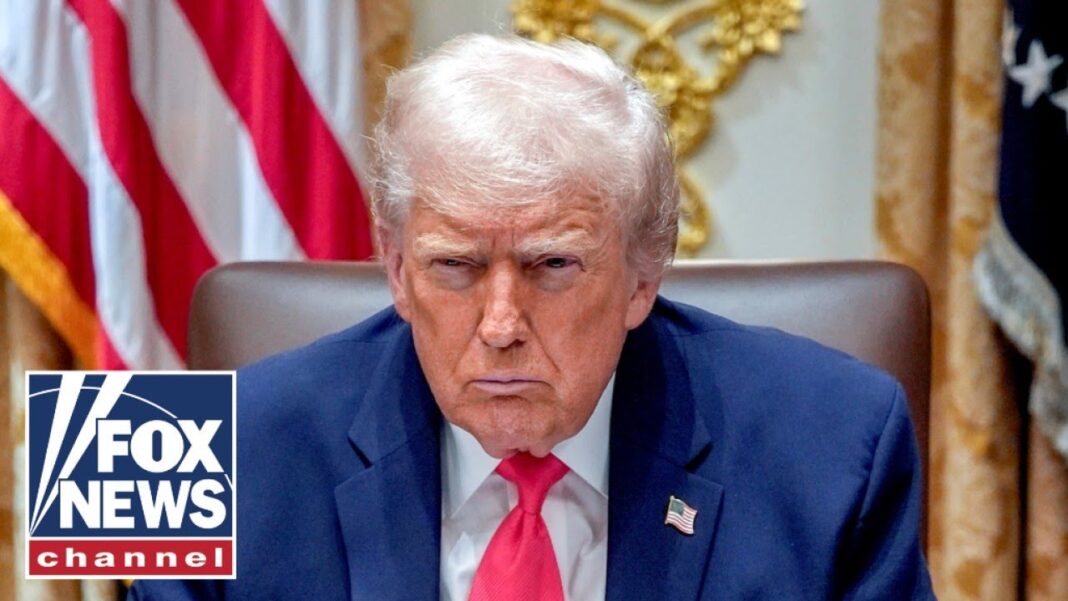
In a development that has reverberated across diplomatic corridors from Washington to Brussels, President Donald Trump has signaled that the United States may be on the verge of a historic rupture with the North Atlantic Treaty Organization, raising the specter of a geopolitical realignment at a moment of acute international tension. As reported on Wednesday by Fox News, the president’s remarks—delivered in the context of escalating conflict with Iran—underscore a profound dissatisfaction with the alliance’s response and call into question the future of a cornerstone of postwar global security.
For more than seven decades, NATO has functioned as the bedrock of transatlantic defense cooperation, a collective security pact designed to deter aggression and maintain stability across Europe and beyond. Yet in recent years, tensions between Washington and its European partners have intensified, driven by disputes over burden-sharing, strategic priorities, and the evolving nature of global threats.
President Trump’s latest comments suggest that these tensions may have reached a critical inflection point. In an interview cited by Fox News, the president indicated that withdrawing the United States from NATO is no longer a hypothetical consideration but a policy option actively under review.
“I was never swayed by NATO,” Trump reportedly stated, adding that reconsidering America’s participation in the alliance was “beyond consideration.” Such language represents a marked escalation in rhetoric, transforming long-standing skepticism into a potential course of action with far-reaching implications.
At the heart of the current dispute lies the ongoing conflict with Iran and the strategic importance of the Strait of Hormuz—a narrow maritime corridor through which approximately one-fifth of the world’s oil supply flows. Iranian efforts to disrupt or control access to the strait have heightened concerns about global energy markets, prompting the United States to seek a coordinated international response.
According to the Fox News report, the Trump administration requested that NATO allies deploy naval forces to help secure the waterway. However, European nations reportedly declined to participate, citing a range of strategic and political considerations.
For President Trump, this refusal appears to have crystallized broader frustrations. “Beyond not being there, it was actually hard to believe,” he remarked, expressing incredulity at what he perceives as a lack of reciprocity within the alliance.
The president’s critique is rooted in a longstanding argument: that the United States has disproportionately borne the burden of NATO’s collective defense commitments, often intervening on behalf of allies without receiving equivalent support in return.
Trump’s skepticism toward NATO is not new. Throughout his political career, he has repeatedly questioned the alliance’s efficacy and fairness, characterizing it as an outdated institution that fails to reflect contemporary geopolitical realities.
In his recent remarks, he went further, reportedly describing NATO as a “paper tiger”—a term that implies both weakness and a lack of credibility. He suggested that such perceptions are not limited to Washington but are shared by adversaries, including Russia.
This critique aligns with a broader strategic worldview that prioritizes bilateral agreements and transactional relationships over multilateral frameworks. For Trump, alliances must demonstrate tangible value and mutual commitment; otherwise, their utility is called into question.
The president’s comments have also extended to individual allied nations, most notably the United Kingdom. In remarks cited by Fox News, Trump criticized British military capabilities and questioned the country’s willingness to engage in the current conflict.
These statements prompted a swift response from Keir Starmer, who reaffirmed Britain’s commitment to NATO and emphasized the alliance’s enduring importance. “It is the single most effective military alliance the world has ever seen,” Starmer declared, underscoring a stark divergence in perspective.
The exchange highlights a broader transatlantic divide, one that extends beyond the immediate issue of Iran to encompass fundamental differences in strategic outlook and political philosophy.
The potential withdrawal of the United States from NATO would constitute one of the most consequential shifts in global security architecture since the end of World War II. Such a move would not only alter the balance of power within Europe but also have cascading effects across multiple regions.
For European nations, the prospect of diminished American involvement raises urgent questions about defense capabilities and strategic autonomy. Many countries have historically relied on the United States as the guarantor of their security, a role that would be significantly diminished—or entirely eliminated—under a NATO withdrawal scenario.
For adversaries, the implications are equally significant. A weakened or fragmented alliance could embolden rival powers, altering calculations regarding deterrence and potentially increasing the likelihood of conflict.
The immediate context of the dispute—the Strait of Hormuz—adds an additional layer of complexity. As a critical artery for global oil supply, the strait’s stability is essential not only for energy markets but for the broader global economy.
Disruptions to this corridor have historically resulted in sharp fluctuations in oil prices, with ripple effects across industries and regions. The reluctance of NATO allies to participate in securing the strait reflects a cautious approach, balancing the desire to maintain stability with the risks of direct military involvement.
From the perspective of the Trump administration, however, such caution may be interpreted as a failure to meet shared responsibilities. The president’s expectation of automatic support—particularly in light of past American interventions—forms a central pillar of his argument.
Within the United States, the debate over NATO is deeply intertwined with broader questions about foreign policy and national identity. Advocates of continued engagement emphasize the alliance’s role in preserving stability and preventing conflict, while critics argue for a more restrained and selective approach.
President Trump’s position resonates with a segment of the electorate that favors reducing overseas commitments and prioritizing domestic interests. His critique of NATO, therefore, is not merely a policy stance but a reflection of a broader ideological shift.
At the same time, the potential consequences of withdrawal have prompted concern among policymakers and analysts, many of whom warn of the risks associated with dismantling longstanding alliances.
As tensions continue to escalate, the future of NATO—and by extension, the structure of global security—appears increasingly uncertain. The coming weeks may prove decisive, as diplomatic efforts unfold and strategic decisions are made.
For now, the alliance remains intact, its members navigating a complex and evolving landscape. Yet the possibility of a fundamental change cannot be dismissed, particularly in light of the president’s unequivocal language.
The statements attributed to President Trump, as reported by Fox News, mark a potential turning point in the history of transatlantic relations. They reflect not only immediate frustrations over the Iran conflict but a deeper reevaluation of the principles that have governed international cooperation for decades.
Whether this moment will culminate in a formal withdrawal or serve as a catalyst for reform remains to be seen. What is clear, however, is that the assumptions underpinning the postwar order are being tested in unprecedented ways.
In an era defined by shifting alliances and emerging threats, the question is no longer whether change is coming, but how profound that change will be—and what it will mean for the future of global stability.

I sure hope President Trump continue with his saying of leaving NATO. The latest incident regarding the ships unable to cross the Strech
Is sufficient proof of the nations that are part of the NATO. Leave it would be the best form of showing the world who the UNITED STATES are.