



|
Getting your Trinity Audio player ready...
|
By: Fern Sidman
Amid a climate of mounting uncertainty and strategic recalibration, Israeli officials are expressing deepening pessimism regarding the likelihood of a substantive diplomatic breakthrough between the United States and Iran. As reported on Wednesday by World Israel News, the prevailing sentiment within Jerusalem’s leadership is that ongoing negotiations are unlikely to yield a durable agreement, with many viewing the process as a calculated maneuver by Tehran to delay renewed hostilities rather than resolve underlying tensions.
This assessment emerges at a critical juncture, following the decision by President Trump to extend a tenuous ceasefire with Iran without specifying a definitive endpoint. While the extension ostensibly provides additional time for diplomatic engagement, Israeli officials interpret it through a markedly different lens—one shaped by skepticism, strategic vigilance, and a readiness to return to military confrontation should talks falter.
According to the information provided in the World Israel News report, Israeli leadership harbors little confidence that negotiations will culminate in a meaningful agreement. Senior officials have characterized Iran’s approach as deliberately ambiguous, accusing its leadership of engaging in protracted discussions while avoiding decisive commitments.
One high-ranking Israeli source described Tehran’s posture as fragmented and inconsistent, suggesting that Iranian representatives are “speaking in multiple voices.” This perceived lack of coherence has reinforced the belief that the negotiation process is being used as a stalling tactic, enabling Iran to buy time while preserving its strategic options.
From Jerusalem’s perspective, the stakes are exceptionally high. The central issue remains Iran’s nuclear program, including its accumulation of enriched uranium and its broader regional influence. Israeli officials, as referenced by World Israel News, maintain that any agreement falling short of comprehensive constraints would fail to address the core security concerns driving the current standoff.
Despite the diplomatic impasse, coordination between Israel and the United States remains robust. Israeli officials emphasize that both nations are aligned in their strategic outlook and prepared to act decisively should negotiations collapse. This alignment has translated into extensive military planning and operational readiness across multiple theaters.
Since the inception of the ceasefire, joint preparations have intensified, encompassing a range of exercises designed to ensure rapid mobilization in the event of renewed conflict. These activities have included coordinated drills involving fighter aircraft and aerial refueling operations, underscoring the logistical complexity of potential strikes.
A significant milestone in this preparatory phase was the recent visit to Israel by Brad Cooper, during which joint operational frameworks were reportedly finalized. According to the World Israel News report, these discussions resulted in the approval of a comprehensive “target bank”—a detailed compilation of strategic objectives that could be engaged in a future military campaign.
The scope of these plans is said to extend beyond purely military installations, encompassing elements of Iran’s national and energy infrastructure. Such targets are viewed as critical levers for exerting pressure on Tehran, with the aim of compelling concessions on its nuclear ambitions.
The extension of the ceasefire by President Trump has introduced a complex dynamic into the already fragile situation. While the decision ostensibly reflects a willingness to allow diplomacy additional time, it is accompanied by measures that maintain—and in some respects intensify—military pressure.
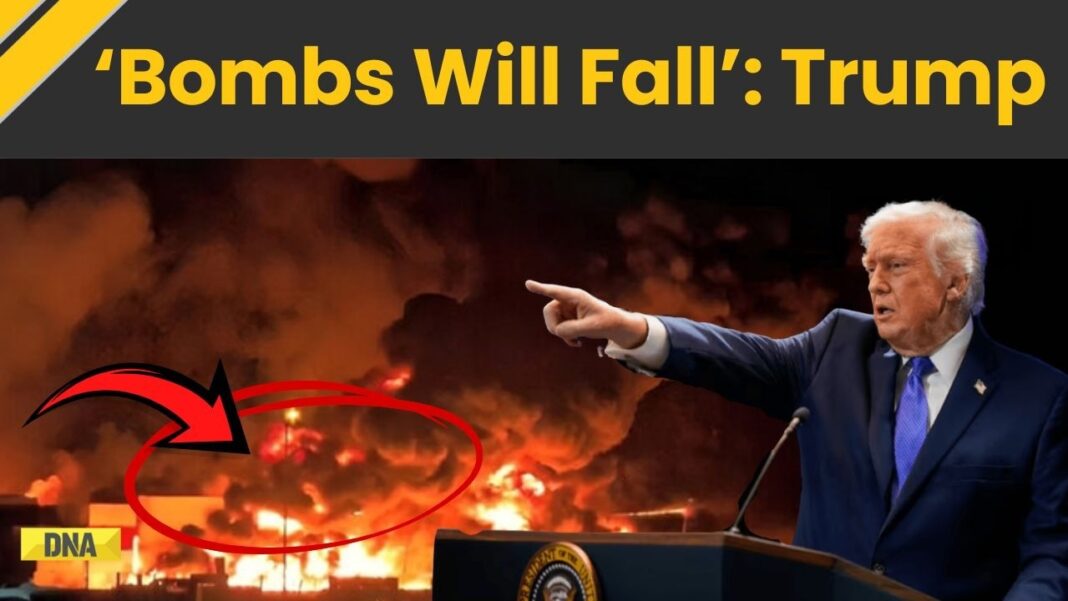
Trump has made clear that the United States will continue its naval blockade of Iran, effectively restricting the country’s economic lifelines while negotiations proceed. At the same time, he has emphasized that American forces remain fully prepared to resume hostilities at short notice.
Israeli officials interpret this dual-track approach as both a necessity and a risk. On one hand, sustained pressure is seen as essential to preventing Iran from exploiting the ceasefire to advance its strategic objectives. On the other, the absence of a clear timeline introduces uncertainty, raising questions about how long the current equilibrium can be maintained.
Complicating matters further are indications of internal divisions within Iran’s leadership. Reports cited by World Israel News suggest that disagreements persist over whether to engage in negotiations under the current conditions, particularly in light of the ongoing blockade.
These divisions have manifested in conflicting signals from Iranian officials, with some advocating continued dialogue while others warn against concessions perceived as capitulation. The resulting ambiguity has contributed to the perception among Israeli and American policymakers that Iran lacks a unified negotiating position.
This fragmentation is seen by some as an opportunity to apply additional pressure, while others caution that it may also increase the unpredictability of Tehran’s actions. In either case, the lack of cohesion complicates efforts to achieve a clear and enforceable agreement.
The uncertainty surrounding the negotiation process has been further exacerbated by questions over the scheduling of future talks. Reports have indicated that a planned second round of discussions, initially expected to take place in Islamabad, may not proceed as anticipated.
According to accounts referenced by World Israel News, Iran has shown reluctance to participate in further talks while the blockade remains in effect. This stance has contributed to a stalemate, with both sides holding firm to positions that limit the scope for compromise.
Additional reporting suggests that skepticism within the White House mirrors that of Israeli officials. Concerns have been raised regarding the authority of Iranian negotiators to make binding commitments, as well as the significant gaps that persist between the two sides on key issues such as uranium enrichment, sanctions relief, missile capabilities, and regional influence.
As diplomatic efforts falter, the specter of renewed conflict looms ever larger. Israeli officials, as cited by World Israel News, have made clear that they are prepared to act in concert with the United States should negotiations fail.
The potential resumption of hostilities would mark a significant escalation, with far-reaching implications for regional stability and global security. The involvement of major powers, combined with the strategic importance of the Middle East, ensures that any conflict would extend well beyond the immediate participants.
Iranian officials, for their part, have expressed concern that the continuation of the ceasefire under conditions of sustained military pressure could serve as a prelude to further attacks. This perception has heightened tensions, reinforcing a cycle of mistrust that undermines the prospects for diplomatic resolution.
Within Israel, the prevailing mood is one of cautious realism. While officials continue to support the diplomatic process in principle, they are simultaneously preparing for its potential failure. This dual approach reflects a recognition of the inherent uncertainties involved, as well as the high stakes at play.
The emphasis on preparedness is not merely rhetorical. As detailed by World Israel News, the coordination between Israeli and American forces has reached an advanced stage, with detailed operational plans in place and resources allocated to support rapid execution.
At the same time, Israeli leadership remains acutely aware of the broader implications of any military action. The potential for escalation, the impact on civilian populations, and the response of regional actors all factor into the complex calculus guiding decision-making.
The current situation represents a delicate balance between diplomacy and deterrence, one in which each move carries significant consequences. The extension of the ceasefire has provided a temporary reprieve, but it has not resolved the underlying tensions that define the relationship between the United States, Israel, and Iran.
As negotiations continue—albeit under strained conditions—the prospects for a comprehensive agreement remain uncertain. The interplay of internal divisions within Iran, skepticism among Western policymakers, and the ever-present possibility of military escalation creates a landscape characterized by volatility and unpredictability.
In the final analysis, the developments described in the World Israel News report paint a picture of a diplomatic process under severe strain, overshadowed by preparations for potential conflict. The extension of the ceasefire, while offering a window for negotiation, has done little to bridge the deep divides that separate the parties involved.
For Israel, the path forward is defined by vigilance and readiness, coupled with a cautious engagement in diplomacy. For the United States, it is a test of whether pressure and negotiation can be effectively balanced. And for Iran, it is a moment of internal reckoning, as competing factions navigate the complex interplay of strategy and survival.
As the world watches, the outcome of this high-stakes confrontation remains uncertain. What is clear, however, is that the decisions made in the coming days and weeks will shape the trajectory of the region for years to come, determining whether the fragile calm gives way to renewed conflict or an elusive, hard-won peace.
