


























Breaking the Silence: Sweden Challenges the Use of “Islamophobia” to Suppress Debate on Extremism and Terror
By: Fern Sidman
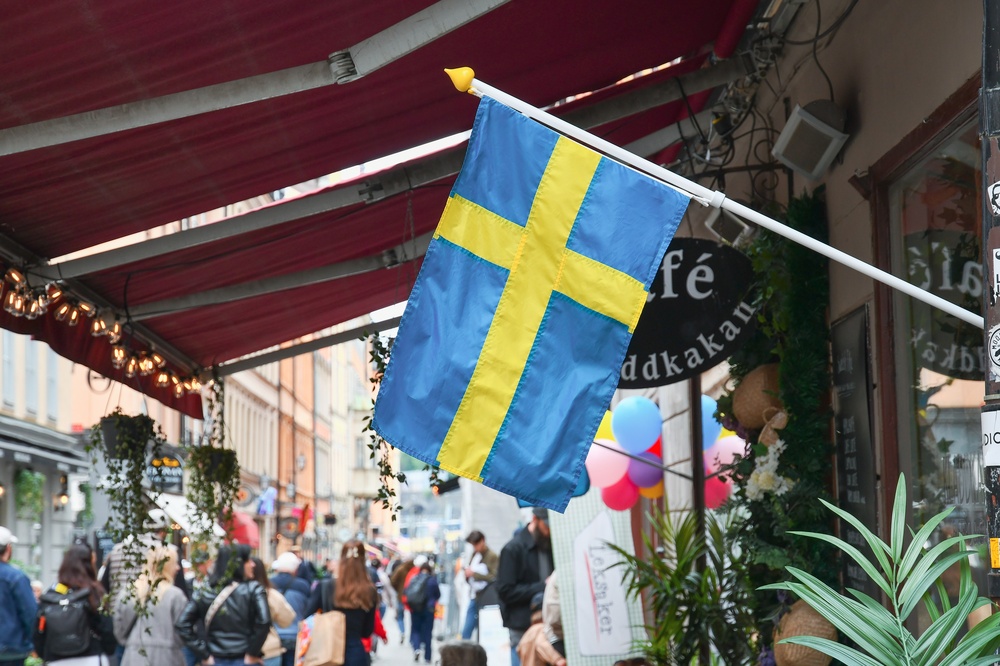
In an era increasingly defined by linguistic sensitivities, political orthodoxy, and fierce battles over the boundaries of acceptable discourse, Sweden’s decision to discontinue the official use of the term “Islamophobia” represents a significant and potentially transformative moment in the broader European conversation about freedom of expression, religious criticism, and democratic resilience.
According to statements attributed to Swedish Foreign Minister Maria Malmer Stenergard, Sweden intends not only to abandon the term domestically but also to encourage the European Union and the United Nations to reconsider its continued use. If pursued with consistency and intellectual rigor, this policy shift may prove to be one of the most consequential free-speech initiatives undertaken by a Western democracy in recent years.
The controversy surrounding the term “Islamophobia” has never been merely semantic. Rather, it has centered on a profound and increasingly urgent question: Can a democratic society openly scrutinize and criticize a religion, its doctrines, its institutions, and its historical legacy without being accused of bigotry?
For many years, critics have argued that the term “Islamophobia” has frequently been deployed not to combat genuine anti-Muslim prejudice, which unquestionably exists and should be condemned wherever it appears, but instead to suppress legitimate examination of religious ideas and practices. In political debates, media discussions, academic settings, and public policy forums throughout Europe and North America, the label has often functioned as a rhetorical weapon designed to end debate rather than encourage it.
This distinction is critical.
Hatred directed toward individuals because they are Muslim is morally wrong and incompatible with the principles of liberal democracy. Every citizen deserves equal protection under the law regardless of faith, ethnicity, race, or background. Violence, discrimination, harassment, and intimidation against Muslims must be rejected unequivocally.
However, criticism of a religion is fundamentally different from hostility toward its adherents.
Religions are systems of ideas. Ideas are subject to examination, challenge, disagreement, and debate. Indeed, the very foundation of democratic civilization rests upon the principle that no ideology, institution, or belief system is immune from scrutiny.
Christianity has been criticized. Judaism has been criticized. Hinduism has been criticized. Buddhism has been criticized. Secular ideologies have been criticized. Political movements have been criticized.
No society committed to intellectual freedom can establish a special category of belief that exists beyond examination. Sweden appears to be recognizing this essential democratic principle.
The problem with the term “Islamophobia” is that it frequently conflates two entirely different phenomena. On one hand, there is genuine anti-Muslim hatred directed against individuals because of their faith. On the other hand, there is criticism of Islamic doctrine, Islamic political movements, Islamic legal traditions, or extremist interpretations of Islam.
These are not the same thing.
A citizen who opposes Islamist extremism is not anti-Muslim. A scholar who analyzes troubling passages within religious texts is not anti-Muslim. A journalist who investigates honor violence, forced marriages, radicalization networks, or extremist organizations is not anti-Muslim. A politician who questions immigration policies influenced by concerns over integration or security is not anti-Muslim.
Yet all too often, such discussions have been met with accusations of “Islamophobia,” effectively shutting down conversations that democratic societies must be able to have openly. Europe’s experience over the past several decades has made these debates impossible to ignore. Questions surrounding integration, radicalization, terrorism, religious extremism, parallel legal structures, freedom of speech, women’s rights, and minority protections have become central public-policy issues throughout the continent.
Citizens are entitled to discuss these matters honestly. Governments are obligated to confront them realistically. Journalists must be free to investigate them thoroughly. Academics must be free to study them rigorously.
When a single word is repeatedly employed to stigmatize such discussions, public trust inevitably erodes. Indeed, one of the greatest dangers posed by politically charged terminology is that it often produces the opposite of its intended effect. Rather than reducing social tension, it can intensify public frustration by creating the perception that legitimate concerns are being dismissed or censored.
Sweden’s position reflects a growing recognition that social cohesion cannot be built upon linguistic intimidation. Healthy democracies require open debate. They require disagreement. They require the willingness to challenge prevailing assumptions. Most importantly, they require confidence that citizens are capable of distinguishing between criticism of ideas and hatred toward people.
The abandonment of the term “Islamophobia” does not mean abandoning opposition to anti-Muslim prejudice. To the contrary, combating genuine discrimination becomes easier when terminology is precise rather than politically loaded. If a person attacks a Muslim because of religious identity, that should be condemned. If a person refuses employment to a Muslim because of faith, that should be condemned. If a person vandalizes a mosque or threatens worshippers, that should be condemned. But criticism of religious doctrines, theological teachings, historical actions, or political movements associated with a religion belongs in an entirely different category.
Confusing these categories serves neither justice nor truth.
It is also worth noting that the same standards applied to Islam should apply universally. No religion should enjoy immunity from criticism, and no religion should be singled out for hostility. Equality before the law requires intellectual consistency.
The ultimate question facing Europe is not whether citizens should be allowed to criticize Islam. In a free society, they unquestionably should. The real question is whether democratic institutions possess sufficient confidence in their own principles to permit robust debate without resorting to labels that discourage dissent.
Sweden’s decision suggests that at least one government believes the answer is yes. Whether other European nations follow suit remains to be seen. Yet the broader significance of this development extends well beyond any single phrase. It touches upon the fundamental values that define open societies: freedom of conscience, freedom of speech, intellectual honesty, and the conviction that ideas must stand or fall on their merits rather than be shielded by political taboos.
If Sweden’s initiative succeeds in encouraging a more nuanced and intellectually serious discussion throughout Europe, it will have rendered a valuable service not merely to advocates of free expression, but to democratic society itself.
At a moment when many institutions appear increasingly reluctant to distinguish between criticism and hatred, Sweden’s stance serves as a reminder that liberty requires courage. It requires the willingness to defend open inquiry even when doing so invites controversy.
That is not intolerance. It is democracy functioning exactly as it was intended to function.



