

























Washington Governor Investigated Human Rights Commissioner’s Antisemitic Remarks in 2025 — Yet He Remains on Panel
By: Ariella Haviv
More than a year after remarks widely condemned as antisemitic were made during a public meeting of the Washington State Human Rights Commission, questions continue to reverberate throughout the state regarding accountability, public trust, and the responsibilities entrusted to those serving on government bodies charged with safeguarding civil rights.
According to a report on Saturday at The Jewish News Syndicate (JNS), the office of Washington Governor Bob Ferguson previously reviewed and investigated comments made by Human Rights Commissioner Luc fils Jasmin during a March 27, 2025, commission meeting. Yet despite the controversy and subsequent scrutiny, Jasmin remains a member of the commission, with his current term extending through June 2028.
The episode has reignited broader national discussions regarding antisemitism in public institutions, particularly at a time when Jewish communities across the United States continue to report heightened concerns about anti-Jewish rhetoric, harassment, and hate incidents.
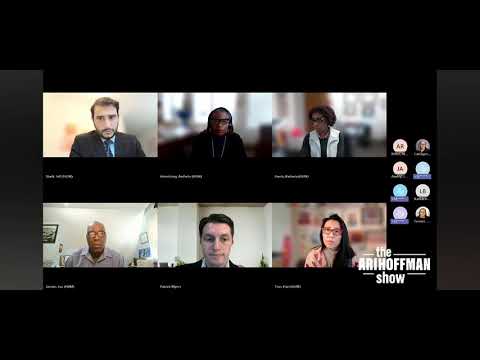
As detailed by JNS, the controversy resurfaced publicly after the Washington State Human Rights Commission posted video footage of the March 2025 meeting on Wednesday, bringing renewed attention to statements that many Jewish leaders and community advocates characterized as deeply offensive and profoundly insensitive.
The commission itself occupies a significant role within Washington state government. Charged with addressing discrimination complaints, promoting equal opportunity, and advancing civil rights protections, the agency is expected to serve as a guardian of fairness and inclusion for all residents regardless of race, religion, ethnicity, gender, or other protected characteristics.
Against that backdrop, the comments attributed to Jasmin have generated particularly sharp criticism.
According to the JNS report, during the March 2025 meeting, Jasmin remarked that the term antisemitism has existed since the era of Nazi Germany and then asserted that Jewish people were “always crying” about antisemitism.
“This word ‘antisemitism’ has been around since the Jews got trampled by Hitler, and it seems like the Jewish people keep on crying and crying and crying and crying—always crying over the antisemitism,” he stated during the meeting, according to JNS.
The commissioner reportedly made additional comments regarding the Israeli-Palestinian conflict, asserting that “these people the Jewish are killing by the millions over there—the Palestinians and the Arabs.” Those statements immediately drew criticism from Jewish organizations and community leaders after they became more widely known.
The remarks were particularly striking because they originated from an individual serving on a commission specifically tasked with protecting the rights and dignity of minority communities. JNS reported that when questions were directed to the Human Rights Commission regarding whether any formal action had been taken following the comments, Barbara Harris, the commission’s executive director, indicated that the matter had been reviewed by the governor’s office rather than the commission itself. “The governor’s office appoints commissioners and handles matters related to your inquiry,” Harris told JNS.
She further explained that because the governor’s office had previously reviewed and investigated the matter, it would be more appropriate for inquiries to be directed there. “Given that the governor’s office previously reviewed this matter and investigated, I believe it is most appropriate to forward this correspondence to the governor’s office for any review or response deemed appropriate, rather than addressing the matter through the commission,” Harris told JNS.
JNS subsequently sought comment from Governor Ferguson’s office regarding the matter. The controversy has also drawn attention to Jasmin’s personal and professional background.
According to the JNS report, Jasmin is a pastor who immigrated to the United States from Haiti and was appointed to the commission in 2023 by former Governor Jay Inslee. The commissioner’s continued presence on the panel has prompted debate about whether public officials who make controversial statements regarding religious minorities should face disciplinary measures, removal, or other consequences.
Complicating the situation is the fact that Jasmin’s son, Luc Jasmin III, currently serves as the Eastern Washington outreach representative for the governor’s office and is also pursuing elected office as a Democratic candidate for the state legislature. In comments provided to JNS, the younger Jasmin acknowledged that his father had apologized privately to the governor’s office shortly after the incident occurred. At the same time, he confirmed that no public apology had been issued.
According to the JNS report, he also stated that he had personally spoken with his father about the longstanding and historically positive relationships between Jewish and Haitian communities. The absence of a public apology has become one of the central issues raised by critics.
Many Jewish leaders argue that remarks made in a public governmental forum require a public acknowledgment of wrongdoing, particularly when those remarks involve stereotypes or language perceived as dismissive of genuine concerns regarding antisemitism. The controversy arrives at a moment when debates over antisemitism occupy an increasingly prominent place in American public life.
Jewish organizations frequently cite data showing that antisemitic incidents have risen significantly in recent years, including acts of harassment, vandalism, intimidation, and physical violence.
Against that backdrop, language suggesting that concerns about antisemitism are exaggerated or overemphasized is often viewed as particularly troubling by Jewish advocacy groups. Shasti Conrad, chair of the Washington State Democratic Party, addressed the matter in comments provided to JNS. “Washington Democrats condemn antisemitism in any form,” Conrad stated. “Hate has no place in our state, and we are working to elect Democrats up and down the ballot who will protect the safety and freedoms of every Washingtonian,” she added.
Her statement reflects broader efforts by political leaders to distance themselves from rhetoric perceived as discriminatory while reaffirming commitments to religious tolerance and civil rights.
Among the most forceful responses came from Solly Kane, president and chief executive officer of the Jewish Federation of Greater Seattle. According to JNS, Kane revealed that his organization attempted to contact Jasmin directly after learning of the comments. “Our office reached out directly to commissioner Jasmin earlier this week after these comments came to light to express our concerns and request he do some serious learning and reflection as well as issue an apology,” Kane told JNS. “We have not heard back from him.”
Kane’s remarks underscored the frustration felt by many within the Jewish community regarding the absence of direct engagement from the commissioner. He also challenged the substance of Jasmin’s statements, arguing that they reflected a fundamental misunderstanding of the realities confronting Jewish Americans. “At a time when the Jewish population is 2% of Americans but the target of approximately 70% of all religious-based hate crimes, for commissioner Jasmin to suggest that Jews are always ‘crying and crying’ about antisemitism reveals a stunning lack of understanding and awareness of the real threats the American Jewish community faces,” Kane told JNS.
His comments highlight one of the central themes underlying the controversy: whether dismissive language regarding antisemitism contributes to the minimization of legitimate fears and experiences within the Jewish community. Kane further argued that Jewish Americans are not seeking preferential treatment but rather the same protections afforded to all citizens. “Commissioner Jasmin suggests that Jews are seeking special treatment when in fact all the Jewish community is looking for are the basic entitlements in this country of safety and religious freedom,” he told JNS.
Those observations resonate with concerns voiced by Jewish organizations nationwide, many of which have warned that normalization of antisemitic rhetoric can contribute to an atmosphere in which prejudice becomes increasingly tolerated. The controversy has also generated broader questions about leadership standards within governmental institutions.
Human rights commissions occupy a unique position in public life because they are expected to model impartiality, fairness, and respect for diverse communities. When members of such bodies become embroiled in allegations involving bias or discriminatory remarks, critics argue that public confidence in those institutions can be undermined.
Kane ultimately called upon elected officials throughout Washington state to respond decisively.
He urged leaders to “unequivocally condemn commissioner Jasmin’s remarks and uphold their responsibility to be moral leaders in our community by making clear that offensive comments like these have no place in Washington state,” according to JNS.
As the controversy continues to unfold, the central questions remain unresolved. Although the governor’s office reportedly reviewed and investigated the matter, no public disciplinary action has been announced. Jasmin continues to serve on the Human Rights Commission, and his term remains scheduled to continue through June 2028.
For many observers, the debate now extends beyond a single set of comments and speaks to larger issues involving accountability, public trust, and the standards expected of those entrusted with defending civil rights. The episode has become a flashpoint in an ongoing national conversation about antisemitism, governmental responsibility, and the obligation of public officials to ensure that all communities feel respected, protected, and represented within the institutions designed to safeguard their rights.
Whether additional action will be taken remains uncertain. What is clear, however, is that the controversy has placed renewed scrutiny on Washington State’s Human Rights Commission and intensified calls from Jewish leaders for stronger responses to rhetoric they believe diminishes the seriousness of antisemitism in contemporary society.



