
















By: Max Schleifer
The recent decision by Iran to launch ballistic missiles toward Israel following months of relative calm and ceasefire arrangements has illuminated what many regional observers believe is a profound shift within the power structure of the Islamic Republic. According to a report on Saturday in The Wall Street Journal (WSJ), the missile strike was not merely a military maneuver designed to send a message to Jerusalem. Rather, it represented a visible manifestation of an evolving internal balance of power in Tehran, where hardline military figures appear to be exerting increasing influence over the nation’s strategic direction.
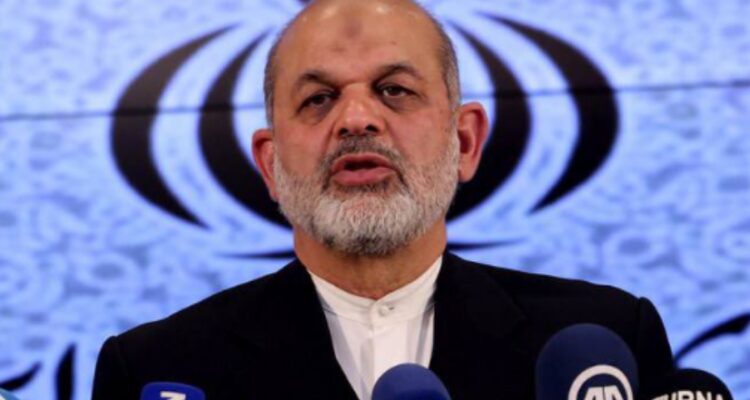
At the center of this reported transformation stands Ahmad Vahidi, the commander of Iran’s powerful Islamic Revolutionary Guard Corps, whose rise within the regime has reportedly altered both domestic decision-making processes and Iran’s posture toward the broader Middle East.
As detailed by the WSJ, Vahidi emerged as the principal advocate for the missile strike against Israel, successfully overcoming opposition from more cautious elements within the Iranian leadership who reportedly feared that renewed hostilities could derail sensitive diplomatic contacts with the United States and undermine prospects for a broader political understanding.
The reported episode offers a revealing glimpse into the increasingly dominant role of the Revolutionary Guards and the diminishing influence of officials who have favored a more measured approach toward regional tensions and international negotiations.
According to the WSJ report, Vahidi argued forcefully in favor of launching the missile attack despite concerns voiced by more moderate factions within the Iranian establishment. Those opposing the strike reportedly warned that such an escalation could jeopardize ongoing communications with Washington and diminish the likelihood of achieving diplomatic gains at a moment when discussions surrounding sanctions, regional security arrangements, and broader geopolitical issues remained active.
Yet, according to the WSJ report, Vahidi ultimately succeeded in convincing Iran’s Supreme National Security Council to approve the operation. The resulting missile exchange marked the first direct confrontation between Iran and Israel since the ceasefire that had taken effect in April, dramatically raising concerns throughout the region about the possibility of renewed military escalation.
The missile launch therefore served multiple purposes. Militarily, it demonstrated Iran’s continued ability to project force despite recent setbacks. Politically, it showcased the growing authority of hardline figures who believe deterrence can only be maintained through displays of strength rather than diplomatic accommodation.
Perhaps most importantly, according to the analysis presented by the WSJ, it signaled that the center of gravity within Tehran may be shifting away from traditional political institutions and increasingly toward the Revolutionary Guards. Vahidi’s emergence as one of the most influential figures in Iran is rooted in a career that spans the entire history of the Islamic Republic.
According to information cited by the WSJ, Vahidi was among the original founders of the Revolutionary Guards in 1979, shortly after the Iranian Revolution transformed the nation’s political landscape.
His ascent within the organization was remarkably swift. At just 23 years old, Vahidi reportedly became head of the Guards’ intelligence branch, placing him in a position of extraordinary authority at an unusually young age. His early involvement in shaping Iran’s security architecture helped establish his reputation as both a strategic thinker and an uncompromising defender of revolutionary ideology.
Over subsequent decades, Vahidi expanded his influence through a series of increasingly significant roles.
According to the WSJ report, he played a central role in establishing the Quds Force, the elite external operations branch that became one of Iran’s most important instruments for projecting power beyond its borders. The Quds Force would eventually become synonymous with Tehran’s regional strategy, overseeing relationships with allied groups and helping expand Iranian influence throughout the Middle East.
The WSJ reported that Vahidi was also instrumental in transforming Hezbollah from a relatively small terrorist organization into one of the most powerful political and military actors in Lebanon. That evolution became a cornerstone of Iran’s broader strategy of cultivating regional partners capable of advancing Tehran’s interests while providing strategic depth against adversaries.
Throughout the years, Iran’s support for Hezbollah has been regarded as one of the defining features of its foreign policy. According to the WSJ report, Vahidi’s involvement in developing that relationship significantly enhanced his standing within the Revolutionary Guards and among the most influential figures in the regime.
His reputation grew further as he assumed increasingly senior military responsibilities, culminating in his current position as commander of an organization that reportedly oversees approximately 200,000 fighters. That immense force structure makes him the leader of what many analysts regard as the most powerful armed institution in Iran.
The WSJ reported that Vahidi’s influence extends well beyond military affairs. He has reportedly adopted an uncompromising position in discussions concerning Iran’s future relationship with the United States.
According to the publication, Vahidi has insisted that any potential agreement must include provisions designed to restore Iran’s military deterrence capabilities, preserve its missile arsenal, safeguard frozen financial assets, and ensure protection for Hezbollah and other allied organizations. Such demands reflect a broader strategic worldview that prioritizes maintaining leverage and resisting external pressure.
For Vahidi and those aligned with his perspective, military capability remains the foundation of national security. Diplomatic agreements, while potentially useful, are viewed through the lens of whether they strengthen or weaken Iran’s long-term strategic position.
The WSJ reported that this philosophy has increasingly shaped Tehran’s negotiating posture, creating friction with officials who have advocated a more flexible approach.
Vahidi’s rise reportedly accelerated after the injury of Mohammad Pakpour, whose diminished role created an opportunity for Vahidi to consolidate authority. According to the WSJ report, the transition significantly expanded Vahidi’s operational control and strengthened his ability to shape Iran’s overall strategy. The shift appears to have occurred during a period of heightened regional instability, making military leadership particularly influential.
As tensions intensified across multiple theaters, including the Strait of Hormuz, Lebanon, Syria, and relations with Israel, decision-making increasingly gravitated toward figures perceived as capable of navigating security crises. Vahidi’s longstanding experience and deep institutional connections positioned him advantageously within that environment.
The WSJ reported that Vahidi has played a prominent role in shaping Iran’s strategy regarding the Strait of Hormuz, one of the world’s most critical maritime chokepoints. Control over or influence within the strait has long been regarded as one of Tehran’s most powerful strategic assets. A substantial percentage of global energy shipments pass through the narrow waterway, making any disruption capable of reverberating throughout international markets.
According to the WSJ report, Vahidi has consistently emphasized the importance of preserving Iran’s ability to use the strait as a source of geopolitical leverage. That perspective aligns with broader Revolutionary Guards doctrine, which views asymmetric capabilities as essential tools for counterbalancing the superior conventional military power of the United States and its allies.
Perhaps the most consequential aspect of Vahidi’s reported rise concerns his relationship with Iran’s civilian leadership. According to Arab and Iranian sources cited by the WSJ report, Vahidi has repeatedly bypassed both President Masoud Pezeshkian and Foreign Minister Abbas Araghchi when determining strategic priorities related to the conflict.
If accurate, such reports suggest an increasingly prominent role for military institutions in setting national policy. Traditionally, Iran’s political system has featured a complex interplay between elected officials, clerical authorities, and security organizations.
The reported elevation of Vahidi’s influence may indicate that the Revolutionary Guards are assuming a more direct role in determining the nation’s course during a period of heightened regional confrontation.
According to the WSJ report, this dynamic has made Vahidi one of the principal obstacles to achieving a comprehensive agreement with Washington.
The emergence of Vahidi as a central decision-maker carries significant implications for the broader Middle East. Should his influence continue to expand, regional governments may increasingly find themselves confronting an Iranian leadership structure that prioritizes deterrence, military readiness, and strategic confrontation over diplomatic compromise.
According to the WSJ report, the missile strike against Israel offered a revealing indication of how this approach may manifest itself in practice. Rather than seeking to reduce tensions at a delicate moment, Vahidi reportedly viewed the operation as an opportunity to reinforce Iran’s credibility and demonstrate resilience. For supporters within the regime, such actions project strength and discourage adversaries. For critics, they risk triggering dangerous escalatory cycles that could undermine regional stability and complicate diplomatic efforts.
As reported by the WSJ, Ahmad Vahidi has evolved from a revolutionary-era intelligence officer into one of the most influential architects of Iran’s contemporary security strategy. His fingerprints are visible across many of the defining features of Tehran’s regional posture, from Hezbollah’s development and the creation of the Quds Force to current policies involving Israel, the United States, and the Strait of Hormuz.
The recent missile strike against Israel has brought renewed attention to his role and influence. Whether viewed as a guardian of Iran’s strategic interests or as a hardline figure complicating efforts toward regional de-escalation, Vahidi appears poised to remain a pivotal actor in shaping the Islamic Republic’s trajectory.
According to the WSJ report, his growing authority may ultimately prove decisive in determining whether Iran pursues confrontation, compromise, or some combination of both as it navigates one of the most consequential periods in its modern history.



