






















By: Fern Sidman
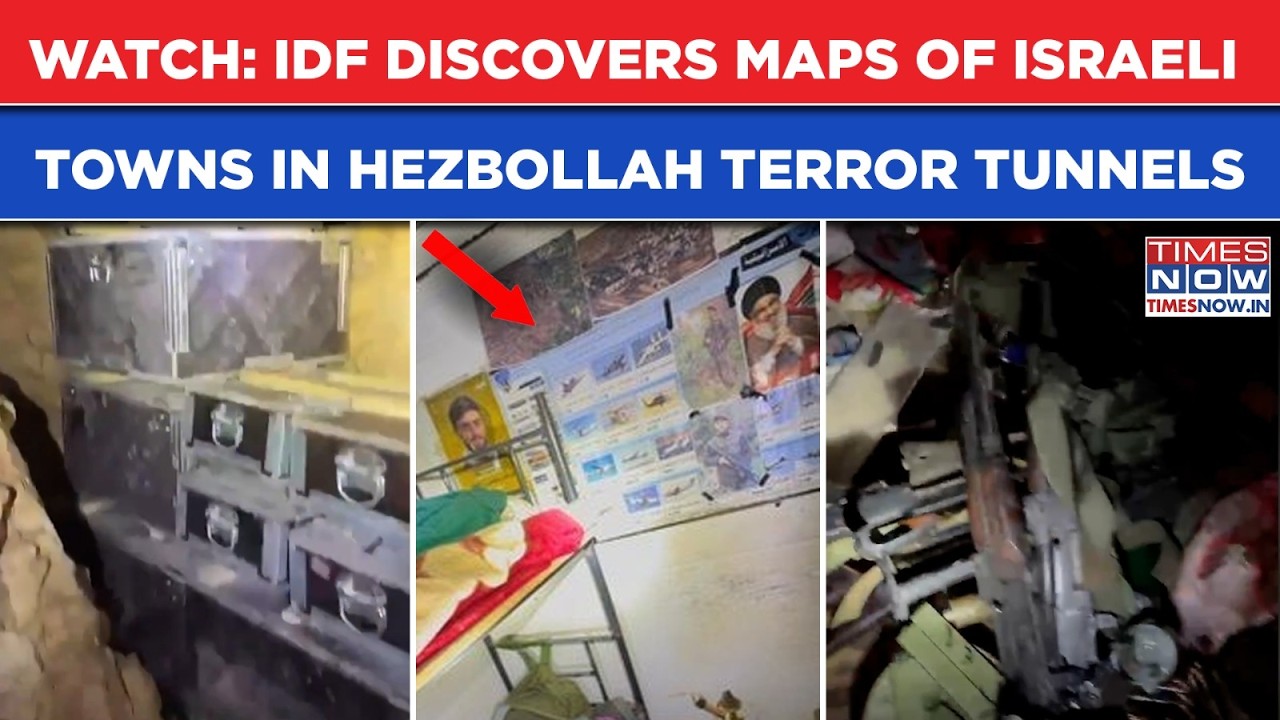
The discovery of detailed operational maps deep inside a vast Hezbollah tunnel complex beneath Lebanon’s strategically significant Beaufort Ridge has provided what Israeli military officials describe as some of the clearest evidence yet of Iran’s long-term vision for projecting power directly against northern Israel. According to report on Saturday by JFeed, the maps, uncovered during extensive Israeli military operations in southern Lebanon, depict plans for Hezbollah control over communities in the Galilee and the border town of Metula, reinforcing longstanding Israeli assertions that the Iranian-backed terrorist organization had transformed portions of southern Lebanon into a forward operating platform aimed at Israeli civilian population centers.
The revelations emerged as Israel Defense Forces personnel continued a comprehensive campaign to dismantle Hezbollah’s underground military infrastructure, a network that Israeli officials contend was constructed over many years with substantial Iranian assistance, financing, and strategic guidance. The findings, reported by JFeed, have added a new dimension to ongoing debates regarding regional security arrangements and the future of any diplomatic framework involving Iran and its network of proxy organizations throughout the Middle East.
The tunnel complex in question lies beneath Beaufort Ridge, a prominent geographic feature that has long occupied a critical position in the military history of southern Lebanon. For decades, the area has served as a focal point in the broader struggle between Israel and Hezbollah, making the discovery of extensive subterranean infrastructure beneath the ridge particularly significant.
According to the JFeed report, the maps were uncovered by forces from the IDF’s 36th Division, operating in conjunction with elite personnel from the Commando Brigade and the Yahalom combat engineering unit. These specialized forces have been engaged in the painstaking process of clearing and mapping the extensive tunnel network, a task requiring sophisticated technology, engineering expertise, and constant operational vigilance.
Military officials cited by JFeed described the maps as particularly revealing because of the locations and objectives allegedly marked on them. The documents reportedly displayed detailed references to communities in northern Israel, including Metula and other population centers situated near the Lebanese border.
Israeli military sources characterized the discovery as evidence that the infrastructure was conceived not merely as a defensive refuge but as part of a broader offensive strategy. “The maps illustrate in stark detail the Iranian regime’s strategic vision for this sector,” a senior military source told JFeed. “This wasn’t defensive infrastructure. It was designed as an offensive platform for terrorizing Israeli civilians from underground positions immune to air attack.”
Such assessments align with longstanding Israeli claims that Hezbollah’s extensive military buildup in southern Lebanon has been designed not only to deter Israeli operations but also to facilitate large-scale offensive actions during future conflicts.
The tunnel network itself appears to represent a substantial engineering undertaking. According to information reported by JFeed, Israeli forces believe the underground system was developed over multiple years and was intended to function as a hardened command-and-control center capable of directing military operations even under sustained aerial bombardment.
Military planners have long recognized the tactical advantages provided by underground infrastructure. Deep tunnels offer protection against precision-guided munitions, facilitate concealed movement of personnel and equipment, and enable communications to continue even when surface facilities are destroyed.
Israeli officials contend that the Beaufort complex embodied all of these capabilities. According to the JFeed report, the underground labyrinth contained extensive weapons stockpiles that transformed the tunnel system into a formidable military installation. Forces operating within the network reportedly discovered Kornet anti-tank missiles, rocket-propelled grenade launchers, mortar ammunition, fragmentation grenades, and anti-aircraft weaponry.
The quantity and diversity of the weapons allegedly found inside the complex suggest, according to Israeli assessments cited by JFeed, that the tunnels were intended to sustain prolonged combat operations rather than merely serve as temporary shelters. The operation gained additional urgency following a dramatic confrontation inside the tunnel network.
According to the JFeed report, a reconnaissance drone operated by the Yahalom unit detected a group of Hezbollah terrorists moving within one section of the underground passageways. The drone, conducting surveillance deep inside the tunnel system, reportedly came under fire as the terrorists attempted to destroy it and prevent their position from being compromised.
Rather than remain underground, the operatives allegedly fled toward the surface after realizing their location had been identified. Israeli surveillance assets maintained continuous observation of the suspects as they exited the tunnel and linked up with additional operatives above ground.
The intelligence gathered by ground forces enabled the Israeli Air Force to conduct a highly precise strike against the group. Fighter aircraft were reportedly directed to the exact location of the fleeing terrorists, resulting in the elimination of the entire cell before its members could escape or reorganize.
Israeli military officials cited the operation as an example of the increasingly sophisticated integration between intelligence platforms, special operations forces, engineering units, and aerial assets.
The ability to identify targets underground, maintain surveillance as they move to the surface, and rapidly coordinate precision air support has become an increasingly important component of Israel’s operational doctrine in confronting tunnel-based threats.
According to the JFeed report, the Beaufort operation forms part of a broader campaign throughout southern Lebanon aimed at systematically dismantling Hezbollah’s military infrastructure. Israeli forces have reportedly targeted more than 70 Hezbollah-related sites in recent days alone. These operations have included strikes against rocket launchers, command facilities, operational headquarters, and positions allegedly used to prepare attacks against Israeli territory.
Military officials have argued that these efforts are essential to preventing Hezbollah from reestablishing offensive capabilities along Israel’s northern frontier. The significance of the maps extends beyond the immediate tactical battlefield. Security analysts quoted by JFeed suggest that the discovery carries important implications for ongoing diplomatic discussions involving Iran and regional security arrangements.
At a time when international negotiators continue to explore frameworks intended to reduce tensions across the Middle East, the existence of extensive Hezbollah infrastructure allegedly designed for offensive operations against Israel raises difficult questions regarding the future role of Iranian-backed organizations.
Some analysts argue that any agreement focusing exclusively on Iran’s nuclear program while neglecting Hezbollah’s military capabilities would leave a major source of instability unresolved. “Hezbollah’s 150,000 rockets and this tunnel network aren’t Lebanese assets,” one security expert told JFeed. “They’re Iranian force-projection tools positioned on Israel’s border. A deal that brackets Hezbollah as a separate issue isn’t a peace agreement, it’s a deferred crisis.”
Such assessments reflect broader Israeli concerns that Hezbollah functions as a central component of Iran’s regional strategy. Israeli officials have consistently maintained that Tehran’s support for Hezbollah extends beyond financial assistance to include training, weapons transfers, intelligence cooperation, and strategic planning.
The alleged discovery of maps depicting operational ambitions inside northern Israel is therefore being interpreted by many within Israel’s security establishment as further evidence of direct Iranian involvement in shaping Hezbollah’s military objectives.
The operation has also highlighted the continuing challenge posed by subterranean warfare.
Over the past two decades, underground networks have become a defining feature of modern asymmetric conflicts. Organizations such as Hezbollah and Hamas have invested heavily in tunnel construction, recognizing the advantages such systems provide against technologically superior adversaries.
For military planners, neutralizing these networks requires immense resources, specialized equipment, and highly trained personnel capable of operating in some of the most dangerous environments on the battlefield.
The Yahalom unit, which has played a central role in the Beaufort operation, is specifically tasked with confronting these challenges. Its personnel specialize in combat engineering, explosive ordnance disposal, and subterranean warfare, making them among the Israeli military’s most critical assets in operations of this nature.
According to the JFeed report, Israeli commanders have emphasized that efforts to dismantle Hezbollah’s underground infrastructure will continue. Military officials reportedly stated that forces remain committed to removing the organization’s operational capabilities “layer by layer,” with the objective of establishing long-term security along Israel’s northern border. “We are dismantling the terror organization’s assets layer by layer,” military sources told JFeed. “The goal is to achieve operational control over this sector and prevent Hezbollah from reestablishing any foothold that threatens Israeli communities.”
As operations continue beneath Beaufort Ridge and throughout southern Lebanon, the discovery of the maps has become a powerful symbol of the broader strategic contest unfolding between Israel and Iran. For Israeli officials, the documents provide tangible evidence of what they view as years of preparation for future confrontation. For military analysts, they underscore the enduring significance of Hezbollah’s underground infrastructure and the complexities involved in eliminating it.
Whether viewed as intelligence breakthroughs, strategic warnings, or further evidence of regional instability, the findings reported by JFeed have added a dramatic new chapter to an already volatile security landscape—one that continues to shape the future of Israel’s northern frontier and the wider Middle East



