


















By: Fern Sidman
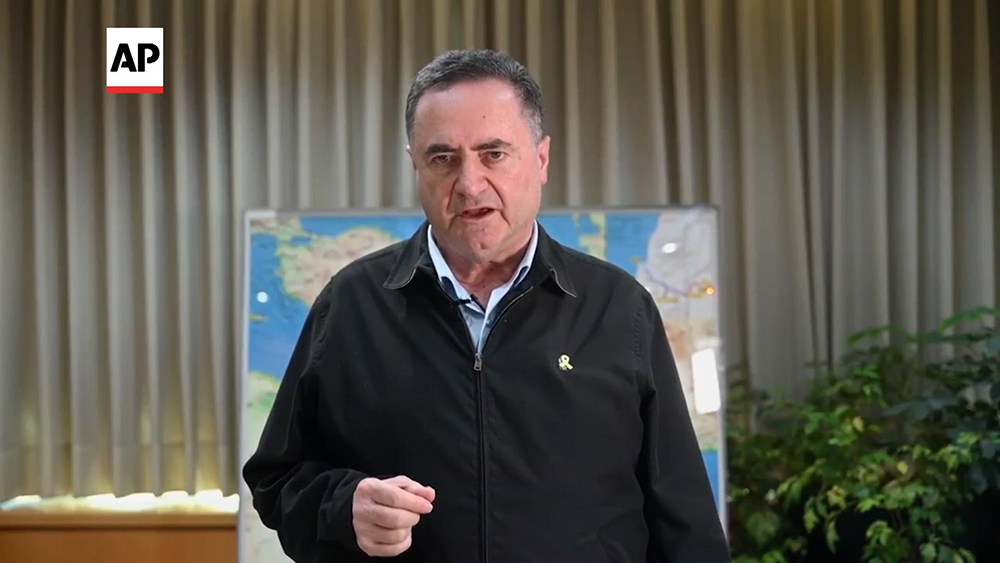
Israeli Defense Minister Israel Katz has delivered one of the clearest indications yet of how Jerusalem intends to navigate a rapidly evolving regional landscape, declaring that while the United States appears to be advancing an agreement with Iran centered on American strategic interests, Israel expects any eventual arrangement to address not only Tehran’s nuclear ambitions but also its missile arsenal and extensive network of regional proxy organizations.
According to a report on Friday at VIN News, Katz outlined a far-reaching vision of Israel’s security doctrine during remarks issued on Friday, emphasizing that recent military operations conducted jointly by Israel and the United States have dramatically weakened Iran’s military capabilities while simultaneously reinforcing Israel’s determination to maintain complete operational independence when confronting future threats.
The comments come at a critical juncture in Middle Eastern geopolitics as Washington and Tehran continue discussions regarding a potential diplomatic framework aimed at reducing tensions that have dominated the region for months. While American officials have repeatedly stressed that preventing Iran from acquiring nuclear weapons remains the principal objective of the negotiations, Israeli officials have signaled that they view the broader threat posed by Iran as extending well beyond its nuclear program.
According to the VIN News report, Katz acknowledged that the United States is pursuing an agreement based primarily on American interests, particularly the goal of ensuring that Iran never becomes a nuclear-armed state. However, he indicated that Israel expects any meaningful settlement to address a wider array of security concerns that have shaped regional instability for decades.
The defense minister’s remarks reflected a longstanding Israeli position that Tehran’s ballistic missile capabilities and sponsorship of armed organizations throughout the Middle East are inseparable components of the broader threat environment confronting the Jewish state.
At the center of Katz’s statement was an assessment of the military achievements realized during recent operations against Iranian assets and affiliated organizations.
VIN News reported that the defense minister argued that coordinated American and Israeli actions have fundamentally altered the strategic balance by significantly degrading Iran’s military infrastructure and delaying its capabilities for years.
The assessment echoes similar statements made by Israeli security officials who have argued that sustained military pressure has reduced Tehran’s ability to project power across multiple fronts simultaneously.
Yet even as Katz highlighted those achievements, he stressed that military successes alone do not eliminate the need for vigilance. “Prime Minister Benjamin Netanyahu and I have instructed the IDF to prepare accordingly,” Katz stated, according to the VIN News report.
That declaration appeared intended to convey that Israel is preparing for multiple potential outcomes, including scenarios in which diplomatic efforts succeed, partially succeed, or fail altogether.
The defense minister’s emphasis on preparedness underscored what has become a defining characteristic of Israeli strategic planning: the determination to preserve freedom of action regardless of international diplomatic developments.
Indeed, one of the most significant elements of Katz’s statement involved Israel’s insistence on maintaining an independent capability to respond to emerging threats.
According to the VIN News report, Katz stressed that Israel must retain the ability to act unilaterally if necessary to prevent Iran from developing capabilities that threaten Israeli security. That position has been a cornerstone of Israeli defense policy across multiple administrations and reflects deep skepticism regarding the permanence of diplomatic agreements in a region characterized by rapidly changing alliances and persistent instability.
The defense minister’s comments extended beyond Iran itself and addressed the broader security architecture Israel has established in recent years throughout multiple theaters of operation.
Katz made clear that Israel has no intention of withdrawing from security zones it currently controls in Lebanon, Syria, and Gaza. Those areas have become central components of Israel’s strategy for preventing hostile organizations from establishing positions near its borders.
Katz indicated that the Israel Defense Forces will continue to maintain a presence and operational readiness in strategic areas extending from the summit of Mount Hermon to regions of southern Lebanon, as well as locations in Gaza and the Samaria region.
The message was unmistakable: Israel views these positions not as temporary arrangements but as essential elements of a broader security framework designed to prevent future attacks.
Particularly noteworthy were Katz’s comments regarding northern Samaria. According to the VIN News report, the defense minister stated that the Israel Defense Forces would not withdraw from terrorist strongholds in the region that have already been evacuated of residents.
“The IDF will not withdraw from the terrorist camps in northern Samaria, which have been evacuated of residents, and if necessary, the operation will be expanded to additional terrorist camps,” Katz said.
The statement suggests that Israeli security planners continue to view northern Samaria as an active front requiring sustained military attention. Israeli officials have repeatedly cited concerns regarding terrorist infrastructure and the potential for armed groups to exploit areas with reduced governmental control.
Katz’s remarks indicate that military operations in the area remain a priority and could expand if intelligence assessments warrant further action. Beyond specific operational considerations, the defense minister used the opportunity to articulate what he described as the guiding principles of Israel’s contemporary security doctrine.
Katz characterized Israeli strategy as one that seeks decisive outcomes rather than temporary compromises and confronts threats both near and far from Israel’s borders. That formulation reflects a broader evolution in Israeli military thinking since the Hamas attacks of October 7, 2023, and the subsequent conflicts that reshaped the regional landscape.
Rather than focusing exclusively on immediate threats, Israeli planners increasingly emphasize disrupting hostile capabilities before they mature into direct dangers. Katz framed this approach as essential to safeguarding the strategic gains achieved through recent military campaigns.
“Much is at stake in this period, and we are determined to continue leading a firm security policy that will prevent harm to our security achievements and will not endanger our ability to fight against the Shiite axis of evil led by Iran and the Sunni axis of evil led by the Muslim Brotherhood,” Katz said, according to VIN News.
The language reflects the defense minister’s view that Israel confronts multiple ideological and military adversaries simultaneously and must therefore maintain flexibility across several theaters.
His reference to both Shiite and Sunni extremist movements highlights a strategic perspective that sees threats emerging from diverse sources despite their differing ideological foundations. The remarks also underscore Israel’s concern that diplomatic arrangements focused narrowly on nuclear issues could leave other security challenges unresolved.
For Israeli policymakers, Iran’s influence extends through an intricate network of alliances, armed groups, and regional partnerships that operate across multiple countries. As a result, many Israeli officials have argued that addressing the nuclear issue alone would fail to eliminate the broader strategic challenge posed by Tehran.
Katz’s comments suggest that Jerusalem will continue pressing for comprehensive measures that address missile development, proxy organizations, and regional destabilization efforts alongside any restrictions placed on nuclear activities. The defense minister also took time to recognize the sacrifices and contributions of Israel’s military personnel and civilian population.
According to the VIN News report, Katz expressed appreciation to the Israel Defense Forces leadership, active-duty troops, career military personnel, and reserve soldiers for their accomplishments during a period of extraordinary operational demands.
Israel’s reserve system has played a particularly significant role in sustaining prolonged military operations across multiple fronts. The defense minister likewise acknowledged the resilience of residents in northern communities who have endured repeated security challenges and disruptions resulting from regional hostilities.
Their steadfastness, Katz suggested, has become an integral component of Israel’s overall national defense effort. In addition, he offered condolences to families who have lost loved ones during recent conflicts and extended wishes for recovery to those who have been wounded.
Those remarks served as a reminder that strategic discussions regarding diplomacy, deterrence, and military preparedness carry profound human consequences. According to the VIN News report, Katz’s statement arrives amid continuing efforts to shape post-conflict realities in Gaza, Lebanon, and Syria while international attention remains focused on negotiations involving Washington and Tehran.
Whether those diplomatic efforts ultimately produce a durable agreement remains uncertain. What is clear, however, is that Israeli leaders intend to evaluate any arrangement through the prism of long-term national security rather than short-term political considerations.
Katz’s message was one of cautious vigilance: while diplomatic initiatives may advance, Israel will continue preparing for every eventuality, preserving its operational independence, maintaining strategic positions it considers essential, and retaining the capacity to confront threats wherever they emerge.
As regional dynamics continue to evolve, those principles appear destined to remain at the center of Israel’s security policy for the foreseeable future.



