













Jewish Civil Rights Group Urges Hochul to Initiate Proceedings for the Removal of Mamdani from Office
Organization Alleges Official Misconduct and Diminished Protections for Jewish Residents; Calls for Formal State Inquiry Into Mayor Zohran Mamdani’s Conduct
By: Carl Schwartzbaum
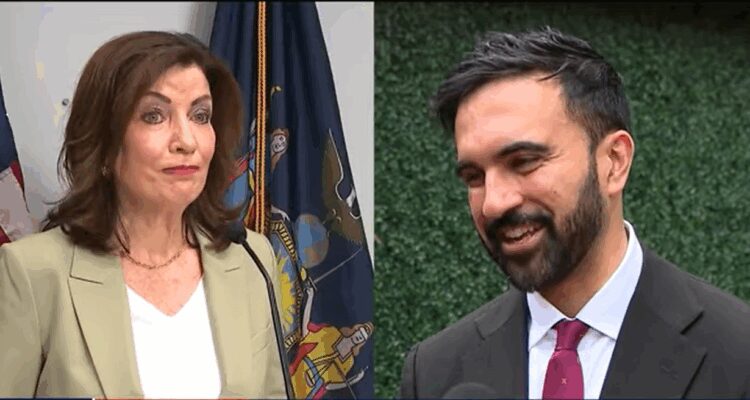
A national Jewish civil rights organization has formally petitioned New York Governor Kathy Hochul to initiate proceedings that could potentially lead to the removal of New York City Mayor Zohran Mamdani from office, arguing that actions taken by the administration since the beginning of the year have undermined protections for Jewish residents and raised serious questions about the public trust.
The request was delivered in a detailed letter sent to the governor and copied to a broad range of federal, state, and local officials. According to the organization and activists associated with the group EndJewHatred, the governor should open a formal inquiry into whether the mayor’s conduct in office warrants further action under applicable state authorities.
The appeal marks one of the most significant challenges yet mounted against Mamdani since he assumed office on January 1, following a highly contentious election campaign that featured sharp disagreements over Israel, antisemitism, free speech, and public policy.
The organization argues that the concerns extend beyond political disagreements and instead involve what it characterizes as official misconduct and a failure to uphold equal protections for all New Yorkers. Supporters of the effort contend that Jewish residents have experienced growing unease regarding decisions made by City Hall and the broader climate surrounding issues affecting the Jewish community.
A national Jewish civil rights organization has formally called on New York Gov. Kathy Hochul to begin proceedings that could lead to the removal of New York City Mayor Zohran Mamdani from office, arguing his actions in City Hall have left Jewish New Yorkers with diminished legal… pic.twitter.com/orEN0nqyUQ
— Kevin Deutsch (@kdeutschjourno) June 3, 2026
The letter reportedly asks Governor Hochul to determine whether the circumstances justify a formal review of the mayor’s conduct and whether any statutory remedies should be considered.
The request places the governor in the center of a politically charged debate that has intensified in recent months.
According to the organization’s letter, activists believe that state officials should examine whether actions taken by the administration have adversely affected Jewish New Yorkers and whether those actions constitute a breach of responsibilities associated with public office. The group argues that the governor has both the authority and the obligation to review allegations involving potential misconduct by local officials when substantial concerns are raised regarding the administration of government.
While the letter reportedly contains detailed arguments supporting the request, the central contention advanced by the organization is that City Hall policies and public statements have contributed to a deterioration in confidence among many Jewish residents. The organization further contends that these concerns warrant a formal examination rather than remaining within the realm of political debate.
The dispute emerges against a backdrop of heightened tensions surrounding issues involving antisemitism, public demonstrations, Middle East politics, and municipal governance.
Since taking office, Mayor Mamdani has remained a polarizing figure. Supporters have praised him as a transformative political leader willing to challenge established institutions and advance progressive priorities. Critics, meanwhile, have accused him of fostering division and advancing policies they believe are harmful to significant segments of the city’s population.
The organization behind the letter argues that concerns regarding Jewish residents deserve special scrutiny because New York City is home to one of the largest Jewish populations in the world. As a result, activists maintain that any actions perceived as diminishing protections or creating unequal treatment must be examined carefully and transparently.
The letter reportedly characterizes the issue as one involving civil rights, public confidence, and equal protection under the law. The organization’s appeal includes allegations concerning statements and conduct that activists say have contributed to a climate of concern within the Jewish community.
According to the letter, the group believes that certain public remarks and policy decisions have sent troubling signals to Jewish New Yorkers. The organization argues that elected officials have a responsibility to represent all residents equally and to ensure that no community feels marginalized or excluded from the protections afforded by government.
Activists associated with the effort contend that the concerns they are raising should not be dismissed as ordinary political disagreement. Rather, they argue that the issues involve fundamental questions about governance, accountability, and public trust. The organization has therefore urged Governor Hochul to undertake a comprehensive review of the allegations and determine whether additional action is warranted.
Calls for the removal of a sitting New York City mayor are exceptionally uncommon and historically rare.
Such requests typically arise only when opponents believe that alleged misconduct extends beyond policy disagreements and enters the realm of official wrongdoing. For that reason, the organization’s appeal immediately attracted attention from political observers, legal analysts, and community leaders. Even if no formal proceedings ultimately occur, the request itself represents a significant escalation in the ongoing dispute between the mayor’s critics and supporters.
The letter places substantial political pressure on state officials to address the concerns being raised while simultaneously highlighting broader debates about public accountability and municipal leadership.
The appeal now places Governor Hochul in a potentially sensitive position. As New York’s chief executive, the governor may face calls from different constituencies to either investigate the matter further or dismiss the allegations as politically motivated.
At the time the request became public, no formal determination had been announced regarding whether the governor would take any action in response to the organization’s appeal. Any review, if undertaken, would likely involve complex legal and factual questions concerning the scope of state authority, the standards applicable to removal proceedings, and the evidence supporting the allegations. Political observers note that such matters often involve lengthy review processes and substantial legal scrutiny.
The controversy is expected to intensify debate over the relationship between City Hall and New York’s Jewish community.
Supporters of the mayor are likely to argue that policy disagreements and criticism of government actions do not constitute grounds for removal from office. Critics, meanwhile, contend that the issues raised by the organization deserve serious consideration and should not be dismissed without examination.
The dispute also underscores the increasingly prominent role that civil rights organizations and advocacy groups are playing in local political battles. By elevating their concerns directly to the governor, activists have ensured that the issue will remain part of the public conversation in the weeks ahead.
Whether Governor Hochul ultimately acts on the request remains uncertain. What is clear is that the letter has added a new and consequential dimension to the ongoing debate surrounding Mayor Mamdani’s administration.
For supporters of the organization’s effort, the appeal represents an attempt to secure accountability and address concerns they believe have gone unanswered. For defenders of the mayor, it may be viewed as a politically charged effort to challenge an elected official through extraordinary means.
As state officials evaluate the request, the controversy is likely to remain a focal point of discussion among community leaders, elected officials, legal experts, and residents across New York.
The outcome may ultimately shape not only the future of the current dispute but also broader conversations about public trust, civil rights protections, and the responsibilities of elected leaders in one of the world’s most diverse cities.



