

















|
Getting your Trinity Audio player ready...
|
President Signals Imminent Verdict on Sweeping Proposal That Could End Maritime Confrontation, Lift Naval Blockade, and Launch New Phase of Nuclear Negotiations
By: Max Schleifer
President Trump announced Friday that he is preparing to make a “final determination” on a far-reaching proposed agreement with Iran that could reshape the geopolitical landscape of the Middle East, reopen one of the world’s most strategically vital maritime corridors, end the United States naval blockade of Iranian ports, and initiate a new chapter of negotiations concerning Tehran’s nuclear ambitions.
The dramatic announcement, delivered through a detailed post on Truth Social and reported by The New York Post, comes after months of escalating military tensions, maritime confrontations, economic pressure campaigns, and intense diplomatic maneuvering involving Washington, Tehran, and international stakeholders.
The potential agreement, if finalized, would represent one of the most consequential diplomatic developments in the region since the outbreak of the latest confrontation involving Iran, the United States, and allied nations.
In a statement that immediately reverberated through diplomatic, military, and financial circles around the world, Trump outlined what he described as the fundamental conditions underpinning the proposed arrangement.
“Iran must agree that they will never have a Nuclear Weapon or Bomb. The Hormuz Strait must be immediately open, no tolls, for unrestricted shipping traffic, in both directions,” Trump wrote.
The declaration underscores what has consistently been the administration’s central demand: a permanent prohibition against Iran obtaining nuclear weapons capability.
For years, American officials have maintained that preventing Tehran from crossing the nuclear threshold remains a non-negotiable national security objective. Trump’s latest remarks suggest that any agreement moving forward will continue to be anchored by that principle.
Among the most significant elements of the proposed accord is the future status of the Strait of Hormuz, the narrow maritime passage connecting the Persian Gulf to international shipping routes.
The waterway has long been regarded as one of the world’s most important strategic chokepoints.
A substantial percentage of global energy exports transit through the strait, making any disruption capable of sending shockwaves through international energy markets and global supply chains.
According to The New York Post’s report on the developing situation, reopening the strait without restrictions appears to be one of Washington’s foremost priorities.
Trump emphasized that unrestricted navigation must become the governing principle of any final settlement. “The Hormuz Strait must be immediately open, no tolls, for unrestricted shipping traffic, in both directions,” he reiterated.
The language suggests an effort not merely to restore navigation but to institutionalize guarantees designed to prevent future interference with international shipping.
The proposal would effectively end a period of extraordinary tension during which commercial vessels faced heightened uncertainty amid military operations and naval enforcement measures.
Another major component of the prospective agreement involves the elimination of naval mines believed to remain within the region. Trump disclosed that American military forces have already undertaken extensive mine-clearing operations.
“All water mines (bombs), if any, will be terminated,” the president stated.
He added that American forces had already removed numerous explosive devices through specialized naval operations.
“We have removed, through detonation, numerous such mines with our great underwater mine sweepers,” Trump wrote.
The president further indicated that Iran itself would be responsible for addressing any remaining threats. “Iran will complete the immediate removal and/or detonation of any mines that are left, which will not be many!”
Military analysts have consistently warned that even a limited number of naval mines can pose substantial risks to commercial and military vessels alike.
Consequently, mine-clearing provisions are likely to be viewed as a crucial confidence-building measure designed to reassure shipping companies, insurers, and international governments.
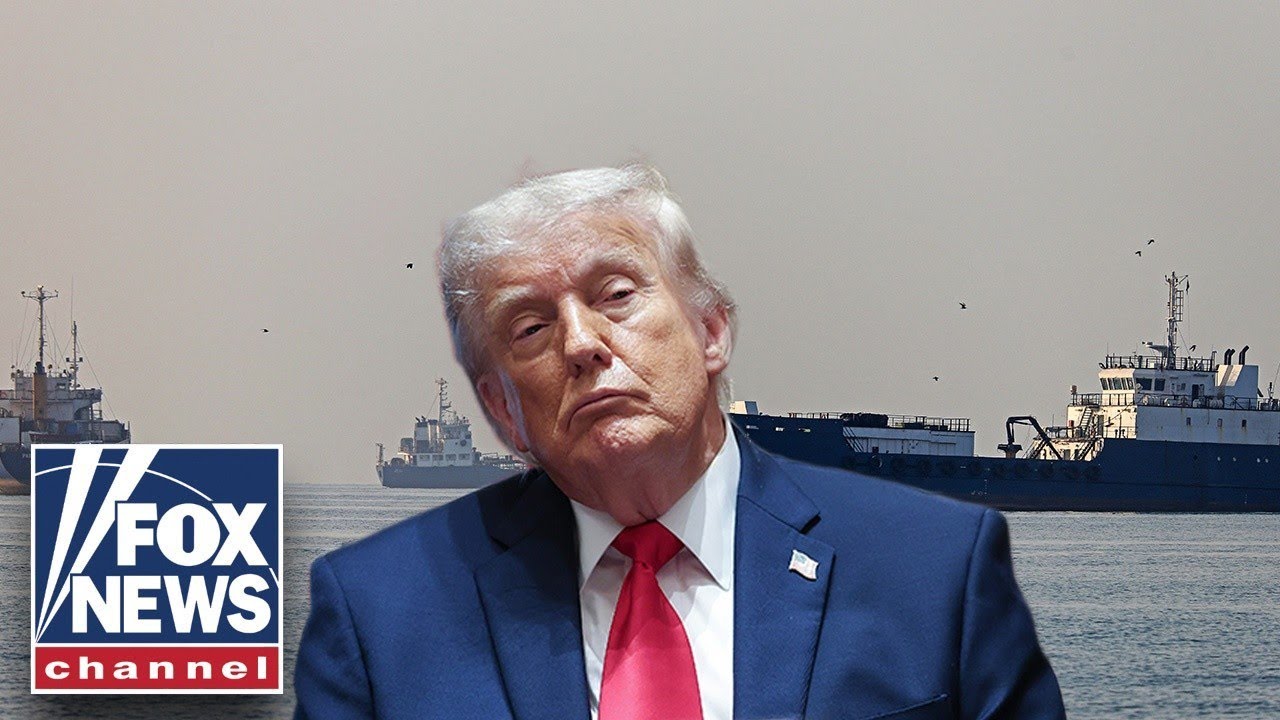
Perhaps the most immediately tangible consequence of a finalized agreement would be the lifting of the American naval blockade.
The blockade has been one of the most visible manifestations of Washington’s pressure campaign against Tehran.
Trump indicated that the restrictions would soon be removed if the agreement proceeds. “Ships caught in the Strait due to our amazing and unprecedented Naval Blockade, which will now be lifted, may start the process of ‘heading home!’” he declared.
The president then added a characteristic personal flourish. “Say HELLO to your wives, husbands, parents, and families from me, your favorite President!”
While lighthearted in tone, the remark underscored the potentially significant humanitarian and commercial implications of ending maritime restrictions.
Shipping companies, energy producers, and international markets have closely monitored developments in the region for months. Any restoration of normal traffic patterns could have far-reaching economic consequences extending well beyond the Middle East.
Beyond maritime security concerns, the most consequential aspect of the proposed agreement may involve Iran’s highly enriched uranium stockpile.
The fate of Iran’s nuclear materials has remained one of the most contentious issues throughout negotiations. Trump revealed an extraordinary proposal involving direct American participation in the removal and destruction of enriched uranium.
“The enriched material, sometimes referred to as ‘Nuclear Dust,’ which is buried deep underground with virtually collapsed mountains, caused by our powerful B2 Bomber attack 11 months ago, sitting on top of it, will be unearthed by the United States,” Trump wrote.
The president described a highly complex operation requiring sophisticated engineering capabilities.
According to Trump, the United States and China are uniquely positioned to perform such work.
“The enriched material … will be unearthed by the United States (which, it is agreed, is the only Country, along with China, with the mechanical capability of doing so!), in close coordination and conjunction with the Islamic Republic of Iran, plus the International Atomic Energy Agency, and DESTROYED.”
The statement offers a rare glimpse into the technical challenges associated with securing and eliminating deeply buried nuclear materials.
It also suggests a potentially unprecedented level of cooperation among Washington, Tehran, and international nuclear inspectors.
The inclusion of the International Atomic Energy Agency represents another noteworthy dimension of the proposal. The Vienna-based organization has long served as the principal international body responsible for monitoring nuclear programs and verifying compliance with arms-control agreements.
By explicitly incorporating the agency into the process, negotiators appear to be seeking a mechanism that could lend credibility and transparency to any future arrangement.
Verification has historically been one of the most difficult aspects of nuclear diplomacy with Iran.
The participation of independent inspectors may therefore prove essential in building confidence among skeptical governments and observers.
One of the more surprising revelations from Trump’s announcement involved the question of financial compensation.
Despite extensive discussions surrounding sanctions, frozen assets, and economic relief measures, the president indicated that no financial transfers would occur immediately. “No money will be exchanged, until further notice,” Trump stated.
The declaration suggests that Washington intends to maintain significant leverage throughout the initial implementation phase.
By postponing economic concessions, American negotiators may hope to ensure compliance with key security provisions before broader financial arrangements are considered.
Trump added that numerous additional issues had already been resolved. “Other items, of far less importance, have been agreed to.”
Though the president did not elaborate on those provisions, the comment implies that negotiators have already made substantial progress on a range of secondary issues.
The implications of a finalized agreement would extend far beyond the immediate parties involved.
For the United States, the accord could represent a significant diplomatic achievement while reducing the risk of further military escalation.
For Iran, it could offer a pathway toward easing international isolation while preserving a degree of national sovereignty.
For global markets, the reopening of the Strait of Hormuz could help stabilize energy flows and reduce uncertainty that has weighed heavily on international commerce.
The proposed destruction of enriched uranium, meanwhile, could alter the strategic balance that has defined regional security calculations for years.
Yet substantial questions remain unanswered.
Iranian officials have not publicly confirmed acceptance of all reported terms. Likewise, many observers remain cautious after previous diplomatic efforts appeared close to completion before ultimately collapsing.
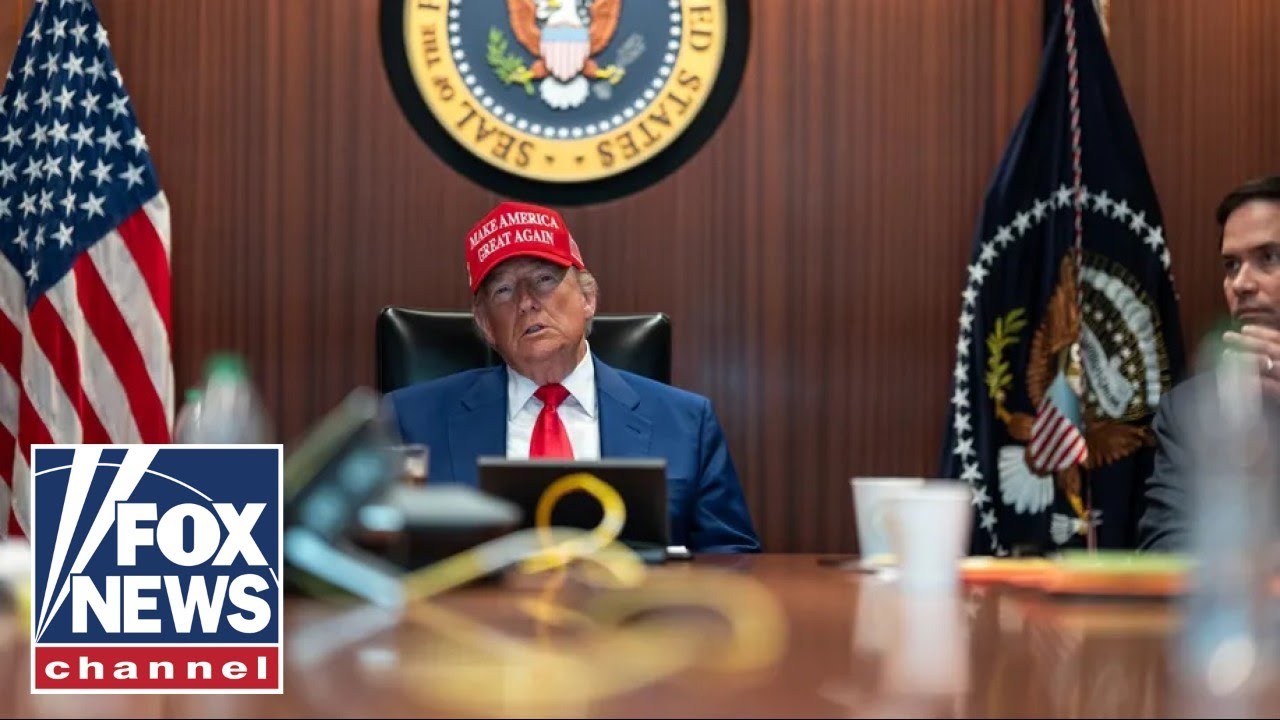
Trump himself acknowledged the gravity of the decision before him. “I will be meeting now, in the Situation Room, to make a final determination,” he announced.
As reported by The New York Post, policymakers, military leaders, diplomats, and international observers are now awaiting the president’s ultimate verdict.
The coming days may determine whether months of negotiations culminate in a historic breakthrough or whether tensions once again return to center stage.
For now, the world remains focused on Washington, where a single decision could reshape maritime security, nuclear diplomacy, and the future trajectory of relations between the United States and Iran.
The stakes could hardly be higher.
Whether the proposed agreement becomes reality or joins the long list of unrealized diplomatic ambitions, Trump’s forthcoming decision is poised to become one of the defining geopolitical moments of the year.



