
















|
Getting your Trinity Audio player ready...
|
Jerusalem Condemns UN Move as ‘Moral Disgrace,’ Accuses Guterres of Equating Democratic State With Hamas Terrorists
By: Fern Sidman
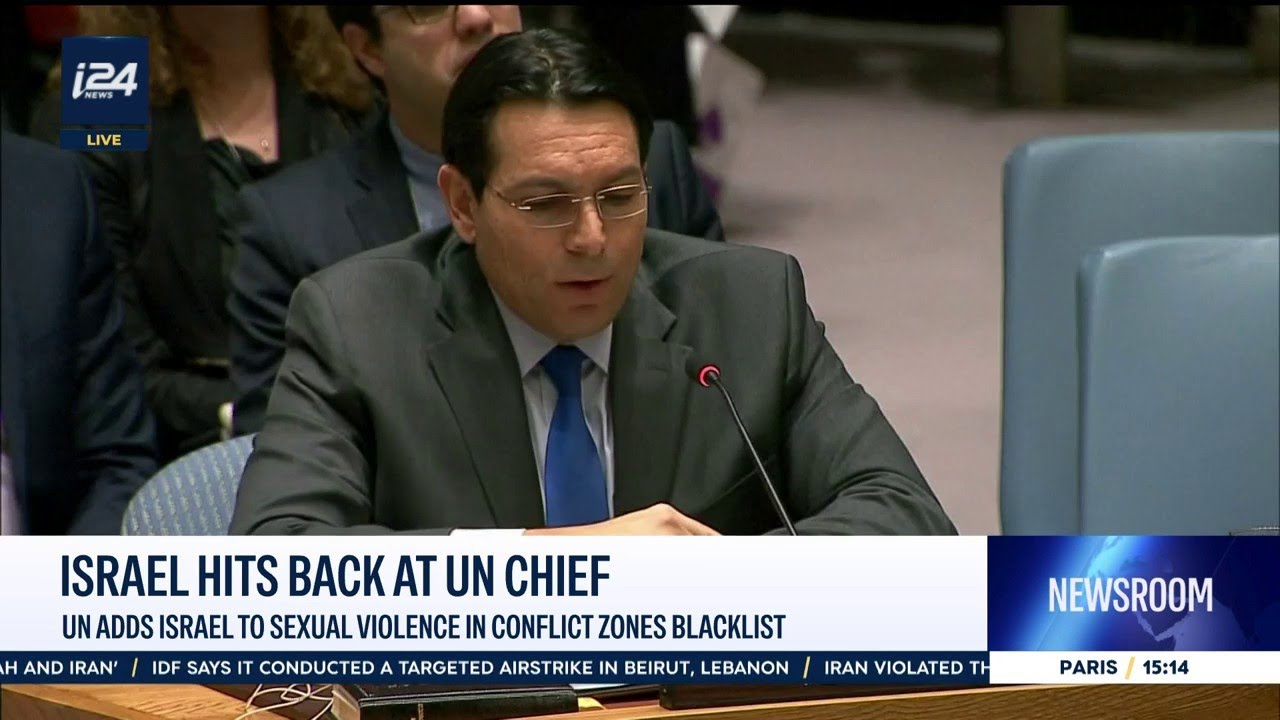
A dramatic new rupture has emerged between Israel and the United Nations after the Israeli government announced on Thursday that it was suspending ties with the office of United Nations Secretary-General António Guterres following the inclusion of Israeli entities on a UN blacklist related to conflict-linked sexual violence.
The decision marks one of the most severe diplomatic confrontations between Jerusalem and the United Nations in recent years and underscores the steadily deteriorating relationship between Israel and the international organization since the outbreak of the Gaza war following the Hamas massacre of October 7, 2023.
According to a report on Thursday in The Algemeiner, Israeli officials reacted with fury after learning that Israeli entities had been added to a list that also includes Hamas and other armed organizations accused of involvement in conflict-related sexual violence.
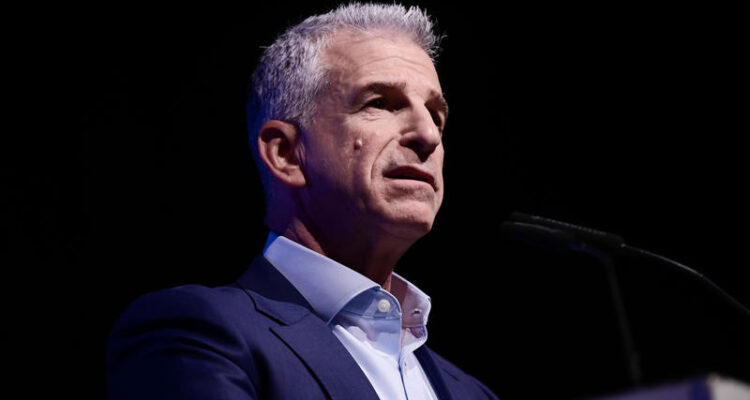
The move prompted an immediate and forceful response from Israeli Ambassador to the United Nations Danny Danon, who announced that Israel would sever engagement with the Secretary-General’s office for as long as Guterres remains at the helm of the global body.
“We are done with the Secretary-General’s lies,” Danon declared in a sharply worded statement posted on X.
“Equating the democratic State of Israel with Hamas terrorists is a new low. Israel protects its citizens while Hamas massacres, rapes, and kidnaps.”
The diplomatic clash represents the latest chapter in a prolonged dispute that has intensified throughout the course of the war and has increasingly placed Israel and the UN on a collision course over issues ranging from military operations in Gaza to allegations of human rights abuses and the conduct of international investigations.
As The Algemeiner reported, Israeli officials have spent months attempting to challenge allegations connected to the UN’s conflict-related sexual violence monitoring mechanisms.
According to Israeli representatives, government agencies and diplomatic officials submitted extensive documentation, data, legal analyses, and formal responses disputing the accusations.
Israel also reportedly invited UN personnel to visit the country and inspect relevant locations independently in an effort to assess what Jerusalem described as unfounded allegations.
Despite those efforts, the United Nations ultimately proceeded with the decision to place Israeli entities on the blacklist, citing what it characterized as “significant concerns” regarding alleged patterns of abuse.
Israeli officials categorically rejected those accusations.
The decision immediately ignited a political firestorm inside Israel and among many of the country’s supporters abroad, who argued that the comparison between Israel and Hamas represented a profound distortion of reality and a troubling example of institutional bias.
Danon was particularly outspoken in his criticism. “This is a moral disgrace that proves Guterres has lost all credibility,” he said. “It is a political decision, disconnected from facts and reality.”
His remarks reflected a broader sentiment among Israeli officials who contend that the UN has repeatedly applied double standards to Israel while failing to hold terrorist organizations to equivalent standards of accountability.
Danon further accused the organization of manipulating facts to fit predetermined political conclusions. “When the facts do not fit the narrative, the UN simply rewrites it,” he stated. “We will continue defending the truth and exposing blood libels in every possible forum.”
The phrase “blood libels” carried particular historical significance, invoking centuries-old false accusations leveled against Jewish communities and reflecting the depth of Israeli anger over the UN’s decision.
According to the information provided in The Algemeiner report, Israeli officials view the blacklist designation not merely as a bureaucratic action but as a symbolic act that places a democratic nation alongside organizations responsible for some of the most brutal atrocities in recent memory.
The controversy is particularly sensitive because the most recent publicly available UN report on conflict-related sexual violence had previously identified Hamas as a party credibly suspected of systematic sexual violence.
Last year’s report included Hamas after investigators concluded that members of the terrorist organization committed acts of rape and other forms of sexual violence during the October 7 attack on southern Israel.
That assault left approximately 1,200 people dead and saw hundreds abducted into Gaza.
Multiple investigations, witness testimonies, forensic analyses, and international reviews have examined allegations of sexual violence committed during the attack.
Against that backdrop, Israeli officials argue that placing Israeli entities on the same blacklist as Hamas represents a profound moral inversion.
“Anyone able to include Israel on the same list as the terrorists and rapists of Hamas has no moral standing to seek cooperation,” Danon declared.
The dispute comes amid a broader deterioration in relations between Jerusalem and the Secretary-General.
Since the beginning of the war, Israeli leaders have repeatedly accused Guterres of displaying bias against Israel and failing to adequately condemn terrorism directed against Israeli civilians.
The relationship reached an especially low point last year following Iran’s ballistic missile attack against Israel.
Israeli officials were deeply critical of what they perceived as an inadequate response from the Secretary-General.
At the time, then-Foreign Minister Israel Katz delivered one of the strongest rebukes ever directed at the UN chief by an Israeli government official.
Katz characterized the organization as “antisemitic and anti-Israeli” and formally declared Guterres persona non grata.
The declaration represented an extraordinary diplomatic step and highlighted the extent to which trust between the two sides had eroded.
The latest controversy appears likely to deepen that divide even further.
The Algemeiner reported that Israel’s decision to suspend ties with the Secretary-General’s office does not necessarily mean a complete cessation of all interaction with UN agencies and institutions. However, it does signal a deliberate effort to isolate Guterres politically and to challenge his authority and credibility on issues involving Israel.
The timing of the dispute is also notable because Guterres is approaching the end of his tenure.
His term as Secretary-General is scheduled to conclude later this year, and discussions regarding potential successors are already underway.
The official selection process is expected to continue over the coming months before a recommendation is ultimately presented.
For many Israeli officials, however, the impending transition offers little immediate consolation.
They argue that decisions made during Guterres’s leadership have already caused significant damage to relations between Israel and the United Nations and have contributed to what they view as a growing credibility crisis within international institutions.
Supporters of the UN’s decision, meanwhile, contend that international bodies have an obligation to investigate allegations wherever they arise and that no state should be exempt from scrutiny.
Critics of Israel have argued that accountability mechanisms must apply universally regardless of political sensitivities.
Yet Israeli officials maintain that the issue is not accountability itself but rather what they describe as a deeply flawed and politically motivated process.
As The Algemeiner noted throughout its coverage, the dispute has become emblematic of a larger struggle over narratives, legitimacy, and international perceptions surrounding the ongoing conflict.
For Israel, the blacklist designation is viewed as an unjust and damaging stain on its reputation.
For the United Nations, the controversy reflects the increasingly contentious nature of monitoring alleged abuses in one of the world’s most scrutinized conflicts.
The practical implications of Israel’s decision remain uncertain.
Diplomatic observers will be closely watching to determine whether the suspension of ties leads to broader disruptions in communication between Israel and various UN institutions or whether it remains focused primarily on the Secretary-General’s office.
What is clear is that the latest confrontation has further widened an already substantial gulf between Jerusalem and the United Nations.
With the Gaza conflict continuing to reverberate across diplomatic, legal, and political arenas worldwide, the battle over international legitimacy and narrative control appears far from over.
For now, Israeli officials are signaling that they intend to continue challenging the UN’s conclusions aggressively and publicly.
As Danon made clear in his remarks, Jerusalem has no intention of retreating from that fight.
“We will continue defending the truth,” he said, “and exposing blood libels in every possible forum.”
Those words encapsulate the mood in Jerusalem as yet another fierce diplomatic confrontation unfolds between Israel and the international institution that was once instrumental in the creation of the Jewish state itself.



