45.5 F
New York

tjvnews.com

Monday, April 27, 2026
CLASSIFIED ADS
LEGAL NOTICE
DONATE
SUBSCRIBE
Home Blog

Iran’s Top Diplomat Briefly Returns to Pakistan but Trump Says the Sides Can Talk by Phone

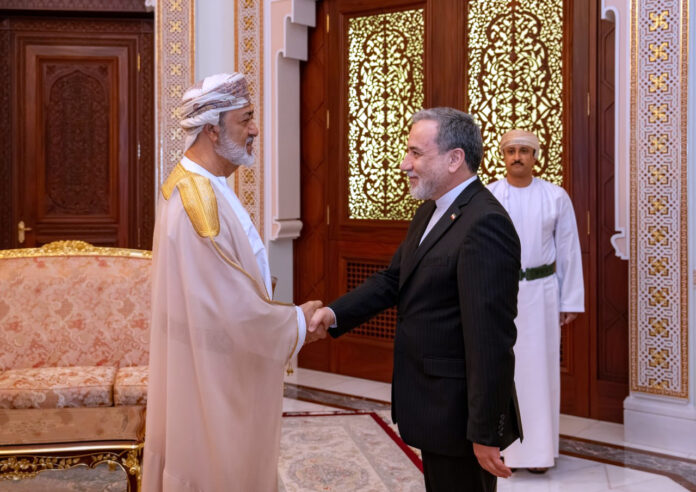
In this photo released by the Iranian Foreign Ministry, Iranian Foreign Minister Abbas Araghchi, right, shakes hands with Oman's Sultan Haitham bin Tariq during their meeting, in Muscat, Oman, Sunday, April 26, 2026. (Iranian Foreign Ministry via AP)

(AP) — Iran ‘s foreign minister briefly visited Islamabad again on Sunday as Pakistan’s political and military leadership scrambled to reignite ceasefire negotiations between Tehran and Washington, but President Donald Trump said they could talk by phone instead.

Abbas Araghchi had left Pakistan’s capital late the previous day, creating confusion around an expected second round of talks there, but he returned before continuing on to Moscow on Sunday, Iranian state media said. He had been in Oman, which previously mediated talks and is on the other side of the strategic Strait of Hormuz.

The White House last week said it would dispatch envoys Steve Witkoff and Jared Kushner to Islamabad to follow up on historic face-to-face talks earlier this month. But shortly after Araghchi’s departure Saturday, Trump said he had called off the mission because of a lack of progress with Iran.

“If they want, we can talk but we’re not sending people,” Trump told Fox News on Sunday. He said earlier on social media: “All they have to do is call!!!”

Indirect talks between the two sides were ongoing, two Pakistani officials said, speaking on condition of anonymity because they were not authorized to speak to the media.

Trump last week indefinitely extended the ceasefire that U.S. and Iran agreed to on April 7 that has largely halted the fighting that began with joint U.S.-Israeli strikes on Feb. 28. But a permanent settlement remains elusive in the war that has killed thousands of people and shaken the global economy.

Strait of Hormuz at center of Iran’s discussions in Oman

A standoff remained on in the Strait of Hormuz, a vital global waterway through which one-fifth of the world’s oil typically travels, as Iran has restricted movement through it and the U.S. enforces a blockade of Iranian ports.

Iran wants to persuade Oman to support a mechanism to collect tolls from vessels passing through the strait, through which a fifth of the world’s oil flows in peacetime, according to a regional official who spoke on condition of anonymity because he was not authorized to discuss the matter.

Oman’s response wasn’t immediately clear.

The official, who is involved in mediation efforts, also said Iran insists on ending the U.S. blockade before a new round of talks and that Pakistan-led mediators are trying to bridge significant gaps between the countries.

Araghchi also spoke by phone with counterparts in Qatar and Saudi Arabia on Sunday.


Even before Saturday’s developments, Iran’s foreign ministry said any talks would be indirect and Pakistani officials would act as go-betweens, reflecting Tehran’s wariness after rounds of indirect talks last year and earlier this year ended with Iran being attacked by the U.S. and Israel.

Trump said Iran has offered a ‘much better’ proposal

The economic fallout is growing two months into the war as global shipments of oil, liquefied natural gas, fertilizer and other supplies are disrupted by the near-closure of the strategic strait.

Both sides have continued to make military threats. Iran’s joint military command on Saturday warned that “if the U.S. continues its aggressive military actions, including naval blockades, banditry, and piracy” it will face a “strong response.”

Trump last week ordered the military to “shoot and kill” small boats that could be placing mines in the waterway.

Trump told journalists on Saturday, before a security incident at the White House Correspondents’ Dinner, that within 10 minutes of him canceling Witkoff and Kushner’s trip to Islamabad, Iran sent a “much better” proposal.

He did not elaborate but stressed that one of his conditions is that Iran “will not have a nuclear weapon.” The status of Iran’s enriched uranium has long been at the center of tensions. Tehran has 440 kilograms (972 pounds) of uranium enriched to 60% purity, a short, technical step from weapons-grade levels, according to the U.N. nuclear watchdog agency.

Syed Mohammad Ali, an independent political analyst in Pakistan, said the delay in the talks must not be seen as a setback and that indirect talks were progressing. He said tensions between Washington and Tehran cannot be eased overnight and the negotiation process requires patience.

“But the good thing is that the ceasefire is holding, and both sides have a desire to end the conflict in a way that does not backfire at home,” Ali said.

A growing toll even as fragile ceasefires hold

Since the war began, at least 3,375 people have been killed in Iran and at least 2,509 people in Lebanon, where the Israel-Hezbollah fighting resumed two days after the Iran war started.

Also, 23 people have been killed in Israel and more than a dozen in Gulf Arab states. Fifteen Israeli soldiers in Lebanon, 13 U.S. service members in the region and six U.N. peacekeepers in southern Lebanon have been killed.

Another ceasefire — between Israel and the Iranian-backed Lebanese militant Hezbollah group — has been extended by three weeks. Hezbollah has not participated in the Washington-brokered diplomacy.

Oil prices rise again as Pakistan talks fail to materialize

Oil prices rose when the market opened Sunday as traders absorbed the news of the stalled ceasefire talks.

West Texas Intermediate, the U.S.-produced light, sweet crude, was selling for $96.50 a barrel Sunday, up 2% since the market closed on Friday. The price was 44% higher than before the start of the Iran war, when oil was selling for about $67 a barrel.

Brent crude, the international standard, was trading at $107.75 per barrel Sunday, up about 3% since Friday and 48% since the war began, when oil was selling for $72 a barrel.

Oil prices have risen steadily since the war began and tankers full of crude became stranded in Persian Gulf, unable to safely transit through the Strait of Hormuz.
Netanyahu Orders Unprecedented Cancellation of Lag B’Omer Festivities at Meron Amid Mounting Security Fears

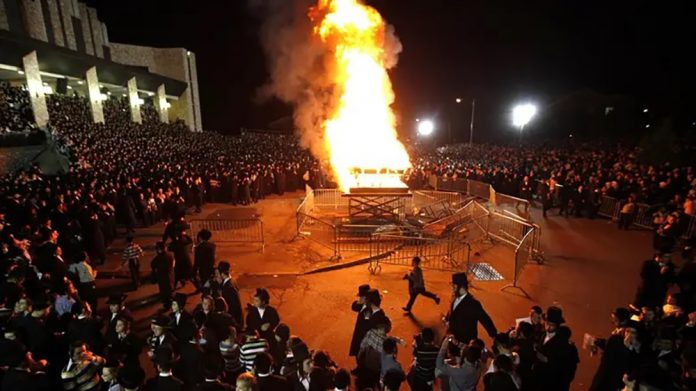
Lag B’Omer in Meron. Photo Credit: IsraelNationalNews.com
Netanyahu Orders Unprecedented Cancellation of Lag B’Omer Festivities at Meron Amid Mounting Security Fears

By: Arthur Popowitz

In a decision that reverberates across both the religious and national landscape of Israel, Prime Minister Benjamin Netanyahu has ordered the cancellation of this year’s large-scale Lag BaOmer pilgrimage at Mount Meron, reducing what is traditionally one of the most significant annual religious gatherings in the country to a strictly symbolic observance. As reported on Sunday by VIN News, the directive reflects a convergence of acute security concerns, regional instability, and the enduring challenge of safeguarding large civilian populations in a time of heightened geopolitical tension.

The decision marks a rare and consequential interruption to a centuries-old tradition that has long served as a focal point of communal identity and spiritual expression. For generations, the annual Hillula at the tomb of Rabbi Shimon Bar Yochai has drawn hundreds of thousands of participants from across Israel and the global Jewish diaspora. Its suspension, even in partial form, underscores the severity of the security calculus currently confronting Israeli leadership.

The Lag BaOmer gathering at Mount Meron occupies a unique and revered place within Jewish religious life. The event commemorates the life and legacy of Rabbi Shimon Bar Yochai, a towering figure of early rabbinic tradition whose teachings have profoundly influenced Jewish thought. Each year, pilgrims converge upon the site to engage in prayer, reflection, and celebration, transforming the mountainous region into a vibrant tapestry of devotion and communal unity.

The VIN News report highlighted the magnitude of this event, noting that attendance frequently reaches into the hundreds of thousands. The gathering is characterized by its dynamic atmosphere, featuring religious ceremonies, music, and communal participation that extends throughout the night and into the following day. For many, the pilgrimage represents not merely a ritual obligation but a deeply personal and transformative experience.

The decision to curtail such an event, therefore, carries implications that extend well beyond logistical considerations. It touches upon questions of religious continuity, communal resilience, and the delicate balance between tradition and security.

At the heart of the government’s decision lies a sober assessment of the risks associated with hosting a mass gathering in a region marked by ongoing tension. Mount Meron is situated in northern Israel, in close proximity to the border with Lebanon, an area that has experienced repeated episodes of instability and conflict.

According to the VIN News report, officials have cited the fragility of the current ceasefire with Lebanon as a primary factor in their deliberations. While the ceasefire remains formally in effect, it is widely understood to be tenuous, with the potential for escalation ever present. The presence of Hezbollah strongholds in the vicinity further amplifies the perceived threat, particularly in the context of rocket attacks that could target large concentrations of civilians.

The logistical challenges associated with such a scenario are formidable. The mountainous terrain surrounding Mount Meron, while picturesque, presents significant obstacles to rapid evacuation. In the event of an attack, ensuring the safe and orderly movement of hundreds of thousands of individuals would pose an immense challenge, raising the specter of mass casualties.

Officials have therefore concluded that the risks inherent in proceeding with the traditional format of the pilgrimage are simply too great to justify. As VIN News reported, the prime minister’s office explicitly referenced the fear of a large-scale casualty event as a central consideration in the decision-making process.

In accordance with the prime minister’s directive, government ministries responsible for organizing the event have been instructed to halt all preparations for a mass gathering. This includes the suspension of logistical planning, infrastructure deployment, and coordination efforts that typically begin months in advance of the pilgrimage.

Law enforcement agencies have also been mobilized to enforce the restrictions. Police have received clear instructions to prevent unauthorized access to the site, ensuring that the area remains secure and that the scaled-down observance proceeds without incident. These measures reflect a broader strategy aimed at minimizing risk while preserving a limited form of commemoration.

VIN News has reported that the Hillula will still take place in a symbolic capacity, though details regarding the format of this reduced observance remain limited. It is expected that a small number of authorized participants may be permitted to attend, allowing for the continuation of essential religious rites without the presence of large crowds.

The cancellation of the large-scale gathering at Mount Meron cannot be understood in isolation from the broader historical context. In 2021, the site was the scene of a tragic crowd crush that resulted in the deaths of 45 individuals, marking one of the deadliest civilian disasters in Israel’s history. That event prompted a comprehensive reassessment of safety protocols and crowd management practices at the site.

In the years since, authorities have implemented a range of measures aimed at preventing a recurrence of such a tragedy. These efforts have included stricter capacity limits, enhanced infrastructure, and improved coordination among emergency services. However, the current security environment presents challenges that extend beyond the scope of these reforms.

The combination of external threats and the inherent complexities of managing large crowds has created a situation in which even the most robust safety measures may be insufficient. The decision to scale back the event, therefore, reflects not only immediate concerns but also the lessons learned from past experiences.

The move to cancel the mass gathering at Mount Meron aligns with a broader pattern of heightened vigilance across Israel’s northern region. Despite the existence of a ceasefire, tensions with Lebanon and Hezbollah remain a central focus of national security planning.

VIN News has emphasized that the current situation is characterized by a delicate balance between deterrence and restraint. While efforts are ongoing to maintain stability, the potential for sudden escalation cannot be discounted. In this context, the presence of a large civilian gathering near the border would represent a significant vulnerability.

The decision also reflects the government’s prioritization of public safety over symbolic considerations. While the cultural and religious significance of the pilgrimage is undeniable, the imperative to protect human life has ultimately taken precedence.

As of this writing, there has been limited public response from religious leaders and community organizers regarding the scaled-back plans. However, it is likely that the decision will generate a range of reactions, reflecting the diverse perspectives within Israeli society.

For some, the cancellation may be viewed as a necessary and prudent measure in light of the prevailing security environment. For others, it may represent a painful disruption to a cherished tradition, raising questions about the long-term impact on communal practices.

The VIN News report noted that similar decisions in the past have often sparked debate over the balance between security and religious freedom. This tension is likely to persist as authorities continue to navigate the complex interplay of these considerations.

The suspension of the large-scale Lag BaOmer pilgrimage at Mount Meron serves as a poignant reminder of the challenges facing Israel at this moment in its history. It highlights the fragility of normalcy in a region marked by persistent uncertainty and underscores the resilience required to adapt to changing circumstances.

At the same time, the decision reflects a broader commitment to safeguarding the well-being of citizens, even when doing so necessitates difficult and unprecedented choices. The symbolic observance that will take place in lieu of the traditional gathering may lack the scale and vibrancy of past years, but it will nonetheless serve as a testament to the enduring spirit of the community.

In the final analysis, the cancellation of the mass gathering at Mount Meron represents a convergence of tradition, security, and responsibility. It is a decision shaped by both immediate threats and long-standing lessons, informed by a recognition of the risks inherent in the current environment.

As VIN News has documented, the move underscores the gravity of the challenges facing the nation and the difficult choices required to navigate them. While the absence of the usual crowds will undoubtedly be felt, the preservation of life remains the paramount concern.

In this sense, the scaled-back observance at Mount Meron stands not as a diminishment of tradition, but as an affirmation of its deeper values—resilience, unity, and the enduring commitment to safeguard the future even in the face of uncertainty.

Targeting Trump: The politics of hatred and the Iran war

President Donald Trump has signaled his determination to proceed with high-stakes negotiations with Iran, even as conflicting messages from Tehran cast uncertainty over the diplomatic horizon. Credit: CBS News
Ny Fiamma Nirenstein

Many American presidents have been the target of fierce hatred, fueled by anti-Americanism, envy and ideology. The Vietnam War and the Iraq War brought endless insults upon Presidents Bush and Lyndon Johnson—both were labeled Nazis, baby killers, imperialists.

But with Trump it is different: it is mockery, rejection, fear. The drive to remove him from the international stage is not confined to left-wing demonstrations, even if it is not irrelevant that the attacker is said to have admired former Vice President Kamala Harris.

The hope to see him disappear is psychological; the irritation and rejection are far more intense than usual and are shared by large numbers of politicians. Dislike of him creates alliances that would otherwise not exist in Europe.

The declaration that one cannot stand Trump has become almost a prerequisite for social acceptance. Of course, it is legitimate to reject his policies, but often what disturbs people is that he is American, that he is wealthy, that he has a beautiful wife and the mannerisms of a spoiled cowboy.

His disruption of the world order is unwelcome because it challenges a balance that is more imagined than real—the idea that peace will come from a presumed reconciliation between the Christian and Islamic worlds. Trump has touched this point.

The war is long, he takes his time, and this is immediately seen as weakness. He reacts to Iranian aggression in the Gulf and is blamed for energy disruptions; he challenges Iran’s possession of enriched uranium and makes it a central objective, yet he is told—despite evidence, including from the IAEA—that it does not exist.

Trump has envisioned a world in which Iran is finally defeated. Imagine such a world—one without the execution of women, homosexuals and dissidents; without powerful weapons aimed first at destroying Israel and then the rest of the “Satans” that refuse to convert to Islam; without mass attacks on Americans and Jews worldwide; without terrorist armies like Hamas and Hezbollah poisoning the international system.

The road is long, but who has said it is “illegal”? Bill Clinton bombed Kosovo for 78 days, Barack Obama bombed Libya, Joe Biden struck the Houthis and Iraqi militias. None of them consulted Congress, nor the United Nations, nor NATO.

This does not mean one must like Trump, and his war clearly seeks concrete advantages for his country, as well as limiting Russian and Chinese power—both key backers in the Middle East conflict. But his actions offer no justification for becoming a target of international scorn, ridicule or incitement to violence.

Yet even before his election, Emmanuel Macron warned against his arrival, Olaf Scholz said that “the United States does not guarantee security,” Josep Borrell insisted Trump is “unpredictable,” and Kaja Kallas even declared that “the free world needs new leaders.”

From this emerges a vulgarity in which only harsh insults are acceptable—“fascist,” or condescending dismissal, “poor fool.”

Thus, Robert De Niro shouts, “F*** Trump;” Madonna says, “I have thought a lot about blowing up the White House,” and Johnny Depp asks, “When was the last time an actor assassinated a president?” Italy, for its part, has become a champion of grotesque portrayals of Trump that spill over into street-level hostility.

No one seems to know anymore who he really is: a president who, whatever criticisms may be made of any political leader, has attempted the bold and revolutionary path of confronting the Iranian regime—the most odious of dictatorships and the most dangerous to the world to which we belong.

Report: Iran Puts Forward New Hormuz-Centered Proposal to the United States

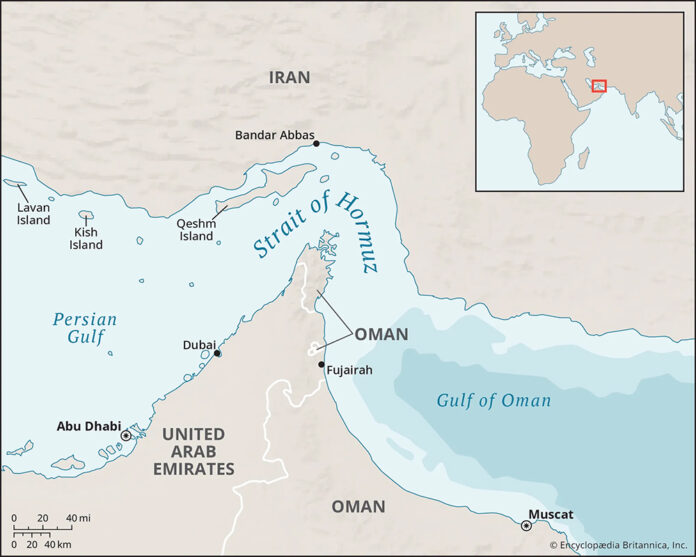
Central to the current crisis is the Strait of Hormuz, a narrow yet strategically indispensable waterway through which roughly one-fifth of the world’s oil supply typically passes. The threat of its closure—or even partial disruption—has far-reaching implications for global energy markets. Credit: Britannica.com

Report: Iran Puts Forward New Hormuz-Centered Proposal to the United States

By: Fern Sidman

In a dramatic and consequential development within one of the most volatile geopolitical confrontations of recent years, Iran has transmitted a revised diplomatic proposal to the United States through intermediaries in Pakistan, signaling a calculated attempt to recalibrate negotiations that have thus far remained mired in stalemate. According to a detailed report on Sunday by Axios, the proposal reflects a deliberate effort by Tehran to reorder the hierarchy of issues under discussion—placing immediate emphasis on maritime security and de-escalation while deferring the far more contentious question of its nuclear program to a later phase.

This strategic maneuver, emerging at a moment of acute regional tension, has intensified deliberations within Washington and raised profound questions about leverage, sequencing, and the broader architecture of any potential agreement between the two adversaries.

At the core of Iran’s revised framework lies a significant departure from the traditional structure of negotiations. Rather than confronting nuclear issues at the outset, Tehran is proposing that discussions first focus on the reopening of the Strait of Hormuz and the cessation of hostilities currently defining the conflict. Only after these objectives are achieved would negotiations pivot toward the nuclear file.

Axios reported that this approach has been communicated through Pakistani intermediaries, who have assumed a central role in facilitating dialogue between the parties. The involvement of Pakistan, alongside other regional actors including Egypt, Turkey, and Qatar, underscores the complexity and multilateral nature of the diplomatic effort.

The proposal is widely interpreted as an attempt to break the current impasse while simultaneously addressing internal divisions within Iran’s leadership. According to sources cited by Axios, there is no unified consensus within Tehran regarding the extent of nuclear concessions that should be offered in exchange for sanctions relief or a broader agreement with the administration of Donald Trump.

The fragmentation within Iran’s leadership appears to be a critical factor shaping its negotiating posture. The Axios report noted that Iranian Foreign Minister Abbas Araghchi conveyed to mediators that competing factions within the government remain deeply divided over the question of uranium enrichment and the potential removal of enriched material from the country.

These divisions have created a scenario in which Tehran is seeking a diplomatic pathway that avoids immediate confrontation over its nuclear program while still securing tangible benefits—most notably the lifting of the United States naval blockade and the reopening of vital shipping lanes.

By prioritizing the Strait of Hormuz, Iran aims to achieve a dual objective: alleviating economic pressure and creating a more favorable environment for subsequent negotiations. However, this sequencing has generated significant concern within Washington.

United States officials, as reported by Axios, have expressed apprehension that addressing the Hormuz issue first could undermine Washington’s negotiating position. The blockade of the Strait of Hormuz represents one of the most powerful tools at the disposal of the United States, exerting considerable economic and strategic pressure on Iran.

Lifting this blockade without securing commitments on the nuclear front would, according to American officials, risk forfeiting critical leverage. Without such leverage, compelling Tehran to dismantle its enriched uranium stockpile or agree to a long-term cessation of enrichment activities would become significantly more challenging.

This concern lies at the heart of the current deliberations within the White House, where policymakers are grappling with the implications of Iran’s proposal and the broader trajectory of the conflict.

The Strait of Hormuz, a narrow maritime corridor through which a substantial portion of the world’s oil supply passes, has long been a focal point of geopolitical tension. Control over this strategic waterway confers significant influence over global energy markets, making it a critical element in the ongoing confrontation between Iran and the United States.

The Axios report highlighted that discussions in Muscat, Oman, following the Pakistan talks, have centered heavily on this issue. Araghchi’s engagement with regional mediators reflects the urgency of addressing the maritime dimension of the conflict, which carries implications not only for the immediate parties but for the global economy as a whole.

Iran’s insistence on prioritizing the reopening of the strait underscores its recognition of the economic and symbolic importance of this objective. At the same time, it presents a complex dilemma for Washington, which must weigh the benefits of de-escalation against the potential loss of strategic advantage.

The past several days have witnessed an intense flurry of diplomatic engagements, as Iranian officials have sought to build momentum behind their revised proposal. Following discussions in Pakistan, Araghchi traveled to Oman before returning to Islamabad for additional consultations. He is also expected to proceed to Moscow for meetings with Vladimir Putin, further underscoring the international dimension of the negotiations.

Axios reported that these movements reflect a concerted effort by Tehran to align regional and global actors around its proposed framework. By engaging multiple intermediaries, Iran appears to be attempting to create a coalition of support that could influence Washington’s response.

However, the effectiveness of this strategy remains uncertain, particularly given the skepticism expressed by United States officials.

The administration of President Trump has responded to the proposal with a mixture of caution and assertiveness. A spokesperson for the White House, Olivia Wales, emphasized that the United States would not conduct negotiations through public channels and reiterated the administration’s commitment to securing an agreement that prevents Iran from obtaining a nuclear weapon.

Axios reported that Trump himself has taken a firm stance, canceling planned talks in Islamabad and citing internal disarray within Iran’s leadership as a key factor. In a public statement, he asserted that the United States retains a dominant position in the negotiations, declaring that Washington “holds the cards.”

This posture reflects a broader strategy that combines diplomatic engagement with sustained pressure, including the continuation of the naval blockade and the implicit threat of military action.

In light of the evolving situation, President Trump is expected to convene a high-level meeting in the White House Situation Room. According to Axios, this gathering will bring together senior national security and foreign policy officials to assess the status of negotiations and consider potential next steps.

The meeting is anticipated to focus on several key questions: whether to engage with Iran’s revised proposal, how to maintain or enhance leverage, and what alternative strategies may be available should negotiations fail to progress.

The outcome of these deliberations could have far-reaching implications, not only for the immediate conflict but for the broader trajectory of United States policy toward Iran.

The phased approach proposed by Iran represents both an opportunity and a risk. On one hand, it offers a potential pathway to de-escalation, allowing both sides to achieve immediate objectives while deferring more contentious issues. On the other hand, it raises the possibility that critical questions—particularly those related to nuclear capabilities—could be postponed indefinitely.

The Axios report noted that this tension lies at the heart of the current impasse. While Iran seeks to create space for negotiation by addressing less contentious issues first, the United States remains focused on the central objective of preventing nuclear proliferation.

Reconciling these priorities will require a delicate balancing act, one that tests the diplomatic skill and strategic judgment of all parties involved.

The stakes of the current negotiations extend far beyond the immediate concerns of the United States and Iran. The Strait of Hormuz is a vital artery for global energy supplies, and any disruption to its operation carries significant economic consequences.

Moreover, the outcome of these talks will influence the broader geopolitical landscape, shaping relationships among regional powers and affecting the balance of influence among major global actors.

The Axios report underscored that the involvement of multiple intermediaries reflects the recognition that this is not merely a bilateral issue but a matter of international concern.

As the revised proposal circulates through diplomatic channels and deliberations intensify in Washington, the conflict between the United States and Iran stands at a critical juncture. The choices made in the coming days and weeks will determine whether the current deadlock can be broken or whether tensions will continue to escalate.

The reporting of Axios provides a detailed and nuanced account of the complexities involved, highlighting the interplay of internal divisions, strategic calculations, and international dynamics that define this moment.

In the final analysis, the question is not merely whether an agreement can be reached, but what form that agreement will take and whether it will address the fundamental issues at the heart of the conflict. The answer to that question will shape the future of the region—and perhaps the world—for years to come.

Stephen Miller’s Scathing Rebuke of the ADL Sparks Fierce Debate Over Jewish Representation and Ideological Drift

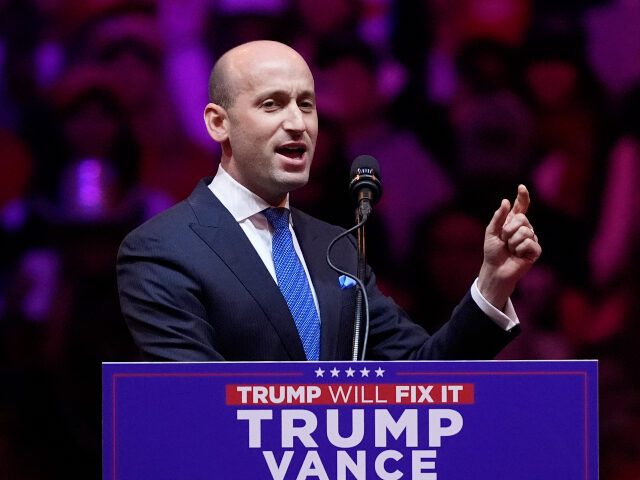
Stephen Miller speaks before Republican presidential nominee former President Donald Trump at a campaign rally at Madison Square Garden, Sunday, Oct. 27, 2024, in New York. (AP Photo/Evan Vucci)

Stephen Miller’s Scathing Rebuke of the ADL Sparks Fierce Debate Over Jewish Representation and Ideological Drift

By: Fern Sidman

A forceful and highly controversial statement issued by Stephen Miller, White House Deputy Chief of Staff for Policy, has ignited a sweeping and deeply consequential debate over the ideological direction, institutional integrity, and representational legitimacy of the Anti-Defamation League. Speaking explicitly from within his own Jewish identity, Miller delivered an unambiguous denunciation of the organization, asserting that it no longer reflects the interests, values, or priorities of the Jewish community.

His remarks, published on X.com, were neither cautious nor restrained. Instead, they constituted a direct and sweeping indictment of what he described as a profound transformation of the Anti-Defamation League from a focused civil rights institution into what he characterized as an ultra-left activist entity pursuing a broad and deeply politicized agenda.

Miller began his critique with a declaration that framed the entire argument: “Speaking as a Jew.” This formulation was not incidental. It was intended to establish both authority and perspective, signaling that his criticism was not external or adversarial in the conventional sense, but rather internal, rooted in identity and conviction.

He then delivered the central claim that has since reverberated across political and communal discourse: that the Anti-Defamation League is not, in fact, a Jewish organization in any meaningful or representative sense. This assertion challenges a long-standing perception of the organization as a primary voice of Jewish advocacy and protection.

By rejecting that premise outright, Miller opened a broader conversation about who speaks for the Jewish community, and whether institutional authority can be assumed in the absence of genuine alignment with widely held beliefs and values.

At the heart of Miller’s critique lies a detailed and sharply defined set of allegations regarding the organization’s ideological posture. He contends that the Anti-Defamation League has embraced a series of positions that extend far beyond its historical mission of combating antisemitism.

Among the most striking elements of his argument is the claim that the organization actively promotes what he described as radical transgender ideology, a characterization that reflects his broader concern about the organization’s involvement in contentious cultural debates. In Miller’s view, this represents a significant departure from the organization’s foundational purpose and a misallocation of its institutional focus.

He further accused the organization of advocating for policies that, in his words, amount to the erosion of national borders, a position he associates with broader debates over immigration and sovereignty. This critique aligns with his longstanding emphasis on border security as a central component of national policy.

In addition, Miller asserted that the organization supports efforts to dismantle traditional policing structures, a claim that situates the Anti-Defamation League within ongoing national conversations about law enforcement and public safety. According to his analysis, such positions are not only politically charged but also fundamentally at odds with the interests of communities seeking security and stability.

Perhaps most consequentially, he argued that the organization has contributed to what he described as the erosion of free speech, alleging that it has engaged in efforts to suppress dissenting viewpoints rather than fostering open dialogue.

Beyond ideological concerns, Miller directed significant attention to the methods he believes the organization employs in advancing its agenda. He accused the Anti-Defamation League of relying on tactics that include slander, bullying, and character assassination.

Such allegations, if accurate, would represent a profound departure from the principles of fairness and integrity that are typically associated with civil rights advocacy. Miller’s critique suggests that these tactics not only undermine trust but also contribute to a broader climate of intimidation that discourages open debate.

Central to this aspect of his argument is the claim that the organization responds to criticism by labeling its detractors as antisemitic, regardless of the substance of their arguments. Miller contends that this practice not only misrepresents legitimate criticism but also diminishes the seriousness of genuine antisemitism.

One of the most significant and far reaching elements of Miller’s critique is his warning about the dangers of conflating criticism of an organization with hostility toward an entire people. He argues that equating opposition to the Anti-Defamation League with antisemitism is not only inaccurate but also harmful.

According to Miller, such conflation trivializes the historical and contemporary reality of antisemitism by expanding the term to encompass political disagreement. This, he suggests, weakens the ability to identify and combat genuine threats, thereby undermining the very purpose the organization claims to serve.

In a striking reversal of conventional narratives, he further argued that this conflation itself reflects a form of prejudice, insofar as it reduces the diversity of Jewish thought to a single institutional perspective.

Miller’s critique resonates within a broader context of growing skepticism toward established institutions. Across multiple sectors, there is an increasing demand for transparency, accountability, and authenticity.

In the case of the Anti-Defamation League, the concerns raised by Miller and others center on whether the organization has maintained fidelity to its core mission. Critics argue that by engaging in a wide array of political issues, the organization has diluted its focus and compromised its credibility.

Supporters of this view contend that effective advocacy requires clarity of purpose, particularly at a time when antisemitic incidents are on the rise. They argue that expanding the organization’s agenda to include unrelated or tangential issues risks diverting attention and resources from the urgent task of combating hatred directed at Jewish communities.

The implications of this debate extend far beyond the immediate controversy. They touch on fundamental questions about the nature of representation, the boundaries of advocacy, and the responsibilities of institutions that claim to speak on behalf of a community.

For Miller, the conclusion is unequivocal. He described the organization in stark terms, asserting that it has undermined Jewish interests and no longer deserves the authority or credibility it once possessed. His call for strong condemnation reflects a belief that meaningful reform or accountability is unlikely without sustained and vocal criticism.

Whether this perspective will gain broader traction remains to be seen. What is certain, however, is that the conversation he has initiated is unlikely to fade quickly. It has exposed deep divisions and raised difficult questions that will require careful and thoughtful engagement.

In the final analysis, Miller’s remarks represent more than a critique of a single organization. They constitute a challenge to the assumptions that underpin contemporary discourse about identity, advocacy, and authority.

By articulating a vision of Jewish representation that diverges sharply from that of the Anti-Defamation League, he has compelled a reassessment of what it means to speak for a community and how that authority is earned and maintained.

As this debate continues to unfold, it will serve as a critical test of the capacity for open dialogue and principled disagreement. In an era marked by polarization and complexity, the ability to engage with such challenges constructively will be essential to the health and vitality of public life.

Netanyahu Warns Hezbollah Violations Are Breaking Down Ceasefire Agreement


By: Fern Sidman

In a wide-ranging and forceful address delivered at the opening of Sunday’s cabinet meeting, Israeli Prime Minister Benjamin Netanyahu articulated a resolute stance on a series of urgent national and international developments, weaving together concerns over political violence, domestic unrest, and mounting security challenges along Israel’s northern frontier. As reported on Sunday by Israel National News, the prime minister’s remarks underscored the gravity of the current moment, reflecting a leadership posture defined by vigilance, determination, and an insistence on maintaining both internal cohesion and external deterrence.

Netanyahu began his address by referencing a deeply unsettling development abroad: the attempted assassination of President Trump. The prime minister described the incident as profoundly shocking, noting that he and his wife were “deeply disturbed” upon learning of what he characterized as a repeated attempt on the lives of Trump and his spouse. He expressed relief that the US president, along with his wife and senior members of his administration, emerged from the incident unharmed.

Yet Netanyahu’s comments quickly moved beyond expressions of concern to a broader reflection on the dangers of political violence. He emphasized that such acts, regardless of where they occur, represent a fundamental threat to democratic societies. “There is no place for violence,” he declared, extending the principle not only to attacks on political leaders but to violence in all its forms. In a pointed transition, he stressed that this imperative applies “first and foremost” within Israel itself, signaling a deep concern about the tone and trajectory of discourse within the country.

This concern was brought into sharp focus as Netanyahu turned to a tragic and deeply disturbing incident in the central Israeli city of Petah Tikva. In somber terms, he condemned the killing of a young boy, Benjamin Zelka, describing the act as both “despicable” and profoundly horrifying. The murder, which occurred in a pizzeria, has reverberated across the nation, prompting widespread grief and outrage.

Netanyahu’s response to the incident was unequivocal. He not only denounced the act itself but also the subsequent surge of inflammatory rhetoric that followed. “We cannot accept this,” he said, referring to what he described as a wave of incitement that risked further destabilizing an already fragile social environment. His remarks conveyed a sense of urgency, warning that such patterns of behavior must be confronted and eradicated before they take deeper root.

To that end, the prime minister announced a series of immediate steps aimed at addressing both the symptoms and underlying causes of such violence. Following the cabinet meeting, he indicated that he would convene discussions with the education minister and the national security minister to explore a combination of enforcement measures and educational initiatives. The objective, he explained, is to instill a clear understanding—particularly among younger generations—that acts of violence are not only morally reprehensible but unequivocally criminal.

This dual emphasis on enforcement and education reflects a broader strategy aimed at shaping societal norms while ensuring accountability. Netanyahu’s remarks suggested that the government views the issue not merely as a matter of law enforcement but as a deeper cultural challenge requiring sustained engagement across multiple domains, including schools and families.

While domestic concerns occupied a significant portion of his address, Netanyahu also devoted considerable attention to the evolving security situation along Israel’s northern border. In particular, he addressed criticisms suggesting that Israel had failed to respond adequately to violations of the ceasefire in Lebanon. Rejecting such claims, he asserted that the Israel Defense Forces are actively and forcefully engaged in maintaining security in the region.

Central to his argument was the assertion that ongoing actions by the Hezbollah terrorist organization are effectively undermining the ceasefire framework. According to Netanyahu, these violations necessitate a robust and sustained response, guided by the overriding imperative of protecting Israeli citizens and military personnel. “What obligates us,” he stated, “is Israel’s security, the security of our soldiers, and the security of our communities.”

The prime minister emphasized that Israel retains full operational freedom under the terms of its agreements with both the United States and Lebanon. This, he explained, extends beyond reactive measures to include proactive efforts aimed at neutralizing emerging threats before they materialize. Such a posture, he argued, is essential in an environment characterized by persistent volatility and the presence of hostile actors.

Providing a concrete illustration of this approach, Netanyahu revealed that over the past 2 weeks, the Israel Defense Forces Northern Command has eliminated 46 terrorists. While he did not provide specific details regarding the operations, the figure underscores the intensity of military activity in the region and the government’s commitment to maintaining a strong deterrent posture.

“We will act with a strong hand and an outstretched arm,” Netanyahu declared, invoking language that conveys both resolve and readiness. He made clear that Israel will not tolerate what he described as “lawlessness” along its borders and will take whatever measures are necessary to restore and sustain security in the north.

The prime minister’s remarks also touched upon the broader political landscape within Israel, where tensions remain high amid shifting alliances and ongoing debates over governance. Statements from key political figures, reported by Israel National News, highlight the extent to which internal divisions continue to shape the national discourse.

Itamar Ben Gvir, leader of the Otzma Yehudit party, offered a sharply critical assessment of rival political factions, accusing them of compromising national interests. His comments reflect a broader pattern of rhetoric that underscores the polarized nature of Israeli politics, particularly in the wake of recent events.

Similarly, Avigdor Lieberman, leader of the Yisrael Beiteinu party, addressed developments within the opposition, framing them in the context of a broader effort to reshape the political landscape. His remarks suggest that the current moment is being viewed by many as a potential inflection point, with implications for the balance of power in the months ahead.

Members of the Likud party, Netanyahu’s political base, also weighed in, offering their own interpretations of the evolving dynamics. Their statements, characterized by pointed criticism of rival leaders and alliances, further illustrate the intensity of the political environment and the challenges facing efforts to achieve consensus.

Against this backdrop, Netanyahu’s emphasis on unity and the rejection of violence takes on added significance. His call to address incitement and reinforce societal norms can be seen as an attempt to counteract the centrifugal forces that threaten to pull the nation further apart. At the same time, his firm stance on security underscores the government’s determination to confront external threats with unwavering resolve.

The convergence of these themes—domestic stability and national security—reflects the complex interplay of factors shaping Israel’s current trajectory. As reported by Israel National News, the prime minister’s address sought to address both dimensions, presenting a comprehensive framework for navigating a period of heightened uncertainty.

In the final analysis, Netanyahu’s remarks serve as both a reflection of the challenges facing Israel and a declaration of the government’s intent to meet them head-on. Whether through efforts to curb internal violence, initiatives to strengthen social cohesion, or military operations aimed at securing the nation’s borders, the message conveyed was one of determination and vigilance.

As the country moves forward, the effectiveness of these efforts will depend not only on the actions of its leaders but also on the collective response of its citizens. In a time marked by both danger and opportunity, the imperative to uphold the principles of security, justice, and unity remains as urgent as ever.

Herzog Temporarily Nixes Netanyahu’s Pardon Request; Urges Renewed Talks Toward Plea Agreement

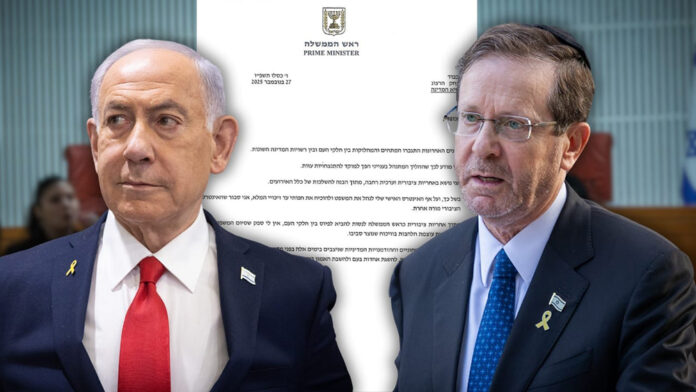
Israel Prime Minister Benjamin Netanyahu and Israeli President Isaac Herzog over a backdrop of Netanyahu’s presidential pardon request. (photo credit: MIRIAM ALSTER/FLASH90, YONATAN SINDEL/FLASH90)

Herzog Temporarily Nixes Netanyahu’s Pardon Request; Urges Renewed Talks Toward Plea Agreement

By: Jeff Gorman

In a moment laden with constitutional gravity and political consequence, Israeli President Isaac Herzog has declined—at least for now—to grant a pardon to Israeli Prime Minister Benjamin Netanyahu, instead opting to pursue an ambitious and delicate effort to broker a negotiated resolution between the embattled premier and the state’s legal authorities. The decision, reported on Sunday by The Times of Israel, represents a pivotal juncture in one of the most consequential legal and political sagas in the nation’s modern history, with ramifications that extend far beyond the courtroom and into the very fabric of Israeli society.

At the heart of the matter lies Netanyahu’s ongoing trial, which began in 2020 and centers on allegations of bribery, fraud, and breach of trust. The proceedings have not only placed an incumbent prime minister in the unprecedented position of standing trial while in office but have also exacerbated longstanding fissures within Israel’s political landscape. The charges themselves—relating to claims that Netanyahu exchanged regulatory favors for gifts and favorable media coverage—have been vigorously contested by the prime minister, who has consistently maintained his innocence and characterized the prosecution as a politically motivated campaign designed to unseat him.

Herzog’s latest intervention, however, signals a determination to steer the crisis away from a zero-sum judicial outcome and toward a negotiated settlement that might mitigate the broader societal tensions the trial has inflamed. In a formal statement issued on Sunday, the president’s office confirmed that he would not be granting a pardon at this stage, emphasizing instead the necessity of exhausting all avenues for dialogue and compromise before considering such an extraordinary step.

“As he has said repeatedly,” the statement noted, “the president believes that reaching an agreement between the parties in the prime minister’s cases is both proper and constructive.” The language reflects a carefully calibrated approach, one that seeks to balance respect for the rule of law with a recognition of the broader national interest in stability and cohesion.

This emphasis on mediation aligns with Herzog’s longstanding view of the presidency as an institution uniquely positioned to bridge divides and foster consensus. According to the information provided in The Times of Israel report, Herzog has grown increasingly concerned that the prolonged legal battle surrounding Netanyahu is deepening political polarization at a time when the country faces a confluence of external and internal challenges. These include ongoing security tensions, the lingering effects of recent military engagements, and the approach of national elections scheduled to take place in approximately six months.

The president’s decision to prioritize negotiations over immediate clemency also reflects the complex legal considerations surrounding the use of the pardon power. In Israel, the authority to grant a pardon is enshrined in the Basic Law governing the presidency, but its application in cases involving ongoing legal proceedings—particularly those in which no conviction has yet been secured—remains a subject of considerable debate.

This issue was addressed directly in a position paper released last month by the Pardons Department of the Justice Ministry. The document, cited by The Times of Israel, concluded that granting a pardon under the current circumstances would be highly problematic. Among the concerns highlighted were the absence of a conviction, the lack of any admission of guilt by Netanyahu, and the broader implications for the integrity of the judicial process.

“Based on the factual and legal foundation currently before us,” the department stated, “it cannot be determined that the pardon authority applies in this case.” The paper further cautioned against taking what it described as a “far-reaching and exceptional step” that would effectively terminate ongoing legal proceedings, warning that such an action could undermine public confidence in the rule of law.

Netanyahu’s request for a pardon, formally submitted in November of 2025, was itself framed in terms of national unity rather than personal exoneration. In a video statement released at the time, the prime minister argued that the continuation of the trial was exacerbating divisions within Israeli society and diverting attention from pressing national priorities. “Israel faces immense challenges,” he said, “and to confront them effectively, unity is essential.”

Yet the request was notable for what it did not include: any acknowledgment of wrongdoing or expression of remorse. This omission has proven to be a central obstacle in the consideration of clemency, as traditional legal and ethical norms surrounding pardons often emphasize the importance of contrition as a prerequisite for forgiveness.

The political dimensions of the issue have further complicated matters. Netanyahu’s supporters, both within Israel and abroad, have mounted an energetic campaign urging Herzog to grant the pardon, arguing that the trial represents a form of judicial overreach that is destabilizing the country. Among the most vocal advocates has been President Donald Trump, who has publicly criticized Herzog’s reluctance to act and called for immediate clemency.

Conversely, Netanyahu’s critics have warned that granting a pardon under the current conditions would set a dangerous precedent, effectively placing political considerations above the rule of law. Many have insisted that any resolution must involve either a full judicial determination or a negotiated settlement in which the prime minister accepts responsibility and withdraws from political life.

It is within this fraught context that Herzog’s proposal for mediated talks assumes its significance. According to The Times of Israel, the envisioned negotiations would bring together Netanyahu’s legal representative, Amit Hadad, and Attorney General Gali Baharav-Miara, whose relationship with the prime minister’s government has been marked by profound ideological and institutional tensions.

Baharav-Miara has emerged as a central figure in the ongoing confrontation between the executive branch and the legal establishment. Her office has repeatedly challenged or declined to defend government initiatives that it deems inconsistent with the law, prompting calls from members of Netanyahu’s coalition for her dismissal. These disputes have become emblematic of a broader struggle over the balance of power within Israel’s democratic system, particularly in light of the government’s controversial efforts to implement sweeping judicial reforms.

Herzog’s belief that a negotiated agreement remains possible reflects a degree of optimism that may not be universally shared. The legal and political stakes are extraordinarily high, and the positions of the parties involved appear, at least on the surface, to be deeply entrenched. Yet the president has reportedly expressed confidence that the “legal landscape leaves room for creativity and innovation,” suggesting that a carefully crafted compromise might yet be within reach.

Not all observers, however, have welcomed this approach. Heritage Minister Amichay Eliyahu, who submitted a position paper supporting Netanyahu’s pardon request, has criticized Herzog’s decision to pursue mediation rather than immediate clemency. In a sharply worded statement, Eliyahu accused the president of opting for procedural caution over decisive leadership, arguing that the moment called for bold action to heal the nation’s divisions.

“It is unfortunate,” Eliyahu wrote, “that the president has chosen the path of legal procedure rather than the path of leadership.” His remarks underscore the extent to which even the mechanism for resolving the crisis has become a subject of political contention.

Beyond the immediate question of Netanyahu’s legal fate, the broader implications of Herzog’s decision are profound. The trial has become a focal point for debates over the nature of political accountability, the independence of the judiciary, and the resilience of democratic institutions in the face of sustained pressure. It has also served as a catalyst for mass protests, legislative battles, and a reexamination of the constitutional framework that governs the state.

In this context, the president’s effort to facilitate a negotiated settlement can be seen as an attempt to de-escalate a situation that threatens to spiral further out of control. By shifting the focus from adversarial litigation to collaborative dialogue, Herzog is seeking to create a space in which competing interests might be reconciled without resorting to outcomes that could exacerbate existing tensions.

Whether such an outcome is achievable remains an open question. The history of similar efforts, both in Israel and elsewhere, suggests that success will depend not only on the skill of the mediators but also on the willingness of the parties to engage in good faith and to make concessions that may be politically costly.

For Netanyahu, the stakes are existential. A negotiated plea agreement could potentially bring an end to the legal proceedings and allow him to claim a measure of vindication, but it might also require compromises that could curtail his political career. For the Attorney General and the broader legal establishment, any agreement must preserve the integrity of the judicial process and avoid the perception of capitulation to political pressure.

As the nation watches this high-stakes drama unfold, the role of the presidency as a stabilizing force will be tested as never before. Herzog’s decision to delay a pardon and pursue mediation reflects a belief that the long-term health of the state depends not on expedient solutions but on processes that command broad legitimacy and respect.

In the final analysis, the unfolding negotiations represent more than a legal maneuver; they are a microcosm of the challenges facing Israeli democracy at a moment of profound uncertainty. As reported by The Times of Israel, the coming weeks and months will determine not only the fate of one of the country’s most enduring political figures but also the trajectory of a nation grappling with the demands of justice, unity, and governance in an increasingly complex world.

Manifesto of Violence: Chilling Revelations Emerge After Cole Allen’s Assault on White House Correspondents’ Dinner


By: Fern Sidman

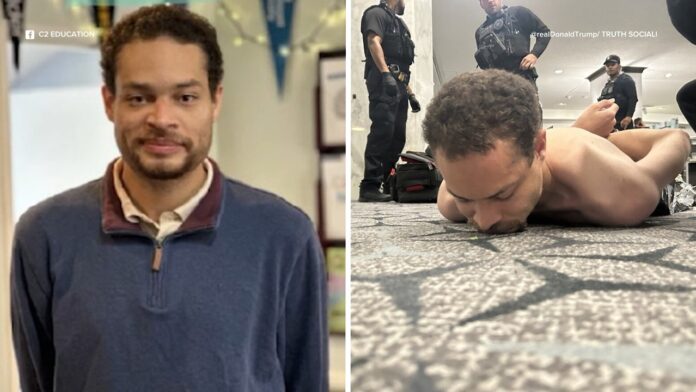
In the aftermath of the shocking shooting that disrupted the White House Correspondents’ Dinner in Washington on Saturday evening, disturbing new details have come to light regarding the mindset, preparation, and motivations of the accused assailant, identified as Cole Allen, a 31-year-old educator from Torrance, California. As reported on Sunday by The New York Post, investigators have uncovered a lengthy and deeply unsettling manifesto sent by Allen to members of his family mere minutes before he opened fire, offering a rare and troubling window into the psyche of a man allegedly intent on committing a targeted act of political violence.

The document, transmitted approximately 10 minutes prior to the attack, reveals a meticulously articulated yet profoundly deranged justification for his actions. In it, Allen referred to himself with the ominous moniker “Friendly Federal Assassin,” a self-appointed title that encapsulates both the performative and ideological dimensions of his conduct. The manifesto outlines a hierarchy of intended victims, explicitly identifying “administration officials” as his primary targets, ordered from the most senior figures downward. Notably, he excluded the Director of the Federal Bureau of Investigation from this list, though he did not elaborate on the rationale for that exception.

According to the information provided in The New York Post report, Allen’s writing was saturated with incendiary accusations directed at President Donald Trump and members of his administration, whom he characterized in the most extreme and inflammatory terms. In one passage, he declared his unwillingness to be complicit in what he described as the crimes of those in power, asserting that violence was, in his view, a necessary response. His language was both accusatory and apocalyptic, reflecting a worldview in which moral outrage had metastasized into a justification for lethal action.

Perhaps most chilling was Allen’s apparent willingness to accept collateral casualties in pursuit of his objectives. While he claimed to have selected ammunition intended to reduce unintended harm, he nonetheless conceded that he would be prepared to harm “most everyone” present if doing so were necessary to reach his designated targets. This admission underscores the indiscriminate potential of the violence he contemplated, even as he attempted to rationalize it within the framework of his distorted moral calculus.

The manifesto also contains repeated references to Allen’s religious beliefs, which he invoked in an effort to defend his actions against anticipated criticism. Drawing upon selective interpretations of Christian doctrine, he argued that passivity in the face of perceived injustice constituted moral failure. In his reasoning, the principle of non-retaliation applied only to personal suffering, not to the suffering of others, which he claimed imposed an obligation to act. Such arguments, while cloaked in theological language, reveal a profound misappropriation of religious concepts in service of violent extremism.

In addition to ideological grievances, Allen’s document reflects a preoccupation with contemporary political controversies. He referenced policies and actions attributed to the Trump administration, including enforcement measures related to migration and operations targeting illicit trafficking networks. These issues, filtered through his own interpretation, appear to have contributed to the narrative he constructed to justify his planned attack.

The operational details described in the manifesto further illuminate the extent of his preparation. As reported by The New York Post, Allen traveled from Los Angeles to Washington, DC, by train, passing through Chicago along the way. Acting Attorney General Todd Blanche suggested that this method of travel may have been chosen deliberately to avoid the heightened scrutiny associated with air transportation. Such a decision indicates a degree of forethought aimed at minimizing the likelihood of detection prior to the attack.

Upon arrival at the Washington Hilton, the venue for the Correspondents’ Dinner, Allen reportedly took note of what he perceived as significant lapses in security. In his manifesto, he expressed astonishment that he was able to enter the premises carrying multiple weapons without raising suspicion. He described the environment as one marked by complacency, with security efforts concentrated primarily on external threats such as demonstrators rather than on individuals already inside the facility.

Allen’s critique of the security arrangements was both detailed and scathing. He suggested that the focus on arrivals and protests had created a vulnerability that he was able to exploit by checking into the hotel in advance. In a particularly alarming passage, he speculated that a foreign operative could have introduced even more formidable weaponry under similar circumstances without detection. While such assertions may reflect exaggeration, they nonetheless raise serious questions about the adequacy of existing security protocols at high-profile events.

The manifesto came to the attention of law enforcement through the actions of Allen’s own family. His brother, upon receiving the document, alerted authorities in New London, Connecticut, prompting an urgent response. This intervention, though unable to prevent the initial outbreak of violence, may have contributed to the rapid identification and apprehension of the suspect.

Subsequent investigations have revealed additional aspects of Allen’s background that shed light on his trajectory toward radicalization. According to information cited in The New York Post report, he had acquired two handguns and a shotgun from a firearms retailer and stored them at his parents’ residence. He was also known to engage in regular firearms training at a shooting range, suggesting a level of familiarity and proficiency with weapons.

Allen’s associations further indicate a pattern of increasing political engagement, albeit of a highly volatile nature. He was reportedly connected to a group known as “The Wide Awakes” and is believed to have participated in a protest movement characterized by its opposition to established authority structures. Individuals who interacted with him, including family members interviewed by the Secret Service, described him as prone to making increasingly radical statements and expressing a desire to take decisive action to address what he perceived as systemic injustices.

The closing passages of Allen’s manifesto provide a stark and unsettling glimpse into his emotional state as he prepared to carry out the attack. In a tone that oscillates between anguish and resolve, he acknowledged the personal cost of his actions, expressing sorrow for the life he was about to abandon and the trust he would betray. At the same time, he articulated a sense of inevitability, framing his decision as the culmination of mounting frustration and anger.

This duality—of despair intertwined with determination—underscores the complexity of the motivations that can drive individuals toward acts of extreme violence. While the document offers insight into Allen’s reasoning, it also highlights the profound disconnect between his perception of reality and the broader societal norms that condemn such actions.

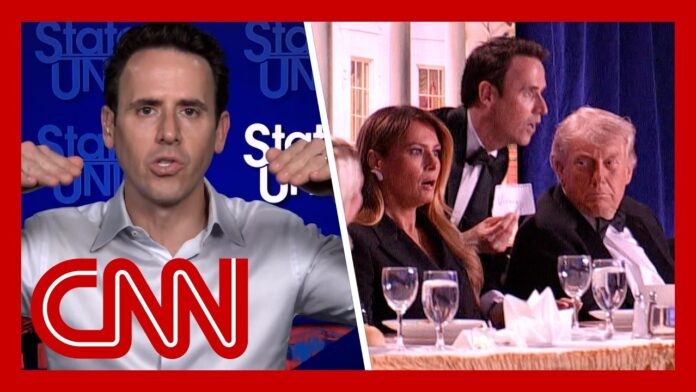
The incident itself, which unfolded shortly after 8:30 p.m., sent shockwaves through the assembled gathering of journalists, public officials, and other distinguished guests. As reported by The New York Post, the sound of gunfire triggered immediate panic, with attendees seeking cover as security personnel moved swiftly to neutralize the threat. A law enforcement officer was injured during the confrontation but is expected to recover.

President Donald Trump, who had been present at the event, was safely evacuated along with other high-profile attendees. In subsequent remarks, he praised the rapid response of law enforcement and emphasized the resilience of democratic institutions in the face of such attacks. The annual dinner, a longstanding celebration of the principles of free expression and a key fundraising event for journalistic scholarships, has since been postponed, with plans to reschedule within 30 days.

As the investigation continues, authorities are working to piece together a comprehensive understanding of the factors that led to this act of violence. The manifesto, while providing a detailed account of Allen’s intentions and beliefs, represents only one component of a broader inquiry into his influences, associations, and mental state.

The revelations reported by The New York Post have intensified public debate over issues ranging from political rhetoric and ideological extremism to the adequacy of security measures at major events. They also underscore the enduring challenge of identifying and mitigating threats posed by individuals who operate outside organized networks, often referred to as lone actors.

In the final analysis, the events of that Saturday evening serve as a stark reminder of the vulnerabilities that persist even in the most carefully managed environments. They highlight the need for continued vigilance, robust security protocols, and a deeper understanding of the pathways that can lead individuals from grievance to violence.

The story of Cole Allen is not merely one of an isolated incident but of a convergence of personal turmoil, ideological fervor, and systemic gaps that, taken together, resulted in a moment of profound disruption. As the nation reflects on the implications of this attack, the imperative to address these underlying issues with clarity and resolve has never been more evident.

Security Breakdown at the Nation’s Most Guarded Gala: Inside the Alarming Failures That Preceded the White House Correspondents’ Dinner Shooting


By: Fern Sidman

In the immediate aftermath of the shocking gunfire that shattered the carefully choreographed spectacle of the White House Correspondents’ Dinner, a deeply troubling narrative has begun to emerge—one that raises profound questions about institutional preparedness, operational oversight, and the fundamental assumptions underlying security at one of the most high-profile gatherings in the United States. As reported on Sunday by The Gateway Pundit, a growing chorus of attendees, including prominent public figures, journalists, and political operatives, have come forward with remarkably consistent accounts describing what they characterize as startlingly inadequate security protocols at the Washington Hilton on the night of the attack.

The revelations, delivered in vivid firsthand testimony and widely disseminated across social media platforms, paint a portrait of an event in which the customary layers of protection—expected at any venue hosting the President of the United States, the Vice President, senior Cabinet officials, and hundreds of influential members of the press—were either diminished to a nominal presence or bypassed altogether. In the context of an increasingly volatile political climate, and following two prior assassination attempts targeting President Donald Trump, the implications of such lapses are as serious as they are disquieting.

Among the most striking accounts is that of Kari Lake, a senior advisor to the United States Agency for Global Media, whose immediate reaction following the incident captured both disbelief and indignation. Writing in the aftermath of the chaos, Lake described a process of entry that appeared almost perfunctory in its lack of rigor. According to her account, no one requested a verifiable inspection of her ticket, nor was she asked to produce photographic identification—an omission that, under ordinary circumstances, would be considered unthinkable at an event of such magnitude and sensitivity.

Lake’s description suggests that entry into the venue required little more than the presentation of what appeared to be a ticket, without meaningful authentication. This, she argued, created an environment in which the threshold for access was dangerously low, effectively reducing security to a symbolic gesture rather than a substantive safeguard. Her remarks, cited by The Gateway Pundit, also included a broader critique of the political and media climate, which she linked to the tensions surrounding the event.

Equally compelling is the testimony of Mads Campbell, a conservative commentator whose detailed account of the evening has since garnered over one million views. Campbell’s narrative offers a granular depiction of the atmosphere preceding the attack, emphasizing a pervasive sense of unease that she and her companion reportedly experienced upon arrival. From the outset, she noted the absence of the multilayered screening processes typically associated with high-security events: no systematic bag inspections, no rigorous identity verification, and no structured queuing designed to regulate the flow of attendees.

Instead, Campbell described what she perceived as a chaotic and unregulated influx of individuals, with large crowds being ushered rapidly through entry points in a manner that prioritized speed over scrutiny. The resulting environment, she suggested, was not merely disorganized but inherently unsafe—a conclusion that was tragically reinforced when gunfire erupted shortly thereafter. Her account, as highlighted by The Gateway Pundit, underscores the extent to which intuitive concerns about security were borne out by subsequent events.

Additional corroboration comes from a range of other attendees, including Bethany Miller, editor of The Conservateur, who reported that she attended multiple pre-dinner receptions at the Washington Hilton without encountering any meaningful security screening. According to her observations, entry to these preliminary events required only the presentation of an electronic ticket, which could easily have been forwarded or replicated. It was only upon reaching the main dinner itself that more conventional measures, such as magnetometers and ticket verification, were reportedly implemented.

Even at that stage, however, questions remain regarding the adequacy of the procedures. Former Federal Communications Commission Chairman Ajit Pai provided a detailed account of his own experience, describing a sequence of checkpoints that, while present, appeared largely superficial in execution. Pai recounted being admitted to the hotel driveway upon showing his ticket, followed by successive entries through escalator checkpoints, each requiring only minimal verification. The culmination of this process was a passage through what he described as a “bare-bones” metal detector, where personal items were placed on a table but not subjected to systematic scanning.

Pai’s observations suggest that while certain elements of security infrastructure were nominally in place, their operational effectiveness may have been compromised by inconsistent application or insufficient oversight. This distinction—between the presence of security measures and their meaningful enforcement—lies at the heart of the concerns now being raised by attendees and observers alike.

The broader context in which these revelations have emerged further amplifies their significance. The White House Correspondents’ Dinner, often referred to colloquially as the “Nerd Prom,” is not merely a social gathering but a symbolic convergence of political power and media influence. It is an event that, by its very nature, attracts both visibility and vulnerability, making it a potential target for individuals seeking to exploit moments of concentrated prominence.

According to The Gateway Pundit report, the suspect in the shooting, identified as Cole Tomas Allen, a 31-year-old resident of Torrance, California, was able to exploit precisely such vulnerabilities. Authorities allege that Allen checked into the Washington Hilton as a registered guest prior to the event, thereby circumventing the heightened scrutiny typically associated with day-of arrivals. This strategic decision allowed him to move within the premises with relative freedom, ultimately enabling him to assemble a long weapon in an unsecured area before initiating the attack.

The mechanics of this breach raise critical questions about the integration of hotel operations with event-specific security protocols. In a venue that simultaneously accommodates both high-profile events and routine guest activity, the delineation of secure zones becomes a matter of paramount importance. The apparent failure to adequately monitor or restrict access to certain areas within the hotel suggests a gap in coordination that may have been exploited by the assailant.

The response of law enforcement and security personnel, once the attack commenced, has been widely commended. The Secret Service, in particular, is credited with acting swiftly to neutralize the immediate threat and secure the safety of the President and other attendees. One agent, struck at close range by a bullet, survived due to the protection afforded by a bulletproof vest—a testament to the critical importance of defensive preparedness even in the face of unexpected breaches.

Nevertheless, the effectiveness of the response does not diminish the gravity of the preceding failures. As U.S. Attorney for the District of Columbia Jeanine Pirro stated, the suspect appeared intent on inflicting maximum harm, a characterization that underscores the potential consequences of any lapse in preventive measures. Allen now faces multiple felony charges, including the use of a firearm during a crime of violence and assault on a federal officer, with additional charges anticipated as the investigation progresses.

The unfolding inquiry is expected to examine not only the actions of the suspect but also the systemic factors that may have contributed to the breach. Central to this investigation will be the question of accountability: who authorized the security protocols in place, and to what extent were they consistent with established standards for events of this nature? As The Gateway Pundit report emphasized, these are not merely procedural questions but matters of national significance, given the concentration of high-value targets present at the event.

Moreover, the incident has reignited broader debates about the balance between accessibility and security in public events. While the Correspondents’ Dinner is intended to celebrate the principles of free expression and open discourse, it also operates within a security environment that demands vigilance and adaptability. The challenge lies in reconciling these objectives without compromising the safety of participants.

In the days ahead, it is likely that calls for increased transparency will intensify, with lawmakers, security experts, and the public seeking a comprehensive account of the decisions and conditions that allowed the breach to occur. The testimonies collected thus far, as reported by The Gateway Pundit, provide a compelling foundation for such scrutiny, offering detailed insights into the experiences of those who were present on the night in question.

Ultimately, the events at the Washington Hilton serve as a stark reminder of the inherent risks associated with gatherings of national prominence. They highlight the necessity of rigorous, consistently applied security measures and the dangers of complacency in environments where the stakes are exceptionally high. As the investigation continues, the lessons drawn from this incident will likely shape the protocols governing similar events in the future, with the aim of ensuring that such a convergence of vulnerability and opportunity is not repeated.

In the final analysis, the shooting at the White House Correspondents’ Dinner is not merely an isolated act of violence but a catalyst for a broader reckoning with the standards and practices that define security in the modern era. The accounts documented by The Gateway Pundit underscore the urgency of this task, offering a detailed and, at times, unsettling portrait of a system that, on that night, fell short of its essential purpose.

A Presidency Under Fire: The Escalating Pattern of Assassination Attempts Against Donald Trump from 2024 to 2026


By: Julie Herndon

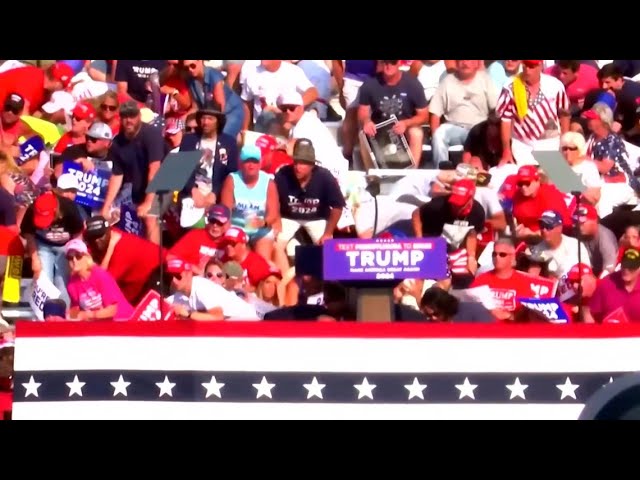
In the annals of modern American political history, few presidencies have been so persistently shadowed by direct physical threats as that of President Donald Trump. From the harrowing events of July 13, 2024 in Butler, Pennsylvania, to the chilling gunfire that erupted at the Washington Hilton Hotel on April 25, 2026, a discernible and deeply troubling pattern has emerged—one marked by repeated assassination attempts, systemic security challenges, and an increasingly volatile political climate.

Drawing upon reporting from multiple outlets and corroborated timelines, including detailed accounts referenced by Axios and other contemporaneous sources, this investigation reconstructs the chronology, context, and implications of these incidents, revealing a sustained campaign of threats against a sitting president that has tested the resilience of American institutions.

The Butler, Pennsylvania Attack: July 13, 2024

The first and most consequential assassination attempt in this sequence occurred on July 13, 2024, during a campaign rally in Butler, Pennsylvania. The event, intended as a routine political gathering in a key electoral state, devolved into a scene of chaos and tragedy within seconds.

At approximately 6:11 p.m., a gunman identified as Thomas Crooks opened fire from an elevated position approximately 164 yards away, using a high-powered rifle. One bullet grazed Trump’s right ear, drawing blood and narrowly missing a fatal trajectory.

The attack resulted in the death of a rally attendee and injuries to two others, underscoring the indiscriminate nature of the violence. Secret Service counter-snipers responded almost instantaneously, neutralizing the assailant within moments.

Subsequent investigations revealed alarming lapses in security coordination, including vulnerabilities in perimeter control and rooftop surveillance. A federal review was ordered by the Department of Homeland Security, reflecting the gravity of what was widely described as one of the most significant security failures in modern campaign history.

The Butler incident fundamentally altered the security paradigm surrounding Trump, prompting immediate enhancements to protective measures and igniting a broader national debate about political violence.

The Florida Sniper Plot: September 15, 2024

Barely two months after the Butler attack, a second assassination attempt unfolded in West Palm Beach, Florida, this time in a markedly different setting. Trump, engaged in a recreational outing at a golf course, became the target of a sniper who had positioned himself in advance with apparent intent to carry out a long-range attack.

The suspect, identified in reporting as Ryan Routh, was apprehended before he could execute his plan. Authorities later confirmed that the individual had established a firing position and possessed the means to carry out a lethal strike.

Unlike the Butler attack, which exposed failures in real-time response, the Florida incident highlighted the persistent challenge of preemptive detection. Intelligence gaps, surveillance limitations, and the sheer unpredictability of lone actors contributed to the near-success of the plot.

Routh was subsequently convicted and sentenced to life imprisonment in early 2025, marking one of the most severe judicial responses to a presidential assassination attempt in recent history.

An Atmosphere of Persistent Threat

By late 2024, it had become evident that these incidents were not isolated anomalies but part of a broader escalation in threats against Trump. According to compiled timelines, at least two confirmed assassination attempts occurred during the 2024 campaign alone, accompanied by numerous additional threats and plots that were disrupted before reaching operational stages.

Security agencies also investigated alleged foreign involvement, including claims of state-sponsored plots, although definitive connections remained contested. The cumulative effect of these developments was a dramatic intensification of protective measures surrounding Trump, including expanded Secret Service resources and revised protocols for public appearances.

The Washington Hilton Incident: April 25, 2026

The most recent and perhaps most symbolically significant attempt occurred on April 25, 2026, during the White House Correspondents’ Association Dinner at the Washington Hilton Hotel. Unlike the open-air setting of Butler or the controlled environment of a private golf course, this event represented one of the most secure and high-profile gatherings in the nation’s capital.

At approximately 8:36 p.m., an armed assailant identified as Cole Allen advanced toward the main security checkpoint, equipped with a shotgun, a handgun, and multiple knives.

Gunfire erupted as the suspect attempted to breach the perimeter, triggering immediate panic among the more than 2,500 attendees present. Secret Service agents executed a rapid evacuation of Trump, his cabinet, and other dignitaries, while engaging the attacker in a confrontation that left one agent injured but ultimately resulted in the suspect’s capture.

Authorities quickly concluded that the assailant was a lone actor, although investigations into motive and potential affiliations continued.

The incident marked the third major assassination attempt against Trump within a two-year period, prompting renewed scrutiny of security protocols and raising urgent questions about vulnerabilities even in ostensibly secure environments.

Patterns and Parallels: Lone Actors and Systemic Risks

A comparative analysis of these incidents reveals several recurring characteristics:

1. Lone Actor Phenomenon

In each confirmed attempt, the assailant operated independently, without direct evidence of coordinated group involvement. This trend reflects a broader shift in modern political violence, where individuals radicalized through personal grievances or ideological convictions act autonomously.

2. Exploitation of Security Gaps

Each incident exposed specific vulnerabilities:

Butler: inadequate rooftop security and perimeter control

Florida: failure to detect pre-positioned sniper activity

Washington Hilton: insufficient internal screening and checkpoint vulnerabilities

3. Escalation in Frequency and Boldness

The progression from an outdoor rally to a private recreational setting, and finally to a high-security national event, demonstrates an increasing audacity among attackers.

4. Psychological and Symbolic Impact

Beyond the immediate physical danger, these attempts have had a profound psychological effect, both on the president and on the broader public. The repetition of such incidents reinforces a perception of instability and erodes confidence in the ability of institutions to ensure safety.

Institutional Response and Evolving Security Doctrine

In response to these events, the Secret Service and other federal agencies have undertaken significant reforms. These include, expanded intelligence gathering and threat assessment, enhanced surveillance technologies, increased coordination with local law enforcement and consideration of additional protective measures, including personal ballistic protection for the president.

Despite these efforts, the persistence of threats underscores the inherent challenges of protecting public figures in an open society.

Political Violence in Historical Context

While assassination attempts against American presidents are not unprecedented, the concentration of multiple high-profile incidents within such a short timeframe is highly unusual. Historical comparisons often reference figures such as Abraham Lincoln or Ronald Reagan, yet the frequency and diversity of threats faced by Trump appear to represent a distinct modern phenomenon.

Experts have pointed to factors including political polarization, the proliferation of digital radicalization, and the accessibility of weapons as contributing elements.

A Presidency Defined by Risk

Throughout these events, Trump himself has maintained a posture of defiance, repeatedly emphasizing his intention to continue public engagements despite the risks. In the aftermath of the Washington Hilton incident, he characterized the presidency as a “dangerous profession,” while reaffirming his commitment to maintaining normalcy.

This stance, while politically resonant among supporters, also raises complex questions about the balance between accessibility and security in democratic leadership.

A Precarious Era

The sequence of assassination attempts from July 13, 2024 through April 25, 2026 represents more than a series of isolated events. It reflects a broader transformation in the nature of political risk in the United States—one defined by unpredictability, technological complexity, and heightened societal tensions.

As the nation continues to grapple with these challenges, the experiences of President Donald Trump serve as a stark reminder of the fragility of even the most robust security systems. The lessons drawn from Butler, West Palm Beach, and Washington will undoubtedly shape the future of presidential protection, but they also pose a deeper question: how can a democratic society preserve openness and accessibility while confronting an era of unprecedented threat?

In that unresolved tension lies the enduring significance of this extraordinary and unsettling chapter in American history.

From Global Stage to Global Systems: Omer Adam’s Billion-Dollar Leap into Artificial Intelligence Power

From Global Stage to Global Systems: Omer Adam’s Billion-Dollar Leap into Artificial Intelligence Power
By: David Avrushmi

A transformative development in the global artificial intelligence sector has emerged with remarkable force, fusing technological ambition with an unexpected cultural dimension. As recently reported by Israel Hayom, a newly forged strategic partnership between the Israeli infrastructure firm Anan and the American artificial intelligence powerhouse Crusoe has propelled the valuation of the Israeli enterprise beyond the $1 billion threshold, a meteoric rise achieved within just 4 years of its founding. At the heart of this extraordinary narrative stands Omer Adam, a globally celebrated singing sensation whose transition from the concert stage to the high-stakes world of advanced computing infrastructure represents one of the most compelling cross-industry evolutions in recent memory.

The agreement between Anan and Crusoe signals far more than a conventional business arrangement; it represents a decisive step in reshaping the global architecture of artificial intelligence infrastructure. Under the terms of the partnership, Anan will supply an initial 40 megawatts of advanced computing capacity from its rapidly expanding server farm complex in Afula, a site engineered to scale up to a formidable 100 megawatts. The contract, valued in the hundreds of millions of dollars, underscores the intensifying global demand for high-performance computing capabilities capable of sustaining the exponential growth of artificial intelligence applications.

According to the information provided in the Israel Hayom report, the significance of this deal extends well beyond its financial magnitude. It positions Israel once again at the forefront of technological innovation, reinforcing its reputation as a critical node in the global network of advanced computing and digital infrastructure. The collaboration also reflects a broader shift in the artificial intelligence sector, where access to power, land, and scalable engineering expertise has become increasingly scarce and strategically vital.

Founded just four years ago, Anan was conceived not as a conventional data center operator but as a forward-looking platform dedicated to building a comprehensive global infrastructure for artificial intelligence. Its founding trio—Maor Malul, Nissim Sharial-Gaon, and Omer Adam—represents an unusual yet highly effective convergence of executive leadership, financial acumen, and visionary ambition.

Malul, serving as chief executive officer, has overseen the company’s rapid expansion with a disciplined focus on operational excellence. Sharial-Gaon, an experienced investment strategist, has provided the financial architecture necessary to sustain aggressive growth. Yet it is Adam’s involvement that has captured widespread public attention, not merely because of his celebrity status but due to the depth of his commitment to innovation and national development.

The Israel Hayom report emphasized that Anan’s model departs fundamentally from traditional data center paradigms. Instead of merely offering storage and processing capacity, the company is constructing a vertically integrated ecosystem designed specifically for artificial intelligence workloads. This includes high-density computing clusters, advanced cooling systems, redundant power infrastructure, and continuous operational capability, all engineered to function at maximum efficiency 24 hours a day, 6 days a week.

The Afula facility, which serves as the focal point of the Crusoe partnership, exemplifies the scale and sophistication of Anan’s ambitions. Spanning tens of thousands of square meters, the site is being developed at an accelerated pace to meet the urgent needs of global technology firms seeking reliable and scalable computing power.

The project incorporates cutting-edge engineering solutions, including high-efficiency cooling systems capable of sustaining dense computational loads, as well as robust backup power systems designed to ensure uninterrupted operation. Industry analysts, as cited in the Israel Hayom report, have noted that the global shortage of suitable infrastructure for artificial intelligence computing has created a competitive environment in which projects of this magnitude are both rare and highly sought after.

The ability to deliver 40 megawatts of capacity in the initial phase, with a clear pathway to 100 megawatts, places Anan among an elite group of providers capable of supporting the next generation of artificial intelligence development. This capability is particularly significant given the increasing computational demands of machine learning, data analytics, and generative technologies.

Crusoe’s decision to partner with Anan reflects a carefully calibrated strategy aimed at expanding its global footprint while securing access to high-quality infrastructure in strategically advantageous locations. The company, which has emerged as one of the fastest-growing entities in the artificial intelligence infrastructure sector, provides advanced cloud solutions tailored to the needs of leading technology organizations, including OpenAI and Oracle.

In October 2025, Crusoe successfully raised $1.4 billion, achieving a valuation of $10 billion and reinforcing its status as a dominant force in the industry. Its entry into Israel, led by Alon Yariv, underscores the country’s enduring appeal as a hub of technological innovation. Yariv’s prior transaction, valued at approximately $200 million, further highlights the scale of investment being directed toward the Israeli market.

In statements cited in the Israel Hayom report, Crusoe described Anan as a “central and significant strategic partner,” emphasizing its intention to deepen its presence in Israel over the long term. This perspective aligns with a broader trend in which multinational technology firms increasingly recognize Israel’s unique combination of technical expertise, entrepreneurial culture, and rapid execution capabilities.

The partnership with Crusoe represents only one component of Anan’s broader expansion strategy. The company has already secured multiple additional agreements with international entities, positioning itself to develop infrastructure projects exceeding 500 megawatts in total capacity. This ambitious pipeline reflects a long-term vision aimed at establishing Israel as a global epicenter for artificial intelligence infrastructure.

The Israel Hayom report highlighted that such expansion is not merely a commercial endeavor but a strategic initiative with national implications. By attracting significant foreign investment and creating high-value employment opportunities, Anan’s growth contributes to the broader economic and technological development of the country.

While the technological and financial dimensions of this story are undeniably significant, the presence of Omer Adam adds a uniquely human and inspirational element. Widely regarded as one of the most accomplished and beloved musical artists of his generation, Adam has achieved extraordinary success both within Israel and on the international stage.

His musical career is characterized by a remarkable blend of vocal virtuosity, emotional depth, and cultural resonance. From sold-out performances across major arenas to chart-topping recordings, Adam has established himself as a defining voice of contemporary music. His ability to connect with audiences transcends linguistic and cultural boundaries, earning him admiration from fans around the world.

Yet beyond his artistic achievements, Adam is equally renowned for his profound commitment to philanthropy and national service. Israel Hayom has frequently documented his extensive charitable efforts, including support for community initiatives, assistance to families in need, and unwavering solidarity with soldiers serving in the Israel Defense Forces. His visits to military bases, performances for service members, and contributions to welfare programs have cemented his reputation as not only a performer but also a deeply compassionate and socially responsible individual.

Adam’s involvement in Anan represents a broader cultural phenomenon in which creative talent intersects with technological innovation. His decision to invest in artificial intelligence infrastructure reflects both personal foresight and a commitment to contributing to Israel’s future prosperity.

Importantly, while the recent deal has elevated Anan’s valuation to over $1 billion, Adam himself is not becoming a billionaire as a direct result. Nevertheless, his early investment in the company has proven to be exceptionally prescient, illustrating a capacity for strategic thinking that extends well beyond the realm of music.

The Anan-Crusoe partnership serves as a powerful testament to Israel’s enduring capacity for innovation and adaptability. Despite the complexities of its regional environment, the country continues to attract significant international investment and to play a pivotal role in shaping the future of technology.

As the Israel Hayom report underscored, the convergence of advanced infrastructure, visionary leadership, and cultural influence embodied in this story represents a defining moment in the evolution of Israel’s global standing. The collaboration not only strengthens the country’s technological capabilities but also reinforces its position as a dynamic and resilient participant in the global economy.

In the final analysis, the ascent of Anan and the involvement of Omer Adam encapsulate a narrative of extraordinary breadth and significance. It is a story that transcends traditional boundaries, uniting the worlds of music, technology, and national development in a singular expression of ambition and achievement.

Through its groundbreaking partnership with Crusoe, Anan has secured a place at the forefront of the artificial intelligence revolution. Through his dual role as artist and investor, Omer Adam has demonstrated that creativity and innovation are not confined to any single domain. Together, they have crafted a narrative that is as inspiring as it is consequential, offering a compelling vision of what can be achieved when talent, determination, and opportunity converge on a global stage

Seconds from Shock: Israeli Mentalist Oz Pearlman at Center of White House Correspondents Dinner Panic

Seconds from Shock: Israeli Mentalist Oz Pearlman at Center of White House Correspondents Dinner Panic

By: Yisroel David

In a moment that began with wonder and ended in sheer alarm, Israeli-born mentalist Oz Pearlman found himself at the epicenter of a dramatic security crisis that unfolded during one of Washington’s most high-profile gatherings. As reported on Sunday by Israel National News, Pearlman was in the midst of an intimate performance for President Trump and First Lady Melania Trump at the White House Correspondents’ Association dinner on Saturday night when gunfire erupted outside the venue, triggering chaos, swift evacuation procedures, and a moment of collective terror that would leave a lasting imprint on all who were present.

The evening had been proceeding in its customary fashion, blending ceremony, media spectacle, and carefully curated entertainment. Pearlman, renowned for his ability to captivate audiences with feats of psychological illusion and intuitive perception, had been invited to provide a moment of intellectual intrigue amid the formal proceedings. Positioned mere feet from the President and First Lady, he was demonstrating a mentalism routine involving a handwritten note, an exercise designed to astonish through apparent mind reading and predictive insight.

According to the information provided in the Israel National News report, video footage from the scene captures a striking juxtaposition: a performer engaged in a delicate act of psychological artistry, and within seconds, the abrupt transformation of the environment into one defined by urgency and fear. As Pearlman lifted his gaze, what initially appeared to be a minor disturbance rapidly escalated into a full-scale security incident. The sound of gunfire outside the ballroom shattered the atmosphere, prompting an immediate and highly coordinated response from the United States Secret Service.

Agents moved with remarkable speed and precision, forming a protective perimeter around the President and First Lady before escorting them, along with senior administration officials, out of the venue. Attendees, including journalists, dignitaries, and staff, were instructed to take cover as security personnel secured the premises.

In the aftermath of the incident, Pearlman took to social media to reassure the public and recount his experience. His words, as cited in the Israel National News report, convey both the immediacy of the danger and the profound emotional impact of the moment.

He described how the unfolding chaos forced those in the room to react instinctively. Believing initially that an explosion or imminent attack was about to occur, Pearlman and others dropped to the ground in a matter of seconds. The proximity to the President added an additional layer of gravity to the situation, as the mentalist found himself only a few feet away from one of the most heavily protected individuals in the world.

Pearlman recalled locking eyes with President Trump during those tense moments, an exchange that underscored the shared vulnerability experienced by everyone present. The surreal nature of the situation—transitioning from a moment of entertainment to one of existential uncertainty—left a deep impression on the performer.

“It was likely the most frightening moment of my life,” he reflected, emphasizing both the intensity of the experience and his relief that no lives were lost. He also expressed gratitude for the decisive actions of the Secret Service, whose rapid intervention ensured the safety of those in attendance.

To fully appreciate the significance of Pearlman’s presence at such an event, it is essential to examine the trajectory of his remarkable career. Born in Israel and raised in the United States, Pearlman has cultivated a reputation as one of the world’s foremost mentalists, blending intellectual rigor with theatrical flair to create performances that defy conventional explanation.

From an early age, Pearlman demonstrated an aptitude for analytical thinking and problem solving, qualities that would later inform his approach to mentalism. His academic pursuits led him to a distinguished education, where he honed the cognitive skills that underpin his performances. However, it was his passion for the art of illusion that ultimately defined his professional path.

Over the years, Pearlman has achieved international acclaim through a combination of live performances, television appearances, and corporate engagements. His breakthrough came with a widely celebrated appearance on a major talent competition, where he astonished audiences with feats of memory, intuition, and psychological insight. That platform propelled him into the global spotlight, establishing him as a sought-after performer for high-profile events.

Israel National News has frequently highlighted Pearlman’s unique ability to bridge cultural and geographic boundaries. Whether performing in Israel, the United States, or other international venues, he has consistently demonstrated an extraordinary capacity to connect with diverse audiences. His performances are characterized not merely by technical proficiency but by a deep understanding of human perception and emotion.

While Pearlman’s professional achievements are undeniably impressive, his personal qualities have also earned him widespread admiration. Known for his composure, humility, and intellectual curiosity, he embodies a rare combination of artistic creativity and disciplined precision.

Colleagues and observers often describe him as a meticulous thinker, someone who approaches his craft with both scientific rigor and imaginative flair. This duality—balancing analytical reasoning with creative expression—has become a defining feature of his identity as a performer.

Moreover, Pearlman’s connection to his Israeli heritage remains a central aspect of his personal narrative. Despite his global success, he has maintained a strong sense of cultural identity, frequently engaging with audiences in Israel and representing the country on the international stage. His achievements serve as a source of pride for many, reflecting the broader contributions of Israeli talent to the global cultural landscape.

The incident at the White House Correspondents’ Association dinner carries implications that extend beyond the immediate experience of those present. As the Israel National News report  noted, the event underscores the persistent challenges associated with securing high-profile gatherings in an era marked by evolving threats.

The swift response of the Secret Service, widely praised by officials and attendees alike, highlights the importance of preparedness and coordination in mitigating potential crises. At the same time, the episode serves as a stark reminder of the unpredictability inherent in public life, particularly for individuals operating at the highest levels of political and cultural visibility.

For Pearlman, the experience represents a profound intersection of his professional and personal worlds. As a performer accustomed to controlling the narrative of a room, he was suddenly thrust into a situation defined by uncertainty and external forces. The contrast between these roles—master of illusion and participant in a real-world crisis—adds a layer of complexity to his account.

In the days following the incident, Pearlman’s reflections have resonated with audiences around the world. His ability to articulate the emotional intensity of the moment, while maintaining a sense of gratitude and perspective, speaks to a broader theme of resilience.

The Israel National News report emphasized that such experiences often reveal the character of those involved. In Pearlman’s case, his response has been marked by composure, humility, and an unwavering appreciation for the efforts of those who ensured the safety of others.

The mentalist’s journey—from his early beginnings to his presence at one of the most prestigious events in Washington—illustrates a career defined by dedication, innovation, and an enduring commitment to excellence. The events of that evening, while unsettling, serve as yet another chapter in a narrative that continues to captivate and inspire.

Ultimately, the incident at the White House Correspondents’ Association dinner transcends the boundaries of a single event. It represents a convergence of artistry, leadership, and human vulnerability, encapsulated in a moment that will be remembered for its intensity and its resolution.

For Oz Pearlman, it was a night that began with the promise of wonder and concluded with a profound reminder of life’s fragility. For those who witnessed it, the experience will remain indelibly etched in memory. And for observers around the world, as conveyed through the report by Israel National News, it stands as a testament to the enduring interplay between spectacle and reality, where even the most carefully orchestrated performances can give way to the unpredictable forces of the world beyond the stage.

Sabastian Sawe breaks fabled 2-hour barrier in the marathon to shatter world record by 65 seconds

(AP) — The fabled 2-hour barrier for a marathon has been broken, officially, in an once-inconceivable achievement in sports.

Not by one runner, but two.

In a race for the ages, Sabastian Sawe of Kenya won the London Marathon in 1 hour, 59 minutes and 30 seconds on Sunday, shattering the previous men’s world record by an astonishing 65 seconds.

“What comes today is not for me alone,” the 29-year-old Sawe said, “but for all of us today in London.”

Just 11 seconds further back was Ethiopia’s Yomif Kejelcha, who — running in his first-ever marathon — also covered the 26.2-mile (42.2-kilometer) course in under 2 hours.

Completing the podium was Uganda’s Jacob Kiplimo, who broke the previous world-record time — set by Kenya’s Kelvin Kiptum in Chicago in 2023 — by seven seconds, finishing in 2:00:28.

In an exhilarating sight, Sawe ran quicker as the marathon went on, covering the second half of the race in 59 minutes and 1 second. He pulled clear with Kejelcha after 30 kilometers and then made his solo break in the final two kilometers, sprinting along the finish on The Mall to loud cheers.

Sawe, who retained his title in London, said it was a “day to remember for me” and thanked the huge crowds who lined the streets of the British capital to witness what might be regarded as a feat marking the peak of human physical achievement.

“I think they help a lot,” he said, “because if it was not for them you don’t feel like you are so loved … with them calling, you feel so happy and strong.”

Under two hours has been done before — unofficially

Breaking two hours in a marathon has been a long time coming — and has been done before.

However, when Eliud Kipchoge — the Kenyan long-distance great — achieved the feat in Vienna in 2019, it was in a specially tailored race called the “1.59 Challenge” that was arranged by British billionaire Jim Ratcliffe in favorable conditions, on a 6-mile (9.6-kilometer) circuit, and using rotating pacemakers.

That meant it wasn’t classed as an official race setting, so Kipchoge’s time of 1:59:40 didn’t go in the record book.

In any case, Sawe surpassed that time by 10 seconds on a mostly flat course across London in dry, sunny conditions.

“The goalposts have literally just moved for marathon running,” Paula Radcliffe, a former winner of the London Marathon, said during commentary of the race for the BBC.

At the turn of the century, the world’s best time for the men’s marathon was 2:05:42, set by Khalid Khannouchi in Chicago in 1999.

Khannouchi broke his own record by four seconds in 2002 — the last time the fastest men’s marathon was run in London — and it has been whittled down gradually over the last 24 years by a succession of Kenyan and Ethiopian runners, including Haile Gebrselassie, Wilson Kipsang, Kipchoge and most recently Kiptum.

Assefa wins fastest-ever women’s-only marathon
A record was also set in the women’s race, with Ethiopia’s Tigst Assefa pulling away with about 500 meters remaining to win in 2:15:41 and defend the title in the fastest-ever time in a women’s-only marathon.

However, it was 16 seconds slower than the course record set by Radcliffe in 2003 when it was a mixed race.

Kenya’s Hellen Obiri was 12 seconds back in second place in a personal-best time on her London debut and compatriot Joyciline Jepkosgei was third, a further two seconds adrift. It was the first time three women have run under 2 hours, 16 minutes in a marathon.

“I screamed when I finished because I knew I was breaking the world record,” Assefa said.

“I felt much healthier today and have worked really hard on my speed and all my training has paid off.”

Swiss double in wheelchair races

In the wheelchair races, there was a Swiss double with Marcel Hug powering to a sixth straight men’s title – and eighth in total – and Catherine Debrunner beating Tatyana McFadden in a close finish to defend the title.

‘A room that was just totally unified,’ Trump says after shots fired at White House correspondents’ dinner

(JNS ) “Very brave” Secret Service agents stopped a suspect with “multiple weapons” at the White House correspondents’ dinner in Washington on Saturday, U.S. President Donald Trump said after he was moved to the White House in what the pool reporter described as the fastest motorcade in which he had ever traveled.

The suspected attacker’s actions led to a “room that was just totally unified,” the president said. He added that law enforcement is going through the suspect’s home in California. The suspect was described as having a “long gun.”

“He’s a very sick person,” Trump said.

The president said that he spoke with a Secret Service agent, who was shot at a “very close distance” with a “very powerful gun.”

“The vest did the job,” he said of the agent’s bulletproof vest. “I just spoke to the office and he’s doing great. Great shape,” he added. “Very high spirits.”

Trump added the hotel building was, in his opinion, not a very secure building and that is one reason, he said, why he is expanding event spaces at the White House.

“They’ve wanted the ballroom for 150 years,” he said. “We need levels of security that probably no one has ever seen before.”

“We’ll do it better within 30 days. We’ll make it bigger and better and even nicer,” Trump said of the event. “I fought like hell to stay, but it was protocol.”

“Probably a lone shooter, but we will find out,” he said. “We will find out very quickly.”

A photo, apparently of a suspected shooter at the White House correspondents’ dinner, which U.S. President Donald Trump shared on April 25, 2026. Credit: U.S. President Donald Trump/TruthSocial.

“I heard a noise. I sort of thought it was a tray going down,” Trump told a reporter. “It was either a tray or a bullet. I hoped it was a tray.”

“It was quite far away, but it was a gun,” he said. “I was watching what was happening. Probably should have gone down even faster.”

“We had resources sitting at tables. Some in disguise,” the president said. “He had a long way to go,” he added of the suspect, whom he said was stopped at the “first line of defense.”

“It’s not going to deter me from winning the war in Iran,” the president said. He added that he didn’t think that was a motivation for the suspected shooter.

Netanyahu urges IDF to ‘vigorously attack’ Hezbollah targets in southern Lebanon

Hezbollah. (Shutterstock)

By Vered Weiss, World Israel News

Israeli Prime Minister Benjamin Netanyahu instructed the Israel Defense Forces on Saturday night to “vigorously attack Hezbollah targets” after the military reported what it called a “blatant violation of the ceasefire understandings by the Hezbollah terrorist organization” when projectiles were launched from Lebanon into northern Israel.

According to the IDF, one of the projectiles was intercepted, while the other landed in an open area. No injuries were reported.

The military also said it intercepted an aerial target aimed at Israeli troops operating in Lebanon.

The incidents occurred despite an existing ceasefire between Israel and Lebanon.

President Donald Trump said Thursday that the ceasefire would be extended by three weeks following a meeting at the White House. The truce had been set to expire on Sunday.

In a post on Truth Social, Trump said the meeting “went very well” and added that the United States would work with Lebanon “to help it protect itself from Hezbollah.” He said Lebanese President Joseph Aoun and Israeli Prime Minister Benjamin Netanyahu are expected to visit the White House “in the coming weeks.”

IDF kills Hezbollah terrorist posing as journalist in targeted Lebanon strike
“They do have Hezbollah to think about,” Trump said. “We are going to be working with Lebanon to get things straightened out in that country. I think it will be a wonderful thing to get this worked out simultaneously with what we are doing in Iran.”

Although the Lebanese government has agreed to the ceasefire, Hezbollah is not acknowledging a truce.

The conflict between Israel and Lebanon resumed after Hezbollah struck Israel, describing the attack as retaliation for the assassination of Iran’s Supreme Leader Ali Khamenei on February 28.

The IDF’s Arabic-language spokesman Avichay Adraee on Saturday again warned Lebanese civilians not to return to southern Lebanon amid the ceasefire. Despite repeated warnings, civilians in southern Lebanon have been attempting to cross back into their villages in recent days, The Jerusalem Post previously reported.

Cole Allen, 31, a California Educator, Identified as Suspect in White House Correspondents’ Dinner Shooting

Cole Allen, 31, a California Educator, Identified as Suspect in White House Correspondents’ Dinner Shooting

By: Fern Sidman

In what has already been described as one of the most alarming security breaches in recent American political history, a violent and highly coordinated shooting incident shattered the decorum of the prestigious White House Correspondents’ Dinner on Saturday evening, sending shockwaves through Washington’s political and media establishment. As reported on Saturday night by The New York Post, the suspect—identified as 31-year old Cole Allen of Torrance, California—has been apprehended following a harrowing sequence of events that unfolded just outside the event’s primary security perimeter.

The annual dinner, long regarded as a symbol of the intersection between political authority and journalistic enterprise, was underway when the tranquility of the evening was violently interrupted. According to accounts compiled by The New York Post, the incident occurred at 8:36 pm, at a moment when the gathering had reached a relaxed interlude, with attendees—including senior government officials and members of the press corps—being served their first course.

Authorities have since confirmed that Allen, who is believed to be employed as a teacher, approached the vicinity of the event’s main security checkpoint armed with a formidable and deeply concerning array of weaponry. Law enforcement officials reported that he carried not only a shotgun and a handgun, but also multiple knives, suggesting a level of preparation that has prompted serious questions regarding both intent and capability.

Washington Metropolitan Police Chief Jeffrey Carroll, whose remarks were cited in The New York Post report, characterized the suspect as a lone actor, emphasizing that preliminary findings do not indicate the involvement of any broader network or coordinated group. “At this stage,” Carroll stated, “all available evidence suggests that the individual acted independently, without external assistance or organizational backing.”

Despite this initial assessment, investigators remain cautious, acknowledging that the complexity of such incidents often necessitates a comprehensive review of all potential connections, motivations, and influences.

Eyewitness testimonies, as detailed in The New York Post report, paint a vivid and deeply unsettling picture of the events as they unfolded. Allen reportedly discharged his weapon near the security screening area before advancing toward the main ballroom, where the nation’s political elite had gathered.

During this chaotic progression, a secret service officer stationed at the checkpoint was struck by gunfire. Fortunately, the officer was equipped with protective body armor, which is credited with preventing what could have been a fatal injury. Officials have since confirmed that the officer is expected to make a full recovery, a development that has been widely interpreted as a testament to both preparedness and resilience.

Chief Carroll noted that the suspect’s actions appeared both deliberate and aggressive, describing a scenario in which Allen sought to penetrate the security perimeter and enter the event’s central gathering space. The potential consequences of such a breach, given the high concentration of prominent figures in attendance, are difficult to overstate.

The human dimension of the incident is perhaps most poignantly captured in the accounts of those who were present at the dinner. Witnesses described a sudden eruption of panic as multiple gunshots rang out, shattering the evening’s atmosphere of civility and celebration.

According to one attendee quoted by The New York Post, guests instinctively sought cover beneath tables, remaining there for what felt like an extended and uncertain period. Another observer recounted the confusion and fear that gripped the room, noting that the distinction between rumor and reality quickly blurred in the absence of clear information.

Helen Mabus, a volunteer assisting with the event, provided a particularly striking account of the suspect’s actions prior to the shooting. She described a “makeshift room” near the entrance, an area used for storage of bar equipment, where security presence was reportedly minimal. According to her testimony, Allen retrieved a weapon from a bag within that space before initiating the attack.

Her description of the firearm—long in form and atypical in appearance—has contributed to ongoing discussions regarding the adequacy of security protocols and the potential vulnerabilities inherent in large scale public events.

In the immediate aftermath of the incident, President Trump issued a statement commending the swift and decisive actions of law enforcement personnel. As reported by The New York Post, the president emphasized the professionalism and courage demonstrated by officers who responded to the threat, noting that their intervention likely prevented a far more catastrophic outcome.

“Law enforcement acted with remarkable speed and bravery,” the president said at a press briefing at the White House, adding that the suspect had been successfully apprehended and that the situation was now under control. He further indicated that authorities would conduct a thorough search of the suspect’s residence in Torrance, California, as part of an ongoing investigation into the individual’s background and potential motives.

In a decision that has sparked considerable debate, the president initially suggested that the event might continue despite the disruption, urging that the show proceed as planned. However, he ultimately deferred to law enforcement officials, who determined that the dinner should be postponed in light of the circumstances.

The immediate consequence of the incident has been the postponement of the White House Correspondents’ Dinner, with officials indicating that the event will be rescheduled within the next 30 days. Beyond this logistical adjustment, however, the episode has raised profound questions regarding security, preparedness, and the evolving nature of threats in contemporary society.

The characterization of the suspect as a “lone wolf” has not diminished the gravity of the situation. On the contrary, it has underscored the challenges faced by law enforcement agencies in anticipating and preventing acts of violence carried out by individuals operating outside traditional networks.

Experts have long warned that such actors, often driven by personal grievances or ideological extremism, can be particularly difficult to detect and deter. The events of Saturday evening appear to reinforce those concerns, highlighting the need for continued vigilance and innovation in security practices.

The incident also carries significant symbolic weight. The White House Correspondents’ Dinner is not merely a social gathering; it is an institution that embodies the relationship between the government and the press. An attack on such an event therefore resonates beyond the immediate physical threat, touching upon broader themes of democracy, transparency, and the resilience of public institutions.

In its comprehensive coverage, The New York Post emphasized the importance of examining both the specific circumstances of the attack and the larger context in which it occurred. This includes not only the operational aspects of security but also the societal factors that may contribute to acts of violence.

As investigations continue and the nation reflects on the events of that tumultuous evening, one conclusion remains inescapable: the line between normalcy and crisis can be alarmingly thin. The swift actions of law enforcement, combined with a measure of fortuitous circumstance, ensured that the incident did not result in greater loss of life.

Yet the questions it has raised—about security, preparedness, and the nature of contemporary threats—will undoubtedly persist. In the words of one observer cited by The New York Post, the evening served as a stark reminder that even the most carefully orchestrated events are not immune to disruption.

In the days and weeks ahead, policymakers, security experts, and the public alike will grapple with the implications of what transpired. The challenge will be to translate the lessons of that night into meaningful action, ensuring that the institutions and traditions it sought to disrupt emerge not weakened, but strengthened in their resolve.