



|
Getting your Trinity Audio player ready...
|
By: Arthur Popowitz
In a decision that reverberates across both the religious and national landscape of Israel, Prime Minister Benjamin Netanyahu has ordered the cancellation of this year’s large-scale Lag BaOmer pilgrimage at Mount Meron, reducing what is traditionally one of the most significant annual religious gatherings in the country to a strictly symbolic observance. As reported on Sunday by VIN News, the directive reflects a convergence of acute security concerns, regional instability, and the enduring challenge of safeguarding large civilian populations in a time of heightened geopolitical tension.
The decision marks a rare and consequential interruption to a centuries-old tradition that has long served as a focal point of communal identity and spiritual expression. For generations, the annual Hillula at the tomb of Rabbi Shimon Bar Yochai has drawn hundreds of thousands of participants from across Israel and the global Jewish diaspora. Its suspension, even in partial form, underscores the severity of the security calculus currently confronting Israeli leadership.
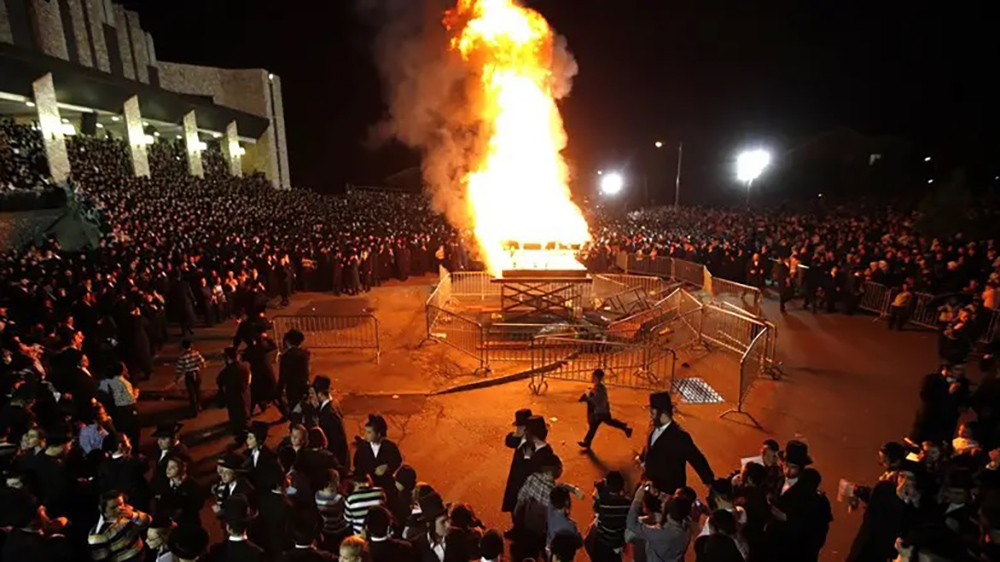
The Lag BaOmer gathering at Mount Meron occupies a unique and revered place within Jewish religious life. The event commemorates the life and legacy of Rabbi Shimon Bar Yochai, a towering figure of early rabbinic tradition whose teachings have profoundly influenced Jewish thought. Each year, pilgrims converge upon the site to engage in prayer, reflection, and celebration, transforming the mountainous region into a vibrant tapestry of devotion and communal unity.
The VIN News report highlighted the magnitude of this event, noting that attendance frequently reaches into the hundreds of thousands. The gathering is characterized by its dynamic atmosphere, featuring religious ceremonies, music, and communal participation that extends throughout the night and into the following day. For many, the pilgrimage represents not merely a ritual obligation but a deeply personal and transformative experience.
The decision to curtail such an event, therefore, carries implications that extend well beyond logistical considerations. It touches upon questions of religious continuity, communal resilience, and the delicate balance between tradition and security.
At the heart of the government’s decision lies a sober assessment of the risks associated with hosting a mass gathering in a region marked by ongoing tension. Mount Meron is situated in northern Israel, in close proximity to the border with Lebanon, an area that has experienced repeated episodes of instability and conflict.
According to the VIN News report, officials have cited the fragility of the current ceasefire with Lebanon as a primary factor in their deliberations. While the ceasefire remains formally in effect, it is widely understood to be tenuous, with the potential for escalation ever present. The presence of Hezbollah strongholds in the vicinity further amplifies the perceived threat, particularly in the context of rocket attacks that could target large concentrations of civilians.
The logistical challenges associated with such a scenario are formidable. The mountainous terrain surrounding Mount Meron, while picturesque, presents significant obstacles to rapid evacuation. In the event of an attack, ensuring the safe and orderly movement of hundreds of thousands of individuals would pose an immense challenge, raising the specter of mass casualties.
Officials have therefore concluded that the risks inherent in proceeding with the traditional format of the pilgrimage are simply too great to justify. As VIN News reported, the prime minister’s office explicitly referenced the fear of a large-scale casualty event as a central consideration in the decision-making process.
In accordance with the prime minister’s directive, government ministries responsible for organizing the event have been instructed to halt all preparations for a mass gathering. This includes the suspension of logistical planning, infrastructure deployment, and coordination efforts that typically begin months in advance of the pilgrimage.
Law enforcement agencies have also been mobilized to enforce the restrictions. Police have received clear instructions to prevent unauthorized access to the site, ensuring that the area remains secure and that the scaled-down observance proceeds without incident. These measures reflect a broader strategy aimed at minimizing risk while preserving a limited form of commemoration.
VIN News has reported that the Hillula will still take place in a symbolic capacity, though details regarding the format of this reduced observance remain limited. It is expected that a small number of authorized participants may be permitted to attend, allowing for the continuation of essential religious rites without the presence of large crowds.
The cancellation of the large-scale gathering at Mount Meron cannot be understood in isolation from the broader historical context. In 2021, the site was the scene of a tragic crowd crush that resulted in the deaths of 45 individuals, marking one of the deadliest civilian disasters in Israel’s history. That event prompted a comprehensive reassessment of safety protocols and crowd management practices at the site.
In the years since, authorities have implemented a range of measures aimed at preventing a recurrence of such a tragedy. These efforts have included stricter capacity limits, enhanced infrastructure, and improved coordination among emergency services. However, the current security environment presents challenges that extend beyond the scope of these reforms.
The combination of external threats and the inherent complexities of managing large crowds has created a situation in which even the most robust safety measures may be insufficient. The decision to scale back the event, therefore, reflects not only immediate concerns but also the lessons learned from past experiences.
The move to cancel the mass gathering at Mount Meron aligns with a broader pattern of heightened vigilance across Israel’s northern region. Despite the existence of a ceasefire, tensions with Lebanon and Hezbollah remain a central focus of national security planning.
VIN News has emphasized that the current situation is characterized by a delicate balance between deterrence and restraint. While efforts are ongoing to maintain stability, the potential for sudden escalation cannot be discounted. In this context, the presence of a large civilian gathering near the border would represent a significant vulnerability.
The decision also reflects the government’s prioritization of public safety over symbolic considerations. While the cultural and religious significance of the pilgrimage is undeniable, the imperative to protect human life has ultimately taken precedence.
As of this writing, there has been limited public response from religious leaders and community organizers regarding the scaled-back plans. However, it is likely that the decision will generate a range of reactions, reflecting the diverse perspectives within Israeli society.
For some, the cancellation may be viewed as a necessary and prudent measure in light of the prevailing security environment. For others, it may represent a painful disruption to a cherished tradition, raising questions about the long-term impact on communal practices.
The VIN News report noted that similar decisions in the past have often sparked debate over the balance between security and religious freedom. This tension is likely to persist as authorities continue to navigate the complex interplay of these considerations.
The suspension of the large-scale Lag BaOmer pilgrimage at Mount Meron serves as a poignant reminder of the challenges facing Israel at this moment in its history. It highlights the fragility of normalcy in a region marked by persistent uncertainty and underscores the resilience required to adapt to changing circumstances.
At the same time, the decision reflects a broader commitment to safeguarding the well-being of citizens, even when doing so necessitates difficult and unprecedented choices. The symbolic observance that will take place in lieu of the traditional gathering may lack the scale and vibrancy of past years, but it will nonetheless serve as a testament to the enduring spirit of the community.
In the final analysis, the cancellation of the mass gathering at Mount Meron represents a convergence of tradition, security, and responsibility. It is a decision shaped by both immediate threats and long-standing lessons, informed by a recognition of the risks inherent in the current environment.
As VIN News has documented, the move underscores the gravity of the challenges facing the nation and the difficult choices required to navigate them. While the absence of the usual crowds will undoubtedly be felt, the preservation of life remains the paramount concern.
In this sense, the scaled-back observance at Mount Meron stands not as a diminishment of tradition, but as an affirmation of its deeper values—resilience, unity, and the enduring commitment to safeguard the future even in the face of uncertainty.
