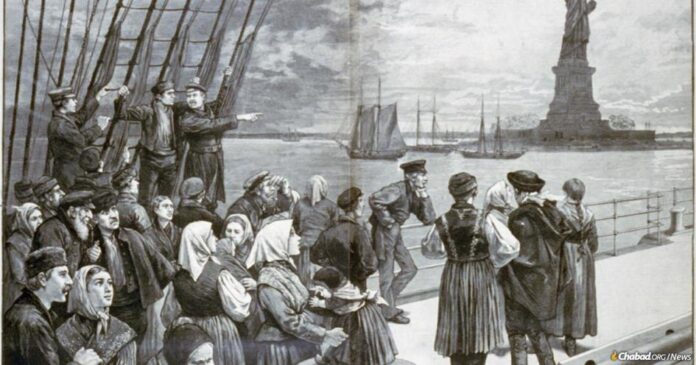
The Passover event takes place annually.
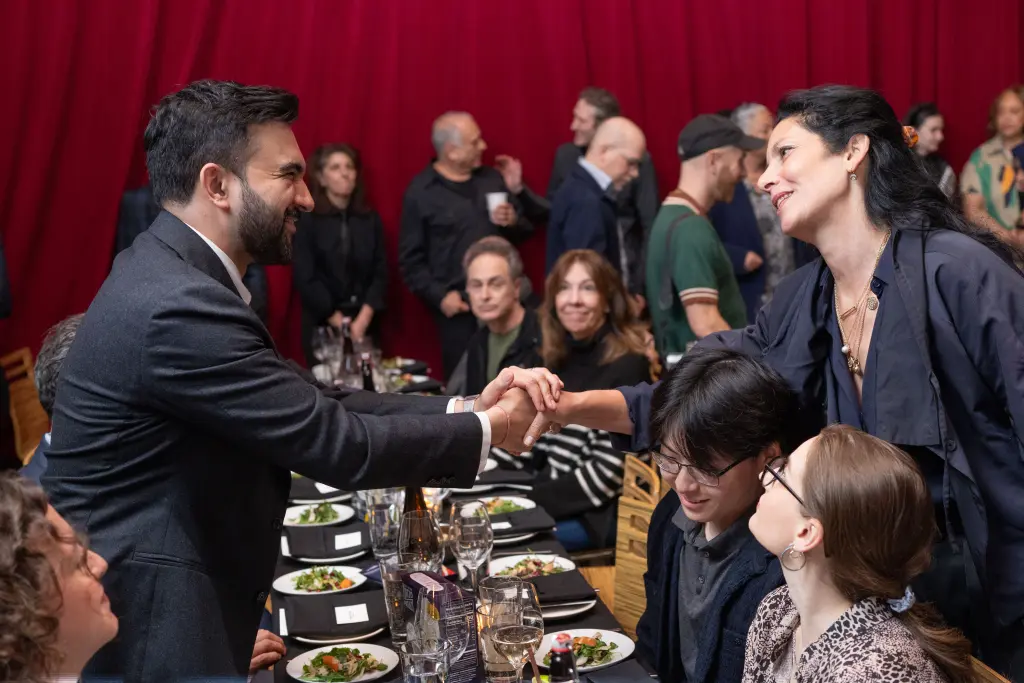
Michael Appleton/Mayoral Photography Office
Mamdani Heckled at Passover Seder in NYC Amid Rising Antisemitism Tensions
By: Max Schleifer
In a city renowned for its pluralism yet increasingly strained by ideological fault lines, a Passover gathering intended to celebrate tradition and communal unity devolved into a moment of sharp public discord, reflecting the deepening tensions surrounding antisemitism, political rhetoric, and the boundaries of civic leadership. As reported on Wednesday in The New York Post, New York City Mayor Zohran Mamdani faced pointed heckling during his appearance at a prominent seder event, exposing fractures within segments of the Jewish community and reigniting scrutiny of his political positions.
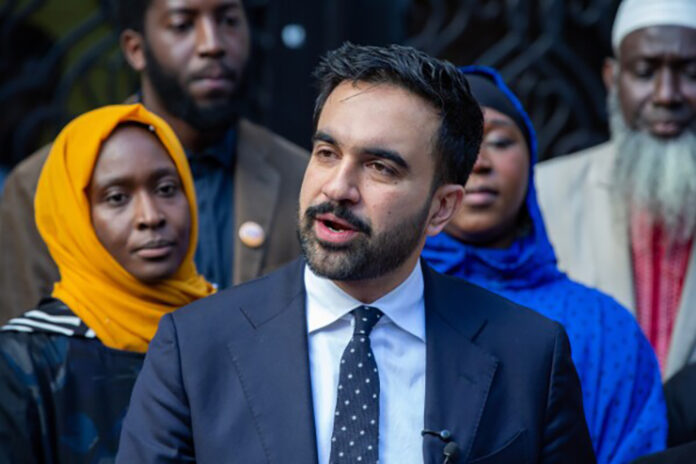
Mamdani was heckled as he spoke, according to a report. Michael Appleton/Mayoral Photography Office
The incident unfolded at the 33rd annual “Downtown Seder,” hosted by entrepreneur Michael Dorf at the City Winery in Manhattan. The event, traditionally characterized by reflection, storytelling, and a spirit of inclusivity, drew approximately 370 attendees, including civic figures, cultural personalities, and members of New York’s diverse Jewish community.
Yet, as The New York Post report detailed, the evening’s atmosphere shifted markedly when Mayor Mamdani took the stage. While addressing what he described as a troubling rise in antisemitism affecting Jewish New Yorkers, an unidentified attendee interrupted with a stark and unsettling declaration: “Every Jewish organization is a target.”
The outburst, brief but jarring, reverberated through the venue. Attendees quickly attempted to restore order, with some urging the speaker to continue and others calling for restraint. One voice rose in response, “Stop the xenophobia, let him speak,” capturing the competing impulses present in the room—defense of open discourse on one hand, and palpable unease on the other.
According to accounts compiled by The New York Post, the disruption was not an isolated moment but rather the culmination of simmering discontent. Witnesses described an undercurrent of dissatisfaction even before Mamdani began speaking. One attendee recalled that a woman shouted “Shame, shame, shame” upon his introduction, while others noted persistent murmuring and visible discomfort among segments of the audience.
“It was wild,” one source told The New York Post. “It’s never like that.”
Such reactions suggest that the controversy surrounding the mayor’s appearance had already taken hold prior to the event itself. Indeed, the decision to include Mamdani in the program had drawn criticism in advance, most notably from Israeli American comedian Modi Rosenfeld, who withdrew from the benefit upon learning of the mayor’s participation.
“We were not told Mamdani was participating in this event until today,” read a statement posted on Rosenfeld’s social media account, as cited by The New York Post. His manager described the situation as inappropriate, emphasizing the lack of transparency surrounding the lineup.
Despite the interruptions, Mayor Mamdani continued his remarks, ultimately receiving applause from portions of the audience. In addressing the disruption, he adopted a tone that sought to contextualize the moment within the broader character of New York City itself.
“This is New York City, and we love to be here,” he said, according to reports referenced by The New York Post. “If there was complete decorum everywhere we were, we would have to ask ourselves if we had left the city that we love.”
His comments appeared to frame the incident not as a breakdown of civility but as an expression of the city’s vibrant, if sometimes contentious, democratic culture. For some observers, this interpretation underscored a commitment to open dialogue; for others, it risked minimizing the gravity of the sentiments expressed during the disruption.
At the center of the controversy lies Mayor Mamdani’s political record, particularly his positions on Israel and his associations with figures who have themselves drawn criticism for inflammatory rhetoric. As noted repeatedly by The New York Post, Mamdani has faced sustained backlash for statements suggesting that Israel should not exist as a Jewish state—a stance that many within the Jewish community view as fundamentally incompatible with their historical and cultural identity.
Further scrutiny has arisen from his connections to individuals such as Hasan Piker and Linda Sarsour, both of whom have been accused by critics of promoting narratives perceived as hostile to Jewish concerns. While Mamdani and his supporters argue that such criticisms mischaracterize his views, the cumulative effect has been to position him as a polarizing figure within an already fraught discourse.
Michael Dorf, the event’s host, sought to downplay the severity of the disruption, describing the heckling as “very minor” in an interview with The New York Post. He credited the mayor for handling the situation with composure and emphasized that the overwhelming majority of attendees responded positively.
“Out of 370 people, 365 loved it,” Dorf said, adding that the event’s spirit remained intact despite the controversy.
At the same time, Dorf acknowledged receiving a significant volume of hostile communications in response to Mamdani’s inclusion. Nevertheless, he defended the decision on the grounds of civic engagement, noting that previous mayors had also been invited to participate in similar gatherings.
“He’s the mayor of our city,” Dorf remarked, underscoring a belief that public officials should be afforded opportunities to engage with diverse constituencies—even in the face of disagreement.
The incident at the Downtown Seder cannot be understood in isolation. It is, rather, emblematic of broader dynamics shaping contemporary public life in New York and beyond. The intersection of rising antisemitism, contentious debates over Israel, and the evolving role of political leadership has created a landscape in which moments of cultural celebration can quickly become arenas for ideological confrontation.
The heckler’s statement—asserting that Jewish organizations are targets—resonates within a context marked by increasing concern over antisemitic incidents. For many attendees, the remark likely carried a chilling implication, transforming what might otherwise have been a routine disruption into a moment of profound red alert.
At the same time, the varied responses within the room—ranging from condemnation of the outburst to calls for continued dialogue—highlight the diversity of perspectives within the community itself.
For Mayor Mamdani, the episode presents both a challenge and an opportunity. As a public figure navigating a complex and often polarized environment, he must reconcile competing expectations: to engage openly with constituents, to address legitimate concerns about antisemitism, and to articulate positions that resonate across diverse communities.
The scrutiny he faces is unlikely to diminish. If anything, incidents such as this one may intensify the focus on his rhetoric and associations, particularly as debates over Israel and antisemitism continue to occupy a central place in public discourse.
New York City has long prided itself on its capacity to accommodate difference—to serve as a forum in which diverse voices can be heard, contested, and, at times, reconciled. The events at the Downtown Seder, as chronicled by The New York Post, reveal both the strength and the fragility of that tradition.
On one hand, the willingness of individuals to speak out—even in disruptive ways—reflects a deeply ingrained culture of engagement. On the other, the intensity of the reactions underscores the challenges inherent in sustaining constructive dialogue amid profound disagreement.
As the city continues to grapple with these tensions, the question remains whether its leaders—and its citizens—can find a path that preserves both the openness and the mutual respect upon which its identity depends.
Federal prosecutors in Manhattan are scrutinizing well-timed bets on prediction markets that have lately grabbed headlines — and are examining whether they may have violated insider trading laws, sources told The Post.
Officials at the US Attorney for the Southern District of New York — headed by former Securities and Exchange Commission Chairman Jay Clayton — recently met with reps from Polymarket about lucrative wagers on surprise events like the capture of Nicolás Maduro and missile strikes on Iran, sources close to the situation said.
“The action in the prediction markets, like the action in any markets, is stuff that will be looked at,” a source with knowledge of the matter told The Post.
Jay Clayton, US Attorney for the Southern District of New York, recently met with reps from Polymarket about lucrative wagers on surprise events.AP
The person added that both the SEC and the US Attorney’s office have authority to probe concerns about insider trading and market manipulation in “all markets … just because a market is new doesn’t mean it can’t be investigated.”
Officials leading the Southern District’s securities and commodities fraud unit met with representatives of Polymarket to discuss potential violations of existing law in the rapidly expanding sector, the sources said.
Polymarket, headed by CEO Shayne Coplan, didn’t respond to a request for comment.
It couldn’t immediately be learned whether federal prosecutors have also met with rival prediction markets site Kalshi.
But “all of them are being looked at,” said the source with firsthand knowledge of the matter.
The person added that no specific trade has caught the US Attorney’s eye.
“There just a lot out there, too much to ignore,” the source said.
A spokesperson for Kalshi, headed by CEO Tarek Mansour, referred The Post to social media comments by the company’s Head of Enforcement Robert DeNault saying insider trading and market manipulation are violations of Kalshi’s rules.
“Kalshi has been and will continue to collaborate with law enforcement on investigations to ensure the integrity of regulated prediction markets,” he wrote on X
The Southern District’s inquiry, earlier reported on by CNN, marks a regulatory ramp up for an industry that has grown sharply over the past year, with virtually no federal oversight.
No companies have been accused of wrongdoing. Prediction market sites allow wagers on a variety of topics and events including sports and awards shows.
“As a general matter, our Office meets with market participants to discuss market activity and application of the law,” Nicholas Biase, a spokesman for the US Attorney’s office, said in a statement.
“With regard to so-called ‘prediction markets,’ our Office has made clear that various laws — including insider-trading statutes, anti-money-laundering requirements, prohibitions on manipulation, and other antifraud provisions — apply to a broad range of observed activity,” he added.
Last week, Polymarket said it was cracking down on using stolen information and illegal tips, among other steps, while Kalshi announced guardrails to prevent politicos and athletes from betting on outcomes they could influence.SOPA Images/LightRocket via Getty Images
“Calling it a prediction market doesn’t insulate you from fraud,” he said.
Well-timed wagers on the sites have spurred bipartisan legislative efforts to clarify the rules.
Last week, California Gov. Gavin Newsom issued an executive order banning state officials from using insider information in prediction markets. And Arizona recently filed a criminal case against Kalshi, alleging the company operates an illegal gambling business and facilitates election wagering. Kalshi has denied the allegations.
In addition, dozens of civil lawsuits — backed by a bipartisan group of state attorneys general — have been filed against prediction-market operators.
Critics argue that the platforms are largely self-regulated and vulnerable to manipulation. Polymarket’s US-approved platform is not yet fully operational, meaning some of its most controversial markets — such as those tied to Venezuela and Iran — are offered offshore and beyond the reach of US regulation.
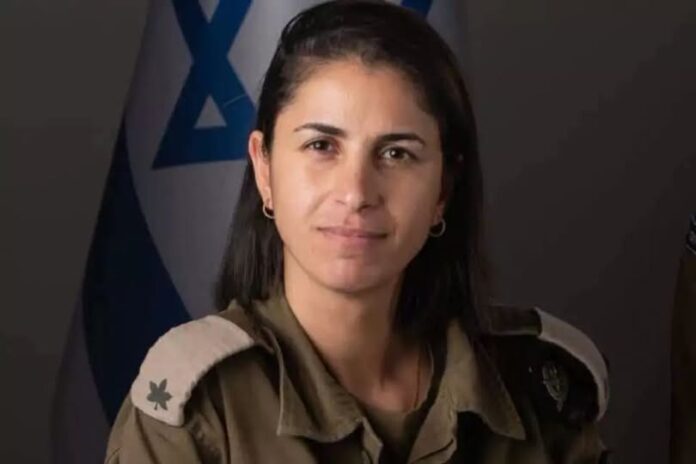
Ella Waweya: an Israeli Muslim Arab woman who has risen to the rank of Major, becoming one of the most senior Arab Muslim officers in the IDF.
Photo: IDF
By: Chaya Abecassis
In a region so often defined by division, conflict, and entrenched narratives of separation, a singular image has emerged from the heart of Israel’s military establishment—an image that, in its quiet yet unmistakable power, challenges prevailing assumptions and underscores the country’s complex social fabric. At an air force base in southern Israel, Lieutenant Colonel Ella Waweya, a Muslim woman and the Arabic-language spokesperson for the Israel Defense Forces, stood before an advanced “Adir” aircraft and delivered a message that resonated far beyond the confines of the military sphere.
“I am standing behind an ‘Adir’ aircraft that is undermining the capabilities of the Iranian regime,” she declared with measured resolve. “We have the plan, the capabilities, and the targets—and we will continue to act with determination, precision, and strength for your security.”
Her words, delivered in the context of an escalating confrontation with Iran, were not merely a statement of military intent. They represented something far more profound: a living testament to the ethos of pluralism and inclusion that defines Israel’s armed forces and, by extension, its broader society.
The Israel Defense Forces have long been characterized not only by their operational readiness but also by their remarkable social composition. Within their ranks serve individuals from a wide array of ethnic, religious, and cultural backgrounds—Jews of diverse origins, Druze, Christians, Bedouin, and increasingly, Muslim men and women who have chosen to contribute to the defense of the state.
Lieutenant Colonel Waweya’s role is particularly significant. As the official Arabic-language spokesperson, she occupies a position that bridges linguistic and cultural divides, addressing audiences both within Israel and across the broader Middle East. Her presence in such a prominent capacity is emblematic of a system that, while not without its challenges, actively incorporates minority voices into its most visible and consequential institutions.
This inclusivity is not incidental; it is institutional. Muslim soldiers, including Bedouin trackers renowned for their specialized skills, serve alongside their Jewish counterparts in a variety of units. Women—across all communities—have increasingly assumed leadership roles, reflecting a broader commitment to gender equality within the military framework.
The image of a Muslim woman standing beside one of the most advanced aircraft in the Israeli arsenal carries a symbolism that is difficult to overstate. It conveys a message not only to adversaries but also to allies and observers: that Israel’s strength derives not solely from its technological capabilities but from the diversity and cohesion of its people.
In a region where religious identity is often weaponized as a tool of division, the integration of Muslim personnel into the Israeli military challenges reductive narratives. It demonstrates that allegiance to the state and participation in its defense are not confined to a single religious or ethnic group.
Moreover, Waweya’s speech underscores a broader principle: that the defense of Israel is a collective endeavor, encompassing citizens from all walks of life. Her words—firm, articulate, and resolute—embody a shared commitment to security that transcends individual identity.
The military serves as a microcosm of the nation itself—a space where differences are not erased but integrated into a unified purpose.
This is not to suggest an absence of tension or complexity. Like any diverse society, Israel grapples with internal challenges and competing perspectives. However, the elevation of figures such as Lieutenant Colonel Waweya illustrates a deliberate effort to foster inclusion and representation at the highest levels.
Her visibility, particularly during a period of heightened conflict, sends a powerful signal. It affirms that Israel’s defense is not the domain of a singular identity but a shared responsibility embraced by a multifaceted citizenry.
As the aircraft behind her symbolized technological superiority and strategic reach, Lieutenant Colonel Ella Waweya herself embodied something equally vital: the human dimension of national defense. Her presence, her voice, and her role within the IDF serve as a compelling reminder that strength is not measured solely in firepower but in the ability to unite diverse individuals under a common purpose.
In an era marked by polarization and mistrust, her message resonates with a clarity that transcends the immediate context of military operations. It speaks to the possibility of coexistence, the power of inclusion, and the enduring potential of a society that, even amid conflict, strives to reflect the full spectrum of its people.
Sky of Sirens: Iran’s Intensifying Missile Barrage Batters Central Israel as Retaliation Strikes Rock Tehran
By: Tzirel Rosenblatt
A volatile and deeply perilous escalation in the ongoing regional conflict unfolded on Wednesday afternoon as the Iranian regime launched a substantial salvo of ballistic missiles toward the heart of Israel, triggering widespread alarm, mass civilian displacement into shelters, and a rapid sequence of retaliatory strikes deep within Iranian territory. As reported on Wednesday by Israel National News, the dual-front confrontation underscores a widening and increasingly sophisticated conflict that now spans not only geographic boundaries but also the psychological resilience of civilian populations.
The assault, described by defense officials as unusually large in both scale and coordination, involved between eight and ten ballistic missiles directed toward central Israel—specifically targeting densely populated urban centers. Within moments of detection, air raid sirens reverberated across cities including Tel Aviv, Ramat Gan, Bnei Brak, and Savyon, in some locations sounding as many as five times within a matter of minutes.
According to accounts compiled by Israel National News, the rapid succession of alerts created an atmosphere of acute urgency and confusion, compelling residents to seek immediate refuge in protected spaces. The intensity of the warning system activation underscored the severity of the threat and the unpredictability of the incoming projectiles.
Emergency response protocols were activated with remarkable speed. Rescue teams, including personnel from Magen David Adom, were dispatched to no fewer than ten distinct locations from which distress calls had been received. These teams encountered scenes marked by structural damage, scattered debris, and shaken civilians emerging cautiously from shelters.
Despite the scale of the barrage, initial reports indicated that there were no widespread fatalities. However, the absence of mass casualties belies the gravity of individual cases and the broader psychological toll inflicted upon the population.
Medical teams treated several individuals suffering from acute anxiety, a predictable yet no less significant consequence of sustained exposure to missile threats. Additionally, five civilians sustained injuries while attempting to reach protected areas—an illustration of the inherent dangers even in the act of seeking safety.
More severe injuries were reported in subsequent incidents. Sheba Medical Center in Tel Hashomer confirmed that its medical staff were engaged in a desperate effort to save the life of an 11-year-old girl critically wounded by shrapnel. Her condition was described as grave, while her father was reported to be in moderate condition. Six additional children were admitted for treatment, reflecting the indiscriminate nature of the attack.
At Beilinson Hospital in Petah Tikva, another young victim—a 12-year-old boy—was listed in serious condition, alongside his mother, who sustained moderate injuries. Eleven additional individuals with minor injuries were treated and transported to nearby medical facilities. These cases, documented by Israel National News, highlight the human cost of the escalation, particularly among the most vulnerable segments of society.
Eyewitness accounts from emergency responders provide a stark and unvarnished depiction of the aftermath. Magen David Adom paramedic Yissachar Weiss described arriving at a site marked by visible destruction and disoriented civilians.
“We saw destruction and people walking around conscious,” Weiss recounted. “Among them was an 11-year-old girl, semi-conscious, suffering from shrapnel injuries to her limbs. We provided immediate medical treatment and evacuated her to the hospital in serious condition.”
Senior medic Lipa Hirsch offered a similarly sobering account, noting the discovery of a 13-year-old boy who had sustained injuries from the blast. “He was conscious but clearly affected,” Hirsch said. “We transported him in moderate condition while continuing to search the area for additional casualties.”
Such testimonies, frequently cited by Israel National News, illuminate the chaotic and often harrowing conditions faced by first responders operating under the constant threat of additional strikes.
Beyond the immediate human toll, the missile impacts triggered a series of secondary incidents that further complicated emergency response efforts. In Holon, a fire erupted in an open area following a direct hit, necessitating intervention by firefighting units. In Petah Tikva, a building strike resulted in a gas leak, prompting urgent containment measures to prevent further danger.
Interception debris—fragments of missiles neutralized by Israel’s air defense systems—was discovered across multiple cities in the Sharon region, illustrating the gravity of the engagement. While these systems successfully intercepted a significant portion of the incoming threats, officials emphasized that no defense mechanism is entirely impermeable.
Compounding the sense of instability, residents were scarcely given time to recover before additional alerts signaled the probability of a second barrage. Sirens pierced the afternoon air, extending beyond central Israel to include regions such as Samaria and parts of the south.
The repetition of alerts within such a compressed timeframe amplified public anxiety and underscored the evolving tactics employed by the Iranian regime. According to the report by Israel National News, the staggered nature of the attacks appears designed to overwhelm both defensive systems and civilian coping mechanisms.
In a swift and decisive countermeasure, the Israel Defense Forces initiated a comprehensive wave of strikes targeting Iranian military infrastructure. These operations, concentrated in the capital city of Tehran and surrounding areas, aimed to degrade the regime’s offensive capabilities and disrupt its ability to launch further attacks.
Over the course of two days, the Israeli Air Force reportedly struck approximately 400 targets across Iran. These included dozens of military installations in central Tehran and at least 15 key weapons manufacturing facilities—sites believed to be integral to the production of ballistic missiles and other advanced armaments.
The scale and precision of these strikes reflect a broader strategic objective: to systematically dismantle the Iranian regime’s capacity to wage sustained warfare. As emphasized in reporting by Israel National News, the operations represent not merely retaliation but a calculated effort to alter the balance of power in the region.
The events of Wednesday illustrate the increasingly complicated nature of modern warfare, in which military engagements are conducted alongside psychological operations aimed at undermining civilian morale. The repeated activation of sirens, the unpredictability of missile trajectories, and the visible effects of destruction all contribute to a pervasive sense of vulnerability.
At the same time, the resilience demonstrated by Israeli civilians—evident in their adherence to safety protocols and the rapid mobilization of emergency services—serves as a countervailing force. The ability to maintain societal cohesion under such conditions is itself a strategic asset.
The escalation carries profound implications not only for Israel and Iran but for the broader international community. The involvement of advanced missile systems, the targeting of urban centers, and the speed of retaliatory actions all raise the specter of a wider conflagration.
Diplomatic efforts to contain the conflict are ongoing, yet the trajectory of events suggests that military considerations currently dominate the strategic landscape. The interplay between offense and defense, deterrence and escalation, will likely shape the next phase of the conflict.
As the dust settles—temporarily—over the cities of central Israel, the events of this latest exchange stand as a stark reminder of the fragility of regional stability. The Iranian missile barrage and Israel’s subsequent strikes represent not isolated incidents but components of a broader and deeply entrenched confrontation.
For now, both nations remain locked in a cycle of action and reaction, each seeking to assert dominance while avoiding the threshold of all-out war.
In this precarious equilibrium, the lives of civilians—children, families, entire communities—hang in the balance, their daily existence shaped by the sound of sirens and the hope that the next warning will not herald catastrophe.
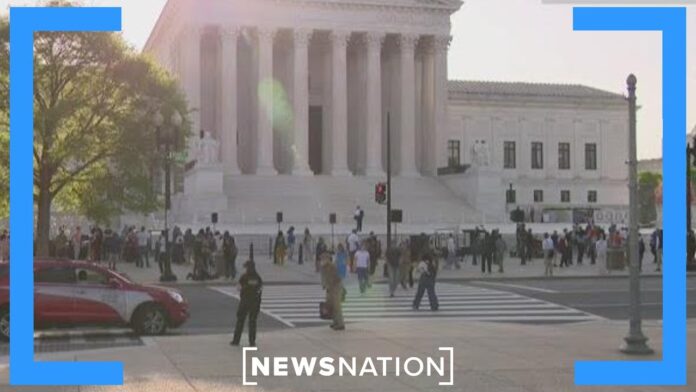
(TJV NEWS) President Donald Trump made an extraordinary appearance at the U.S. Supreme Court this week, sitting in on oral arguments tied to one of the most consequential legal fights of his political career — but he did not stay for the full hearing, according to reporting from The Mirror.
As The Mirror reports, Trump attended arguments centered on his administration’s effort to restrict birthright citizenship, a policy that directly challenges long-standing interpretations of the 14th Amendment to the United States Constitution. The amendment has historically been understood to guarantee citizenship to anyone born on U.S. soil, regardless of their parents’ immigration status — a principle that has been upheld for more than a century.
Trump’s presence alone marked a highly unusual moment in American legal history. Sitting presidents almost never attend Supreme Court proceedings, largely out of respect for the separation of powers and to avoid the perception of influencing the judiciary. His decision to appear in person underscored the political and legal weight of the case, which could fundamentally reshape U.S. immigration policy.
According to The Mirror, Trump took a seat in the courtroom gallery as his administration’s legal team presented arguments defending the proposed limits on automatic citizenship. Government lawyers argued that the current interpretation of the 14th Amendment has been applied too broadly and that the Constitution does not necessarily guarantee citizenship to children born to non-citizens or undocumented immigrants.
However, in a move that quickly drew attention, Trump did not remain for the full session. As reported by The Mirror, he left the courtroom shortly after his administration’s lawyers concluded their arguments, exiting before attorneys challenging the policy had fully presented their case. The early departure sparked immediate reaction, both inside Washington and across social media.
Critics seized on the moment, arguing that leaving before hearing opposing arguments reflected poorly on the seriousness of the constitutional debate. Some legal analysts suggested that the optics of the move could reinforce concerns about politicizing the court. Supporters, on the other hand, dismissed the criticism, noting that there is no formal requirement for attendees — even a president — to remain for the entirety of oral arguments.
The case itself has been working its way through the courts after lower federal judges blocked the policy, ruling that it likely violates the Constitution. Those rulings set up a direct showdown at the Supreme Court, where justices are now tasked with determining whether the executive branch has the authority to reinterpret the scope of birthright citizenship.
During the hearing, The Mirror notes, several justices appeared skeptical of the administration’s arguments, pressing government lawyers on both historical precedent and the potential consequences of narrowing citizenship rights. Questions from the bench focused heavily on whether such a significant shift should come from Congress rather than through executive action.
Legal scholars widely view the case as a potential landmark decision — one that could redefine the meaning of citizenship in the United States. If the court were to side with Trump’s position, it could open the door to sweeping changes in immigration enforcement and the legal status of millions of people born in the country.
At the same time, a ruling against the administration would reaffirm more than a century of constitutional interpretation and limit the ability of future presidents to unilaterally alter such a foundational right.
Trump’s brief appearance — and his decision to leave early — added another layer of political theater to an already high-stakes legal battle. As The Mirror emphasizes, the moment highlights both the unprecedented nature of the case and the intense scrutiny surrounding every move tied to it.
The Supreme Court is expected to issue its ruling in the coming months, a decision that could carry profound and lasting consequences for immigration law, constitutional interpretation, and the balance of power between the presidency and the courts.
In a development that has reverberated across diplomatic corridors from Washington to Brussels, President Donald Trump has signaled that the United States may be on the verge of a historic rupture with the North Atlantic Treaty Organization, raising the specter of a geopolitical realignment at a moment of acute international tension. As reported on Wednesday by Fox News, the president’s remarks—delivered in the context of escalating conflict with Iran—underscore a profound dissatisfaction with the alliance’s response and call into question the future of a cornerstone of postwar global security.
For more than seven decades, NATO has functioned as the bedrock of transatlantic defense cooperation, a collective security pact designed to deter aggression and maintain stability across Europe and beyond. Yet in recent years, tensions between Washington and its European partners have intensified, driven by disputes over burden-sharing, strategic priorities, and the evolving nature of global threats.
President Trump’s latest comments suggest that these tensions may have reached a critical inflection point. In an interview cited by Fox News, the president indicated that withdrawing the United States from NATO is no longer a hypothetical consideration but a policy option actively under review.
“I was never swayed by NATO,” Trump reportedly stated, adding that reconsidering America’s participation in the alliance was “beyond consideration.” Such language represents a marked escalation in rhetoric, transforming long-standing skepticism into a potential course of action with far-reaching implications.
At the heart of the current dispute lies the ongoing conflict with Iran and the strategic importance of the Strait of Hormuz—a narrow maritime corridor through which approximately one-fifth of the world’s oil supply flows. Iranian efforts to disrupt or control access to the strait have heightened concerns about global energy markets, prompting the United States to seek a coordinated international response.
According to the Fox News report, the Trump administration requested that NATO allies deploy naval forces to help secure the waterway. However, European nations reportedly declined to participate, citing a range of strategic and political considerations.
For President Trump, this refusal appears to have crystallized broader frustrations. “Beyond not being there, it was actually hard to believe,” he remarked, expressing incredulity at what he perceives as a lack of reciprocity within the alliance.
The president’s critique is rooted in a longstanding argument: that the United States has disproportionately borne the burden of NATO’s collective defense commitments, often intervening on behalf of allies without receiving equivalent support in return.
Trump’s skepticism toward NATO is not new. Throughout his political career, he has repeatedly questioned the alliance’s efficacy and fairness, characterizing it as an outdated institution that fails to reflect contemporary geopolitical realities.
In his recent remarks, he went further, reportedly describing NATO as a “paper tiger”—a term that implies both weakness and a lack of credibility. He suggested that such perceptions are not limited to Washington but are shared by adversaries, including Russia.
This critique aligns with a broader strategic worldview that prioritizes bilateral agreements and transactional relationships over multilateral frameworks. For Trump, alliances must demonstrate tangible value and mutual commitment; otherwise, their utility is called into question.
The president’s comments have also extended to individual allied nations, most notably the United Kingdom. In remarks cited by Fox News, Trump criticized British military capabilities and questioned the country’s willingness to engage in the current conflict.
These statements prompted a swift response from Keir Starmer, who reaffirmed Britain’s commitment to NATO and emphasized the alliance’s enduring importance. “It is the single most effective military alliance the world has ever seen,” Starmer declared, underscoring a stark divergence in perspective.
The exchange highlights a broader transatlantic divide, one that extends beyond the immediate issue of Iran to encompass fundamental differences in strategic outlook and political philosophy.
The potential withdrawal of the United States from NATO would constitute one of the most consequential shifts in global security architecture since the end of World War II. Such a move would not only alter the balance of power within Europe but also have cascading effects across multiple regions.
For European nations, the prospect of diminished American involvement raises urgent questions about defense capabilities and strategic autonomy. Many countries have historically relied on the United States as the guarantor of their security, a role that would be significantly diminished—or entirely eliminated—under a NATO withdrawal scenario.
For adversaries, the implications are equally significant. A weakened or fragmented alliance could embolden rival powers, altering calculations regarding deterrence and potentially increasing the likelihood of conflict.
The immediate context of the dispute—the Strait of Hormuz—adds an additional layer of complexity. As a critical artery for global oil supply, the strait’s stability is essential not only for energy markets but for the broader global economy.
Disruptions to this corridor have historically resulted in sharp fluctuations in oil prices, with ripple effects across industries and regions. The reluctance of NATO allies to participate in securing the strait reflects a cautious approach, balancing the desire to maintain stability with the risks of direct military involvement.
From the perspective of the Trump administration, however, such caution may be interpreted as a failure to meet shared responsibilities. The president’s expectation of automatic support—particularly in light of past American interventions—forms a central pillar of his argument.
Within the United States, the debate over NATO is deeply intertwined with broader questions about foreign policy and national identity. Advocates of continued engagement emphasize the alliance’s role in preserving stability and preventing conflict, while critics argue for a more restrained and selective approach.
President Trump’s position resonates with a segment of the electorate that favors reducing overseas commitments and prioritizing domestic interests. His critique of NATO, therefore, is not merely a policy stance but a reflection of a broader ideological shift.
At the same time, the potential consequences of withdrawal have prompted concern among policymakers and analysts, many of whom warn of the risks associated with dismantling longstanding alliances.
As tensions continue to escalate, the future of NATO—and by extension, the structure of global security—appears increasingly uncertain. The coming weeks may prove decisive, as diplomatic efforts unfold and strategic decisions are made.
For now, the alliance remains intact, its members navigating a complex and evolving landscape. Yet the possibility of a fundamental change cannot be dismissed, particularly in light of the president’s unequivocal language.
The statements attributed to President Trump, as reported by Fox News, mark a potential turning point in the history of transatlantic relations. They reflect not only immediate frustrations over the Iran conflict but a deeper reevaluation of the principles that have governed international cooperation for decades.
Whether this moment will culminate in a formal withdrawal or serve as a catalyst for reform remains to be seen. What is clear, however, is that the assumptions underpinning the postwar order are being tested in unprecedented ways.
In an era defined by shifting alliances and emerging threats, the question is no longer whether change is coming, but how profound that change will be—and what it will mean for the future of global stability.
As Israel prepared to usher in the Passover holiday—a time traditionally defined by reflection, renewal, and national memory—the country found itself once again navigating the uneasy intersection of celebration and conflict. In a solemn and strategically significant address delivered just hours before the onset of the holiday, Effie Defrin, spokesman for the Israel Defense Forces, issued a stark warning: the threat of missile fire from Iran and its proxies remains acute, even during one of the most sacred periods on the Jewish calendar.
According to a report on Wednesday by Israel National News, Defrin’s message was not one of alarmism, but of sober vigilance. It reflected a military establishment deeply engaged in a complex and evolving campaign—known as Operation Roaring Lion—while simultaneously preparing the civilian population for the realities of a conflict that shows little regard for timing or tradition.
Passover, often referred to as the Festival of Freedom, commemorates the liberation of the Israelites from bondage in ancient Egypt. Yet in contemporary Israel, the holiday has increasingly become intertwined with the imperatives of national security. This year, that intersection is particularly pronounced.
Defrin emphasized that both the Iranian regime and the Hezbollah organization may seek to exploit the holiday period as an opportunity to launch attacks against Israeli territory. “The Iranian terror regime and the Hezbollah terrorist organization may fire toward Israeli territory in an attempt to harm Israeli civilians during the holiday,” he stated, as cited by Israel National News.
Such warnings are not issued lightly. They reflect intelligence assessments suggesting that adversarial actors may perceive symbolic moments—such as major religious holidays—as strategically advantageous times to attempt psychological and physical disruption.
Central to Defrin’s address was a reaffirmation of Israel’s defensive readiness. The country’s multilayered missile defense systems, widely regarded as among the most sophisticated in the world, have been deployed across the nation in anticipation of potential threats.
“Defensive systems are deployed and prepared to intercept threats across the country,” Defrin noted, according to Israel National News. This assurance is intended to provide a measure of confidence to a population accustomed to living under periodic threat.
Yet the spokesman was careful to temper this reassurance with a crucial caveat: no defense system is infallible. “Even on the eve of the holiday, it is important to remember that the defense is not hermetic,” he stressed, invoking a term that underscores the impossibility of achieving absolute protection.
This acknowledgment reflects a broader philosophy within Israeli civil defense policy—one that emphasizes not only technological capability but also public awareness and compliance. Defrin urged citizens to continue following the directives of the Home Front Command, whose guidelines have become an integral part of daily life in times of heightened tension.
While much of the public focus rests on defensive measures, Defrin’s remarks also highlighted the ongoing offensive dimension of Operation Roaring Lion. The IDF, he indicated, is actively engaged in striking enemy targets, with operations extending beyond Israel’s borders.
“Overnight, we struck senior commanders in the Hezbollah terrorist organization in the heart of Beirut,” Defrin revealed, as reported by Israel National News. This statement points to a broader strategic effort aimed at degrading the command and control capabilities of adversarial forces.
Such operations are part of a cumulative approach designed to weaken enemy infrastructure and disrupt operational planning. According to Defrin, these efforts are yielding tangible results, contributing to what he described as “broad success.”
The emphasis on accumulating achievements reflects a long-term strategic calculus—one that seeks not merely to respond to immediate threats but to reshape the operational environment in a manner that reduces future risks.
Beyond the technical and strategic dimensions of the conflict, Defrin’s address also carried a deeply human element. He spoke directly to the soldiers operating across multiple fronts, acknowledging their courage and dedication in a time of sustained pressure.
The Israeli military, composed largely of citizen-soldiers, represents a cross-section of society. Its members are not only defenders of the country but also sons, daughters, parents, and siblings—individuals whose personal lives are inextricably linked to the broader national experience.
Defrin extended his remarks to the families of these soldiers, many of whom will spend the holiday separated from their loved ones. “Be proud of them,” he said, as quoted by Israel National News. “They are acting with dedication, determination, and responsibility for the security of the State of Israel and its civilians during this holiday as well.”
This acknowledgment serves as a reminder that the burden of defense is shared not only by those in uniform but also by the families who support them.
The timing of Defrin’s address underscores the psychological dimension of modern warfare. By issuing a warning ahead of a major holiday, the IDF seeks to prepare the public without inducing panic—a delicate balance that requires both transparency and restraint.
Adversaries, for their part, often aim to exploit moments of cultural or religious significance to amplify the psychological impact of their actions. The potential targeting of civilians during Passover would not only pose a physical threat but also seek to undermine the sense of normalcy and continuity that such holidays represent.
In this context, the IDF’s communication strategy plays a critical role. By informing the public of potential risks while emphasizing preparedness, the military aims to foster resilience rather than fear.
Despite the warnings and the ongoing operations, life in Israel continues with a remarkable degree of continuity. Families prepare for the Passover Seder, children ask the traditional questions, and communities gather—albeit with an awareness of the surrounding uncertainties.
This duality—of celebration and vigilance—has become a defining characteristic of Israeli society. It reflects a collective determination to maintain cultural and religious traditions even in the face of persistent threats.
Defrin’s address can thus be seen as part of a broader narrative—one that acknowledges the realities of conflict while affirming the enduring strength of the nation’s social fabric.
As Israel enters the Passover holiday under the shadow of potential hostilities, the message conveyed by Effie Defrin is both clear and multifaceted. The threats are real, the challenges significant, and the stakes high. Yet the nation’s preparedness—both militarily and socially—remains robust.
Through its detailed reporting, Israel National News has provided a comprehensive account of this critical moment, capturing the interplay between strategy, security, and society.
In the final analysis, the address serves as a reminder that the pursuit of freedom—celebrated during Passover—is not merely a historical memory but an ongoing endeavor. It is a pursuit that demands vigilance, resilience, and an unwavering commitment to the principles that define the State of Israel.
Even as families gather around their tables, the guardians of that freedom remain at their posts, ensuring that the story of liberation continues to be written—not only in remembrance, but in reality.
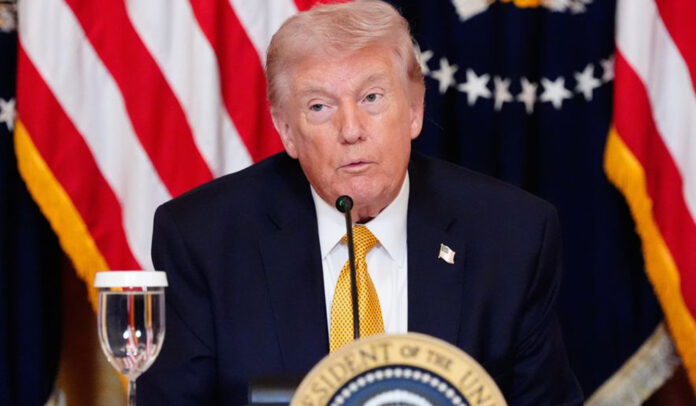
President Donald Trump speaks during a board meeting of the John F. Kennedy Memorial Center For The Performing Arts in the East Room of the White House, Monday, March 16, 2026, in Washington. (AP Photo/Alex Brandon)
(AP) — Iran’s Foreign Ministry spokesperson, Esmail Baghaei, called Trump’s claim the nation wants a ceasefire “false and baseless,” according to a report on Iranian state television.
Also, Iran’s paramilitary Revolutionary Guard separately issued a statement saying the Strait of Hormuz “is firmly and decisively under the control” of its forces.
“This strait will not be opened to the enemies of this nation through the ridiculous spectacle by the president of the United States,” it added.
Both responses are contrary to statements President Trump made on Truth Social Wednseday morning.
The ascent of Mayor Zohran Mamdani has coincided with what can only be described as a deeply disconcerting normalization of antisemitic rhetoric, institutional equivocation, and political duplicity. Credit: AP
By: Ezequiel Doiny
On March 31, 2026 Arutz 7 reported “Jewish comedian Mordechai Rosenfeld, known as Modi, announced on Monday that he will not attend the annual “Downtown Seder” event in Lower Manhattan, after Jewish Insider revealed that New York City Mayor Zohran Mamdani will take part in the event. The event is a Passover-themed benefit for a nonprofit focused on peacebuilding. Israeli musician David Broza is also scheduled to appear at the event.
In a post on Instagram on Monday, Modi’s representatives wrote, “We were not aware Mamdani was participating until today. Modi will not be attending this evening.” Mamdani, who was already under fire during his mayoral campaign for his anti-Israel views, caused an uproar on his first day in office when he cancelled executive orders related to Israel, which were issued by his predecessor, Eric Adams.
The move cancelled an order signed by Adams in June of 2025 formally recognizing the International Holocaust Remembrance Alliance’s (IHRA) working definition of antisemitism. Another executive order which was cancelled prohibited mayoral appointees and agency staff from boycotting and disinvesting from Israel. Mamdani has faced multiple antisemitism controversies since taking office. A recent report indicated that Mamdani’s wife, Rama Dawaji, liked several social media posts that praised or appeared supportive of Hamas’s October 7, 2023, massacre. Earlier this month, Mamdani was introduced at a Ramadan event by a man who called for Hamas to bomb Tel Aviv.”
On January 1, 2026 Arutz 7 reported “William Daroff, CEO of the Conference of Presidents of Major American Jewish organizations, condemned New York City Mayor Zohran Mamdani’s decision to cancel the executive order signed by his predecessor, Eric Adams, in June of 2025, which had formally recognized the International Holocaust Remembrance Alliance’s (IHRA) working definition of antisemitism. “Mayor Madani’s decision to cancel New York’s adoption of the IHRA definition of antisemitism, along with related presidential orders aimed at addressing antisemitic discrimination, is a troubling indicator of the direction he is leading the city, just one day after taking office,” Daroff said.
On March 9, 2026 the NY Post reported “Mayor Zohran Mamdani hosted controversial anti-Israel activist and accused Hamas sympathizer Mahmoud Khalil, his wife and their young son for dinner at Gracie Mansion for the holy month of Ramadan. “Last night, as we marked the one year anniversary of his detention, Rama and I were honored to welcome Mahmoud, Noor, and their son Deen to Gracie Mansion to break our fast together,” Mamdani wrote in a Monday Instagram post. The mayor included a photo of the celebration, showing his wife, Rama Duwaji, holding a plate of food while standing next to a seated Khalil, who was enjoying his meal with a giant smile…”
When Israel and America attacked Iran, Iranians celebrated but Mamdani condemned the attack.
On March 1, 2026 the Gateway Pundit reported:
“A video went viral Saturday that was posted by an Iranian woman doing the YMCA dance to celebrate President Donald Trump toppling the evil Islamist Iranian regime led by Ayatollah Ali Khamenei. The woman, Sana Ebrahimi, had previously posted that she fled her home country to escape the Islamist regime…”
While Iranians celebrated the elimination of Khamenei, Mamdani condemned the attack , pro-Palestinian groups on campus chanted “death to America”.
Arutz 7 reported “New York City Mayor Zohran Mamdani on Friday strongly condemned the joint military strikes carried out by the US and Israel against Iran, calling them a dangerous escalation. Mamdani described the strikes as “a catastrophic escalation in an illegal war of aggression…”
The Gateway Pundit reported “An unofficial Columbia University student group, the pro-Palestinian ‘Columbia University Apartheid Divest’ posted “marg bar amrika,” the Islamist Iranian regime chant that means, “death to America,” to X Saturday in response to the killing of Iran Supreme Leader Ayatollah Ale Khamenei in joint U.S.-Israeli air strikes…”
Mamdani also praised the one sided persecution of Betar, a Zionist group.
On January 14, 2026 the Jerusalem Post reported “Mamdani praises disbanding of Zionist organization Betar…New York City Mayor Zohran Mamdani praised New York Attorney General Letitia James for ordering Betar US to cease its “campaign of violence, harassment, and intimidation against Arab, Muslim, and Jewish New Yorkers.”
Responding to the mayor’s comments, Betar tweeted “Mamdani’s FIRST target is BETAR, a 102 year old Zionist organization headquartered in the Jabotinsky building in Israel. Expect all Zionist groups who stand with the IDF to be next
” …Critics of the settlement were quick to point out that it was one-sided, with no similar crackdown on groups such as Within Our Lifetime, PAL-AWDA, Palestine Youth Movement (PYM), Social Justice for Palestine (SJP), or Jewish Voices for Peace, which incite and propagate hate towards the Jewish community…”
Not only Mamdani and his wife are anti-semites, Mamadani’s father, a Columbia professor is also a radical anti-Israel activist.
On January 13, 2025 the Washington Free Beacon reported “Mamdani’s Father Attacks Columbia’s Anti-Semitism Task Force…Zohran Mamdani’s father, the radical Columbia University professor Mahmood Mamdani, savaged the school’s anti-Semitism task force during a Dec. 12 meeting of the University Senate. Mamdani described the task force as a “prosecutorial agency” and likened its work to imperial British colonizers, who used racial divisions to maintain power, according to an unofficial transcript obtained by our Jessica Schwalb…”
Liberal Jews embracing Mamdani and inviting him for a Passover Seder are the same that campaigned for Mamdani during the elections, these are the same people to whom the Israeli Supreme Court wants honor with a share of the Kotel.
On March 3, 2026 Morton Klein wrote in the ZOA website “Morton Klein, national president of the Zionist Organization of America, sharply criticized a coalition of Reform Jewish groups, accusing them of undercutting U.S. and Israeli military efforts and repeating what he called false claims about shelter access in Israel. Klein told JNS that a March 1 letter from the coalition “is a wishy-washy hodgepodge that fails to appreciate, support and express gratitude for the brilliant, necessary joint U.S.-Israeli actions against the Iranian regime’s dangerous military and nuclear programs.”
“The letter addressing the war in Iran was signed by leaders from eight organizations within the Reform movement, including Rabbi Rick Jacobs, president of the Union for Reform Judaism, who is listed as a speaker at the J Street Convention in Washington, D.C., which concludes on Tuesday.
“Klein said the Reform movement’s statement undermines U.S. and Israeli efforts and legitimacy by challenging the military strategy, incorrectly asserting that Congress has been blocked from carrying out its constitutional duties—which he said U.S. President Donald Trump is fully observing under the Constitution and War Powers Act—and by advancing what he called the “blood libel” claim that Israelis are in bomb shelters while Palestinians lack access to them.
“We are keeping in our hearts those in the direct line of Iranian missiles who are forced to seek safety in bomb shelters—as well as Palestinians who do not have access to shelters—at this very moment,” the letter states. “There is no ‘ethnic shelter discrimination,’” Klein told JNS. “Shelters are mandatory in all new buildings. Many Jewish Israelis and Arabs who live in older homes lack the best access to shelters.” “Shame on the Reform movement,” he added…”
On July 27, 2025 the Union for Reform Judaism published in its website “Reform Movement Statement on Starvation in Gaza…
“…No one should be unaffected by the pervasive hunger experienced by thousands of Gazans. No one should spend the bulk of their time arguing technical definitions between starvation and pervasive hunger. The situation is dire, and it is deadly. Nor should we accept arguments that because Hamas is the primary reason many Gazans are either starving or on the verge of starving, that the Jewish State is not also culpable in this human disaster. The primary moral response must begin with anguished hearts in the face of such a large-scale human tragedy…Starving Gazan civilians neither will bring Israel the “total victory” over Hamas it seeks, nor can it be justified by Jewish values or humanitarian law…
On February 20, 2025 Heritage Minister Rabbi Amichai Eliyahu wrote in Arutz 7 ” In May 2021, when Israel was burning during Operation Guardian of the Walls, when millions of Israelis, children and the elderly, sat day and night in shelters under barrages of Hamas rockets – over 90 rabbinical students of the Reform movement published a public letter. The future generation of their leadership. What did they write there? Did they condemn the terror? Did they send strength to their brethren under attack? Absolutely not. They accused the State of Israel of “apartheid,” called to halt military aid to the IDF, and cried crocodile tears over the suffering in Gaza.
This is not a one-time slip. This is a movement from which vast sections are today providing a tailwind, funding, and legitimacy to radical left-wing organizations on US campuses. Organizations that promote BDS, that call for boycotting Israeli products, and that persecute Jewish students who dare to support Zionism. As far as they are concerned, Judaism is universal, global, one that embraces everyone – except for the Israeli Jew fighting for his life. This disdain for everything related to our nationalism comes from the highest levels. Listen to what happens at their “rabbinical” ordination ceremony (Hebrew Union College). The keynote speaker who takes the stage, to the sound of applause, doesn’t speak about the eternity of Israel.
On the contrary. He stands there and trashes the IDF. He describes our presence here as “walls made from the bodies of teenage soldiers.” Do you understand? Those 19-year-old heroes standing on the firing line to prevent the next massacre are to him just pawns of an occupation protecting a “ghetto of zealots.”
And more than that – he explains to their prospective clergy that there is no problem whatsoever, and it is even desirable, for the Jewish people to disappear and assimilate. He calls on them to tear down the “walls” of Judaism, preaches that intermarriage is the right path, and declares that if Judaism disappears from the world in favor of some enlightened “global tribe” – that is completely fine. For two thousand years, Jews sacrificed their lives so as not to assimilate, to preserve our heritage and our unique identity, and today, on their main stage, they celebrate the erasure of the Jewish people.
“And here is the numerical absurdity that simply cries out to high heaven: Out of about 12,000 synagogues in Israel, the Reform movement holds barely 50 congregations. That is less than half a percent. A marginal group that barely exists on the ground in Israel. It is exactly like one person, within a congregation of 300 worshippers, standing up in his audacity and demanding to expropriate a quarter of the synagogue for himself and his friends from abroad. Not just expropriate – but to bring loudspeakers there, change the prayer arrangements, and conduct ceremonies that trample on the tradition of the 299 other worshippers. In any normal place in the world, they would show him the door.
“But then comes the Supreme Court. Last night, in a decision that proves once again how disconnected the Supreme Court justices are from Jewish identity – excuse me, they are not disconnected. They are actively working against it. Against tradition, against Judaism, and against the majority of the Israeli public, they decided to hand this movement a victory. In the name of those empty words of “equality,” the Supreme Court is forcing the State of Israel to grant an official allocation and space at the Western Wall – the beating heart of the Jewish people – to those same people who despise us from afar.
They don’t come to the Kotel (Western Wall) to pray. The Kotel doesn’t really interest someone who dreams of becoming a citizen of the world and views our nationalism as a crime. They come to the Kotel as a battering ram. They want a foothold in our holiest place in order to gain political recognition, to poke a finger in the eye of traditional Judaism, and to undermine the Jewish identity of the state from within. It is time that we, the sane majority in Israel, stop apologizing and stop bowing our heads to these manipulators. The Western Wall is not real estate to be divided, nor is it playdough that can be molded according to the political whims of the Supreme Court. It belongs to a nation that is proud of its Judaism, that preserves its heritage, and that loves its soldiers. Whoever dreams of a world without a Jewish people – should not look for an estate at our Kotel.”
On February 19, 2025 King Ytzhack Amit, ruler of the Supreme Court, issued a decree to grant the Reform Movement an official allocation and space at the Western Wall. What are the possible consequences of this rule at one of Judaism’s Holiest sites ? There will soon be same sex marriages and Drag Queen story hour performances in the Kotel.
On February 16, 2026 Arutz 7 reported “In a statement to the Supreme Court, the Chief Rabbis assert that the Western Wall is a synagogue and is subject to halakhic rules that require separation between men and women…
“In the statement, filed by attorney Doron Taubman, the Chief Rabbis declare that the Western Wall plaza is considered a synagogue, and halakhic rules requiring gender separation apply to it. The Rabbinate points out that the southern plaza (“Ezrat Yisrael”) provides an alternative for groups wishing to pray outside the traditional Orthodox customs…”
On February 26, 2026 the Coalition for Jewish Values reported “Coalition for Jewish Values (CJV), representing over 2,500 traditional, Orthodox rabbis in public policy, and Am Echad, an organization dedicated to advancing the connection between Israel and the Diaspora, today announced publication of full‑page advertisements highlighting the “larger ideological program” driving the Reform movement’s campaign to have a large section at the Western Wall dedicated for mixed prayer under their auspices.
‘The ads, titled “Exposed,” were published in Wednesday morning’s Jerusalem Post, Yediot Acharonot, and Israel HaYom newspapers. They highlight that the current Reform campaign is part of a coordinated effort to reshape core elements of Jewish life and the Jewish character of the State of Israel. The groups point to Reform leaders’ own public statements evidencing a broader agenda that includes redefining marriage, expanding commercial activity on Shabbat, and altering the state’s Jewish identity.
“Reform leaders are employing talking points about ‘pluralism’ without acknowledging their own stated goals,” said Coalition for Jewish Values Israel Regional Vice President Rabbi Steven Pruzansky. “Yet they publicly declare that the Western Wall campaign is part of a much broader effort to redefine marriage, normalize government-funded desecration of the Sabbath, and reshape the Jewish character of the state. Israelis deserve to understand the full context, instead of being misinformed that this is simply about prayer space…”
“By the Grace of God, 27th of Sivan, Brooklyn, NY., Greetings and blessing:
“…an Orthodox Rabbi cannot in all conscience recognize the Conservative and Reform points of view, inasmuch as both of the latter do not accept the Written and Oral Law. Hence these movements and their representatives cannot be recognized as legitimately representing the Jewish religion, inasmuch as they reject it. This has been unequivocally ruled by the Rambam and other authorities that followed him, who have established the laws and attitudes of the Shulchan Aruch, leaving no room for doubt or discussion on this basic issue.
“From the above it follows immediately that the activities of such dissident groups cannot be recognized as Jewish religious activities within the definition of Jewish religion. Therefore, Orthodox Rabbis cannot, in all conscience, be members of a body or organization together with representatives of the non-Orthodox points of view, namely, of the Conservative and Reform movements, inasmuch as participation and affiliation in such a body or organization would ipso facto constitute a recognition of the Conservative and Reform interpretation of Judaism as being legitimate parts of the framework of the Jewish Religion, in direct conflict with the unequivocal Psak Din of the Rambam and other authorities, as mentioned above…” (source: “The Letter and the Spirit”, volume II page 57)
The Knesset and Israel’s Chief Rabbi must declare that Reformism is not Judaism and therefore reject the Supreme Court’s ruling granting an official allocation and space at the Western Wall to the Reform Movement.
Liberal Jews who embrace anti-Semites like Mamdani should not be rewarded with a place in the Kotel.
Ezequiel Doiny is author of “Obama’s assault on Jerusalem’s Western Wall” and “Jerusalem is the Spiritual capital of Judaism while Mecca is the Spiritual Capital of Islam”
After 78 Years, an Israeli Soldier Returns Home: The Long-Lost Burial of a 17-Year-Old Hero Finally Revealed
By: Fern Sidman
In a discovery that bridges nearly eight decades of uncertainty, grief, and national memory, the Israel Defense Forces has confirmed the final resting place of Private Dov Premat, a 17-year-old soldier who fell during Israel’s War of Independence and whose burial site remained unknown for 78 years. The revelation, reported on Wednesday by Israel National News, represents not only the resolution of a decades-long mystery but also a profound reaffirmation of Israel’s enduring moral commitment to its fallen.
For nearly eight decades, Premat had been classified among those soldiers whose fate was known, but whose burial place remained shrouded in uncertainty—a painful limbo that has afflicted many families since the earliest days of the state. Now, through painstaking investigative work conducted by the IDF’s Missing Persons Unit, it has been determined that Premat was interred in a mass grave at Maoz Haim, alongside 16 other soldiers who perished in the same conflict.
This long-awaited identification marks a deeply emotional milestone, both for Premat’s surviving family and for a nation that continues to honor the sacrifices made during its formative years.
To fully grasp the significance of this discovery, one must return to the harrowing circumstances of June 1948, when the young state of Israel was fighting for its very survival. According to detailed historical accounts cited by Israel National News, Premat served in Company A of the 11th Battalion of the “Oded” Brigade, a unit tasked with defending strategic positions in the northern Galilee.
On June 1, 1948, his company advanced to the village of Malkiya, replacing a Palmach force that had captured the area just days earlier. The strategic importance of Malkiya, situated near the Lebanese border, made it a focal point of fierce combat.
The decisive confrontation came on June 5. At noon, Lebanese forces—comprising infantry supported by armored vehicles—launched a coordinated assault from three directions. The Israeli defenders, though resolute, were significantly outmatched in both numbers and firepower.
The battle that followed was brutal and chaotic. Positions were contested with relentless intensity, and casualties mounted rapidly. Under sustained enemy fire, elements of the Israeli force were compelled to retreat toward the village center, where their command post was located.
It was during this desperate withdrawal that many of the fallen were left behind on the battlefield.
Among those left behind was Private Dov Premat, a teenager who had barely reached adulthood before being thrust into the crucible of war. According to findings referenced by Israel National News, Premat was likely struck while positioned at a location known as “Tree Hill,” a strategic vantage point west of the village.
His body remained there, near a shallow defensive position, as the surviving members of his unit withdrew under cover of darkness. The retreating soldiers, facing overwhelming pressure, were able to evacuate only a single wounded comrade, leaving others behind in the chaos.
In the aftermath of the battle, the bodies of fallen Israeli soldiers were reportedly collected and buried by enemy forces in temporary graves. These initial burials, conducted under wartime conditions, were often rudimentary and poorly documented—circumstances that would later complicate efforts to identify and recover the remains.
The uncertainty surrounding Premat’s burial was not unique. The War of Independence left numerous families without definitive answers regarding the fate of their loved ones. Over the years, the IDF has undertaken extensive efforts to locate and identify missing soldiers, driven by what it describes as a fundamental moral obligation.
As Israel National News has consistently reported, the IDF’s Missing Persons Unit has employed a combination of historical research, forensic analysis, and archival investigation to resolve such cases. In Premat’s case, this meticulous work ultimately led investigators to conclude that his remains had been transferred in November 1948 to a mass grave at Maoz Haim.
This grave, containing the remains of multiple soldiers, had itself been established following the relocation of bodies from earlier temporary burial sites, including those created by enemy forces on the battlefield.
The identification of Premat’s burial site thus represents the culmination of years of investigative persistence—a process that underscores the complexity of reconstructing events that occurred amid the chaos of early statehood.
The announcement of the findings was accompanied by remarks from Brigadier General Edna Ilia, the IDF’s Chief Human Resources Officer and head of the Casualties Division. Her statement, as reported by Israel National News, emphasized the ethical imperative that underpins the IDF’s efforts.
“The IDF and the Missing Persons Unit have been working and investigating cases of missing soldiers and fallen troops whose burial places have been unknown for many years,” she said. “This stems from the IDF’s moral duty and obligation to bring its fallen to burial in Israel.”
Her words reflect a deeply ingrained principle within Israeli society: that no soldier is ever forgotten, and that the passage of time does not diminish the responsibility to account for those who gave their lives in defense of the state.
In a poignant gesture, the findings were presented to Premat’s family during a meeting held on the eve of Passover—a timing that imbues the moment with additional symbolic resonance. The holiday, which commemorates liberation and redemption, provided a fitting context for the resolution of a decades-long search for truth and closure.
“It is our duty to return those who fell for the state,” Ilia continued. “It is a privilege for us to be part of an army that does not rest even after many years.”
While the identification of Premat’s burial site marks a significant achievement, it also serves as a reminder that the work is not yet complete. According to information cited by Israel National News, several soldiers who fell in the same battle remain unaccounted for.
The bodies of Shmuel Bernstein, Yaakov Leibovitz, Shmuel Moldavsky, Yitzhak Glick, and Shlomo Kron have yet to be located—a sobering indication of the enduring challenges faced by investigators.
For the families of these soldiers, the passage of time has not diminished the desire for answers. Each unresolved case represents a story interrupted, a life cut short, and a family left without closure.
The story of Dov Premat is, in many ways, emblematic of a generation that bore the weight of Israel’s founding struggles. At just 17 years old, he was among the youngest of those who took up arms to defend a nascent state under existential threat.
His sacrifice, like that of countless others, forms part of the foundational narrative of Israel—a narrative defined by resilience, courage, and an unwavering commitment to survival.
The eventual discovery of his burial site does not alter the tragic circumstances of his death, but it does restore a measure of dignity and recognition. It ensures that his name is not merely recorded in history, but anchored in a specific place—a place where remembrance can take root.
As Israel continues to confront contemporary challenges, the rediscovery of Dov Premat’s burial site serves as a powerful reminder of the enduring bonds between past and present. It underscores the nation’s commitment to honoring its fallen, not only through memorialization but through the relentless pursuit of truth.
Through its coverage, Israel National News has illuminated the significance of this discovery, capturing both its historical context and its emotional impact.
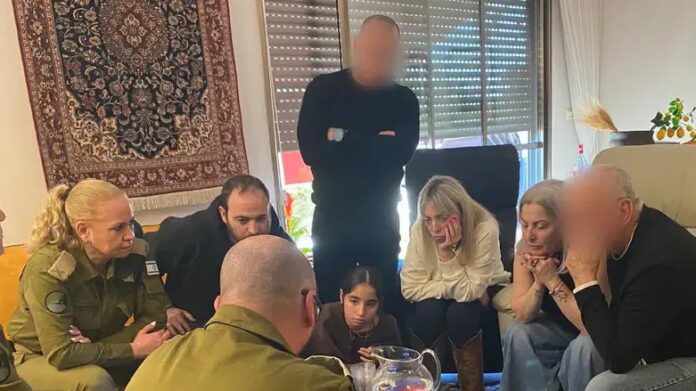
For Premat’s family, the announcement brings a long-awaited sense of closure. For the nation, it reaffirms a collective promise: that even after the passage of decades, those who fell in its defense will never be forgotten, and their stories will continue to be told with the reverence they deserve.
(Epoch Times) NATO intercepted and destroyed an Iranian missile that was fired on March 30 at Turkey, the latest of several such incidents since the U.S.–Israeli strikes on Iran began, a NATO spokesperson said.\
“NATO again successfully intercepted an Iranian ballistic missile heading to Türkiye,” NATO spokeswoman Allison Hart said in a post on her official X account on March 30 and using another spelling for Turkey. “NATO is prepared for such threats and will always do what is necessary to defend all Allies.”
The incident occurred on March 30.
The Turkish Ministry of National Defense confirmed the development in a separate statement and said that the ballistic missile was “neutralized by NATO air and missile defense assets deployed in the Eastern Mediterranean,” according to a translation.
“All necessary measures are being taken resolutely and without hesitation against all threats directed at our country’s territory and airspace, and all developments in the region are being carefully monitored with our national security as the priority,” the statement reads.
There were no further details provided by either NATO or the Turkish Defense Ministry, such as the exact location or the type of missile that was launched.
It was the fourth time that NATO had intercepted a projectile from Iran as it approached or entered Turkish airspace. Tehran has previously denied launching projectiles at Turkey.
Amid the conflict, Turkey has tried to maintain a neutral position and has officials taking part in mediation efforts.
After the U.S. and Israeli militaries launched strikes on Iran, including an attack that killed the country’s top leader, the Iranian regime has responded by firing barrages of missiles at U.S. assets in the region, including at targets in Saudi Arabia, the United Arab Emirates, Qatar, Kuwait, and elsewhere. In early March, Azerbaijan accused Iran of launching a drone attack on it.
Iranian officials on March 30 did not appear to publicly comment on the Turkish Defense Ministry’s and NATO’s assertions that it fired a missile at Turkey.
On state-run Tasnim News, the Iranian Islamic Revolution Guards Corps stated that it fired missiles at command and control centers, drone facilities, and locations in the Middle East that it claimed are being used by the U.S. and Israeli militaries. No locations in Turkey were listed.
The United States and Israel initiated combat operations in Iran on Feb. 28. The country’s top leader, Ayatollah Ali Khamenei, was among those killed in Tehran on the first day of strikes, with his son Mojtaba Khamenei later chosen to succeed him.
Aside from the drone and missile attacks in the region, Iran is also attempting to block some shipping traffic through the Strait of Hormuz, causing oil and gas prices to surge worldwide and inside the United States.
Israel also intensified its long-running strike campaign against the Iran-backed Hezbollah group in Lebanon, expanding its ground operations in the southern part of the country in recent days.
On March 30, U.S. Secretary of State Marco Rubio told ABC News that the Trump administration is still in negotiations with Tehran and indicated that the current regime is fractured due to the strikes.
U.S. President Donald Trump also said on March 30 in a post on social media that talks are going well, but he warned that Iran may face U.S. strikes on its energy plants and other infrastructure if it doesn’t immediately open the Strait of Hormuz.
As New York’s gubernatorial contest accelerates toward what is increasingly shaping up to be one of the most consequential elections in recent memory, Nassau County Executive Bruce Blakeman has emerged as a formidable and increasingly competitive challenger. According to an interview with Blakeman that appeared on Tuesday in The Algemeiner, Blakeman is advancing a sharply defined platform rooted in law enforcement rigor, unapologetic support for Israel, and an assertive campaign against antisemitism—an issue that has moved from the periphery to the center of public discourse across the state.
His candidacy, once considered a long shot in a reliably Democratic stronghold, is now gaining measurable traction. Polling data cited by The Algemeiner reflects a narrowing gap between Blakeman and incumbent Governor Kathy Hochul, with independents increasingly shifting toward the Republican challenger. The political terrain, long thought to be stable, now appears unsettled—reshaped by concerns over public safety, ideological polarization, and the growing unease within New York’s sizable Jewish population.
At the core of Blakeman’s campaign is a clear and uncompromising message: that the state’s leadership has failed to adequately safeguard its citizens—particularly Jewish communities—from rising threats. In his remarks to The Algemeiner, Blakeman underscored his tenure in Nassau County as a model of governance, one he argues has successfully insulated residents from the unrest witnessed elsewhere.
“In Nassau we have not permitted the lawless rioting that has threatened the safety and security of the Jewish community in New York City and on college campuses,” Blakeman stated. His language is deliberate, drawing a stark contrast between Nassau’s policies and what he portrays as permissiveness in neighboring jurisdictions.
Central to this approach is a stringent enforcement regime targeting protest activity that crosses into illegality. Demonstrators who engage in vandalism, intimidation, or violence, he insists, must face immediate arrest. Of particular note is Nassau County’s prohibition on face coverings during protests—a measure Blakeman credits with deterring anonymity-fueled lawlessness.
“These professional paid agitators know that in Nassau they face arrest if they break the law,” he told The Algemeiner, emphasizing that the elimination of masks has curtailed the ability of demonstrators to evade accountability.
This policy has acquired heightened relevance in the aftermath of widespread anti-Israel demonstrations across the United States, many of which featured masked participants and, in some instances, escalated into confrontational or threatening encounters. For Blakeman, the issue is not merely one of public order but of protecting vulnerable communities from targeted hostility.
Blakeman’s campaign is unfolding against a backdrop of intensifying concern over antisemitism, both nationally and within New York. The issue has become a defining fault line in state politics, intersecting with debates over free expression, foreign policy, and the boundaries of legitimate protest.
As The Algemeiner has documented, Blakeman has positioned himself as a staunch advocate for Jewish New Yorkers, a constituency that constitutes a significant portion of Nassau County’s population. Approximately 300,000 of the county’s 1.5 million residents identify as Jewish, making their security and well-being a central concern of local governance.
“As the leader of Nassau County, I have made protecting the Jewish community a priority,” Blakeman stated. His emphasis on demographic realities serves to reinforce the political and moral imperative underpinning his policy agenda.
Yet Blakeman’s framing extends beyond local considerations. He draws a direct connection between rhetoric targeting Israel and the safety of Jewish communities in the United States. In his view, denying Israel’s right to exist as a Jewish state constitutes not merely a geopolitical stance but a manifestation of antisemitism.
“Mamdani denies Israel’s right to exist as a Jewish State,” Blakeman asserted in comments to The Algemeiner. “What he is saying is that other peoples have a right to a homeland but the Jewish people do not. That is a fundamentally antisemitic position.”
This assertion reflects a broader debate within American political discourse, one that has intensified in recent years as criticism of Israel has become more prominent in certain ideological circles. For Blakeman, the distinction between policy critique and delegitimization is clear—and crossing that boundary, he argues, carries tangible consequences for Jewish communities.
A significant dimension of Blakeman’s campaign involves his pointed criticism of New York City Mayor Zohran Mamdani, whom he accuses of fostering an environment hostile to Israel and, by extension, to Jewish residents.
Blakeman’s rhetoric toward Mamdani is unambiguous, reflecting a broader ideological clash between the two figures. He has repeatedly characterized the mayor’s positions as dangerous, arguing that they embolden extremism and undermine communal harmony.
When asked by The Algemeiner whether he would intervene as governor to counter potential anti-Israel actions by city leadership, Blakeman indicated a willingness to assert state authority where necessary. His prior sponsorship of what he describes as the nation’s first anti-boycott law targeting Israel in 2016 serves as a cornerstone of this approach.
“As governor, I will push for the New York State Legislature to pass similar legislation statewide,” he said, criticizing Democratic leaders for failing to codify such measures into law.
This legislative ambition is rooted in his broader opposition to the Boycott, Divestment, and Sanctions movement, which seeks to isolate Israel economically and diplomatically. Blakeman characterizes the movement as inherently aimed at the destruction of the Jewish state, a view he reiterated in his discussions with The Algemeiner.
Blakeman’s pro-Israel stance extends into the realms of economic policy and academic collaboration. He has firmly rejected calls to sever ties between New York institutions and Israeli partners, arguing that such actions would be both unlawful and counterproductive.
The Cornell Tech campus, developed in partnership with Israel’s Technion, has become a focal point of this debate. Activists advocating for disengagement have framed the issue in terms of political solidarity, but Blakeman views it through a different lens.
“I believe that act would be illegal and it will not happen when I am governor,” he told The Algemeiner. “Israeli technology is good for business and good for New York.”
This perspective underscores a broader argument that economic collaboration with Israel is not merely permissible but beneficial, fostering innovation and growth. Blakeman has similarly criticized efforts to pressure companies with Israeli ties to leave New York, describing such actions as economically damaging and legally questionable.
“Boycotting Israel or companies that do business with Israel is illegal in New York,” he stated, signaling his intention to enforce existing laws more vigorously.
Perhaps the most striking development in the campaign is the narrowing of the electoral gap between Blakeman and Hochul. According to polling data cited by The Algemeiner, the incumbent’s lead has shrunk significantly in recent months, driven largely by shifts among independent voters.
The Siena University poll referenced by the outlet shows Hochul maintaining a 13-point advantage, but this represents a notable contraction from earlier margins. Independents, who previously favored Hochul, now lean toward Blakeman—a development that could prove decisive in a closely contested race.
“Interestingly, Hochul’s standing with New Yorkers is essentially the same as last month… yet the race between the two has tightened,” Siena pollster Steven Greenberg observed.
Even more revealing is the movement within New York City itself, where Hochul’s lead has declined substantially. While still commanding a majority, the erosion of her advantage suggests a shifting political dynamic in a region traditionally dominated by Democratic candidates.
Internal polling released by Blakeman’s campaign, as noted by The Algemeiner, paints an even more competitive picture, placing him within single digits of the incumbent.
Blakeman’s rise reflects more than the fortunes of a single candidate; it signals a broader realignment within New York politics. Issues that once occupied secondary status—such as antisemitism and foreign policy—are now central to electoral discourse, intersecting with longstanding concerns over crime, governance, and economic stability.
For many voters, particularly within Jewish communities, the stakes are deeply personal. The perception of increased vulnerability, coupled with dissatisfaction over governmental responses, has created an environment in which Blakeman’s message resonates with growing intensity.
At the same time, his campaign highlights the challenges facing Democratic leadership, which must navigate internal divisions while addressing the concerns of a diverse electorate. The tension between progressive activism and centrist governance is increasingly visible, shaping both policy debates and electoral outcomes.
As the campaign progresses, the contours of a defining political moment are becoming increasingly clear. Bruce Blakeman’s candidacy, grounded in a platform of law enforcement, pro-Israel advocacy, and opposition to antisemitism, has transformed the gubernatorial race into a referendum on the state’s priorities and direction.
Through his engagement with The Algemeiner and other media, Blakeman has articulated a vision of governance that emphasizes security, accountability, and ideological clarity. Whether this vision will ultimately prevail remains uncertain, but its impact on the political landscape is undeniable.
(AP) — Federal authorities have arrested four people in connection with an investigation into a Brooklyn nonprofit that received lucrative city contracts to open homeless shelters in New York City, a person familiar with the investigation confirmed to The Associated Press.
Investigators are also examining whether City Council Member Farah Louis and her sister Debbie Louis, an aide to New York Gov. Kathy Hochul, accepted bribes or kickbacks related to the appropriation of city funds to the nonprofit, according to a search warrant viewed by The Associated Press.
The sisters were not among those arrested Tuesday.
The nonprofit, BHRAGS Home Care Corp., has received around $200 million in city contracts to operate homeless shelters since 2022, including some emergency facilities that were opened in response to an influx of migrants.
Among those arrested Tuesday were BHRAGS President Jean Ronald Tirelus and its executive director, Roberto Samedy, according to the official, who requested anonymity because they are not authorized to discuss an ongoing investigation.
Edouardo St. Fort, a retired New York City police sergeant who ran a security company linked to BHRAGS, is also in custody in Massachusetts, records show. A fourth vendor, Miguel Jorge, was in custody Tuesday, the official said.
An attorney listed for St. Fort did not return a request for comment. Samedy’s attorney declined to comment. Information about attorneys for the other two men was not immediately available.
All four were named in the search warrant, signed March 19, seeking information about and communications between BHRAGS, and Farah and Debbie Louis.
Debbie Louis has been placed on leave, the governor’s office said.
According to St. Fort’s arrest warrant, he is under indictment on charges of conspiracy to commit offenses against the United States, bribery involving programs receiving federal funds, and violating a law prohibiting interstate travel for unlawful activities.
A security company run by St. Fort, Fort NYC Security, worked as a subcontractor for BHRAGS. Since 2023, the city has agreed to pay more than $7 million to Fort NYC Security to provide security services at homeless shelters.
Records from the city comptroller’s office show that five of the six contracts awarded to Fort NYC Security were done so on an emergency basis, meaning the city did not have to solicit bids and award them to the lowest responsible bidder.
According to the search warrant, prosecutors are seeking information about whether the Louis sisters and a third individual, Edu Hermelyn, received benefits in exchange for actions taken on behalf of BHRAGS.
Edu Hermelyn is the husband of state Assembly member Rodneyse Bichotte Hermelyn, who chairs the Brooklyn Democratic Party.
Messages left for Farah Louis, Debbie Louis and Edu Hermelyn were not returned.
A spokesperson for the City Council said the legislative body “takes any potential misconduct extremely seriously.”
“New Yorkers deserve confidence in their government,” the spokesperson said. “It is essential that the federal investigation proceed fairly and expeditiously to bring this matter to a resolution.”
A spokesperson for the U.S. Attorney’s Office in Brooklyn declined to comment.
The existence of a search warrant doesn’t necessarily indicate that prosecutors plan to bring criminal charges, only that investigators persuaded a magistrate judge to allow them to dig deeper and seize evidence.
It’s Passover night, and the Seder table is set for the occasion: three crispy matzahs, a Seder plate holding the bitter herbs and other symbolic items, and—of course—a goblet of sparkling red wine for the Four Cups at each setting. But why do we drink them, and what practices and customs surround them? Read on for 12 facts about this integral part of the PassoverSeder.
1. They Recall G‑d’s Four Promises
At all other Shabbat and festival meals, we drink just one cup of wine. So why four at the Passover Seder? One reason is that the four cups recall four “expressions of redemption”—G‑d’s four promises to our forefathers to redeem them from Egypt,1 each corresponding to a different stage of the Exodus:2
Expression of Redemption
Corresponding Event
Date
“I will take you out from beneath the burden of Egypt.”
The end of Jewish slavery in Egypt
1 Tishrei 2448
“I will rescue you from serving them.”
The actual Exodus
15 Nissan 2448
“I will redeem you with an outstretched arm and great acts of judgment.”
The Splitting of the Sea of Reeds, when the Jews were fully redeemed without fear of further enslavement
21 Nissan 2448
“I will take you for Myself as a nation.”
The giving of the Torah at Mt. Sinai, when we became G‑d’s nation
There are plenty of other reasons for specifically four cups. For example, the four cups correspond to:
Pharaoh’s four anti-Jewish decrees: (1) backbreaking labor; (2) throwing all baby boys into the Nile River; (3) slaughtering Jewish children for Pharaoh to bathe in their blood; (4) failing to provide straw for the bricks.3
The four times the word “cup” is mentioned in Pharaoh’s dream (of Joseph fame).4
The four empires that persecuted the Jews: Babylonia, Persia, Greece, and Rome.5
The four letters of G‑d’s name (the Tetragrammaton).6
Each cup is associated with a different part of the Seder:
First cup: Kiddush
Second cup: the Haggadah
Third cup: Grace after Meals
Fourth cup: Hallel
Each of these four segments is recited over its associated cup. For instance, we pour the second cup of wine before reciting the Haggadah, recite the Haggadah with the cup in front of us, and then drink it.
Before drinking wine, we recite the blessing of Borei Pri Hagafen—“Blessed are You, G‑d … Who creates the fruit of the vine.” At the Seder, Ashkenazi Jews say this blessing four times, once before each cup. Sephardic communities recite it twice—before cups #1 and #3.7
All four cups of wine—as well as the matzah—are consumed while leaning to the left. This practice symbolizes freedom, echoing the age-old custom of kings and noblemen who would dine while reclining on a couch.8
While it’s sufficient to drink the majority of a revi’it(about 1.5 ounces) of wine from each cup, drinking the entire cup is the preferred practice. To do this while minimizing intake, some people use smaller goblets at the Seder—though each cup must be large enough to contain at least one complete revi’it (about 3 ounces).9
Drinking four cups of wine isn’t just for the well-off. Even the poorest Jew should do everything possible to obtain wine, even selling the shirt off one’s back if necessary.10 That said, the community should ideally step in to make sure every member has everything they need for Passover.
The Talmud tells us that Rabbi Yehuda son of Rabbi Ila’i had a strong aversion to drinking wine, as it would give him severe headaches. Even so, he dutifully drank four cups at the Seder each year—and would wrap his temples until Shavuot to manage the pain.11 (Note that if wine is harmful to you, grape juice is an acceptable alternative.)
In some families, it’s customary not to pour your own wine. Instead, a tablemate pours for you. It’s another symbol of freedom, evoking the image of a person of means whose drinks are poured by an attendant.12 (Note that this is not Chabad custom.13)
Any kosher-for-Passover wine works for the Seder, but red is preferred. The color serves as a reminder of Pharaoh’s cruelty—specifically, his decree to slaughter Jewish children and bathe in their blood.
That said, red wine wasn’t always a safe choice: during eras when blood libels were rampant, Jews would deliberately use white wine to guard against false accusations that Jews used the blood of Christian children at their Seder tables.14
It’s customary to pour an additional cup of wine at the Seder, known as the Cup of Elijah the Prophet.15 It’s typically poured before or after Grace after Meals and left on the table until the Seder’s end, when the wine is returned to the decanter.
Why the extra cup? One reason is that the Seder night is considered an especially auspicious moment for the Ultimate Redemption, which, tradition teaches, will be heralded by Elijah the Prophet.16
After Passover ends, Moroccan Jews hold a joyful celebration called mimouna. Families open their homes to guests and set elaborate tables, including a crepe called moufleta. Some families even save the leftover wine from the Four Cups and mix it into the batter—giving the moufleta a special Seder taste!17
A boy of about eight is shifting in his seat. His voice, clear and steady, rises inside the quiet room. Mah nishtanah halailah hazeh mikol haleilot?
“Why is this night different from all other nights?”
For those participating in the Passover seder, all crowding a small rented room just blocks from where Congregation Mikveh Israel holds its services, this is a loaded question. In a land with barely 2,500 Jews from one end of the 13 colonies to the other,1 fewer than one in every 10,000 souls,2 and almost everyone around the table is a refugee displaced by the Revolutionary War. Under those conditions, every seder feels like a miracle in itself.
As the candles flicker on the plain wooden table, a glance around the room offers a strong contrast to what used to be. There are no silver goblets, fine linen or any other luxuries. The basic seder plate holds a roasted chicken neck for the zeroa, and bitter herbs pulled from a nearby garden plot serve as maror. The matzot were made locally and baked in a makeshift brick oven that the congregation set up in a nearby rented yard.
There is no grape wine, a luxury impossible to import while trade routes are disrupted and major ports are under British occupation. Instead, sweet, non-fermented raisin juice, which American Jews have learned to prepare3 when kosher wine is unavailable, will be used for the four cups.4
At the head of the table sits Gershom Mendes Seixas, the leader of Mikveh Israel.5 He is determined to ensure that the men, women and children around the table will retell the story of the Exodus exactly as their fathers had for centuries, in the midst of their own personal exodus.
Moments like this were not unique to one table in Philadelphia. Across the scattered settlements of the American colonies, Jewish families were gathering under similar circumstances to observe Passover. Their numbers were tiny, their communities isolated, and the resources needed for the seder often difficult to obtain. Even something as simple as matzah required coordination, improvisation, and communal effort.
On July 4, 2026, the United States will mark the 250th anniversary of its founding. As Americans celebrate the birth of a nation built on the promise of freedom, that makeshift Passover gathering reminds us how a tiny Jewish community managed to keep the festival alive without any of the structures we take for granted today.
Their strenuous efforts to ensure they had handmade matzah for the seder parallel the later matzah campaign launched by the Rebbe, Rabbi Menachem M. Schneerson, of righteous memory, in 1954. The campaign was created to ensure that no Jew, anywhere, is left without the means to properly fulfill the mitzvah of matzah at a seder table. What once had been a challenge for America’s earliest Jews became a mission: not simply to have matzah for oneself, but to help another Jew obtain it as well. The humble matzah of the early American seder and the Rebbe’s global matzah campaign are connected by the same idea—that freedom is expressed through observing a mitzvah.
A People Scattered Throughout the Land
On the eve of the Revolution, most of the entire Jewish population of the 13 colonies lived in just a handful of port cities: New York, Philadelphia, Charleston, Savannah and Newport.6 Outside those centers, Jewish life was almost nonexistent. A single family might live hundreds of miles from the nearest synagogue or kosher butcher.
The war upended even that delicate network. When the British captured New York in 1776, many Jews fled the city along with thousands of other patriots. Gershom Mendes Seixas, the leader of Congregation Shearith Israel, refused to remain in New York and be forced to pray for the British crown. He convinced most of his congregation to close the synagogue and leave the city before the British invasion. They walked out of the city with Seixas at their head, holding the synagogue’s Torah scroll, and made their way to Patriot strongholds.7 Over the years, he and many members of his congregation would eventually make their way to Philadelphia, joining the already small Jewish community centered around Congregation Mikveh Israel.
Philadelphia soon became the temporary hub of American Jewish life.8 Refugees from New York, along with Jews from smaller towns and trading posts, found themselves praying together, rebuilding communal infrastructure and trying their best to maintain their traditional Jewish observance in the middle of a war. By Passover 1781, Mikveh Israel had swelled to roughly 500 souls.9 It was the largest gathering of Jewish families the young nation had ever seen. Yet even here, the community’s situation remained unsteady. They were all men of trade, with little spiritual guidance; a handful of merchants, shopkeepers and tradesmen trying to keep Passover alive while the war raged around them.
Passover presented some of the greatest challenges for Jewish life in the nascent nation. Even in peacetime, obtaining the foods required for the seder could be difficult in colonial America. During the war, those difficulties multiplied. As a result of the trade routes being disrupted and ports being blockaded, the staples of Jewish life that Jewish communities normally imported from Europe or the Caribbean became scarce.
Matzah, the centerpiece of the seder, could not simply be purchased in a store. There were no commercial kosher bakeries in America at the time, much less matzah bakeries. Communities often had to organize the baking themselves, constructing temporary ovens and carefully supervising the process to ensure that the dough was mixed, rolled and baked within the halachically required 18 minutes. Congregation Mikveh Israel set up a makeshift brick oven in a rented yard near Cherry Street.10 There, under Seixas’s supervision, they baked matzah by hand. They would eventually build a matzah oven as part of the synagogue building.11
Imported kosher wine was nearly impossible to secure.12 Jewish households therefore had to rely on substitutes, the most common being sweet raisin wine. They would place a few pounds of raisins in a large jug or jar, cover it with water and add sugar for extra flavor, if available. The mixture was then set by a warm spot near a fire or stove, covered, and left to steep for a week to allow the raisins to release their sweetness and grape essence.13 After a week, the liquid was strained, filtered and bottled, and the sweet, non-alcoholic drink would serve as kiddush wine or, in this case, the four cups.
Kosher meat also required deliberate planning. Jewish communities depended on trained shochtim, ritual slaughterers, who were sometimes difficult to find during wartime disruptions. Congregations had to coordinate supplies carefully so that families would have what they needed for the festival. Salted beef had to be shipped from distant suppliers, often arriving weeks late.14
Under such conditions, celebrating Passover required the cooperation of the entire community. Synagogues and communal leaders helped organize the baking of matzah and the distribution of essential foods. Wealthier members often assisted poorer families so that everyone could participate in the seder. These efforts reflected more than logistical necessity. They expressed a deep determination to preserve Jewish life even in the face of uncertainty.
A Modern Exodus
At the same time that Jews were retelling the ancient story of the Exodus, the colonies themselves were engaged in their struggle for independence. The message of Passover, of freedom after oppression and redemption after hardship, must have resonated strongly for families living through such trying times.
Many Jews supported the patriot cause. Jewish merchants supplied goods to the Continental Army,15 and Jewish soldiers served alongside their neighbors in the fight for independence.16 Haym Salomon would later become famous for helping finance the revolutionary effort; he sacrificed everything he owned to help a fledgling America win the war and achieve its independence.17 Yet the most enduring legacy of these early American Jews was neither political nor military. It was their quiet persistence to continue living as Jews without compromise, no matter the conditions.
For every single Jew, Passover during the war required effort, planning and sacrifice. Still, they persisted. In doing so, they demonstrated that Jewish life in America would not depend on comfort or abundance. In a country with almost no Jews or infrastructure and in the midst of a war, they proved that faith did not need grandiose buildings or easy access to your every need. It only needed determination and a table so that the seder would still be held as it had always been. And every year, the same question would still be asked: Why is this night different from all other nights?
President George Washington, depicted in Washington Crossing the Dealware by Emanual Leutze, sent a letter in 1790 to the Newport Jewish community, elucidating the Jewish community’s place in the newly founded nation. – WikiCommons
President George Washington, depicted in Washington Crossing the Dealware by Emanual Leutze, sent a letter in 1790 to the Newport Jewish community, elucidating the Jewish community’s place in the newly founded nation.
WikiCommons
Washington’s Letter to the Jewish Community
In 1790, after America had achieved its independence and American life regained a sense of normalcy, George Washington wrote a letter to the Hebrew Congregation in Newport18 elucidating the Jewish community’s place in the newly founded nation. It was widely circulated and reached Jews all over the country.
In it, Washington wrote:
It is now no more that toleration is spoken of, as if it was by the indulgence of one class of people, that another enjoyed the exercise of their inherent natural rights. For happily the Government of the United States, which gives to bigotry no sanction, to persecution no assistance, requires only that they who live under its protection should demean themselves as good citizens, in giving it on all occasions their effectual support.
He continued with the ancient biblical promise:
May the Father of all mercies scatter light and not darkness in our paths, and make us all in our several vocations useful here, and in his own due time and way everlastingly happy.
For the families who had gathered in rented rooms, baked matzah in makeshift ovens and asked the Four Questions under wartime uncertainty, these words were not empty platitudes. They were the living answer to the seder they had fought to keep alive. The freedom they had tasted in their homemade raisin juice and backyard matzah was now being promised to them by their new President himself. The Exodus had found its echo in the founding document of American liberty. America might not be the land promised to Avraham and his descendants, but they would at least be free to serve G‑d according to their conscience in the new land they called home.
The Evolution of a Mitzvah
As the young American nation grew, so did its Jewish population. Beginning in the 1840s, waves of German and later Eastern European immigrants swelled its Jewish community, increasing its numbers from a few thousand to hundreds of thousands.19 Abundance replaced scarcity. Commercial matzah bakeries appeared, kosher wine became easier to obtain, and backyard matzah ovens and homemade raisin juice faded into memory. Comfort, however, came at a price. Many families drifted away from the traditional observance that had defined those early years as conditions improved.
Jewish life in America grew in numbers, but for many, it grew colder in spirit. By the late 1800s, the Lower East Side of New York had become the vibrant heart of American Jewry.20 It was dense, bustling and full of new possibilities, but also a place where the revolutionary faith of the Revolutionary era was being lost amid the pressures of assimilation and daily survival.
Then, in the darkest hour of the 20th century, the Sixth Rebbe, Rabbi Yosef Yitzchak Schneersohn, of righteous memory, arrived on American soil in 1940, barely escaping the Nazis. Leaving the Old World for the New, he looked at this growing but spiritually drifting community and saw concealed within it the same revolutionary spirit that had burned in the Revolutionary era. He set out to revive it and rekindle the resolve that had once made every seder a quiet miracle in a land with almost no Jews.
His son-in-law and successor, the Rebbe, carried that mission forward with global reach. He launched his matzah campaign in 1954 to ensure that no Jew, no matter how far from a community or how assimilated, would be left without matzah or a place at the Passover seder table.
Once, kosher matzah in America had been a logistical headache for a handful of refugees in wartime. Today, America has become the headquarters of a worldwide matzah campaign; volunteers deliver matzah to isolated families, and public seders attended by hundreds are held in the farthest-flung corners of the world.
Some 250 years after the Declaration of Independence, thanks to the Rebbes’ vision, the same resolve that drove those early American Jews to hold a seder no matter the circumstances is alive and well, and spreading worldwide.
Footnotes
1.
Sachar, Howard M., A History of the Jews in America.
3.
Jonathan D. Sarna, “Passover Raisin Wine, the American Temperance Movement, and Mordecai Noah: The Origins, Meaning, and Wider Significance of a Nineteenth-Century American Jewish Religious Practice,”
12.
Jonathan D. Sarna, “Passover Raisin Wine, the American Temperance Movement, and Mordecai Noah: The Origins, Meaning, and Wider Significance of a Nineteenth-Century American Jewish Religious Practice,” https://www.jstor.org/stable/23507858
Hezbollah and Iran weighed the option of preemptive strikes against Israel prior to the current conflict, defense sources reported Monday, according to The Jerusalem Post.
The Iran-backed terror group in Lebanon reportedly directed 1,000 Radwan forces to move southward, closer to the border with Israel, to retaliate for Israeli strikes against terrorist targets following the 2024 ceasefire.
Although defense experts had previously predicted a surprise attack by Iran, Monday was the first time they indicated that Hezbollah would make a similar move.
Hezbollah’s potential plan appeared to focus on targeting IDF troops with ground forces, alongside rocket fire aimed at both military positions and northern Israeli border communities.
They stopped short of confirming whether the group intended a broader ground invasion of northern Israel.
The timing of Hezbollah’s entry into the current conflict has raised questions, as the group joined more than two days after Israel and the United States began heavy strikes on Iran. Defense sources said those joint operations disrupted Hezbollah’s planning.
Despite these assessments, it remains unclear whether Hezbollah would have ultimately carried out a preemptive strike if Israel had not launched its war against Iran. Defense sources acknowledged that such plans may not have progressed beyond preliminary stages.