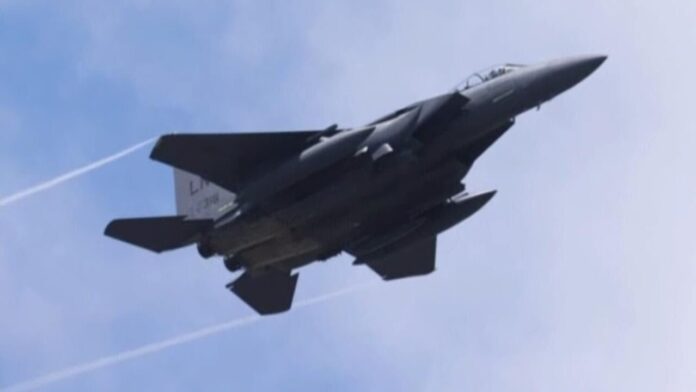
(TJV NEWS) A U.S. F‑15E Strike Eagle fighter jet was shot down over Iran on Friday, and one of the two crew members has been rescued, U.S. officials told CBS News. The second crew member remains missing as search-and-rescue operations continue in challenging and hostile terrain.
The aircraft, carrying a pilot and a weapons systems officer, went down inside Iranian territory. Iran’s Islamic Revolutionary Guard Corps claimed responsibility for shooting down the jet and released videos and images purporting to show the wreckage. Independent verification of the footage is limited.
Iran’s IRGC-affiliated Tasnim News Agency has published a video of people in southern Kohgiluyeh and Boyer-Ahmad province “searching for American pilots”. pic.twitter.com/0i91p9y4Qt
— Ghoncheh Habibiazad | غنچه (@GhonchehAzad) April 3, 2026
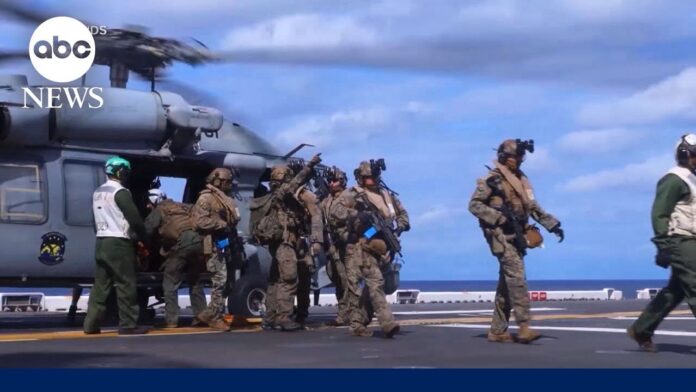
U.S. forces immediately launched a search-and-rescue mission involving HC‑130 and HH‑60 helicopters. One airman has already been recovered and is receiving medical care, while efforts to locate the second continue.
This incident marks a rare confirmed loss of a manned U.S. aircraft over Iranian soil, underscoring the ongoing risks faced by American pilots operating in the region.
BREAKING: One of two crew members of a U.S. fighter jet that was shot down over Iran was located and rescued by U.S. special forces and the search for the second is ongoing, sources tell Axios. https://t.co/ZXndzj9n5I
Iranian state media has urged civilians to assist in capturing any surviving U.S. crew members, offering rewards for information or cooperation with authorities.
Pentagon officials have not disclosed the exact cause of the crash, leaving open questions about whether the jet was downed by missiles, anti-aircraft fire, or other factors.
CBS News will continue to follow developments as U.S. forces search for the missing airman and assess the broader implications for ongoing military operations in the region.
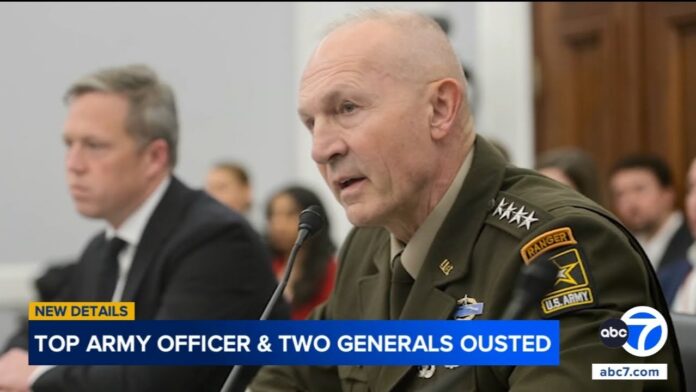
(TJV NEWS) Defense Secretary Pete Hegseth has abruptly pushed the U.S. Army’s top officer, Gen. Randy George, into immediate retirement, part of a sweeping shake‑up of senior military leadership, CBS News reports.
According to CBS, Hegseth asked George to step down and retire “effective immediately,” saying the Army needs leadership that will carry out both his and President Donald Trump’s vision for the service. A Pentagon spokesperson stated the Department is “grateful for General George’s decades of service,” but insisted it was “time for a leadership change.”
George, a West Point graduate and career infantry officer who served in Desert Shield, Desert Storm, Iraq and Afghanistan, had been confirmed as Army chief in 2023 and would normally have remained in the role until 2027.
In addition to George’s abrupt ouster, CBS News says two other senior Army officers were removed from their posts:
Gen. David Hodne, commander of the Army’s Transformation and Training Command, and
Maj. Gen. William Green Jr., head of the Army Chaplain Corps.
The Army’s vice chief of staff, Gen. Christopher LaNeve, a former aide to Hegseth, will serve as acting chief of staff. The shake‑up comes amid broader changes at the Pentagon under Hegseth, who has already fired or forced out more than a dozen senior military leaders, including the Chairman of the Joint Chiefs of Staff and top service chiefs from the Air Force, Navy and intelligence ranks.
Hegseth’s decision follows controversy earlier in the week after he overruled Army leadership to lift punishments against aviators involved in a high‑profile helicopter incident, though sources told CBS News that George’s removal was unrelated to that episode
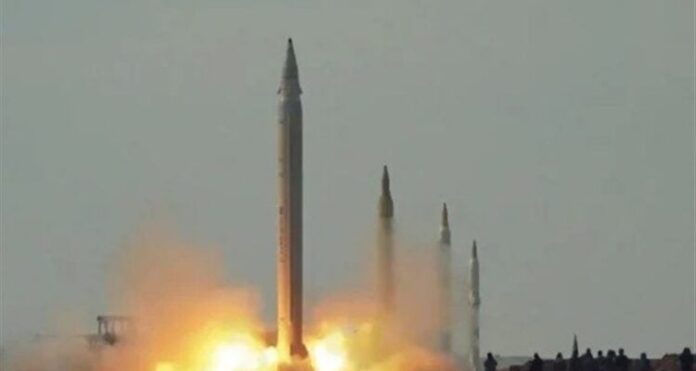
Iranian ballistic missiles are launched. (X Screenshot)
By Vered Weiss, World Israel News
Iran retains the ability to launch significant missile attacks across the region despite ongoing Israeli and US operations, with roughly half of its launchers still functional, according to three sources familiar with US intelligence who spoke to CNN on Friday.
The recent assessments indicate that key elements of Iran’s strike capacity remain in place, including systems likely concealed underground by the Islamic Revolutionary Guard Corps (IRGC) to protect them from airstrikes.
Intelligence findings also show that a substantial portion of Iran’s coastal defense cruise missiles has not been degraded, in part because US efforts have concentrated on targeting Iran’s navy rather than shore-based systems capable of striking vessels in the Strait of Hormuz.
“They are still very much poised to wreak absolute havoc throughout the entire region,” one source said.
The updated intelligence paints a more cautious picture than earlier public remarks by President Donald Trump, who said Wednesday that Iran’s “ability to launch missiles and drones is dramatically curtailed, and their weapons factories and rocket launchers are being blown to pieces, very few of them left.”
Israeli official: There will be no IRGC-connected building standing in a few days
US intelligence officials cited in the report also challenged expectations about the timeline of the conflict.
“We can keep f**king them up, I don’t doubt it, but you’re out of your mind if you think this will be done in two weeks,” one source said.
Estimates of damage to Iran’s missile infrastructure have shifted over time.
The IDF said one week into the war that it had destroyed 75% of Iran’s missile launchers. A Reuters report three weeks later said US intelligence could confirm the destruction of about one-third of Iran’s missile arsenal.
Pentagon spokesman Sean Parnell dismissed CNN’s reporting as inaccurate. “The United States military has delivered a crippling series of blows to the Iranian regime,” he said. “We are far ahead of schedule on accomplishing our military objectives: destroy Iran’s missile arsenal, annihilate their Navy, destroy their terrorist proxies, and ensure Iran can never obtain a nuclear weapon.”
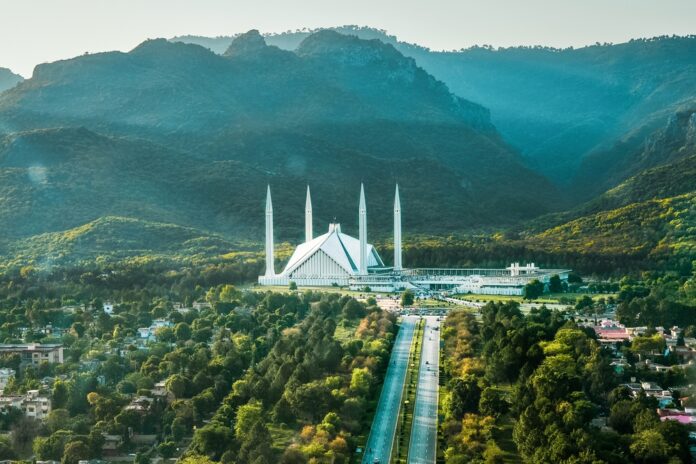
Aerial,Photo,Of, Islamabad,,The Capital City Of Pakistan- SHUTTERSTOCK
(TJV NEWS) Efforts to broker a cease-fire between the United States and Iran have stalled, with diplomatic momentum grinding to a halt despite ongoing mediation attempts, according to a report from The Wall Street Journal.
The WSJ report says regional intermediaries—led by Pakistan and supported by countries including Turkey and Egypt—have been trying to bring both sides to the negotiating table. But those efforts have now hit a dead end, with Iran refusing to move forward under current conditions.
Iranian officials have reportedly told mediators they are unwilling to meet with U.S. representatives in Islamabad, rejecting Washington’s proposals as unacceptable. The refusal marks a significant setback for diplomacy at a time when the conflict continues to escalate.
According to the WSJ report, Tehran has set a high bar for any potential agreement. Iranian leaders are demanding sweeping concessions, including financial reparations, a withdrawal of U.S. forces from the region, and guarantees against future attacks before they would consider ending hostilities.
Despite the breakdown, mediators are not abandoning efforts entirely. Turkey and Egypt are said to be exploring alternative locations for possible talks, including Doha and Istanbul, while floating new proposals aimed at reviving negotiations, the WSJ noted.
Complicating matters further are conflicting narratives from both sides. Former President Donald Trump has claimed that Iran expressed interest in a cease-fire, but Iranian officials have flatly denied that assertion, underscoring the deep mistrust that continues to define the standoff.
The diplomatic impasse highlights just how far apart Washington and Tehran remain, even as global pressure mounts to de-escalate a conflict that has already sent shockwaves through energy markets and regional stability.
(TJV NEWS) Stunning comments from current and former members of Congress are reigniting speculation about what the U.S. government may—or may not—know about extraterrestrial life, with one sitting lawmaker warning the public would be deeply shaken if classified information ever came to light.
Tim Burchett, a Republican congressman from Tennessee, said in a recent interview that the American public would be “up at night worrying” if they knew what he has been told in confidential briefings about UFOs and alien life. According to multiple reports, Burchett—who has been involved in congressional efforts to push for transparency—claimed he has been briefed by numerous federal agencies and recently received information so alarming it could have caused the country to become “unglued” if released.
WAIT… WHAT??
Rep. Tim Burchett just went on TV
and said what he’s seen about aliens
would cause chaos if revealed
Then adds… he’s not suicidal
Also says they’re given locations of unknown “items”
While Burchett declined to provide specifics, he strongly suggested that the secrecy surrounding these issues goes far beyond what has been publicly acknowledged. He has repeatedly argued that taxpayers have a right to know what the government is hiding, even as officials continue to keep details classified.
His remarks came as he was pressed about explosive claims made by former Florida congressman Matt Gaetz, who has alleged he was briefed on a highly secretive U.S. military program involving extraterrestrial beings. According to those claims, the program purportedly involved efforts to create hybrid beings by combining alien and human biology—an assertion that has not been substantiated with evidence.
Matt Gaetz reveals he was briefed by the U.S. Army about a secret hybrid breeding program in which captured aliens were breeding with humans to create a hybrid race.
He says he was told this was a secret military program involving aliens breeding with humans who were kidnapped… pic.twitter.com/pqO6Sedsvj
Burchett notably did not confirm those allegations but also stopped short of dismissing them outright, saying he could not comment on certain matters due to his current position in Congress.
The overlapping statements from both men add fuel to a growing wave of claims, rumors, and speculation surrounding unidentified aerial phenomena (UAPs), which have increasingly moved from the fringes into mainstream political discourse. In recent years, lawmakers from both parties have pushed for greater disclosure, citing concerns that key information may be hidden even from elected officials.
At the same time, many of the more sensational claims—particularly those involving alien bodies or advanced secret programs—remain unproven. Government agencies, including the Pentagon and NASA, have repeatedly said there is no verified evidence of extraterrestrial technology or life interacting with Earth.
Still, Burchett’s warning hints at a deeper tension inside Washington: a divide between officials who say the public cannot handle the truth, and those who argue continued secrecy only breeds distrust.
For now, the public is left with more questions than answers. On one hand, lawmakers are openly suggesting that something extraordinary may be hidden behind classified doors. On the other, hard evidence remains elusive—leaving the line between revelation and speculation as blurred as ever.
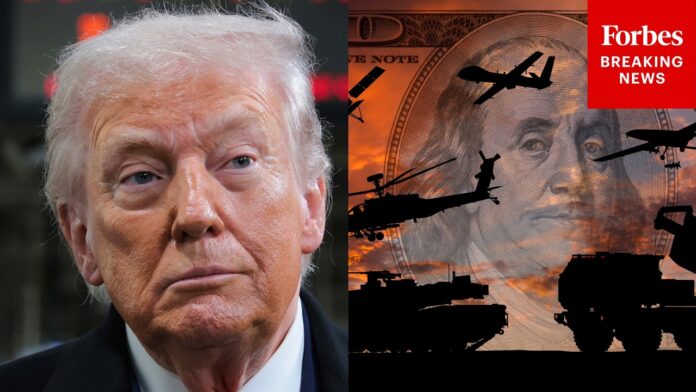
(TJV NEWS) President Donald Trump is preparing to unveil a sweeping fiscal 2027 budget proposal that would dramatically boost military spending while cutting funding for a range of domestic programs, according to Reuters and Business Recorder.
The plan centers on a proposed $1.5 trillion defense budget, marking one of the largest military spending increases in U.S. history, as Reuters reports. The funding push is aimed at strengthening America’s global military posture, expanding weapons production, and replenishing stockpiles depleted by recent conflicts, Reuters notes.
A major component of the proposal is Trump’s ambitious “Golden Dome” missile defense system, which could cost as much as $185 billion. The program is designed to defend against advanced threats, including hypersonic and ballistic missiles, using cutting-edge and space-based technology, according to Reuters.
Beyond missile defense, the budget prioritizes expanding traditional military capabilities. The proposal includes increased procurement of F-35 fighter jets, warships, and Virginia-class submarines, with Reuters reporting that the administration is seeking to ramp up shipbuilding and modernize key areas of the armed forces.
The defense-heavy proposal also reflects broader geopolitical concerns, including tensions in the Indo-Pacific and ongoing conflict dynamics involving Iran, Reuters adds.
However, the aggressive military expansion comes with trade-offs at home. The budget includes a roughly 10% cut to non-defense discretionary spending, impacting a wide range of federal programs, as reported by Business Recorder.
President Donald Trump on Wednesday said it’s “not possible” for the federal government to fund Medicare, Medicaid and child care costs, arguing that it should be up to the states to “take care” of those programs while the federal government focuses on military spending, NBC reported.
He went on to say that he told Office of Management and Budget Director Russell Vought: “Don’t send any money for day care, because the United States can’t take care of day care. That has to be up to a state. We can’t take care of day care. We’re a big country. We have 50 states. We have all these other people. We’re fighting wars. We can’t take care of day care. You got to let a state take care of day care, and they should pay for it too.”
“It’s not possible for us to take care of day care, Medicaid, Medicare, all these individual things,” Trump said. “They can do it on a state basis. You can’t do it on a federal. We have to take care of one thing: military protection. We have to guard the country.”
According to Business Recorder, programs tied to green energy, education, and certain justice initiatives are expected to face reductions, while funding would increase for areas such as law enforcement and immigration enforcement.
Despite the cuts, politically sensitive entitlement programs like Social Security and Medicare are expected to remain untouched, Business Recorder notes, underscoring the administration’s effort to avoid backlash from key voting blocs. The contradictions, however, based on Trump’s statements, confuse the matter.
The proposal is expected to face significant resistance in Congress, where lawmakers often push back against steep domestic cuts even while supporting defense increases. Still, the blueprint highlights Trump’s clear priorities: a massive investment in military strength paired with a scaling back of federal domestic spending, as both Reuters and Business Recorder indicate.
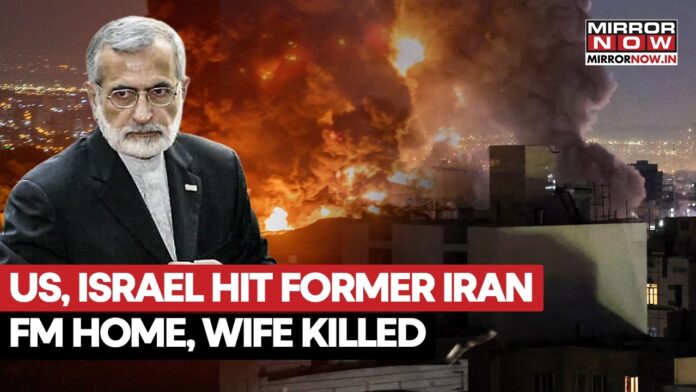
(TJV NEWS) An Iranian official reportedly involved in behind-the-scenes efforts to broker peace has been critically injured in a targeted strike, underscoring how escalating violence is derailing already fragile diplomatic channels, according to The Telegraph.
As reported by The Telegraph, the official—identified as former foreign minister Kamal Kharazi—was struck at his home in Tehran during a joint U.S.-Israeli operation. The attack is part of a broader campaign that has increasingly focused on eliminating senior figures within Iran’s political and military leadership.
Kharazi had been linked to indirect diplomatic efforts aimed at easing tensions, including reported coordination with regional intermediaries such as Pakistan. His role, while not formally acknowledged in official negotiations, placed him among a small group of insiders believed to be exploring potential off-ramps to the conflict. The Telegraph notes that his targeting highlights the growing risks facing anyone tied to even tentative peace outreach.
The strike comes amid a wider pattern of high-level assassinations that have reshaped Iran’s leadership structure since the war erupted earlier this year. A series of coordinated attacks by the United States and Israel have killed multiple senior officials, including top political and security figures, dramatically narrowing the pool of experienced negotiators and power brokers.
According to The Telegraph, such operations are not only intended to weaken Iran militarily but also to disrupt its internal decision-making apparatus. However, analysts warn that removing figures associated with diplomacy could backfire by empowering harder-line elements within the regime—those less inclined to pursue compromise.
Efforts to establish meaningful negotiations were already on shaky ground. While indirect talks between Washington and Tehran had taken place earlier this year through mediators, deep mistrust and conflicting demands stalled progress.
Now, with individuals tied to those efforts being targeted, prospects for a negotiated settlement appear even more remote. Iranian officials have increasingly signaled skepticism toward U.S. intentions, with some fearing that diplomatic overtures could be used as cover for further strikes.
The Telegraph report suggests the latest attack may reinforce those suspicions, further hardening Tehran’s stance at a time when international actors are scrambling to prevent a wider regional escalation.
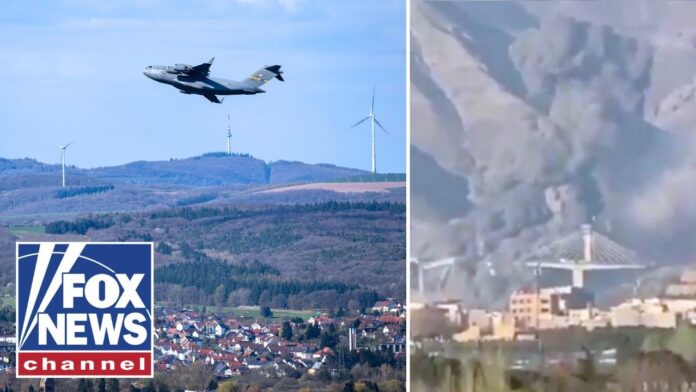
(NEWSMAX) President Donald Trump on Thursday posted a video of a massive bridge strike in Iran, using the footage to urge Tehran to “make a deal before it is too late.”
The video, shared on Truth Social, shows a towering bridge structure being hit and partially collapsing. Alongside it, Trump wrote, “It is time for Iran to make a deal before it is too late, and there is nothing left of what still could become a great country.”
The footage appeared hours after a major bridge under construction in Iran was partially destroyed in an airstrike, The Telegraph reported, quoting Iranian state media.
The B1 bridge in Karaj, a 136-meter-high structure intended to link the region with Tehran, was struck in an operation Iran said was carried out by the United States and Israel. Several people were injured, according to reports.
During his prime-time speech Wednesday, Trump said the conflict was nearing an end but warned the U.S. could strike Iran “extremely hard” if Iran refused to meet his demands.
Iranian officials also said bombs hit the Pasteur Institute of Iran, a century-old medical facility in Tehran. Images released by Iran’s Health Ministry showed extensive damage to a building identified as part of the institute.
The escalation comes amid growing international concern over disruptions to global shipping routes.
The United Kingdom hosted virtual talks on Thursday with about 40 countries aimed at reopening the Strait of Hormuz. British Home Secretary Yvette Cooper said Iran had “hijacked an international shipping route to hold the global economy hostage.”
France, Germany, Canada, the United Arab Emirates, and India took part in the talks, though the United States and several Gulf states were not involved.
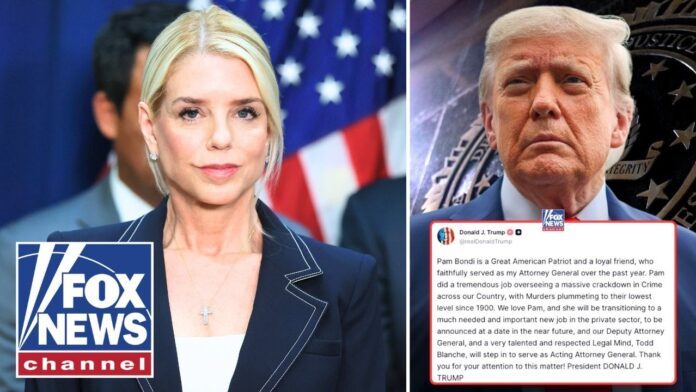
(TJV NEWS) President Donald Trump has already removed Attorney General Pam Bondi from her position, with a potential replacement from within his Cabinet now under consideration, according to a report by Fox News.
Citing sources familiar with the matter, Fox News reported that Bondi was informed of her dismissal during a meeting in the Oval Office on Wednesday night, shortly before Trump delivered a national address. By the time the president spoke publicly, Bondi was effectively out of the job and departing Washington.
The sudden move marks a major shake-up inside the administration, with Fox News noting that Deputy Attorney General Todd Blanche is expected to step in as acting attorney general on an interim basis.
According to Fox News, discussions about Bondi’s replacement were already underway prior to her ouster. Sources indicated that Environmental Protection Agency Administrator Lee Zeldin has emerged as a leading contender for the role, following recent meetings at the White House where the transition was reportedly discussed.
The report adds that Trump had grown increasingly dissatisfied with Bondi’s performance in recent weeks, a sentiment that had been building behind the scenes. While the White House had publicly defended her work as recently as Wednesday, the decision to remove her appears to have come swiftly.
Fox News further detailed that Bondi had accompanied Trump earlier in the day to the U.S. Supreme Court before later learning of her fate, underscoring how abruptly the decision unfolded.
In public remarks cited by Fox News, Trump praised Bondi’s tenure, pointing to efforts to combat crime nationwide, even as he confirmed her transition out of the administration and into a future private-sector role.
The reported shake-up comes as the administration continues to navigate internal pressures and broader political challenges, with the attorney general role now poised for another high-profile transition.
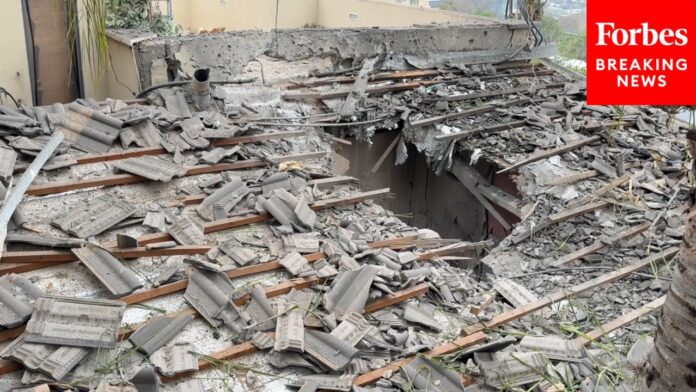
(TJV NEWS) Hezbollah unleashed a heavy barrage of rockets into northern Israel at the start of the Passover holiday, injuring several civilians and sending large swaths of the population scrambling for shelter, according to reporting by The Times of Israel.
According to The Times of Israel, roughly 80 rockets were fired toward northern communities on the first day of Passover, part of a broader escalation that has seen repeated cross-border attacks amid the ongoing regional conflict. The strikes came as Israelis gathered for holiday observances, underscoring the persistent security threat facing the country’s northern region.
Emergency services reported that at least two people were lightly wounded when one of the rockets struck a building in the town of Kiryat Shmona. The Times of Israel noted that the victims included a 34-year-old and an 85-year-old man who required medical treatment after the impact.
In a separate incident later in the day, additional rockets hit the Arab town of Bi’ina, where two more men in their 30s and 40s sustained light injuries, according to The Times of Israel. The attacks caused property damage across multiple locations, with images showing shattered buildings and blown-out windows, including at a commercial site near the Lebanese border.
The barrage triggered widespread air raid sirens throughout northern Israel, forcing hundreds of thousands of residents to seek refuge in bomb shelters as the holiday began. The Times of Israel reported that the rocket fire coincided with ongoing Israeli military operations targeting Hezbollah positions in southern Lebanon.
The attacks are part of a broader escalation involving Iran-backed forces, with Hezbollah continuing to fire rockets into Israel while Israeli forces respond with strikes aimed at degrading the group’s capabilities. The timing—during one of the most significant holidays in the Jewish calendar—has heightened tensions and disrupted celebrations across the country.
As The Times of Israel has repeatedly highlighted, the northern front remains volatile, with civilians bearing the brunt of near-daily exchanges of fire.
The Passover event takes place annually.
Michael Appleton/Mayoral Photography Office
Mamdani Heckled at Passover Seder in NYC Amid Rising Antisemitism Tensions
By: Max Schleifer
In a city renowned for its pluralism yet increasingly strained by ideological fault lines, a Passover gathering intended to celebrate tradition and communal unity devolved into a moment of sharp public discord, reflecting the deepening tensions surrounding antisemitism, political rhetoric, and the boundaries of civic leadership. As reported on Wednesday in The New York Post, New York City Mayor Zohran Mamdani faced pointed heckling during his appearance at a prominent seder event, exposing fractures within segments of the Jewish community and reigniting scrutiny of his political positions.
Mamdani was heckled as he spoke, according to a report. Michael Appleton/Mayoral Photography Office
The incident unfolded at the 33rd annual “Downtown Seder,” hosted by entrepreneur Michael Dorf at the City Winery in Manhattan. The event, traditionally characterized by reflection, storytelling, and a spirit of inclusivity, drew approximately 370 attendees, including civic figures, cultural personalities, and members of New York’s diverse Jewish community.
Yet, as The New York Post report detailed, the evening’s atmosphere shifted markedly when Mayor Mamdani took the stage. While addressing what he described as a troubling rise in antisemitism affecting Jewish New Yorkers, an unidentified attendee interrupted with a stark and unsettling declaration: “Every Jewish organization is a target.”
The outburst, brief but jarring, reverberated through the venue. Attendees quickly attempted to restore order, with some urging the speaker to continue and others calling for restraint. One voice rose in response, “Stop the xenophobia, let him speak,” capturing the competing impulses present in the room—defense of open discourse on one hand, and palpable unease on the other.
According to accounts compiled by The New York Post, the disruption was not an isolated moment but rather the culmination of simmering discontent. Witnesses described an undercurrent of dissatisfaction even before Mamdani began speaking. One attendee recalled that a woman shouted “Shame, shame, shame” upon his introduction, while others noted persistent murmuring and visible discomfort among segments of the audience.
“It was wild,” one source told The New York Post. “It’s never like that.”
Such reactions suggest that the controversy surrounding the mayor’s appearance had already taken hold prior to the event itself. Indeed, the decision to include Mamdani in the program had drawn criticism in advance, most notably from Israeli American comedian Modi Rosenfeld, who withdrew from the benefit upon learning of the mayor’s participation.
“We were not told Mamdani was participating in this event until today,” read a statement posted on Rosenfeld’s social media account, as cited by The New York Post. His manager described the situation as inappropriate, emphasizing the lack of transparency surrounding the lineup.
Despite the interruptions, Mayor Mamdani continued his remarks, ultimately receiving applause from portions of the audience. In addressing the disruption, he adopted a tone that sought to contextualize the moment within the broader character of New York City itself.
“This is New York City, and we love to be here,” he said, according to reports referenced by The New York Post. “If there was complete decorum everywhere we were, we would have to ask ourselves if we had left the city that we love.”
His comments appeared to frame the incident not as a breakdown of civility but as an expression of the city’s vibrant, if sometimes contentious, democratic culture. For some observers, this interpretation underscored a commitment to open dialogue; for others, it risked minimizing the gravity of the sentiments expressed during the disruption.
At the center of the controversy lies Mayor Mamdani’s political record, particularly his positions on Israel and his associations with figures who have themselves drawn criticism for inflammatory rhetoric. As noted repeatedly by The New York Post, Mamdani has faced sustained backlash for statements suggesting that Israel should not exist as a Jewish state—a stance that many within the Jewish community view as fundamentally incompatible with their historical and cultural identity.
Further scrutiny has arisen from his connections to individuals such as Hasan Piker and Linda Sarsour, both of whom have been accused by critics of promoting narratives perceived as hostile to Jewish concerns. While Mamdani and his supporters argue that such criticisms mischaracterize his views, the cumulative effect has been to position him as a polarizing figure within an already fraught discourse.
Michael Dorf, the event’s host, sought to downplay the severity of the disruption, describing the heckling as “very minor” in an interview with The New York Post. He credited the mayor for handling the situation with composure and emphasized that the overwhelming majority of attendees responded positively.
“Out of 370 people, 365 loved it,” Dorf said, adding that the event’s spirit remained intact despite the controversy.
At the same time, Dorf acknowledged receiving a significant volume of hostile communications in response to Mamdani’s inclusion. Nevertheless, he defended the decision on the grounds of civic engagement, noting that previous mayors had also been invited to participate in similar gatherings.
“He’s the mayor of our city,” Dorf remarked, underscoring a belief that public officials should be afforded opportunities to engage with diverse constituencies—even in the face of disagreement.
The incident at the Downtown Seder cannot be understood in isolation. It is, rather, emblematic of broader dynamics shaping contemporary public life in New York and beyond. The intersection of rising antisemitism, contentious debates over Israel, and the evolving role of political leadership has created a landscape in which moments of cultural celebration can quickly become arenas for ideological confrontation.
The heckler’s statement—asserting that Jewish organizations are targets—resonates within a context marked by increasing concern over antisemitic incidents. For many attendees, the remark likely carried a chilling implication, transforming what might otherwise have been a routine disruption into a moment of profound red alert.
At the same time, the varied responses within the room—ranging from condemnation of the outburst to calls for continued dialogue—highlight the diversity of perspectives within the community itself.
For Mayor Mamdani, the episode presents both a challenge and an opportunity. As a public figure navigating a complex and often polarized environment, he must reconcile competing expectations: to engage openly with constituents, to address legitimate concerns about antisemitism, and to articulate positions that resonate across diverse communities.
The scrutiny he faces is unlikely to diminish. If anything, incidents such as this one may intensify the focus on his rhetoric and associations, particularly as debates over Israel and antisemitism continue to occupy a central place in public discourse.
New York City has long prided itself on its capacity to accommodate difference—to serve as a forum in which diverse voices can be heard, contested, and, at times, reconciled. The events at the Downtown Seder, as chronicled by The New York Post, reveal both the strength and the fragility of that tradition.
On one hand, the willingness of individuals to speak out—even in disruptive ways—reflects a deeply ingrained culture of engagement. On the other, the intensity of the reactions underscores the challenges inherent in sustaining constructive dialogue amid profound disagreement.
As the city continues to grapple with these tensions, the question remains whether its leaders—and its citizens—can find a path that preserves both the openness and the mutual respect upon which its identity depends.
Federal prosecutors in Manhattan are scrutinizing well-timed bets on prediction markets that have lately grabbed headlines — and are examining whether they may have violated insider trading laws, sources told The Post.
Officials at the US Attorney for the Southern District of New York — headed by former Securities and Exchange Commission Chairman Jay Clayton — recently met with reps from Polymarket about lucrative wagers on surprise events like the capture of Nicolás Maduro and missile strikes on Iran, sources close to the situation said.
“The action in the prediction markets, like the action in any markets, is stuff that will be looked at,” a source with knowledge of the matter told The Post.
Jay Clayton, US Attorney for the Southern District of New York, recently met with reps from Polymarket about lucrative wagers on surprise events.AP
The person added that both the SEC and the US Attorney’s office have authority to probe concerns about insider trading and market manipulation in “all markets … just because a market is new doesn’t mean it can’t be investigated.”
Officials leading the Southern District’s securities and commodities fraud unit met with representatives of Polymarket to discuss potential violations of existing law in the rapidly expanding sector, the sources said.
Polymarket, headed by CEO Shayne Coplan, didn’t respond to a request for comment.
It couldn’t immediately be learned whether federal prosecutors have also met with rival prediction markets site Kalshi.
But “all of them are being looked at,” said the source with firsthand knowledge of the matter.
The person added that no specific trade has caught the US Attorney’s eye.
“There just a lot out there, too much to ignore,” the source said.
A spokesperson for Kalshi, headed by CEO Tarek Mansour, referred The Post to social media comments by the company’s Head of Enforcement Robert DeNault saying insider trading and market manipulation are violations of Kalshi’s rules.
“Kalshi has been and will continue to collaborate with law enforcement on investigations to ensure the integrity of regulated prediction markets,” he wrote on X
The Southern District’s inquiry, earlier reported on by CNN, marks a regulatory ramp up for an industry that has grown sharply over the past year, with virtually no federal oversight.
No companies have been accused of wrongdoing. Prediction market sites allow wagers on a variety of topics and events including sports and awards shows.
“As a general matter, our Office meets with market participants to discuss market activity and application of the law,” Nicholas Biase, a spokesman for the US Attorney’s office, said in a statement.
“With regard to so-called ‘prediction markets,’ our Office has made clear that various laws — including insider-trading statutes, anti-money-laundering requirements, prohibitions on manipulation, and other antifraud provisions — apply to a broad range of observed activity,” he added.
Last week, Polymarket said it was cracking down on using stolen information and illegal tips, among other steps, while Kalshi announced guardrails to prevent politicos and athletes from betting on outcomes they could influence.SOPA Images/LightRocket via Getty Images
“Calling it a prediction market doesn’t insulate you from fraud,” he said.
Well-timed wagers on the sites have spurred bipartisan legislative efforts to clarify the rules.
Last week, California Gov. Gavin Newsom issued an executive order banning state officials from using insider information in prediction markets. And Arizona recently filed a criminal case against Kalshi, alleging the company operates an illegal gambling business and facilitates election wagering. Kalshi has denied the allegations.
In addition, dozens of civil lawsuits — backed by a bipartisan group of state attorneys general — have been filed against prediction-market operators.
Critics argue that the platforms are largely self-regulated and vulnerable to manipulation. Polymarket’s US-approved platform is not yet fully operational, meaning some of its most controversial markets — such as those tied to Venezuela and Iran — are offered offshore and beyond the reach of US regulation.
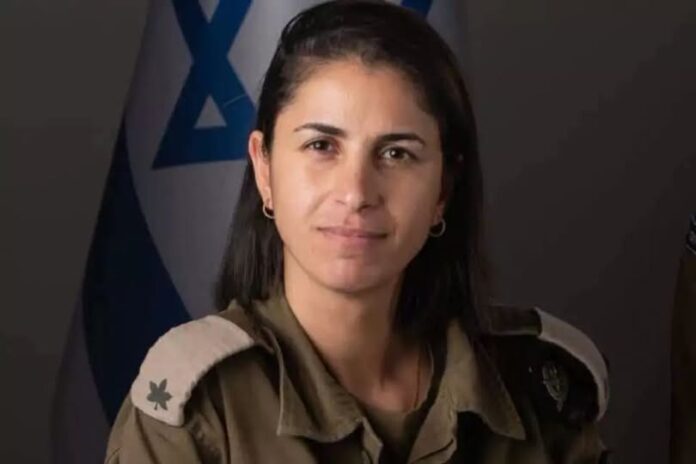
Ella Waweya: an Israeli Muslim Arab woman who has risen to the rank of Major, becoming one of the most senior Arab Muslim officers in the IDF.
Photo: IDF
By: Chaya Abecassis
In a region so often defined by division, conflict, and entrenched narratives of separation, a singular image has emerged from the heart of Israel’s military establishment—an image that, in its quiet yet unmistakable power, challenges prevailing assumptions and underscores the country’s complex social fabric. At an air force base in southern Israel, Lieutenant Colonel Ella Waweya, a Muslim woman and the Arabic-language spokesperson for the Israel Defense Forces, stood before an advanced “Adir” aircraft and delivered a message that resonated far beyond the confines of the military sphere.
“I am standing behind an ‘Adir’ aircraft that is undermining the capabilities of the Iranian regime,” she declared with measured resolve. “We have the plan, the capabilities, and the targets—and we will continue to act with determination, precision, and strength for your security.”
Her words, delivered in the context of an escalating confrontation with Iran, were not merely a statement of military intent. They represented something far more profound: a living testament to the ethos of pluralism and inclusion that defines Israel’s armed forces and, by extension, its broader society.
The Israel Defense Forces have long been characterized not only by their operational readiness but also by their remarkable social composition. Within their ranks serve individuals from a wide array of ethnic, religious, and cultural backgrounds—Jews of diverse origins, Druze, Christians, Bedouin, and increasingly, Muslim men and women who have chosen to contribute to the defense of the state.
Lieutenant Colonel Waweya’s role is particularly significant. As the official Arabic-language spokesperson, she occupies a position that bridges linguistic and cultural divides, addressing audiences both within Israel and across the broader Middle East. Her presence in such a prominent capacity is emblematic of a system that, while not without its challenges, actively incorporates minority voices into its most visible and consequential institutions.
This inclusivity is not incidental; it is institutional. Muslim soldiers, including Bedouin trackers renowned for their specialized skills, serve alongside their Jewish counterparts in a variety of units. Women—across all communities—have increasingly assumed leadership roles, reflecting a broader commitment to gender equality within the military framework.
The image of a Muslim woman standing beside one of the most advanced aircraft in the Israeli arsenal carries a symbolism that is difficult to overstate. It conveys a message not only to adversaries but also to allies and observers: that Israel’s strength derives not solely from its technological capabilities but from the diversity and cohesion of its people.
In a region where religious identity is often weaponized as a tool of division, the integration of Muslim personnel into the Israeli military challenges reductive narratives. It demonstrates that allegiance to the state and participation in its defense are not confined to a single religious or ethnic group.
Moreover, Waweya’s speech underscores a broader principle: that the defense of Israel is a collective endeavor, encompassing citizens from all walks of life. Her words—firm, articulate, and resolute—embody a shared commitment to security that transcends individual identity.
The military serves as a microcosm of the nation itself—a space where differences are not erased but integrated into a unified purpose.
This is not to suggest an absence of tension or complexity. Like any diverse society, Israel grapples with internal challenges and competing perspectives. However, the elevation of figures such as Lieutenant Colonel Waweya illustrates a deliberate effort to foster inclusion and representation at the highest levels.
Her visibility, particularly during a period of heightened conflict, sends a powerful signal. It affirms that Israel’s defense is not the domain of a singular identity but a shared responsibility embraced by a multifaceted citizenry.
As the aircraft behind her symbolized technological superiority and strategic reach, Lieutenant Colonel Ella Waweya herself embodied something equally vital: the human dimension of national defense. Her presence, her voice, and her role within the IDF serve as a compelling reminder that strength is not measured solely in firepower but in the ability to unite diverse individuals under a common purpose.
In an era marked by polarization and mistrust, her message resonates with a clarity that transcends the immediate context of military operations. It speaks to the possibility of coexistence, the power of inclusion, and the enduring potential of a society that, even amid conflict, strives to reflect the full spectrum of its people.
Sky of Sirens: Iran’s Intensifying Missile Barrage Batters Central Israel as Retaliation Strikes Rock Tehran
By: Tzirel Rosenblatt
A volatile and deeply perilous escalation in the ongoing regional conflict unfolded on Wednesday afternoon as the Iranian regime launched a substantial salvo of ballistic missiles toward the heart of Israel, triggering widespread alarm, mass civilian displacement into shelters, and a rapid sequence of retaliatory strikes deep within Iranian territory. As reported on Wednesday by Israel National News, the dual-front confrontation underscores a widening and increasingly sophisticated conflict that now spans not only geographic boundaries but also the psychological resilience of civilian populations.
The assault, described by defense officials as unusually large in both scale and coordination, involved between eight and ten ballistic missiles directed toward central Israel—specifically targeting densely populated urban centers. Within moments of detection, air raid sirens reverberated across cities including Tel Aviv, Ramat Gan, Bnei Brak, and Savyon, in some locations sounding as many as five times within a matter of minutes.
According to accounts compiled by Israel National News, the rapid succession of alerts created an atmosphere of acute urgency and confusion, compelling residents to seek immediate refuge in protected spaces. The intensity of the warning system activation underscored the severity of the threat and the unpredictability of the incoming projectiles.
Emergency response protocols were activated with remarkable speed. Rescue teams, including personnel from Magen David Adom, were dispatched to no fewer than ten distinct locations from which distress calls had been received. These teams encountered scenes marked by structural damage, scattered debris, and shaken civilians emerging cautiously from shelters.
Despite the scale of the barrage, initial reports indicated that there were no widespread fatalities. However, the absence of mass casualties belies the gravity of individual cases and the broader psychological toll inflicted upon the population.
Medical teams treated several individuals suffering from acute anxiety, a predictable yet no less significant consequence of sustained exposure to missile threats. Additionally, five civilians sustained injuries while attempting to reach protected areas—an illustration of the inherent dangers even in the act of seeking safety.
More severe injuries were reported in subsequent incidents. Sheba Medical Center in Tel Hashomer confirmed that its medical staff were engaged in a desperate effort to save the life of an 11-year-old girl critically wounded by shrapnel. Her condition was described as grave, while her father was reported to be in moderate condition. Six additional children were admitted for treatment, reflecting the indiscriminate nature of the attack.
At Beilinson Hospital in Petah Tikva, another young victim—a 12-year-old boy—was listed in serious condition, alongside his mother, who sustained moderate injuries. Eleven additional individuals with minor injuries were treated and transported to nearby medical facilities. These cases, documented by Israel National News, highlight the human cost of the escalation, particularly among the most vulnerable segments of society.
Eyewitness accounts from emergency responders provide a stark and unvarnished depiction of the aftermath. Magen David Adom paramedic Yissachar Weiss described arriving at a site marked by visible destruction and disoriented civilians.
“We saw destruction and people walking around conscious,” Weiss recounted. “Among them was an 11-year-old girl, semi-conscious, suffering from shrapnel injuries to her limbs. We provided immediate medical treatment and evacuated her to the hospital in serious condition.”
Senior medic Lipa Hirsch offered a similarly sobering account, noting the discovery of a 13-year-old boy who had sustained injuries from the blast. “He was conscious but clearly affected,” Hirsch said. “We transported him in moderate condition while continuing to search the area for additional casualties.”
Such testimonies, frequently cited by Israel National News, illuminate the chaotic and often harrowing conditions faced by first responders operating under the constant threat of additional strikes.
Beyond the immediate human toll, the missile impacts triggered a series of secondary incidents that further complicated emergency response efforts. In Holon, a fire erupted in an open area following a direct hit, necessitating intervention by firefighting units. In Petah Tikva, a building strike resulted in a gas leak, prompting urgent containment measures to prevent further danger.
Interception debris—fragments of missiles neutralized by Israel’s air defense systems—was discovered across multiple cities in the Sharon region, illustrating the gravity of the engagement. While these systems successfully intercepted a significant portion of the incoming threats, officials emphasized that no defense mechanism is entirely impermeable.
Compounding the sense of instability, residents were scarcely given time to recover before additional alerts signaled the probability of a second barrage. Sirens pierced the afternoon air, extending beyond central Israel to include regions such as Samaria and parts of the south.
The repetition of alerts within such a compressed timeframe amplified public anxiety and underscored the evolving tactics employed by the Iranian regime. According to the report by Israel National News, the staggered nature of the attacks appears designed to overwhelm both defensive systems and civilian coping mechanisms.
In a swift and decisive countermeasure, the Israel Defense Forces initiated a comprehensive wave of strikes targeting Iranian military infrastructure. These operations, concentrated in the capital city of Tehran and surrounding areas, aimed to degrade the regime’s offensive capabilities and disrupt its ability to launch further attacks.
Over the course of two days, the Israeli Air Force reportedly struck approximately 400 targets across Iran. These included dozens of military installations in central Tehran and at least 15 key weapons manufacturing facilities—sites believed to be integral to the production of ballistic missiles and other advanced armaments.
The scale and precision of these strikes reflect a broader strategic objective: to systematically dismantle the Iranian regime’s capacity to wage sustained warfare. As emphasized in reporting by Israel National News, the operations represent not merely retaliation but a calculated effort to alter the balance of power in the region.
The events of Wednesday illustrate the increasingly complicated nature of modern warfare, in which military engagements are conducted alongside psychological operations aimed at undermining civilian morale. The repeated activation of sirens, the unpredictability of missile trajectories, and the visible effects of destruction all contribute to a pervasive sense of vulnerability.
At the same time, the resilience demonstrated by Israeli civilians—evident in their adherence to safety protocols and the rapid mobilization of emergency services—serves as a countervailing force. The ability to maintain societal cohesion under such conditions is itself a strategic asset.
The escalation carries profound implications not only for Israel and Iran but for the broader international community. The involvement of advanced missile systems, the targeting of urban centers, and the speed of retaliatory actions all raise the specter of a wider conflagration.
Diplomatic efforts to contain the conflict are ongoing, yet the trajectory of events suggests that military considerations currently dominate the strategic landscape. The interplay between offense and defense, deterrence and escalation, will likely shape the next phase of the conflict.
As the dust settles—temporarily—over the cities of central Israel, the events of this latest exchange stand as a stark reminder of the fragility of regional stability. The Iranian missile barrage and Israel’s subsequent strikes represent not isolated incidents but components of a broader and deeply entrenched confrontation.
For now, both nations remain locked in a cycle of action and reaction, each seeking to assert dominance while avoiding the threshold of all-out war.
In this precarious equilibrium, the lives of civilians—children, families, entire communities—hang in the balance, their daily existence shaped by the sound of sirens and the hope that the next warning will not herald catastrophe.
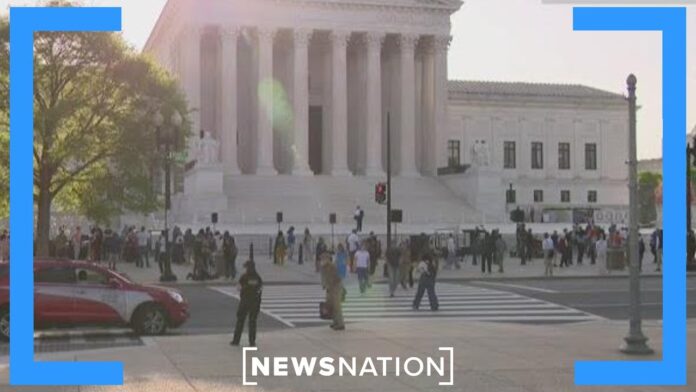
(TJV NEWS) President Donald Trump made an extraordinary appearance at the U.S. Supreme Court this week, sitting in on oral arguments tied to one of the most consequential legal fights of his political career — but he did not stay for the full hearing, according to reporting from The Mirror.
As The Mirror reports, Trump attended arguments centered on his administration’s effort to restrict birthright citizenship, a policy that directly challenges long-standing interpretations of the 14th Amendment to the United States Constitution. The amendment has historically been understood to guarantee citizenship to anyone born on U.S. soil, regardless of their parents’ immigration status — a principle that has been upheld for more than a century.
Trump’s presence alone marked a highly unusual moment in American legal history. Sitting presidents almost never attend Supreme Court proceedings, largely out of respect for the separation of powers and to avoid the perception of influencing the judiciary. His decision to appear in person underscored the political and legal weight of the case, which could fundamentally reshape U.S. immigration policy.
According to The Mirror, Trump took a seat in the courtroom gallery as his administration’s legal team presented arguments defending the proposed limits on automatic citizenship. Government lawyers argued that the current interpretation of the 14th Amendment has been applied too broadly and that the Constitution does not necessarily guarantee citizenship to children born to non-citizens or undocumented immigrants.
However, in a move that quickly drew attention, Trump did not remain for the full session. As reported by The Mirror, he left the courtroom shortly after his administration’s lawyers concluded their arguments, exiting before attorneys challenging the policy had fully presented their case. The early departure sparked immediate reaction, both inside Washington and across social media.
Critics seized on the moment, arguing that leaving before hearing opposing arguments reflected poorly on the seriousness of the constitutional debate. Some legal analysts suggested that the optics of the move could reinforce concerns about politicizing the court. Supporters, on the other hand, dismissed the criticism, noting that there is no formal requirement for attendees — even a president — to remain for the entirety of oral arguments.
The case itself has been working its way through the courts after lower federal judges blocked the policy, ruling that it likely violates the Constitution. Those rulings set up a direct showdown at the Supreme Court, where justices are now tasked with determining whether the executive branch has the authority to reinterpret the scope of birthright citizenship.
During the hearing, The Mirror notes, several justices appeared skeptical of the administration’s arguments, pressing government lawyers on both historical precedent and the potential consequences of narrowing citizenship rights. Questions from the bench focused heavily on whether such a significant shift should come from Congress rather than through executive action.
Legal scholars widely view the case as a potential landmark decision — one that could redefine the meaning of citizenship in the United States. If the court were to side with Trump’s position, it could open the door to sweeping changes in immigration enforcement and the legal status of millions of people born in the country.
At the same time, a ruling against the administration would reaffirm more than a century of constitutional interpretation and limit the ability of future presidents to unilaterally alter such a foundational right.
Trump’s brief appearance — and his decision to leave early — added another layer of political theater to an already high-stakes legal battle. As The Mirror emphasizes, the moment highlights both the unprecedented nature of the case and the intense scrutiny surrounding every move tied to it.
The Supreme Court is expected to issue its ruling in the coming months, a decision that could carry profound and lasting consequences for immigration law, constitutional interpretation, and the balance of power between the presidency and the courts.
In a development that has reverberated across diplomatic corridors from Washington to Brussels, President Donald Trump has signaled that the United States may be on the verge of a historic rupture with the North Atlantic Treaty Organization, raising the specter of a geopolitical realignment at a moment of acute international tension. As reported on Wednesday by Fox News, the president’s remarks—delivered in the context of escalating conflict with Iran—underscore a profound dissatisfaction with the alliance’s response and call into question the future of a cornerstone of postwar global security.
For more than seven decades, NATO has functioned as the bedrock of transatlantic defense cooperation, a collective security pact designed to deter aggression and maintain stability across Europe and beyond. Yet in recent years, tensions between Washington and its European partners have intensified, driven by disputes over burden-sharing, strategic priorities, and the evolving nature of global threats.
President Trump’s latest comments suggest that these tensions may have reached a critical inflection point. In an interview cited by Fox News, the president indicated that withdrawing the United States from NATO is no longer a hypothetical consideration but a policy option actively under review.
“I was never swayed by NATO,” Trump reportedly stated, adding that reconsidering America’s participation in the alliance was “beyond consideration.” Such language represents a marked escalation in rhetoric, transforming long-standing skepticism into a potential course of action with far-reaching implications.
At the heart of the current dispute lies the ongoing conflict with Iran and the strategic importance of the Strait of Hormuz—a narrow maritime corridor through which approximately one-fifth of the world’s oil supply flows. Iranian efforts to disrupt or control access to the strait have heightened concerns about global energy markets, prompting the United States to seek a coordinated international response.
According to the Fox News report, the Trump administration requested that NATO allies deploy naval forces to help secure the waterway. However, European nations reportedly declined to participate, citing a range of strategic and political considerations.
For President Trump, this refusal appears to have crystallized broader frustrations. “Beyond not being there, it was actually hard to believe,” he remarked, expressing incredulity at what he perceives as a lack of reciprocity within the alliance.
The president’s critique is rooted in a longstanding argument: that the United States has disproportionately borne the burden of NATO’s collective defense commitments, often intervening on behalf of allies without receiving equivalent support in return.
Trump’s skepticism toward NATO is not new. Throughout his political career, he has repeatedly questioned the alliance’s efficacy and fairness, characterizing it as an outdated institution that fails to reflect contemporary geopolitical realities.
In his recent remarks, he went further, reportedly describing NATO as a “paper tiger”—a term that implies both weakness and a lack of credibility. He suggested that such perceptions are not limited to Washington but are shared by adversaries, including Russia.
This critique aligns with a broader strategic worldview that prioritizes bilateral agreements and transactional relationships over multilateral frameworks. For Trump, alliances must demonstrate tangible value and mutual commitment; otherwise, their utility is called into question.
The president’s comments have also extended to individual allied nations, most notably the United Kingdom. In remarks cited by Fox News, Trump criticized British military capabilities and questioned the country’s willingness to engage in the current conflict.
These statements prompted a swift response from Keir Starmer, who reaffirmed Britain’s commitment to NATO and emphasized the alliance’s enduring importance. “It is the single most effective military alliance the world has ever seen,” Starmer declared, underscoring a stark divergence in perspective.
The exchange highlights a broader transatlantic divide, one that extends beyond the immediate issue of Iran to encompass fundamental differences in strategic outlook and political philosophy.
The potential withdrawal of the United States from NATO would constitute one of the most consequential shifts in global security architecture since the end of World War II. Such a move would not only alter the balance of power within Europe but also have cascading effects across multiple regions.
For European nations, the prospect of diminished American involvement raises urgent questions about defense capabilities and strategic autonomy. Many countries have historically relied on the United States as the guarantor of their security, a role that would be significantly diminished—or entirely eliminated—under a NATO withdrawal scenario.
For adversaries, the implications are equally significant. A weakened or fragmented alliance could embolden rival powers, altering calculations regarding deterrence and potentially increasing the likelihood of conflict.
The immediate context of the dispute—the Strait of Hormuz—adds an additional layer of complexity. As a critical artery for global oil supply, the strait’s stability is essential not only for energy markets but for the broader global economy.
Disruptions to this corridor have historically resulted in sharp fluctuations in oil prices, with ripple effects across industries and regions. The reluctance of NATO allies to participate in securing the strait reflects a cautious approach, balancing the desire to maintain stability with the risks of direct military involvement.
From the perspective of the Trump administration, however, such caution may be interpreted as a failure to meet shared responsibilities. The president’s expectation of automatic support—particularly in light of past American interventions—forms a central pillar of his argument.
Within the United States, the debate over NATO is deeply intertwined with broader questions about foreign policy and national identity. Advocates of continued engagement emphasize the alliance’s role in preserving stability and preventing conflict, while critics argue for a more restrained and selective approach.
President Trump’s position resonates with a segment of the electorate that favors reducing overseas commitments and prioritizing domestic interests. His critique of NATO, therefore, is not merely a policy stance but a reflection of a broader ideological shift.
At the same time, the potential consequences of withdrawal have prompted concern among policymakers and analysts, many of whom warn of the risks associated with dismantling longstanding alliances.
As tensions continue to escalate, the future of NATO—and by extension, the structure of global security—appears increasingly uncertain. The coming weeks may prove decisive, as diplomatic efforts unfold and strategic decisions are made.
For now, the alliance remains intact, its members navigating a complex and evolving landscape. Yet the possibility of a fundamental change cannot be dismissed, particularly in light of the president’s unequivocal language.
The statements attributed to President Trump, as reported by Fox News, mark a potential turning point in the history of transatlantic relations. They reflect not only immediate frustrations over the Iran conflict but a deeper reevaluation of the principles that have governed international cooperation for decades.
Whether this moment will culminate in a formal withdrawal or serve as a catalyst for reform remains to be seen. What is clear, however, is that the assumptions underpinning the postwar order are being tested in unprecedented ways.
In an era defined by shifting alliances and emerging threats, the question is no longer whether change is coming, but how profound that change will be—and what it will mean for the future of global stability.