






















From Simon Levy to a Record 2026 Class: The Enduring Legacy of Jewish Service at West Point and in America’s Armed Forces
By: Fern Sidman
The announcement that the 2026 graduating class at the United States Military Academy at West Point includes 30 Jewish cadets—the largest known number of Jewish graduates in the institution’s 224-year history—is more than a noteworthy demographic milestone. It is the latest chapter in a remarkable story of patriotism, sacrifice, leadership, and military service that stretches from the birth of the American Republic to the present day.
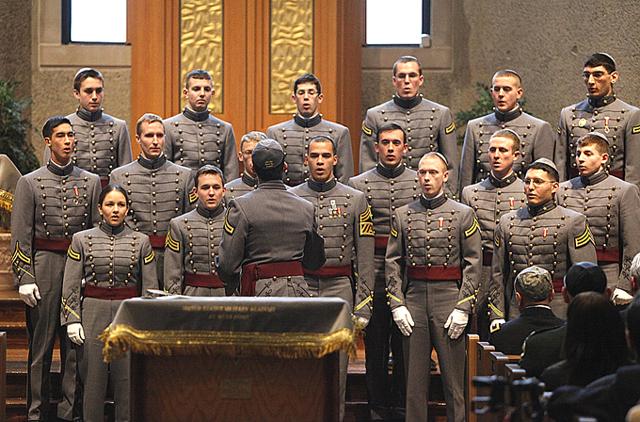
According to recent reports, the historic achievement was highlighted by Colonel Benjamin Wallen, a longtime Jewish leader at West Point who has played an instrumental role in supporting Jewish life at the academy through his involvement with the West Point Hillel and the academy’s Jewish choir. Wallen noted that the graduating Class of 2026 appears to include more Jewish cadets than any class in the academy’s long and distinguished history. While West Point officials do not formally track religious affiliation, Wallen’s assessment has been widely embraced within the academy’s Jewish community.
The milestone carries special significance because Jewish service at West Point dates back to the institution’s very inception.
When the United States Military Academy graduated its first class in 1802, only two cadets completed the program. One of them was Simeon “Simon” Magruder Levy, who became the first Jewish graduate of West Point and only the second graduate in the academy’s history. Levy had distinguished himself through military service during the Indian Wars of the 1790s and was admitted to the newly established academy because of his mathematical aptitude and demonstrated military conduct.
Levy’s story is a fitting metaphor for the broader American Jewish experience. At a time when the Jewish population in the United States was exceedingly small, he stood among the earliest generation of Americans willing to dedicate themselves to military service on behalf of a young and uncertain republic. After graduating, Levy served briefly in the Army Corps of Engineers before illness forced his resignation. He died in 1807 at only 33 years of age, but his legacy has endured for more than two centuries.
Indeed, Jewish participation in the defense of the United States predates West Point itself.
Jewish patriots fought during the American Revolution, contributing both on the battlefield and in the political sphere. Among the most notable was Francis Salvador, often described by historians as the first Jewish American to die in the cause of American independence. Jewish merchants, financiers, soldiers, and civic leaders provided critical support to the revolutionary effort, helping secure the birth of the nation at a time when the Jewish population in North America numbered only a few thousand individuals.
Over the ensuing centuries, Jewish Americans continued to answer the call of military service with distinction. Their contributions can be found in every major conflict in American history.
During the War of 1812, Jewish soldiers and officers served throughout the expanding American military establishment. In the Mexican-American War and the frontier campaigns of the 19th century, Jewish servicemen participated alongside their fellow Americans in the nation’s westward expansion and military operations.
The Civil War marked another important chapter. Thousands of Jewish Americans served on both sides of the conflict. Among the most celebrated was Benjamin Bennett Levy, a Union Army soldier who became the first Jewish American to receive the Medal of Honor. During the Battle of Glendale in Virginia, Levy demonstrated extraordinary courage by taking up a fallen comrade’s weapon and later carrying the regiment’s colors after multiple color bearers had been shot down. His actions preserved the flag from capture and earned him America’s highest military decoration.
Another prominent figure was Alfred Mordecai, a brilliant West Point graduate and one of the most respected military engineers of his era. Faced with the prospect of choosing between North and South during the Civil War, Mordecai resigned rather than take up arms against family members. His story reflected the difficult choices confronting many Americans during the nation’s most traumatic internal conflict.
By the late 19th century and early 20th century, Jewish participation at West Point steadily increased. What had begun with Simon Levy gradually evolved into a small but vibrant community of Jewish cadets and officers.
Yet life was not always easy for Jewish students at the academy. For much of West Point’s history, Jewish cadets lacked a dedicated place of worship. Services were often conducted in temporary locations, and Jewish students were frequently required to adapt their religious observance to the academy’s rigid military environment. Despite these challenges, generations of Jewish cadets persevered and established a proud tradition of service.
The 20th century brought even greater opportunities for Jewish Americans in military leadership. During World War I, thousands of Jewish soldiers fought in the trenches of Europe alongside their fellow Americans. World War II witnessed perhaps the most dramatic expression of Jewish military service in American history. Approximately 550,000 Jewish Americans served in the U.S. armed forces during the war, fighting on battlefields across Europe, North Africa, and the Pacific. Jewish servicemen and women participated in every major theater of combat and contributed to the defeat of Nazi Germany and Imperial Japan.
Many returned home decorated for valor and distinguished service. Among the most extraordinary figures was Tibor Rubin, a Holocaust survivor who immigrated to the United States and later served in the Korean War. Rubin displayed extraordinary heroism under combat conditions and endured years as a prisoner of war. After decades of delay, he was ultimately awarded the Medal of Honor for his remarkable courage and sacrifice.
The postwar era witnessed continued growth in Jewish participation at West Point. A particularly important milestone occurred in 1965 when Jewish graduates established what eventually became the West Point Jewish Chapel Fund. Their objective was ambitious: to construct a permanent Jewish chapel on academy grounds. After nearly two decades of fundraising and administrative efforts, the dream became reality. Construction began in 1982, and the West Point Jewish Chapel was dedicated in 1984. The facility remains one of the most significant symbols of Jewish life at the academy.
The chapel itself serves as a powerful testament to the permanence of Jewish contributions to American military service. Its walls commemorate generations of Jewish graduates, military heroes, and fallen servicemen who answered their nation’s call. It houses memorials to Jewish Medal of Honor recipients, preserves historical artifacts, and serves as a spiritual center for cadets, faculty, and military families.
By 2009, more than 900 Jewish cadets had graduated from West Point since Simon Levy’s pioneering achievement in 1802. Today, the Jewish community at West Point remains vibrant and active. A 2024 account written by a Jewish cadet described a thriving environment that includes Shabbat services, Torah study, Jewish cultural programming, choir activities, educational initiatives, and mentorship from chaplains and community leaders. According to that account, approximately 136 Jewish cadets were enrolled among West Point’s roughly 4,400 cadets, demonstrating both the continuity and growth of Jewish participation within the academy.
Against that backdrop, the graduation of 30 Jewish cadets in the Class of 2026 carries profound significance.
According to Colonel Wallen, several factors may explain the increase. Among them are the Hamas attacks of October 7, 2023, and the subsequent rise in antisemitism throughout many sectors of society. Wallen suggested that these developments may have inspired more young Jews to pursue military service and leadership roles within the armed forces.
His observation reflects a recurring theme throughout Jewish history. Periods of adversity have often strengthened rather than diminished Jewish commitment to public service, civic engagement, and national defense. The decision by increasing numbers of Jewish young men and women to attend West Point may therefore represent not merely a statistical anomaly but a reaffirmation of longstanding values: patriotism, resilience, leadership, and service.
The significance extends beyond the Jewish community itself. West Point has long served as a crucible for American military leadership. Its graduates have commanded armies, led military campaigns, served as presidents, cabinet members, generals, diplomats, and statesmen. The increasing presence of Jewish cadets within that institution enriches the diversity of perspectives and experiences represented within the future leadership of the United States military.
From Simon Levy’s graduation in 1802 to the record-setting Class of 2026, Jewish Americans have helped shape the history of West Point and the history of the United States Armed Forces.
They fought in the Revolution that created the nation. They served in the Civil War that preserved it. They helped defeat fascism during World War II. They stood on the front lines during Korea, Vietnam, Iraq, Afghanistan, and countless other conflicts.
For more than two centuries, Jewish Americans have demonstrated that military service and patriotic devotion are integral components of the American Jewish experience.
The latest class of Jewish graduates at West Point stands as living proof that this proud tradition remains not only alive but stronger than ever. Their achievement represents the continuation of a remarkable legacy—one built upon courage, sacrifice, faith, and an unwavering commitment to serving the United States of America.