


























The Absurdity of Blaming Israel for Defending Itself
By: Fern Sidman
There are moments in history when public discourse becomes so detached from reality that one is compelled to pause and ask whether common sense has become an endangered commodity. We appear to be living through one of those moments now.
Earlier on Tuesday, broadcaster Mark Levin distilled a growing frustration shared by many observers of the Middle East into a remarkably succinct observation. “Let me help,” Levin wrote. “Hezbollah and Iran were attacking Israel. Iran was attacking Arab countries. Iran was firing missiles at our armed forces. But Israel defending itself has endangered a deal? We live in crazy times, folks.”
His comments may have been brief, but they captured a profound contradiction that has increasingly infected discussions surrounding Israel, Iran, and regional security.
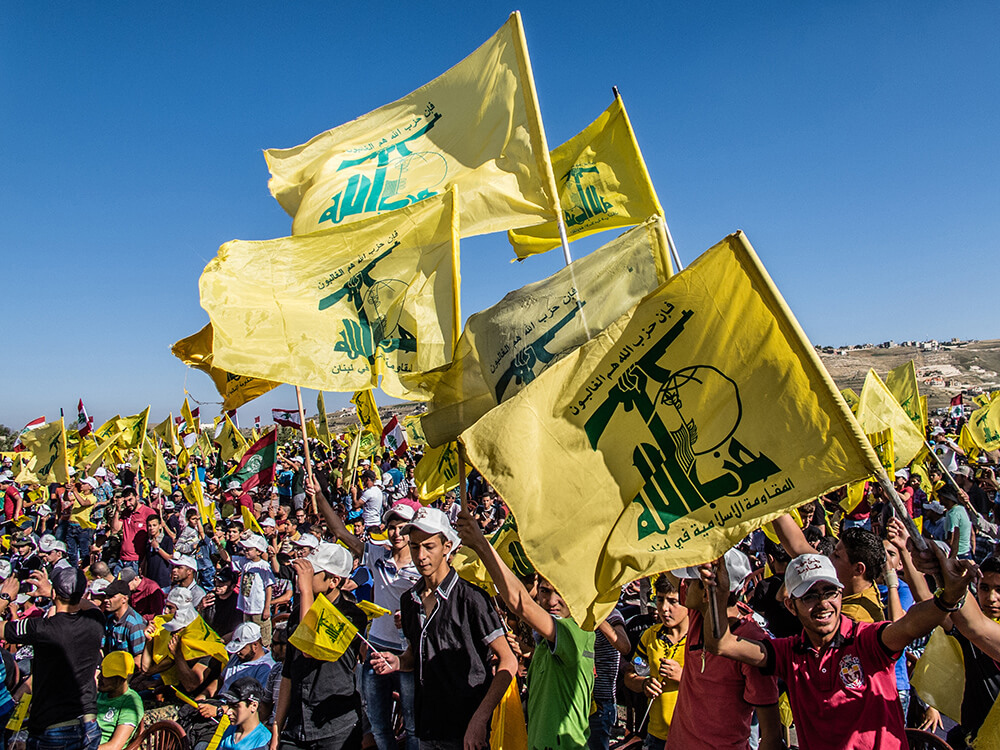
For years, the Islamic Republic of Iran has pursued a strategy of aggression, destabilization, and proxy warfare across the Middle East. Through Hezbollah in Lebanon, terrorist militias in Syria and Iraq, the Houthi movement in Yemen, and other armed proxies, Tehran has systematically sought to project power far beyond its borders. Its fingerprints can be found on countless acts of violence that have brought devastation to civilians throughout the region.
At the same time, Iran has invested enormous resources into ballistic missile programs, drone warfare capabilities, and military networks designed specifically to threaten Israel and undermine American interests in the Middle East.
These are not speculative claims. They are observable realities.
When Iranian-backed forces fire rockets into Israeli communities, when Hezbollah threatens northern Israel with tens of thousands of missiles, when Iranian drones menace commercial shipping routes, and when Tehran openly declares its hostility toward both Israel and the United States, the nature of the threat is neither ambiguous nor theoretical.
Yet somehow, in certain diplomatic and media circles, the focus increasingly shifts away from the aggressor and toward the target of aggression.
The logic is astonishing. Iran launches missiles. Iran arms terrorist organizations. Iran destabilizes neighboring countries. Iran threatens American personnel and interests. Iran funds and directs groups whose stated objective is the destruction of Israel.
And when Israel responds to those threats, it is Israel that is accused of complicating diplomacy. Such reasoning turns reality upside down.
No sovereign nation on earth would be expected to absorb continuous military attacks without responding. No government could fulfill its most basic obligation to protect its citizens if it adopted such a posture.
Israel is frequently held to standards that would never be imposed upon any other democracy. If missiles were launched at London, Paris, Berlin, or Washington, the right of self-defense would be treated as self-evident. Political leaders would not be expected to apologize for protecting their populations. They would not be lectured about the importance of restraint while hostile forces continued their attacks.
Yet when Israel acts to defend its citizens, a different standard often emerges. Suddenly, discussions become less focused on the initial aggression and more focused on the response. This inversion of moral responsibility has become one of the defining characteristics of contemporary debates regarding Israel.
The issue is not whether diplomacy is desirable. Of course it is. Every reasonable person prefers peace to war. Every responsible government should pursue diplomatic solutions whenever possible.
The problem arises when diplomacy becomes detached from accountability. A durable peace cannot be built upon the premise that aggressors bear no responsibility for their actions while those defending themselves are expected to exercise endless restraint.
History demonstrates that appeasement rarely moderates expansionist regimes. More often, it emboldens them. Iran’s leadership has repeatedly interpreted weakness as opportunity.
For decades, Tehran has expanded its influence through force, intimidation, and proxy warfare. It has done so not because it fears confrontation but because it calculates that confrontation will often be avoided. This is why deterrence matters. Deterrence is not an obstacle to peace. In many cases, deterrence is what makes peace possible. A regime contemplating aggression must understand that aggression carries consequences.
Without consequences, there is little incentive to change behavior. Israel’s military responses must therefore be understood within the broader context of deterrence.
When Israeli leaders authorize defensive operations, they are not merely responding to immediate threats. They are seeking to establish that attacks on Israeli citizens will not occur without cost.
This principle is neither radical nor controversial. It is the foundation of national defense. Moreover, the argument that Israeli self-defense somehow jeopardizes diplomatic negotiations raises a fundamental question: What exactly is being negotiated?
If a proposed agreement can survive missile launches from Iran, attacks by Hezbollah, and threats against American forces, but cannot survive Israel defending itself, then something is profoundly wrong with the framework of those negotiations.
Diplomacy should constrain aggressors. It should not constrain victims.
A peace process that implicitly rewards hostile conduct while penalizing defensive action risks producing precisely the opposite of stability. It creates incentives for further aggression. The broader regional context makes this reality even clearer.
Iran’s actions have not been directed solely against Israel. Arab states throughout the region have expressed deep concerns regarding Tehran’s activities. From missile attacks and proxy warfare to maritime disruptions and political interference, Iranian policies have generated anxiety far beyond Jerusalem.
Many governments in the Middle East understand that the challenge posed by Iran extends beyond any single country. It is a regional issue with global implications. The United States has also experienced direct consequences of Iranian behavior.
American military personnel have faced repeated threats from Iranian-backed groups. American interests have been targeted. American policymakers across multiple administrations have struggled to contain Tehran’s destabilizing activities.
Given this record, it is difficult to understand why Israel’s efforts to defend itself would be portrayed as the primary obstacle to peace. The obstacle is not self-defense. The obstacle is aggression. The obstacle is terrorism. The obstacle is the continued willingness of extremist actors to employ violence as an instrument of policy.
Mark Levin’s observation resonates because it exposes this contradiction with unusual clarity. The notion that Israel’s defensive actions are somehow more problematic than the attacks that necessitated them reflects a profound distortion of moral reasoning.
Civilized societies must be capable of distinguishing between those who initiate violence and those who respond to it. They must be able to recognize the difference between aggression and self-preservation.
That distinction is not merely academic. It lies at the heart of international order. When the world loses the ability to identify aggressors, it risks creating an environment in which aggression flourishes. When victims are blamed for defending themselves, the incentives become dangerously inverted.
The current debate surrounding Israel and Iran therefore represents more than a dispute over a particular military operation or diplomatic initiative. It reflects a broader struggle over fundamental principles.
Does a nation have the right to defend its citizens against attack? Should aggressors be held accountable for their actions? Can peace be achieved by ignoring the realities that produce conflict in the first place? For Israel, these are not theoretical questions. They are matters of national survival.
The Jewish state exists in one of the most volatile regions in the world. It faces adversaries that openly call for its destruction. It confronts threats that most Western democracies can scarcely imagine. Under such circumstances, self-defense is not optional. It is indispensable.
Those who genuinely seek peace should focus their attention on the forces driving instability rather than condemning those resisting it. Peace will not emerge from pressuring Israel to tolerate attacks against its citizens. Peace will emerge when those responsible for the attacks understand that violence will not achieve their objectives.
That is why Levin’s comments struck such a chord. They reminded us of a simple truth that has become surprisingly controversial in some quarters: nations under attack have the right to defend themselves. Far from undermining peace, that principle remains one of the essential foundations upon which any lasting peace must ultimately rest.