




|
Getting your Trinity Audio player ready...
|
By: Yehuda Altein
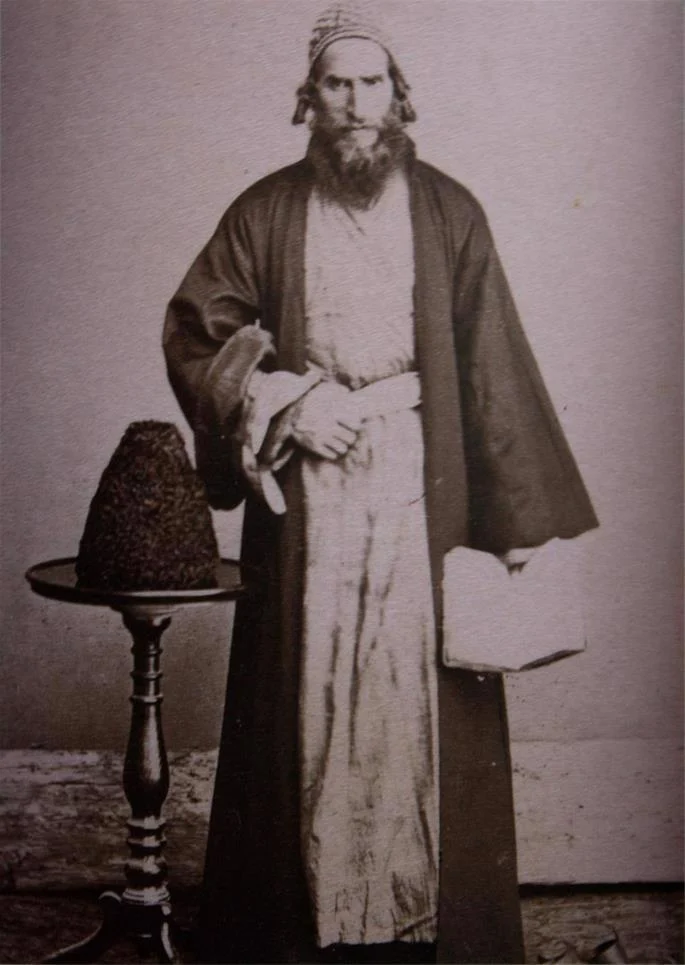
Georgia is a country in the Caucasus region, a stretch of land between the Black and Caspian Seas, where Europe and Asia meet. Over the centuries, Georgia has seen periods of independence and times under Russian rule. But throughout these political changes, its ancient Jewish community not only endured but flourished. Read on for 16 facts about the Jews of Georgia.
- Jews Have Lived There For Millennia
No one knows exactly when Jews first arrived in Georgia, but it’s been a very long time—possibly over 2,500 years! According to The Georgian Chronicles, a medieval collection of historical records, Jews came to the region after the destruction of the First Temple in Jerusalem by Nebuchadnezzar.

- There Are No Kohanim or Levites
One fascinating feature of the Georgian Jewish community is that it’s made up almost entirely of Israelites, with virtually no Kohanim (priests) or Levites among them. According to tradition, when Ezra the Scribe called upon all Kohanim and Levites to return with him to the Land of Israel to help rebuild the Second Temple, those who had settled in Georgia answered his call and left, leaving only Israelites behind.
- They Shared the Region with the Mountain Jews
Georgia’s Jewish population wasn’t alone. The Mountain Jews also lived in the Caucasus region. Although they lived near each other, the two groups developed distinct customs, cultures, and languages. The Mountain Jews lived in the mountainous areas to the north and east, while the Georgian Jews made their homes in the more urban south and west.
- Spanish Exiles Joined Their Ranks
After the Spanish expulsion of 1492, many Sephardic exiles made their way to Georgia, where Jews enjoyed religious freedom and were respected for their contributions to economy and agriculture. Over time, these newcomers blended with the existing Jewish population, becoming an inseparable part of the Georgian Jewish community.

Three centuries later, when Georgia became part of the Russian Empire, Ashkenazi Jews from other parts of Russia began arriving there as well, creating their own separate communities.
- They Held Steadfast to Their Jewish Identity
In many Georgian cities, Jews lived in their own neighborhoods, keeping separate from the non-Jewish residents. This close-knit living arrangement helped them hold onto their Jewish identity and traditions and avoid assimilation. Strong devotion to a Jewish way of life is a hallmark feature of Georgian Jewry that remains with them to this day.
- Blood Libels Under Tsarist Rule
For most of their history, Georgian Jews enjoyed peaceful relations with their non-Jewish neighbors. Sadly, during the Tsarist era, two terrible blood libels occurred—one in Surami in 1850 and another in Sachkhere in 1878. The latter ended in acquittal, but in the first case, the accused were imprisoned, tortured, and exiled to Siberia.
- Their Chabad Connection Is More Than a Century Old
In 1916, a delegation of Georgian Jews visited the fifth Chabad Rebbe, Rabbi Sholom Dovber, in Rostov, asking for help to strengthen Judaism in their region. He responded by sending Rabbi Shmuel Levitin to Kutaisi, where he opened a Jewish school and bolstered Jewish life. Soon, other Chabad emissaries established similar schools across Georgia. These institutions sparked a spiritual revival, and many of their graduates went on to become respected leaders of Georgian Jewry, in Russia and then in Israel.

- Kulashi Was the “Jerusalem of Georgia”
Jews lived all across Georgia—in towns and cities like Kutaisi, Tbilisi, Oni, Akhaltsikhe, and others. But one town stood out: Kulashi. At its peak in the 1960s, 12,000 Jews lived there—the town’s entire population! Known as the “Jerusalem of Georgia,” Kulashi produced many Georgian rabbis (known as chachamim), and remarkably, Jewish life flourished there even under Soviet rule. The Jewish community there has since moved on, mostly to Israel.
- A Bold Plea to the World
In 1969, eighteen Georgian Jewish families bravely sent a heartfelt letter to the United Nations Human Rights Committee. In it, they expressed their deep yearning to move to the land of their ancestors and live openly as Jews. The letter gained international attention. The Soviet Union eventually allowed large numbers of Jews to emigrate, including over 45,000 Georgian Jews, most of whom made their way to the Holy Land.
- The Lailashi Codex
Several ancient manuscript copies of the Bible, known as codices, have gained worldwide recognition, such as the Aleppo Codex and the Leningrad Codex. A lesser-known but equally important manuscript is the Lailashi Codex, named after the small Georgian town where it was held for centuries. Handwritten in exquisite Hebrew script and adorned with numerous complex patterns, this beautiful manuscript is a true crown jewel of Jewish heritage in Georgia.
- Their Cuisine Is Delicious
Georgian Jewish mothers sure know how to cook up a scrumptious storm! Favorites include khinkali, meat dumplings; shechamadi, a stew of meat and rice; and khachapuri, pastries filled with cheese—a favorite year-round but especially on the upcoming holiday of Shavuot. If you ever get the chance to try authentic Georgian kosher cooking, don’t pass it up!
- Their Hospitality Is Legendary
If you ever visit a Georgian Jewish home, expect to be treated like royalty. Their hachnasat orchim (hospitality) is the stuff of legend. No matter that you just stopped by for a minute; you’ll be doted on and wined and dined like a king. Hosts will prepare generous, multi-course meals, leaving the previous course on the table when the next one is brought in—making it feel as if the meal will never end!
- There’s a Georgian Tanya
Georgian is a unique language in a class of its own, very different from just about every other language on the planet. And today, you can even study Chassidism in Georgian! In 2011, the foundational Chassidic text Tanya was published in Georgian, unlocking the wellsprings of Chassidic teachings for thousands of Georgian-speaking Jews.
- Their Songs Pulse with Energy
Georgian Jews sing a wide repertoire of spirited tunes set to the words of various prayers and hymns. Here are two of them:
Adon Haslichot:
- Many Surnames End with “–shvili”
Georgian Jewish surnames often end with “–shvili,” which means “child of” in Georgian. For example, “Michaelshvili” means “son of Michael,” indicating the name of an early ancestor. Some family names hint at professions, places, or other ancestral traits.
- They Are Spread Across the World
Today, only a few thousand Jews remain in Georgia, but Jewish life continues, with active Chabad centers in Tbilisi and Batumi catering to the needs of the community. The majority of Georgian Jews now live in Israel, with other communities in New York and elsewhere, keeping their traditions alive wherever they go.
The author thanks Rabbi Shabtai Michaelshvilli and Mr. Chaim Ben Levy for their invaluable assistance.
Rabbi Yehuda Altein is a writer, translator and editor specializing in Jewish subjects and handwritten family material. A former researcher for JLI’s Machon Shmuel Research Institute, he has written on Jewish history, scriptural exegesis, halachah, and chassidut. Yehuda resides in Brooklyn, N.Y., with his family and enjoys collecting antique Judaica and exploring natural history in the Torah.
