



|
Getting your Trinity Audio player ready...
|
By: Carl Schwartzbaum
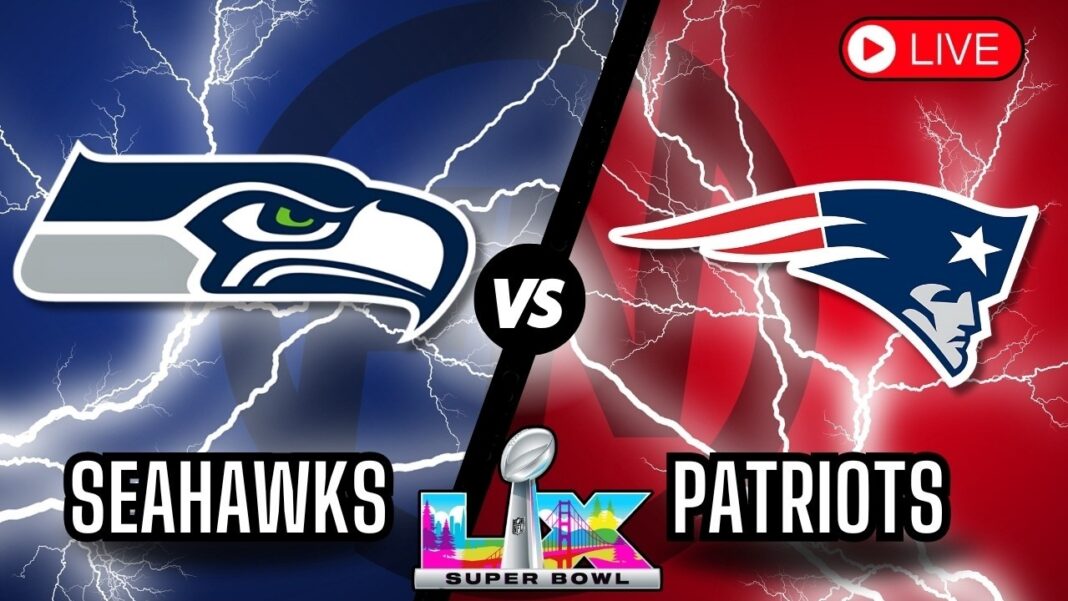
As dusk settles over Northern California and the lights of Levi’s Stadium blaze against the Santa Clara skyline, the sporting world prepares for a familiar yet perpetually astonishing ritual: the Super Bowl. Super Bowl LX, the grand culmination of the 2025 NFL season, is not merely a football game but a meticulously choreographed national event, one that fuses athletic theater with broadcast spectacle and cultural pageantry. Millions of viewers are keenly aware that the New England Patriots and the Seattle Seahawks will collide in the sport’s ultimate contest. Yet, as CBS Sports has noted in its report on Sunday of the Super Bowl’s rhythms and rituals, the true architecture of this evening extends far beyond the opening kickoff. The game unfolds across hours of anticipation, performance, commercial drama, and, finally, the measured cadence of a championship decided.
CBS Sports has long emphasized that the Super Bowl is as much about timing as it is about tactics. The question of when the game begins and ends is not trivial; it shapes family gatherings, viewing parties, advertising strategies, and even the rhythm of cities that pause for the event. In the hours leading up to kickoff, the pregame coverage sets the tone, transforming a football contest into a communal experience.
NBC’s broadcast of Super Bowl LX commences its official pregame coverage at 1 p.m. Eastern Time, offering a marathon of analysis, features, and predictions that stretches across five and a half hours. CBS Sports, which closely monitors how fans consume the Super Bowl across platforms and time zones, has frequently observed that these pregame narratives are where legacies are framed and expectations hardened. By the time the teams take the field, the game’s emotional contours have already been sketched in the public imagination.
The matchup itself arrives with a compelling contrast of identities. The New England Patriots, champions of the AFC, have carved their path through the postseason with a severity that feels almost anachronistic in an era of explosive offenses. Their average of 18 points per game during this playoff run is modest by contemporary standards, a statistic that the CBS Sports report highlighted as the lowest entering a Super Bowl since the 1979 Los Angeles Rams. Yet, if their offense has been parsimonious, their defense has been imperial.
Allowing a mere 8.7 points per game across three postseason contests, the Patriots have evoked memories of historically dominant defensive units, including the vaunted 2000 Baltimore Ravens. CBS Sports analysts have been quick to point out that this statistical profile suggests a team built not to dazzle but to suffocate, to impose a disciplined order upon the chaos of playoff football.
Opposite them stand the Seattle Seahawks, the NFC champions whose season has been defined by relentless momentum. Their staggering +230 point differential is among the most commanding in the modern era, surpassed in the 21st century only a handful of times and not since the 2015 Carolina Panthers reached similar heights. CBS Sports has characterized Seattle’s campaign as one of sustained aggression, a team that not only wins but overwhelms, leaving opponents visibly diminished. Where New England’s narrative is one of methodical containment, Seattle’s is one of expansive dominance, a collision of philosophies that lends Super Bowl LX a sense of strategic intrigue.
Yet for all the footballing gravitas, the Super Bowl’s temporal choreography remains central to its cultural impact. Kickoff is scheduled for approximately 6:30 p.m. Eastern Time, a moment that CBS Sports has described in previous years as the evening’s ceremonial heartbeat. This precise timing reflects decades of broadcast optimization, designed to capture peak viewership across the continental United States.
The game’s first quarter unfolds as families settle into couches and bars swell with noise, while advertisers unveil their most expensive and ambitious creative gambits. CBS Sports has repeatedly noted that the Super Bowl’s commercials are scrutinized with an intensity rivaling that of the plays on the field, each 30-second slot dissected for its cultural resonance and narrative ingenuity.
As the game progresses, the halftime show emerges as a cultural interlude of its own. According to projections cited by CBS Sports, the halftime performance for Super Bowl LX is expected to begin sometime between 7:30 p.m. and 8:30 p.m. Eastern Time, depending on the pace and flow of the first half. This elastic window underscores the unpredictability inherent in live sport. A defensive slugfest or a series of extended drives can stretch the clock, while quick scores compress it. This year’s halftime spectacle, headlined by Bad Bunny, is poised to add yet another chapter to the Super Bowl’s evolving relationship with global pop culture.
CBS Sports has observed in past seasons that halftime performances often become cultural touchstones, generating conversations that ripple far beyond the confines of the stadium, shaping playlists and social media discourse for weeks to come.
The total duration of the Super Bowl is another variable that commands attention. Historical averages offer a guide, though never a guarantee. Games played between 2005 and 2024 have averaged approximately three hours and thirty-seven minutes in length, a figure CBS Sports frequently references when helping viewers plan their evenings. If Super Bowl LX adheres to this norm, the final whistle would sound around 10:07 p.m. Eastern Time. Yet the sport’s most indelible moments often arise in defiance of averages.
A last-second drive, an overtime period, or a sequence of reviews can extend the night, prolonging the communal tension that defines the Super Bowl experience. CBS Sports, in revisiting past classics, has highlighted how games decided in their closing moments linger in memory precisely because they stretch time, forcing viewers to inhabit a prolonged state of anticipation.
The Patriots and Seahawks themselves share a history that lends further texture to this temporal drama. Their previous Super Bowl meeting, concluding the 2014 NFL season, unfolded over nearly the same duration as the modern average, a coincidence that CBS Sports has cited as emblematic of the Super Bowl’s rhythmic consistency even amid narrative unpredictability. That contest, etched into NFL lore for its dramatic conclusion, stands as a reminder that the Super Bowl’s clock is not merely a mechanical measure but a narrative device, stretching and compressing in service of collective memory.
Beyond the stadium, the broadcast architecture of Super Bowl LX reflects the contemporary media ecosystem. NBC’s coverage extends across traditional television and streaming platforms, ensuring that viewers can tune in from living rooms, mobile devices, and public venues alike. CBS Sports has chronicled how this multi-platform approach has reshaped the Super Bowl’s audience, transforming it from a singular broadcast event into a dispersed yet synchronized experience. The proliferation of real-time blogs, social media commentary, and second-screen analytics means that the Super Bowl now unfolds simultaneously on the field and across digital landscapes, each moment amplified, debated, and reframed in real time.
This layered temporality—the hours of pregame buildup, the precisely timed kickoff, the elastic halftime window, and the uncertain endpoint—underscores why the Super Bowl occupies such a singular place in American life. CBS Sports has often argued that the Super Bowl is not merely a game but a temporal anchor, a fixed point in the calendar around which cultural rhythms organize themselves. Super Bowl Sunday has become a secular holiday, its schedule as anticipated as any civic observance. The knowledge of when the game begins and ends is woven into the logistics of parties, the planning of meals, and the pacing of conversation.
As Super Bowl LX approaches its opening kickoff, the convergence of footballing excellence and broadcast ritual invites reflection on the peculiar power of timing in modern sport. The Patriots’ stoic defense and the Seahawks’ explosive dominance will collide under the lights of Santa Clara, but their contest will unfold within a carefully calibrated temporal frame, one that CBS Sports and other outlets have spent years analyzing and refining. From the first notes of the pregame anthem to the final echo of the whistle, Super Bowl LX will occupy a defined yet elastic span of time, a window in which athletic endeavor and cultural performance intertwine.
In the end, the Super Bowl’s enduring allure lies in this very synthesis. It is a night when clocks matter and yet seem to dissolve, when minutes are counted with obsessive precision even as they vanish into memory. As CBS Sports has so often observed, the Super Bowl is a spectacle that teaches its audience not merely to watch a game, but to inhabit a shared temporal experience. Super Bowl LX, with its storied teams, anticipated halftime performance, and meticulously scheduled broadcast, promises to extend that tradition, inviting viewers to surrender to the long night of football and emerge, hours later, with another chapter added to the ever-growing mythology of America’s most watched sporting event.
