




Edited by: TJVNews.com
Federal regulators are expected to authorize the mixing and matching of COVID-19 booster doses this week in an effort to provide flexibility as the campaign for extra shots expands, as was reported by the AP.
The upcoming announcement by the Food and Drug Administration is likely to come along with authorization for boosters of the Moderna and Johnson & Johnson shots and follows the OK for a third dose for the Pfizer vaccine for many Americans last month. The AP reported that the move was previewed Tuesday by a U.S. health official familiar with the matter who was not authorized to speak publicly ahead of the announcement.
The FDA was expected to say that using the same brand for a booster was still preferable, especially for the mRNA vaccines from Pfizer and Moderna that have proved most effective against the coronavirus. The agency was still finalizing guidance for the single-shot J&J vaccine.

Preliminary results from a government study of different booster combinations found an extra dose of any type revs up levels of virus-fighting antibodies regardless of the brand people first received. But recipients of the single-dose J&J vaccination had the most dramatic response — a 76-fold and 35-fold jump in antibody levels, respectively, shortly after either a Moderna or Pfizer booster, compared to a four-fold rise after a second J&J shot.
The AP reported that one confusing decision is what Moderna dose to recommend in combination with other brands. Moderna has applied for its booster to be half the original dose, saying that’s plenty for people who already received two full-strength shots. But the mix-and-match study used full-strength extra doses, and there’s no way to know if a half-dose Moderna booster would trigger as strong a reaction in J&J recipients.
Allowing mixing and matching could make the task of getting a booster simpler for Americans and allow people who may have had adverse reactions to the initial dose to try a different shot.
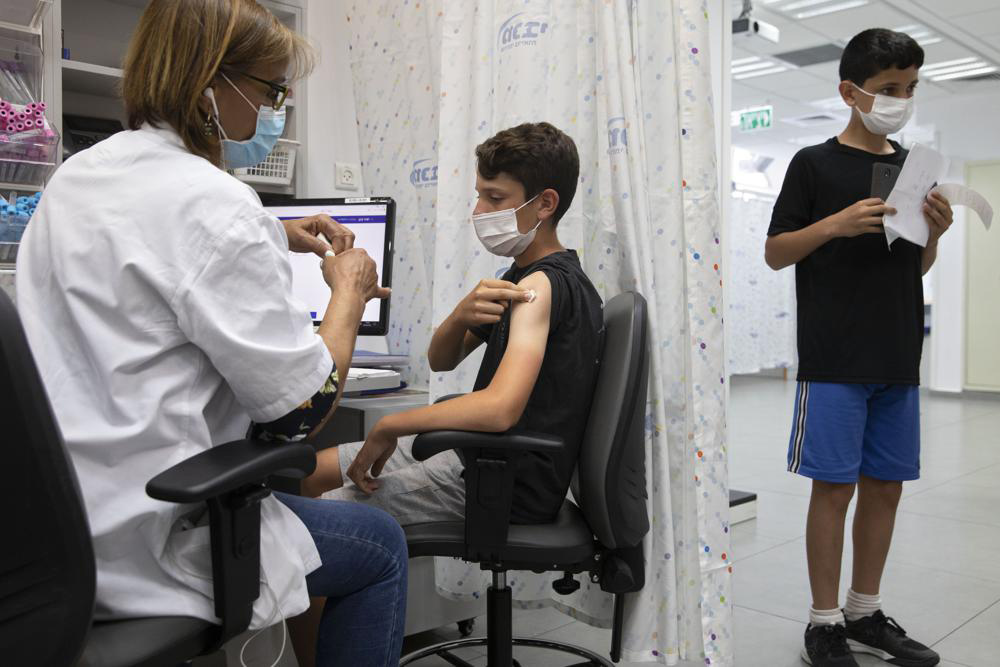
AP reported that last week, the U.S. said it would recognize combinations of vaccines administered overseas for the purposes of entering the country. The practice was common in Canada and some European countries in the early months of the vaccination campaign.
More COVID-19 booster shots may be on the way — but when it’s your turn, you’ll get an extra dose of the original vaccine, not one updated to better match the extra-contagious delta variant, according to the AP report.
And that has some experts wondering if the booster campaign is a bit of a missed opportunity to target delta and its likely descendants.
“Don’t we want to match the new strains that are most likely to circulate as closely as possible?” Dr. Cody Meissner of Tufts Medical Center, an adviser to the Food and Drug Administration, challenged Pfizer scientists recently.
“I don’t quite understand why this is not delta because that’s what we’re facing right now,” fellow adviser Dr. Patrick Moore of the University of Pittsburgh said last week as government experts debated whether it’s time for Moderna boosters, as was reported by the AP. He wondered if such a switch would be particularly useful to block mild infection.

The simple answer: The FDA last month OK’d extra doses of Pfizer’s original recipe after studies showed it still works well enough against delta — and those doses could be rolled out right away. Now the FDA is weighing evidence for boosters of the original Moderna and Johnson & Johnson vaccines.
“It’s less churn and burn on the manufacturing” to only switch formulas when it’s really necessary, said FDA vaccine chief Dr. Peter Marks, as was reported by the AP.
But Pfizer and Moderna are hedging their bets. They’re already testing experimental doses customized to delta and another variant, learning how to rapidly tweak the formula in case a change eventually is needed — for today’s mutants or a brand new one. The tougher question for regulators is how they’d decide if and when to ever order such a switch.
What we know so far:
CURRENT VACCINES ARE WORKING EVEN AGAINST DELTA
Vaccines used in the U.S. remain strongly effective against hospitalization and death from COVID-19, even after the delta variant took over, but authorities hope to shore up waning protection against less severe infection and for high-risk populations, as was reported by the AP. Studies show an extra dose of the original formulas revs up virus-fighting antibodies that fend off infection, including antibodies that target delta.
MIGHT A DELTA-SPECIFIC BOOSTER WORK EVEN BETTER?
Vaccines target the spike protein that coats the coronavirus. Mutations in that protein made delta more contagious but to the immune system, it doesn’t look all that different, said virus expert Richard Webby of St. Jude Children’s Research Hospital.
That means there’s no guarantee a delta-specific booster would protect any better, said University of Pennsylvania immunologist John Wherry. Waiting for studies to settle that question — and if necessary, brewing updated doses — would have delayed rolling out boosters to people deemed to need them now.
“Delta is now the dominant version of the virus worldwide it almost certainly will be a common ancestor for whatever evolves next in a mostly unvaccinated world,” said Trevor Bedford, a biologist and genetics expert at the Fred Hutchinson Cancer Research Center.
A delta-updated vaccine would “help to provide a buffer against those additional mutations,” he said. Bedford is paid by the Howard Hughes Medical Institute, which also supports The Associated Press Health and Science Department.
AP reported that the Pfizer and Moderna vaccines are made with a piece of genetic code called messenger RNA that tells the body to make harmless copies of the spike protein so it’s trained to recognize the virus. Updating the formula merely requires swapping out the original genetic code with mRNA for a mutated spike protein.
Both companies first experimented with tweaked doses against a mutant that emerged in South Africa, the beta variant, that has been the most vaccine-resistant to date, more so than the delta variant. Lab tests showed the updated shots produced potent antibodies. But the beta variant didn’t spread widely.
Now the companies have studies underway of fully vaccinated people who agreed to test a booster dose tweaked to match delta. AP reported that Moderna’s studies also include some shots that combine protection against more than one version of the coronavirus — much like today’s flu vaccines work against multiple influenza strains.
The mRNA vaccines are considered the easiest kind to tweak but some other vaccine makers also are exploring how to change their recipes if necessary.
Moderna’s Dr. Jacqueline Miller told an FDA advisory panel last week the company is studying variant-specific boosters now to learn if they offer advantages, and to be ready if they’re needed, as was reported by the AP.
And Penn’s Wherry said it is critical to carefully analyze how the body reacts to updated shots because the immune system tends to “imprint” a stronger memory of the first virus strain it encounters. That raises questions about whether a subtly different booster would prompt a temporary jump in antibodies the body’s made before — or the bigger goal, a broader and more durable response that might even be better positioned for the next mutations to come along.
“What is the tripping point?” asked Webby, who is part of a World Health Organization network that tracks influenza evolution. “A lot of what is going to need to go into that decision making is just going to be learned by experience, unfortunately.”
Bedford said now is the time to decide what drop in vaccine effectiveness would trigger a formula change, just as is done with flu vaccines every year, as was reported by the AP.
That’s important not just if a dramatically worse variant suddenly develops. Like many scientists, Bedford expects the coronavirus to eventually evolve from a global crisis into a regular threat every winter — which might mean more regular boosters, maybe even yearly in combination with the flu shot.
Timing between shots matters, too, Wherry noted.
“Your boostability may actually improve with longer intervals between stimulation,” he said. While scientists have learned a lot about the coronavirus, “the story’s not finished yet and we don’t know what the last chapters say.”
In a related development, the WND News Center reported that the Food and Drug Administration is delaying its decision on administration of the Moderna vaccine to young people; citing concerns of an increased risk of heart inflammation.
The agency is planning to review the data regarding myocarditis further before making a decision, the Wall Street Journal reported.
Moderna’s chief medical officer, Paul Burton, told the Journal he believes “people can be reassured that the risk of myocarditis with an mRNA vaccine is low.”
However, Sweden, Finland and Norway have halted the Moderna COVID-19 vaccine for younger people, and Iceland has administering the shot to everyone, as WND reported.
Iceland’s chief epidemiologist cited data from the Nordic countries on the increased incidence of myocarditis and pericarditis after vaccination. For the past two months, the Moderna vaccine has been used in Iceland almost exclusively as a booster shot, a third dose.
And on Friday, France’s health authority advised against using the Moderna vaccine because of the myocarditis risk.
The Centers for Disease Control and Prevention said the cases of inflammation have tended to occur a few days after the second COVID-19 vaccine injection.
Last week, an FDA panel unanimously endorsed a half-dose booster shot for older and at-risk adults.
This Friday, FDA officials will decide whether or not to approve Pfizer’s request for emergency authorization for its vaccine for children ages 5 to 11, according to the WND News Center report.
Pfizer and Moderna employ the messenger RNA technology, which “teach” cells to make a protein that triggers an immune response rather than inserting a live virus, as do traditional vaccines.
The Hill reported the CDC is allowing states to preorder doses for young children prior to authorization.
In yet another development, World Israel News reported that an 11-year-old Israeli boy was diagnosed with a “descendant” of the Delta COVID variant that is believed to be at least partially responsible for the recent surge in coronavirus cases in the United Kingdom.
The UK Health Security Agency issued a report last week in which it said that the newly designated AY.4.2 is expanding in England. This Delta subtype is reportedly 10% to 15% more transmissible than its parent variant.
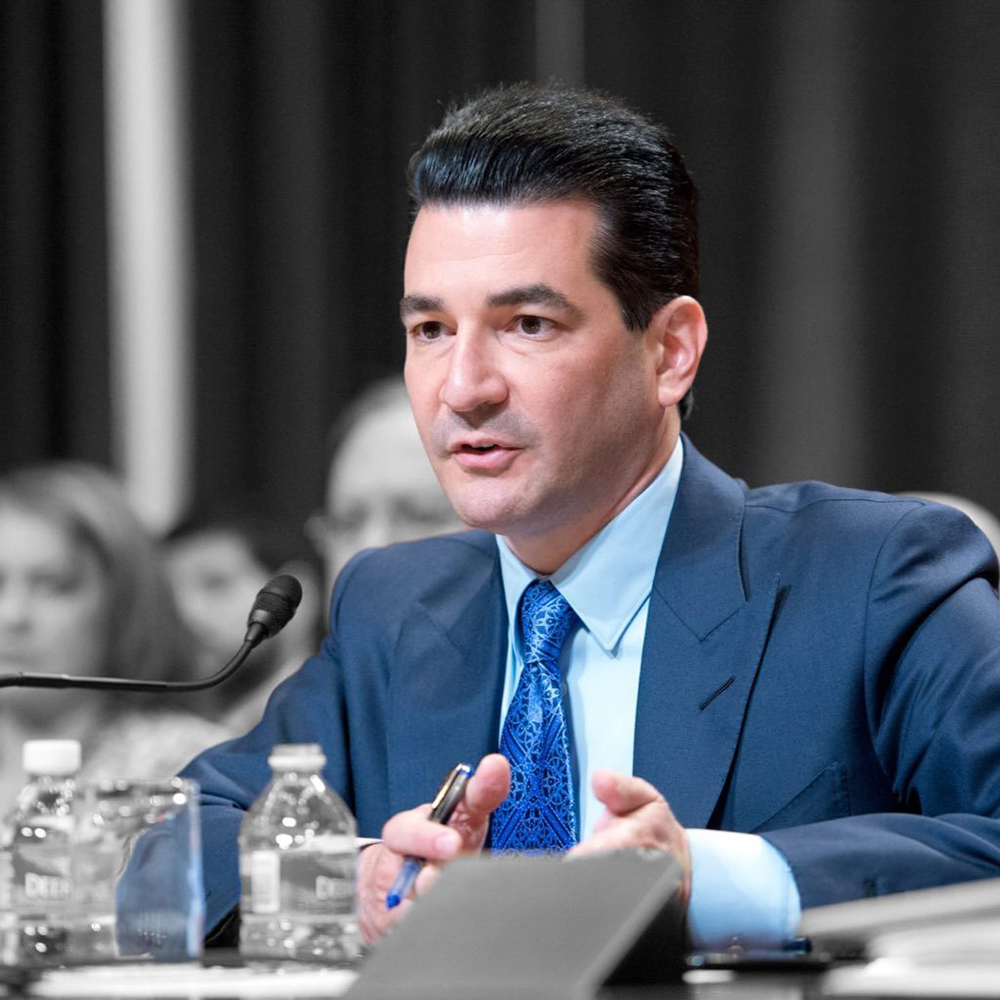
“UK reported its biggest one-day Covid case increase in 3 months just as the new delta variant AY.4 with the S:Y145H mutation in the spike reaches 8% of UK sequenced cases,” tweeted former US Food and Drug Administration Commissioner Scott Gottlieb on Sunday.
“The variant has been in the UK since about July, but it has been slowly increasing in prevalence. There’s no clear indication that it’s considerably more transmissible, but we should work to more quickly characterize these and other new variants. We have the tools,” he added. “This is not a cause for immediate concern but a reminder that we need robust systems to identify, characterize new variants. This needs to be a coordinated, global priority for Covid same as similar international efforts have become standard practice in influenza.”
The Israeli boy returned to Israel from Moldova. He was in quarantine when the diagnosis was made, and the Health Ministry said that no further cases have yet to be discovered.
“The investigation is ongoing,” the ministry said. “The Health Ministry regularly monitors all types of variants and their development.”
Israel has been experiencing a decline in its daily infection and serious cases rate in the last couple of weeks, mostly sparked by a strong booster shot campaign. Some 3.8 million Israelis have had a COVID booster shot.
(Sources: AP, WND News Center, World Israel News)
