



|
Getting your Trinity Audio player ready...
|
By: Tzirel Rosenblatt
A rare and deeply unsettling rupture has opened within the global humanitarian establishment, as allegations of antisemitism have emerged not from external critics, but from within the executive ranks of one of the world’s most recognizable aid organizations. The Jewish News Syndicate (JNS) reported on Tuesday that Halima Begum, the former chief executive officer of Oxfam Great Britain who resigned from her post in December, has publicly accused the organization of fostering what she described as a “toxic antisemitic culture.” Her claims, now part of a legal action against the charity, have ignited renewed scrutiny of the ideological currents coursing through international non-governmental organizations that claim to operate in the name of universal human rights.
Begum’s departure from Oxfam followed accusations that she had bullied staff, a charge she disputes and is contesting in an employment tribunal. Yet it is her counter-accusation—leveled in that same legal forum—that has sent shockwaves through the humanitarian sector. According to reporting cited by JNS, Begum testified that Oxfam’s internal culture had become suffused with antisemitic attitudes and that the organization exhibited a disproportionate fixation on the war in Gaza, one that, in her telling, crowded out a more balanced engagement with the world’s many humanitarian crises. The gravity of the charge is heightened by the fact that Begum herself is Muslim and has been a vocal critic of Israeli policy, a biographical detail that lends her allegations a particular resonance in the eyes of Israeli officials and watchdog groups.
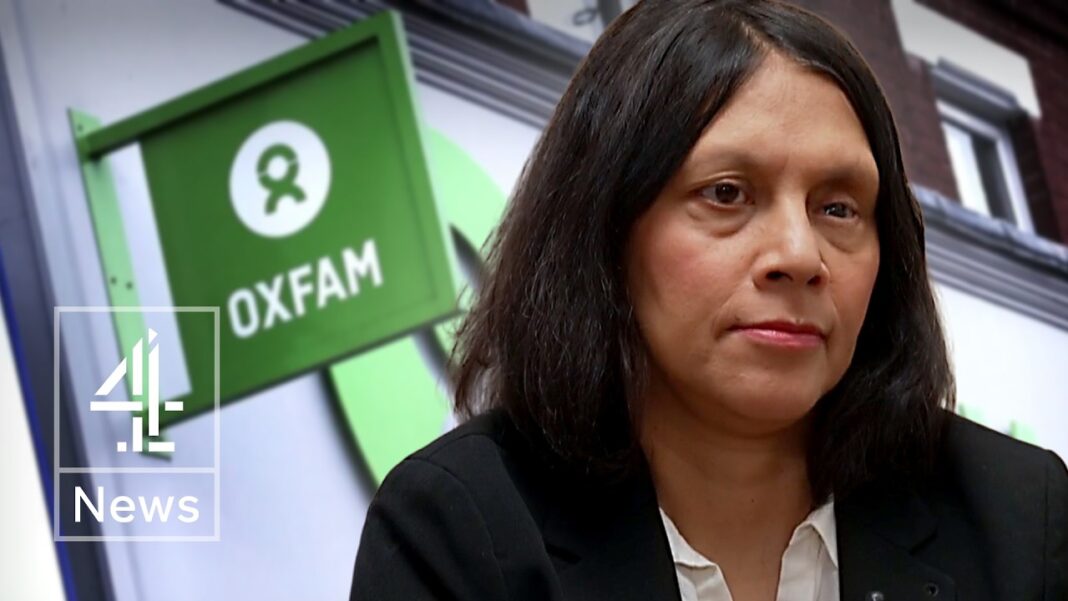
In an interview with Britain’s Channel 4 on February 13, Begum elaborated on her concerns about the organization’s internal posture. She described an atmosphere in which Gaza occupied an outsize place in Oxfam’s institutional focus, creating what she characterized as an unhealthy distortion of the charity’s mission. As reported by JNS, Begum said that within Oxfam it “always felt as though we were disproportionately working around the crisis in Gaza,” an imbalance that, in her view, reflected not merely a humanitarian prioritization but a deeper ideological tilt.
More pointedly, Begum took issue with the organization’s readiness to deploy the language of “genocide” in reference to Israel’s military campaign against Hamas. The invocation of such a legally and morally charged term, she argued, requires rigorous evidentiary standards and careful legal consultation. “To use the word ‘genocide,’ it has to be something we arrive at with consultation and evidence and good legal advice,” she said, according to the JNS report. To employ the term prematurely, she warned, was not only legally precarious but indicative of a culture in which accusatory rhetoric had outpaced sober analysis. Her remarks suggest an internal environment where moral fervor may have eclipsed procedural caution, with potentially profound consequences for the credibility of the organization’s advocacy.
Oxfam, founded in Britain and now operating as a confederation of NGOs across the globe, has long positioned itself as a paragon of humanitarian virtue, dedicated to alleviating poverty and responding to crises wherever they arise. The organization’s moral authority rests on the perception that it speaks from a posture of impartiality, guided by universal principles rather than partisan alignments. It is precisely this claim to neutrality that Begum’s allegations call into question. As the JNS report noted, the charge of antisemitism within such an institution is not merely an internal personnel dispute but a challenge to the legitimacy of a humanitarian brand that wields enormous influence in global public discourse.
The reaction from Israeli officials has been swift and emphatic. Amichai Chikli, Israel’s minister for Diaspora affairs and combating antisemitism, told JNS that Begum’s statements reflected “the narrative and intensity of antisemitism within Oxfam.” He underscored the significance of the testimony by pointing to Begum’s own critical stance toward Israel. “Dr. Begum herself, who is Muslim, has been a vocal critic of the State of Israel,” Chikli said. “Therefore, when she testifies about the level of antisemitism within the organization and levels these accusations herself, her remarks should resonate around the world all the more.” The minister’s comments frame Begum’s allegations as uniquely credible precisely because they come from a figure who cannot easily be dismissed as reflexively pro-Israel.
The Ministry for Diaspora Affairs’ director general, Avi Cohen-Scali, echoed this assessment in remarks reported by JNS, characterizing the episode as “yet another example of the hypocrisy and antisemitism within international organizations that cloak themselves in a humanitarian mantle.” His language reflects a broader Israeli critique of segments of the international NGO ecosystem, which Israeli officials have long accused of singling out the Jewish state for disproportionate condemnation while downplaying or ignoring abuses elsewhere.
Independent watchdogs have also seized upon Begum’s testimony as corroboration of concerns they have raised for years. NGO Monitor, a Jerusalem-based organization that tracks the activities and funding of non-governmental groups, issued a statement asserting that revelations of antisemitism and anti-Israel bias at Oxfam were “as predictable as they are tragic.” According to the information provided in the JNS report, NGO Monitor argued that Begum’s claims of overt bias and pressure to label the Gaza war a genocide without sufficient evidence mirror developments across the human rights sector, where activism, in the group’s view, has supplanted objectivity.
In a sweeping critique, NGO Monitor drew parallels between the turmoil at Oxfam and controversies that have engulfed other prominent NGOs. The watchdog pointed to internal upheaval at Human Rights Watch, where a leaked anti-Israel report precipitated the dissolution of the organization’s Israel/Palestine desk, exposing what NGO Monitor described as the degree to which ideologically driven actors had been allowed to shape the human rights agenda. The pattern, the group suggested, is one of “superpower NGOs” being exposed from within, their professed commitment to universalism undermined by what it termed an “anti-Israel rot.”
The convergence of these critiques raises uncomfortable questions about the politicization of humanitarian advocacy. Organizations such as Oxfam occupy a privileged position in the global moral economy; their pronouncements carry weight with governments, international bodies, and the public. When such organizations are perceived to adopt ideological stances that single out one state—particularly the world’s only Jewish state—for uniquely harsh condemnation, the charge of antisemitism becomes entangled with broader debates about the boundaries between legitimate criticism of Israeli policy and the perpetuation of prejudicial narratives.
Begum’s testimony is especially fraught because it situates these dynamics within the lived experience of leadership. As CEO, she would have been intimately familiar with the internal deliberations, pressures, and incentives that shape organizational messaging. Her assertion that Oxfam was quick to reach for the most damning legal terminology without due process suggests a culture in which symbolic positioning on Israel-Palestine has become a litmus test of moral credibility. The JNS report highlighted the danger inherent in such a culture: when the language of genocide is deployed reflexively, it risks trivializing the term’s gravity and undermining the very standards of evidence that human rights organizations purport to uphold.
The employment tribunal in which Begum’s accusations have surfaced adds another layer of complexity. Her legal dispute with Oxfam, rooted in allegations of workplace bullying and sexism, could be interpreted by skeptics as a personal vendetta. Yet the substance of her claims about antisemitism has been corroborated, at least in part, by external observers who have long criticized the NGO’s posture toward Israel. Even if personal grievances color the dispute, the broader pattern of bias alleged by Begum aligns with concerns voiced by Israeli officials and watchdog groups over many years.
The implications of this controversy extend beyond Oxfam itself. The humanitarian sector wields extraordinary soft power in shaping narratives about conflict, justice, and morality. When that sector becomes entangled in ideological battles that echo longstanding prejudices, its authority is compromised. The erosion of trust in NGOs does not merely affect their reputations; it weakens the global infrastructure of humanitarian response at a time when crises—from war zones to climate disasters—demand credible, impartial intervention.
At a deeper level, Begum’s allegations invite a reckoning with the moral self-conception of international NGOs. The language of universal human rights presupposes an ethical framework that resists the seductions of partisanship. Yet, as NGO Monitor’s statement cited by JNS suggests, the human rights industry has increasingly become a terrain of activism, where certain causes are elevated to symbolic primacy. In such an environment, the Israeli-Palestinian conflict functions less as one humanitarian crisis among many and more as a crucible in which ideological identities are forged and displayed.
Whether Oxfam will undertake a substantive internal reckoning in response to Begum’s claims remains to be seen. The organization’s public posture in the wake of her resignation has thus far focused on the personnel dispute rather than the cultural critique she has articulated. Yet the convergence of testimony from a former CEO, denunciations from Israeli officials, and long-standing warnings from watchdog groups suggests that the issue cannot be dismissed as an idiosyncratic grievance. The allegations point to a deeper malaise within segments of the humanitarian sector, where the pursuit of moral clarity has, in some cases, devolved into the reproduction of age-old prejudices under the banner of progressive advocacy.
The unfolding controversy thus stands as a cautionary tale about the fragility of humanitarian legitimacy. If organizations that claim to embody universal compassion are perceived to harbor ideological biases—particularly biases that echo antisemitic tropes—they risk forfeiting the trust upon which their influence depends. In the end, Begum’s allegations are not merely an indictment of Oxfam’s internal culture; they are a challenge to the humanitarian movement to rediscover the disciplined impartiality that once anchored its moral authority.
