



|
Getting your Trinity Audio player ready...
|
By Lev Tsitrin (New English Review)
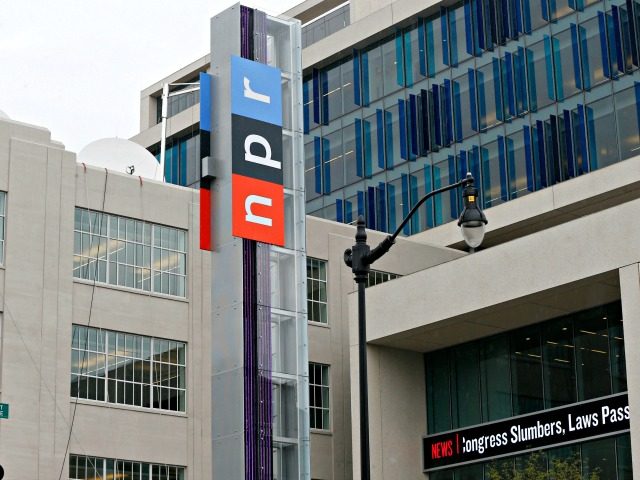
One would argue that the question of “Why does Israel want to kill Hamas leadership when it is supposed to be negotiating with them?” would be best addressed to the Israelis. After all, Israelis know their motivations far better than anyone else does — and yet, for reasons I can’t fathom, NPR’s Ayesha Rascoe addressed that very question to one ” Khaled el-Gindy from Georgetown Center for Contemporary Arab Studies” instead — who thusly psychoanalyzed the Israelis: “The attack confirms Israel is not serious about a ceasefire deal, that it is not a priority to get its hostages released, that it is much more interested in pursuing an agenda that is based on annihilation of Gaza.”

Unlike Ms. Rascoe who is in a position to interview Israelis about the matter (though she chose not to), I have no such access and indeed have to reverse-engineer Israeli thinking from Israeli action — and in my analysis, the Israeli rationale is the exact opposite to the thinking Mr. el-Gindy attributed to Israel on NPR. To my mind, it is precisely because Israel does want the hostages released, and the IDF does not want to go through the destruction of Gaza City, that it tried to kill Doha-based Hamas’ leadership.
How so? Because living in Qatar luxury and viewing the Gaza City battlefield as a geopolitical chess game rather than a scene of unfolding human tragedy, Hamas’ leaders will not agree to President Trump’s demand that Hamas releases all hostages, living or dead, on day one. From that simple fact, it follows that Doha-sheltered Hamas leadership is a roadblock to the release of hostages rather than a road to it — and its elimination has a chance to clear the road to that goal by turning different elements in Hamas into decision-makers, thus potentially making Hamas more pliable and its negotiation position less intransigent — and therefore, making the Gaza City operation unnecessary.
This seems to reflect the IDF thinking — for it is the IDF that would have to do the dirty (and much more importantly, bloody) work of clearing Hamas out of Gaza City and destroying it terror infrastructure there. It is obvious that Hamas’ surrender today is preferable to its surrender later — because more hostages would have a chance to survive, and fewer Israeli soldiers and Palestinian non-combatants killed. Hamas’ Doha-residing leadership stands in the way — so why not remove it, so as to bring closer the release of the hostages, and to avoid the very costly Gaza City operation?
It is hard for me to look into NPR’s Ayesha Rascoe’s mind, and understand her motivations in choosing her guests. It seems to me that if she invited an Israeli — who by the nature of things would be an infinitely better authority on Israeli thinking than a Palestinian, she (and more importantly, the millions of NPR listeners) would have heared something like this: “The Doha attack confirms that Israel’s first priority is getting its hostages back, and the annihilation of Gaza is of no interest to Israel whatsoever; it is a mere byproduct of Hamas’ behavior.”
But Ms. Ruscoe chose not to invite an Israeli to inform Americans on Israeli thinking; she invited a Palestinian — who, as expected, got it all wrong.
Why did she do that? Why did she pervert journalistic practice by interviewing someone with no clue of what he is talking about, offering malicious, anti-Israel guesses instead, when the people do know are readily available for an interview?
In other words, is something antisemitic going on at NPR?
