



|
Getting your Trinity Audio player ready...
|
By: Norman Zwersky
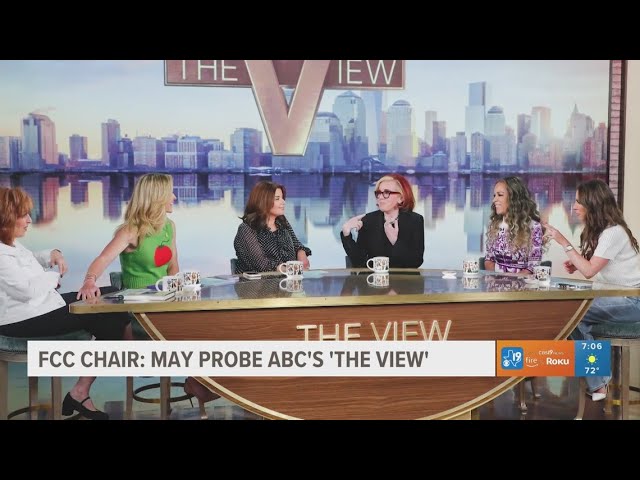
The collision between federal regulation and America’s most visible television talk shows has entered a combustible new phase, with the Federal Communications Commission’s chairman, Brendan Carr, signaling an unprecedented willingness to revisit how political content is treated on programs that have long straddled the line between news and entertainment. According to a report on Thursday in TV Insider, Carr has opened what he describes as “enforcement proceedings” into ABC’s The View, alleging potential violations of the FCC’s equal-time rule following the program’s interview with a political candidate.
The move has reignited an old debate over the scope of broadcast regulation in a fragmented media environment, even as it exposes the growing tension between regulators, network executives, and the cultural power brokers of late-night television.
TV Insider reported that Carr’s comments, delivered during an appearance on Fox News’ The Ingraham Angle on February 18, framed the matter in stark terms. If a program qualifies as “bona fide news,” he explained, it is exempt from the equal-time rule, which otherwise requires broadcast outlets to offer equivalent access to competing candidates for office.
The crux of the FCC chairman’s argument is that Disney, ABC’s parent company, and The View have not sufficiently demonstrated that the daytime talk show qualifies as such. The result, in Carr’s telling, is not merely a regulatory inquiry but an effort to recalibrate what qualifies as news in an era when talk shows regularly host candidates, comment on elections, and shape public opinion.
The equal-time rule itself is a vestige of an earlier media ecosystem, one in which a small number of broadcast networks dominated political discourse. Historically, the rule was intended to ensure fairness by preventing broadcasters from favoring one candidate over another. Over time, however, the FCC carved out exceptions for news programs and for certain talk shows that featured politicians as part of broader journalistic coverage. As TV Insider has noted in its ongoing coverage, this gray area has allowed programs such as The View, The Late Show, and other network talk shows to host political figures without automatically triggering obligations to offer equal airtime to rivals.
Carr’s recent posture suggests that this latitude may be narrowing. According to the information provided in the TV Insider report, the FCC chairman has expressed a desire to remove late-night talk shows and other broadcast network talk formats from the exemptions they have enjoyed. That ambition has already sent shockwaves through the television industry. Earlier in the week, comedian and host Stephen Colbert claimed that he had been barred from interviewing a Texas Senate candidate on The Late Show because of the FCC’s equal-time rule. Colbert framed the decision as political interference, alleging that the administration sought to muzzle critical voices on television.
The interview was instead released on the show’s YouTube channel, where it rapidly accumulated millions of views, underscoring the paradox of regulation in an era where digital platforms can instantly eclipse broadcast reach.
CBS, for its part, denied that Colbert was censored, offering a more procedural explanation that TV Insider summarized in detail. The network said legal counsel warned that airing the interview could trigger equal-time obligations for other candidates, including a sitting member of Congress. Faced with the prospect of having to allocate airtime to multiple campaigns, the show opted to publish the interview online while promoting it during the broadcast. The episode illustrates the complex legal calculations now shaping editorial decisions in network television, even as audiences migrate toward streaming and social media.
At the heart of the FCC’s inquiry, however, is ABC’s The View. According to the TV Insider report, the program previously interviewed the same Texas candidate on its February 2 episode, an appearance that appears to have prompted Carr’s enforcement review. The View has long occupied a peculiar space in the American media landscape: it is a daytime talk show that blends celebrity interviews, lifestyle discussions, and pointed political commentary, delivered by a rotating panel of hosts with distinct ideological identities.
For years, networks and regulators have treated such programs as entertainment-oriented forums that occasionally host newsworthy guests. Carr’s position threatens to collapse that distinction, subjecting the show to regulatory scrutiny traditionally reserved for newsrooms.
The FCC chairman’s rhetoric, as reported by TV Insider, has been notably caustic. In his interview, Carr accused the “legacy media” of having forfeited public trust, going so far as to suggest that Americans now place greater confidence in “gas station sushi” than in traditional news outlets. The hyperbolic remark, while clearly designed for rhetorical effect, reflects a broader populist critique of mainstream media institutions that has gained traction in recent years. Carr further suggested that the controversy surrounding the late-night interview had been “manufactured” to benefit the candidate in question, alleging that the media had amplified the dispute without critical scrutiny.
Such claims have reverberated widely, not least because they touch on sensitive questions of regulatory neutrality. The FCC, though an independent agency, is inevitably enmeshed in political currents, and its interventions in the broadcast realm carry implications for free expression. TV Insider has highlighted the unease among television executives and hosts who worry that regulatory action could chill political discourse on network platforms, driving more content to less regulated digital spaces. In an era when audiences already distrust traditional media, the prospect of federal enforcement actions against popular programs risks deepening perceptions of politicized oversight.
Yet the FCC’s position also reflects a genuine tension within the law. The equal-time rule remains on the books, and its uneven application has long been criticized by legal scholars who argue that exemptions have been applied inconsistently. Programs like The View wield enormous influence, often framing political debates for millions of viewers who may not engage with conventional news broadcasts. If such platforms effectively function as political stages, regulators may feel compelled to ensure that access is not skewed in favor of one candidate or party. TV Insider’s reporting underscores that Carr is attempting to force a reckoning with these unresolved ambiguities.
The broader context, however, complicates any straightforward regulatory solution. The media environment of 2026 bears little resemblance to that of the mid-twentieth century when equal-time principles were conceived. Cable networks, streaming platforms, podcasts, and social media have fragmented audiences and multiplied channels of communication. Even as broadcast networks remain influential, they no longer monopolize political exposure. The Colbert episode, as TV Insider noted, demonstrated that an interview withheld from broadcast television can still reach millions online, raising questions about the efficacy of broadcast-specific regulation in an age of ubiquitous digital distribution.
Moreover, the political valence of talk shows has become increasingly explicit. Hosts are no longer content to occupy the role of neutral entertainers; many openly embrace advocacy, satire, or ideological critique. The View, in particular, has built a brand around vigorous political debate, often featuring elected officials and candidates in settings that blur the boundaries between journalism and opinion. Carr’s insistence that such programs demonstrate bona fide news status if they wish to avoid equal-time obligations reflects a desire to impose clearer categories on a media culture that thrives on hybridity.
TV Insider’s coverage also points to the ripple effects of Carr’s enforcement posture across the industry. Legal departments at major networks are reportedly reassessing booking practices for political guests, wary of triggering regulatory scrutiny. Some executives fear that the safest course of action may be to curtail candidate appearances altogether, a move that could impoverish public discourse by limiting opportunities for voters to encounter candidates in informal, unscripted settings.
Others argue that clearer guidelines could restore fairness and transparency, ensuring that powerful platforms do not become de facto campaign megaphones for select figures.
The controversy surrounding The View thus encapsulates a larger struggle over who controls the terms of political visibility in contemporary America. On one side stands a regulatory apparatus designed for an earlier era, now seeking to assert relevance amid accusations that the media has become partisan and untrustworthy. On the other side are cultural institutions that have evolved into influential political actors, often without the constraints imposed on traditional news organizations. TV Insider’s reporting captures the uneasy equilibrium between these forces, as regulators, networks, and audiences negotiate the boundaries of free expression, fairness, and accountability.
What remains uncertain is how far the FCC will push its enforcement efforts and whether courts will uphold any punitive measures that may follow. Historically, the equal-time rule has been applied sparingly, and its relevance has been diminished by the proliferation of alternative media platforms. Yet Carr’s rhetoric suggests an appetite for a more assertive posture, one that could reshape the relationship between broadcast television and electoral politics. For The View, the inquiry represents more than a regulatory footnote; it is a test of whether a program that has thrived on the alchemy of entertainment and political commentary will be compelled to redefine itself as news or retreat from its role as a forum for candidates.
As TV Insider continues to track the unfolding saga, the broader implications for American media culture are becoming increasingly apparent. The FCC’s challenge to long-standing exemptions threatens to unsettle the delicate balance between regulation and creative freedom that has governed broadcast talk shows for decades. Whether this recalibration will enhance fairness or stifle expression remains an open question. What is clear is that the airwaves are once again a contested terrain, where the old rules are being interrogated under the harsh light of contemporary political polarization.
