



|
Getting your Trinity Audio player ready...
|
By: Carl Schwartzbaum
On Monday, history appeared to bend. After more than two grueling years of conflict and negotiation, the last Israeli hostages held by Hamas were released — marking the culmination of a fraught hostage deal, a ceasefire, and diplomatic orchestration that spanned continents. President Donald J. Trump, at the center of the diplomatic axis, traveled from Israel to Egypt in a whirlwind visit to celebrate what his administration cast as a “generational victory for peace.” Freed hostages, a silenced battlefield, and a new peace architecture — these, the narrative goes, were the fruits of his tenacity and diplomatic acumen.
Across American and international media, the announcement triggered waves of praise and reflection. Reporters, analysts, former presidents, and world leaders lined up to recognize the gravity of the moment — many attributing the breakthrough, in varying degrees, to Trump’s personal involvement, strategic pressure, or force of personality. Yet beneath the jubilation lies a tapestry of open challenges, wide skepticism, and questions of durability: Was this a momentary ceasefire or the foundations of a lasting peace?
1. The Climax: Hostage Release and Ceasefire
The formal announcement early Monday reflected months of back-channel diplomacy, pressure campaigns, and negotiations involving U.S., Egyptian, Qatari, and Israeli mediators. Under the agreement, all remaining Israeli hostages held by Hamas were to be released. In return, Israel would cease major offensive operations in Gaza and allow humanitarian relief and reconstruction flows — while an international force, under U.S. leadership, would help dismantle Hamas’s tunnel network and rearmament efforts.
For many Israelis and observers, the liberation of these hostages was the emotional centerpiece — proof that diplomacy could, at least temporarily, overcome the brutal cycles of war. Television images of families reuniting, sobs of relief, and the raising of national flags underscored the symbolic weight of the moment.
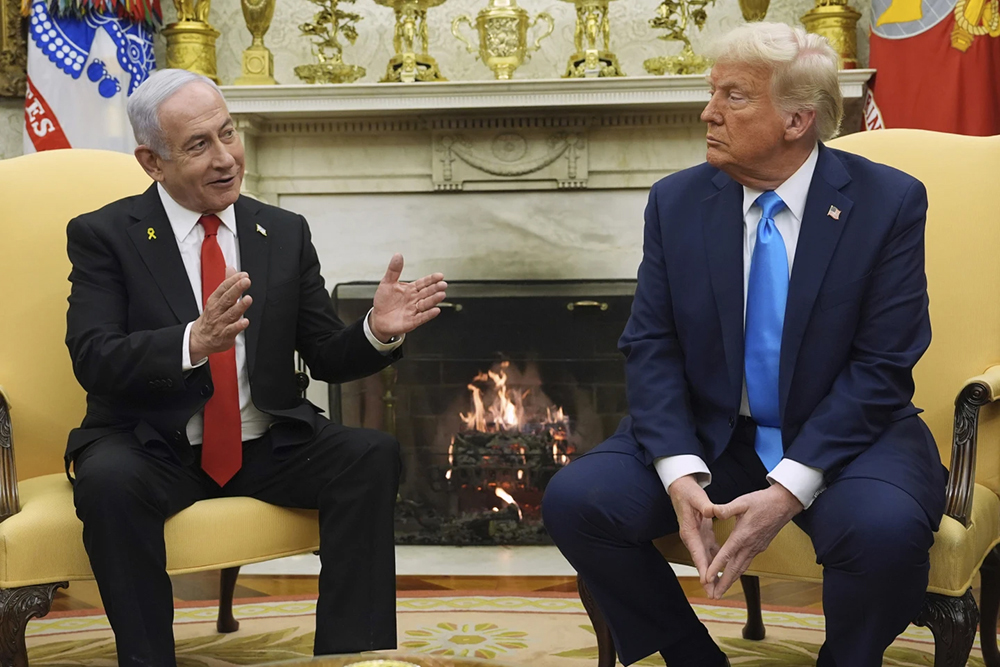
Trump’s presence added spectacle. He landed in Israel soon after the hosts’ arrival, addressed the Knesset, and then traveled to Sharm el-Sheikh, Egypt, where world leaders gathered for a “Summit for Peace.” The timing, symbolic resonance, and global optics were unmistakable: the man once sidelined by many now stood at the crossroads of Middle Eastern diplomacy.
2. United Applause: Voices from Media and Global Observers
The day’s events unleashed a chorus of laudatory commentary — nearly unanimous in framing this breakthrough as historic, diplomatic, and transformational.
James Longman, ABC News Chief International Correspondent, called Trump’s reception in Israel and the Arab world alike “a force of nature,” emphasizing how rare it is for a leader to command such adulation in both contexts.
Mary Bruce, ABC’s Chief White House Correspondent, described the accomplishment as “amazing,” highlighting Trump’s personal role in closing a deal that others couldn’t.
From Agence France-Presse, Léon Bruneau termed it “an undeniable diplomatic victory.”
Tom Llamas of NBC Nightly News called it “remarkable,” while Keir Simmons and Peter Alexander of NBC emphasized the presidential power and dramatic echo in the Knesset, respectively.
David Rhode, NBC’s National Security Editor, credited Trump’s unrelenting pressure on Netanyahu as a pivotal element in bringing the deal to life.
Tom Dickerson of CBS viewed the breakthrough as a newly lit hope: the “first phase of the Trump Peace Plan.”
On the opinion side, the Washington Post Editorial Board called it a “generational accomplishment,” especially given U.S. diplomatic struggles in the region.
Josh Rogin, the Post’s Global Security Analyst, praised Trump’s willingness to pressure both Israel and Arab states toward a shared interest.
Among former leaders and officials, praise echoed broadly:
– Joe Biden commended Trump’s role in the final stretch.
– Bill Clinton credited Trump’s administration and regional actors for maintaining momentum.
– Mike Pence, Newt Gingrich, Leon Panetta, Jake Sullivan, Nikki Haley, and others publicly celebrated the deal as historic, earned, and personally transformative.
Many in diplomatic and academic circles offered nuanced support:
– Mona Yacoubian (CSIS) described it as a victory lap worthy of taking credit, so long as the ceasefire holds.
– Paul Salem (Middle East Institute) spotlighted the emotional weight of hostage reunions and the potential role of Arab mediators.
– David Ignatius invoked conversations with Israeli officials, noting that many had felt disoriented by the war — until Trump stepped decisively into the breach.
Media voices in the U.S. also rose:
– Scott Jennings of CNN marveled at the scale of Trump’s coalition-building across Israel and the Arab world.
– The Wall Street Journal described the breakthrough as a major foreign policy win.
– Fox News commentators, panelists, and conservative voices framed Trump’s role in peace-making as proof of his renewed vigor.
Global leaders applauded the accord:
– Benjamin Netanyahu hailed Trump as Israel’s greatest friend in the White House.
– Yair Lapid, Isaac Herzog, and Knesset Speaker Amir Ohana offered glowing tributes, comparing Trump to Cyrus the Great and affirming shared commitment to peace.
– Foreign heads of state — from Macron to Merz to El-Sisi to Erdogan — thanked Trump and pledged support for implementation.
– Even nations often critical of Israel, such as Pakistan, offered unusually warm language, congratulating Trump for bold leadership and calling for a just peace.
Institutional voices also joined:
– Presidential historians Joe Meacham and Mark Updegrove asserted the moment’s weight in U.S. memory.
– Legal scholar Alan Dershowitz called the diplomacy “brilliant,” while the Republican Jewish Coalition and Heritage Foundation issued statements framing the pact as reaffirming America’s moral leadership.
3. The Narrative Frame: How Trump’s Victory Was Told
What emerges is a carefully assembled narrative: Trump as the protagonist, Israel as long-suffering ally, Hamas as the recalcitrant adversary, and the Middle East as ripe for a new chapter. In that story, the release of hostages and cessation of hostilities become proof of Trump’s enduring role—after years of public questioning—as a statesman capable of delivered peace, not just election drama.
Media framing plays a central role. The repeated references to “force of personality,” “historic moments,” and “reshaping geopolitics” help cast Trump in the role of transformative hero. His critics are sidelined, at least in many mainstream accolades, while the logistics, concessions, caveats, and doubts are downplayed or deferred to future chapters.
Still, these narratives cannot erase real tensions: how sustainable is the peace? Can Hamas be fully demilitarized? Will infrastructure be rebuilt? Will aid penetrate? Who leads Gaza after Hamas? What unintended consequences might emerge in Jordan, Lebanon, Iran, or Palestinian territories? The praise is instantaneous; the tests will last years.
4. Challenges, Skepticism, and the Road Ahead
Even as the public spotlight centers on Trump’s diplomatic triumph, multiple fault lines remain:
A. Proof of Implementation: The ceasefire and hostage deal involve numerous technical steps — prisoner releases, border control, aid delivery, demilitarization, reconstruction, governance. Translating agreements into on-the-ground reality will require constant negotiation, enforcement, and institutional capacity.
B. Hamas’s Role: Critics will ask whether Hamas, despite its defeat, can still strike — underground resiliency, sleeper cells, tunnel networks — and whether it truly disarms or morphs into a different terrorist structure.
C. Gaza’s Governance Vacuum: With Hamas weakened, an interim authority likely needs to be created. Who leads this entity? What legitimacy does it have with Gazans? How can it maintain security without alienating local populations or Israel?
D. Donor Logistics, Reconstruction, and Security Guarantees: The prospect of rebuilding Gaza, while ensuring security, is a mammoth challenge. Donor fatigue, corruption, bureaucratic inertia, and political backlashes could derail efforts.
E. Regional Dynamics: Iran, Hezbollah in Lebanon, ISIS affiliates, and shifting alliances could reignite instability. The revelations of proxy networks and regional interventions are not likely to disappear.
F. U.S. Political Backlash and Sustainability: Trump’s approach — highly personal, media-driven, often transactional — faces structural resistance. Future presidents, Congress, or internal partisan changes could weaken or unravel the accords.
G. Moral and Humanitarian Critiques: Human rights observers will scrutinize civilian casualties, reconstruction priorities, Palestinian autonomy, and whether the deal addresses root grievances or merely pauses violence.
Even among enthusiastic commentators, caveats emerged. Some praised Trump’s boldness while warning that peace built solely on leverage is fragile. Others underscored that success will depend more on follow-through than on spectacle.
5. Why This Moment Matters
In the annals of Middle Eastern diplomacy, one rarely sees an Israeli-Hamas accord anchored to the U.S. presidency in so public and symbolic a way. For Israel, the freeing of hostages represents both military vindication and moral relief. For Palestinians, it brings an uneasy pause in suffering, even if structural change remains distant. For the U.S., it signals a reassertion of American clout — the ability to broker peace rather than manage conflict.
Trump’s triumph narrative positions him as a statesman, not just a factional politician. For his base, it signals vindication — a return to global influence, a reckoning with critics who deemed him too erratic or divisive for such delicate diplomacy. Internationally, it shifts perceptions: U.S. leadership is back in the arena on terms of power and personality.
The broader symbolism cannot be lost: that even in the most intractable conflicts, diplomacy still matters; that hostages matter; that war can be paused. Whether this Ceasefire Day becomes a turning point or a temporary lull depends on leadership, discipline, and honesty.
It is here — in those contrasting demands — that Trump’s legacy in the Middle East may be judged: as a peacemaker, a power broker, or a fleeting footnote. For now, Israel sings. Gaza waits. The world watches.
