



|
Getting your Trinity Audio player ready...
|
By: Chaya Abecassis
As the joint United States–Israeli military campaign against Iran entered its sixth day, President Donald Trump convened a high-level meeting at the White House on Friday with the chief executives of several of the world’s largest defense contractors, signaling a significant acceleration in American weapons production amid the intensifying conflict. The discussions centered on dramatically expanding the manufacturing of sophisticated missile systems and other advanced munitions as Washington seeks to sustain the pace of operations against Tehran’s military infrastructure.
According to a report on Friday by Newsmax, the meeting brought together senior executives from leading defense firms including BAE Systems, Boeing, Honeywell Aerospace, L3Harris Technologies, Lockheed Martin, Northrop Grumman, and RTX. The gathering underscored the growing intersection between military strategy and industrial capacity as the United States mobilizes its defense sector to support the ongoing operation against the Iranian regime.
Trump later described the discussions in a message posted on the social media platform Truth Social, emphasizing that the administration had pressed the defense companies to significantly increase the production of advanced weaponry.
“We discussed Production and Production Schedules,” the president wrote, adding that the companies had agreed to quadruple the output of what he referred to as “Exquisite Class” weaponry in order to reach the highest possible levels of availability as rapidly as possible.
While Trump did not provide a detailed definition of the phrase, defense analysts cited by Newsmax and other outlets have suggested that “Exquisite Class” weaponry likely refers to the most technologically sophisticated missiles and interceptors in the U.S. arsenal—systems designed to strike complex targets or defend against advanced threats.
Among the weapons believed to fall within that category are RTX’s Standard Missile-6 and Tomahawk cruise missiles as well as Lockheed Martin’s Patriot Advanced Capability-3 Missile Segment Enhancement interceptor, commonly known as the PAC-3 MSE. These systems represent some of the most advanced tools available to modern militaries for both offensive and defensive operations.
According to the information provided in the Newsmax report, the discussions with industry leaders focused not only on increasing output but also on accelerating production timelines in order to meet the demands created by the expanding military campaign against Iran.
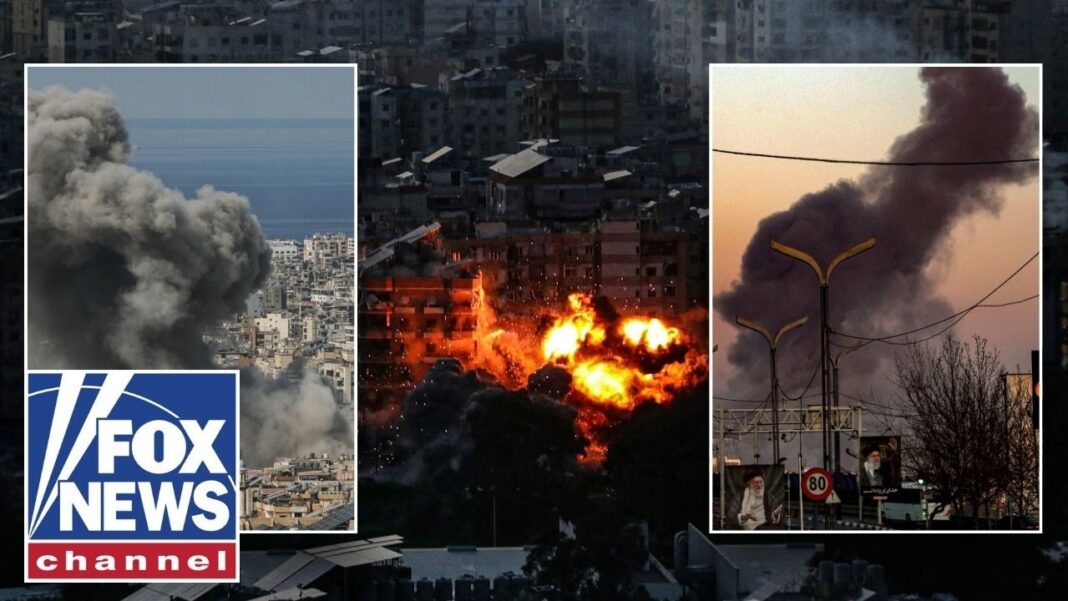
The meeting took place against the backdrop of Operation Epic Fury, the sweeping U.S.-Israeli offensive launched on Feb. 28 that has targeted Iran’s political leadership, military installations, and strategic weapons programs. The campaign has already involved extensive air and missile strikes aimed at neutralizing Tehran’s nuclear infrastructure, dismantling its ballistic missile capabilities, and weakening its network of regional proxy forces.
White House press secretary Karoline Leavitt confirmed that the meeting with defense executives had been scheduled prior to the launch of the operation but had taken on added significance as the conflict intensified.
In remarks carried live by Newsmax and its free streaming platform Newsmax2, Leavitt told reporters that the administration was confident in the United States’ ability to sustain the military campaign.
“As the president has maintained, we have more than enough ammunition and weapons stockpiles to achieve the objectives of Operation Epic Fury and beyond,” Leavitt said outside the White House.
She added that the United States was already making significant progress toward fulfilling those objectives, though she declined to provide specific timelines for the next phases of the campaign.
“I won’t get ahead of the president on broadcasting any timelines,” Leavitt said in comments reported by Newsmax. “But what I will tell you is that the achievable objectives of Operation Epic Fury—we expect it to last about four to six weeks, and we are well on our way to achieving those objectives.”
The expansion of weapons manufacturing reflects the extraordinary scale of the military operation now underway in the Middle East. Since the opening strikes of the campaign, U.S. and Israeli forces have conducted extensive aerial and naval attacks against Iranian military assets, including missile launch sites, air defense systems, naval facilities, and command centers associated with the Islamic Revolutionary Guard Corps.
Defense analysts note that modern high-intensity conflicts require enormous quantities of precision-guided munitions. Systems such as the Tomahawk cruise missile or Patriot interceptors involve intricate manufacturing processes that can limit production rates under normal circumstances.
By urging contractors to quadruple output, the administration appears to be preparing for the possibility of sustained operations not only against Iran but also against the broader network of threats posed by Tehran’s allies and proxies throughout the region.
Trump indicated in his statement that the expansion of manufacturing had already begun months before Friday’s meeting.
“Manufacturing expansion began three months prior to the meeting, and plants and production of many of these weapons are already under way,” he wrote.
Indeed, earlier this year the Pentagon finalized agreements with Lockheed Martin and RTX to boost production of several critical missile systems, including the Patriot air defense interceptor, the Terminal High Altitude Area Defense (THAAD) system, and the Standard Missile family.
Following Friday’s meeting, Lockheed Martin issued a statement confirming that it had committed to dramatically increasing the production of key munitions.
According to the information contained in the Newsmax report, the company said it had agreed to “quadruple critical munitions production” as part of its collaboration with the Pentagon and the White House.
“We are moving with urgency, and we will deliver,” the company said.
The decision to mobilize the American defense industrial base on such a scale highlights the strategic importance that the Trump administration places on the campaign against Iran. Officials have repeatedly argued that Tehran’s nuclear ambitions and its support for militant organizations throughout the Middle East pose an unacceptable threat to both the United States and its allies.
Leavitt reiterated that position in her remarks to reporters, emphasizing that the operation seeks to dismantle the Iranian regime’s capacity to threaten regional stability.
According to the Newsmax report, the administration has outlined several key objectives for Operation Epic Fury, including neutralizing Iran’s nuclear weapons program, destroying its ballistic missile arsenal, crippling its navy, and reducing its influence over proxy terror groups operating in countries such as Lebanon, Yemen, and Iraq.
Leavitt also said that the administration ultimately hopes to empower the Iranian people to reclaim control over their government.
“The president has made it very clear he wants to take out the threat of Iran to the United States,” she said, according to the Newsmax report.
Beyond the immediate military goals, the administration has also begun discussing the long-term political future of Iran. Trump has suggested that the current regime, which has ruled the country since the Islamic Revolution of 1979, may not survive the ongoing conflict.
“As for the future of Iran,” Leavitt said, “it’s in the best interest of the United States for Iran to no longer be led by a radical terrorist regime that chants ‘Death to America’ and is lying to the United States and the world about their secret ambitions to possess a nuclear bomb.”
She added that Trump intends to remain closely involved in deliberations about the country’s leadership should the existing regime collapse.
“President Trump does not want to see that,” Leavitt said of Iran’s nuclear ambitions. “He wants to take an interest in pursuing who the next leader of the Iranian country is going to be, and that has yet to be seen.”
While the ultimate outcome of Operation Epic Fury remains uncertain, Friday’s meeting between the president and defense industry leaders demonstrates the extent to which the United States is preparing for a prolonged strategic confrontation.
By aligning the country’s industrial capacity with its military objectives, the administration appears determined to ensure that American forces—and their Israeli allies—have access to the advanced weaponry required to sustain the campaign.
As the Newsmax report noted, the coming weeks will likely determine whether the intensified pressure on Iran’s leadership succeeds in achieving Washington’s ambitious objectives—or whether the confrontation evolves into an even broader struggle reshaping the balance of power across the Middle East.
