



|
Getting your Trinity Audio player ready...
|
Edited by: TJVNews.com
In the bustling metropolis of New York City, recent announcements by Democratic officials Mayor Eric Adams and Governor Kathy Hochul have sparked fervent debate over the deployment of law enforcement personnel in the city’s subway system. Amidst a backdrop of sensationalized media coverage and public outcry over a spate of violent attacks, both leaders have taken decisive action to bolster security measures, but not without controversy.
Mayor Adams made headlines last month with his pledge to deploy 1,000 additional NYPD officers to patrol the subway system—a move widely perceived as a response to mounting pressure from tabloid media outlets and concerns about public safety. The decision came in the wake of highly publicized incidents targeting subway riders and transit workers, fueling fears among commuters and residents alike.
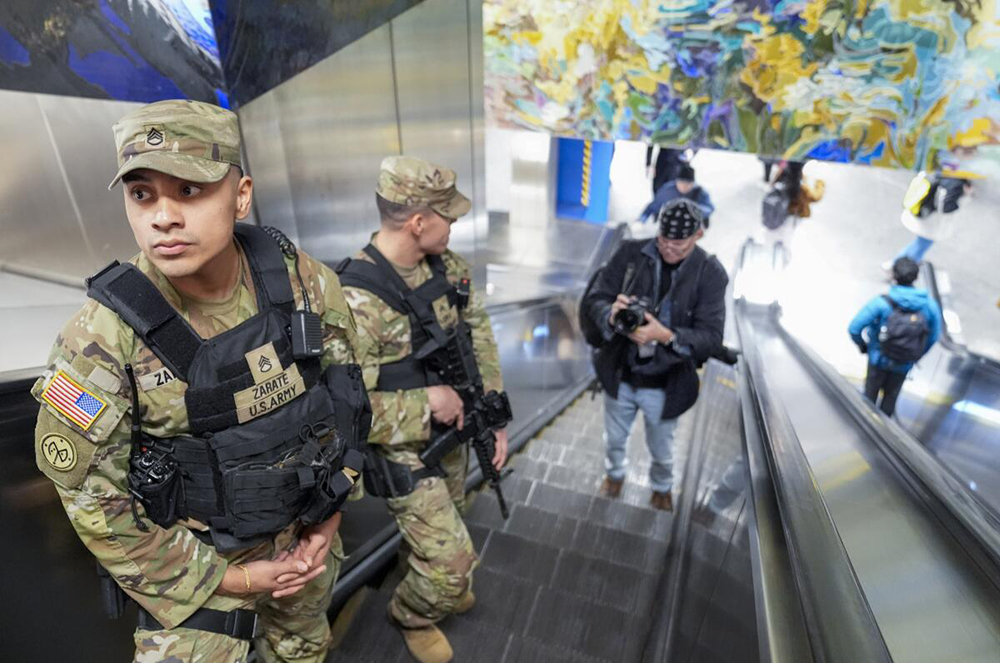
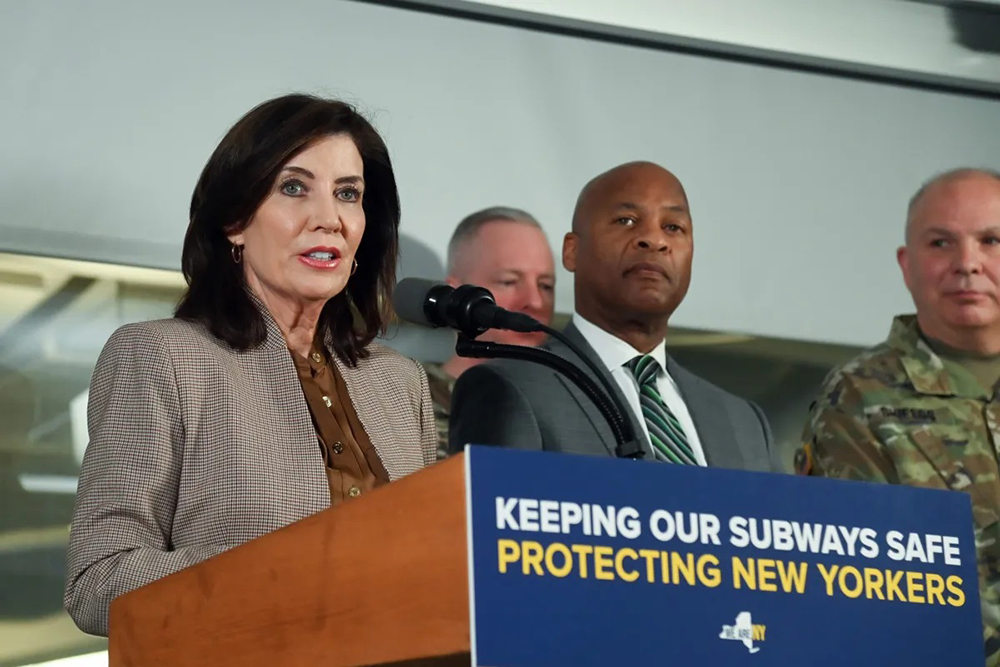
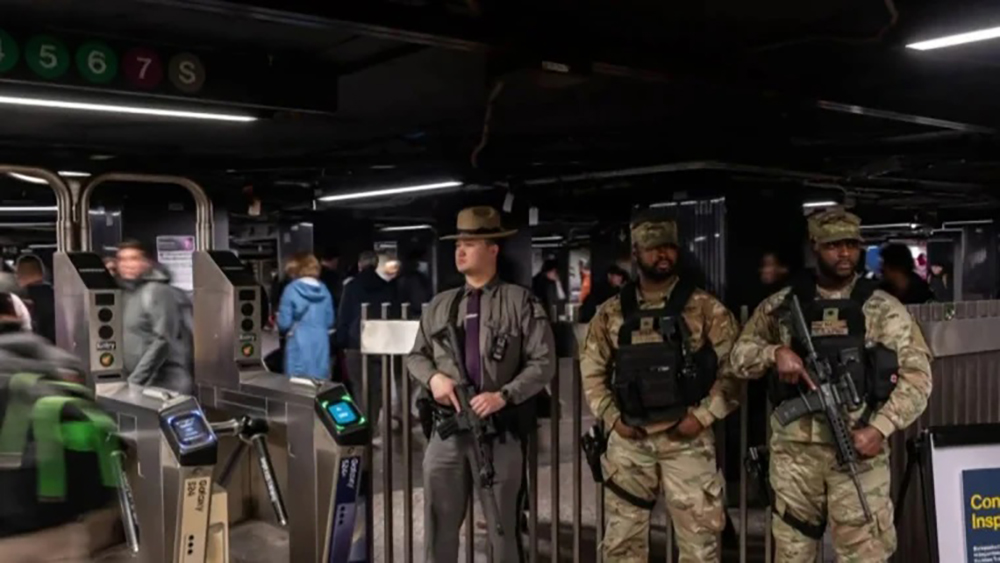
Not to be outdone, Governor Hochul, also a Democrat, announced a complementary initiative to redeploy 750 National Guard troops, along with 250 state troopers and police from the Metropolitan Transportation Authority (MTA), to reinforce subway security efforts. This collaborative effort aims to increase the presence of uniformed personnel in subway stations and on trains, ostensibly to deter criminal activity and ensure the safety of passengers.
The deployment of National Guard troops represents a significant departure from their traditional role within the city. Since the establishment of Joint Task Force Empire Shield in the aftermath of the September 11, 2001 terrorist attacks, these troops have primarily focused on patrolling transportation hubs like Grand Central Station and the Port Authority, donning camouflage uniforms and wielding automatic rifles. However, their new mandate will see them assume a more active role in subway security, including conducting random searches of bags and backpacks—a prospect that has raised concerns among civil liberties advocates.
Critics argue that the militarization of subway security risks exacerbating tensions and further eroding trust between law enforcement and the community. The sight of armed soldiers conducting searches and patrolling subway platforms evokes unsettling parallels to authoritarian regimes, prompting questions about the balance between security measures and civil liberties.
Moreover, the decision to deploy National Guard troops underscores deeper systemic issues plaguing the city, including the persistent challenges of addressing mental health crises, homelessness, and socioeconomic disparities—all of which contribute to crime rates in the subway system. Some argue that investing in holistic, community-based solutions would yield more sustainable results in addressing the root causes of crime.
“While the public perception of danger on the subway has reached a fever pitch, statistically speaking, the likelihood of experiencing a major felony in the subway system is lower than it was in 2022,” notes NYPD data analyst, Dr. Emily Chen. Indeed, despite a 46% year-over-year increase in transit crime in January 2024, the numbers have since ebbed, offering a glimmer of hope amid the apprehension.
However, the divergence between perception and reality is stark. Ohio congressman Jim Jordan’s scathing critique of New York as a “city that’s lost its way” only served to exacerbate these sentiments, despite statistical evidence to the contrary.
In response to January’s crime spike, the authorities are conducting bag searches—a controversial measure that has divided public opinion. “Deploying the 1,000 guardsmen and state police is as much about restoring a sense of security as it is about tangible crime prevention,” Governor Hochul asserted in a press conference. However, skeptics question whether the militarized presence will effectively deter criminal activity or merely exacerbate tensions underground.
The intrusive nature of these searches has drawn criticism from civil liberties advocates, who decry the erosion of personal privacy in the name of public safety.
Amidst the flurry of political maneuvering and heightened security measures, the human toll of subway violence remains starkly visible.
Hochul’s admission that she wasn’t interested in discussing “stats and statistics about what’s going up and what’s going down” reflects a broader sentiment echoed by many New Yorkers. As the local news site Hell Gate succinctly put it, “Hochul Is Sending the National Guard Into the Subway to Search Your Bag Because of Vibes.” This shift away from statistical analysis towards a more intuitive approach to security reflects a recognition of the complex interplay between perception and reality in shaping public opinion.
Yet, the history of subway security measures is not a new phenomenon. Since 2005, bag checks have been intermittently conducted in response to global terrorist threats. Despite legal challenges from organizations such as the New York Civil Liberties Union (NYCLU), federal courts have upheld the constitutionality of these measures, citing the minimal invasion of privacy in comparison to the potential threat of terrorism. The complexities of policing the New York subway system are deeply rooted in its history.
According to a March 7th editorial that appeared in the Guardian of the United Kingdom, Andrew Sparberg, a veteran of the transportation field, recalled the heightened security measures implemented in the aftermath of the 7/7 train attacks in London and Madrid. “People understood that this was necessary because of the state of the world,” Sparberg reflected, as he spoke with The Guardian. His recollection underscored the perpetual tension between safeguarding public safety and preserving individual freedoms—a tension that continues to shape the discourse surrounding subway security in New York City.
The efficacy of these measures remains a subject of debate, as policymakers grapple with the challenge of striking a delicate balance between security and civil liberties in the bustling metropolis.
As was featured in the Guardian report, J Sultan, a native New Yorker of Kashmiri descent, emerged as a prominent figure in this legal battle, alleging that he had been stopped and searched a staggering 21 times by officers since the policy’s inception. A statistician’s analysis revealed that the odds of Sultan being stopped that often if the checks were truly random were approximately one in 165 million—a statistical improbability that fueled suspicions of discriminatory practices.
Sultan’s efforts to address racial profiling through legal channels were met with resistance from the NYPD. Despite offering to abandon the suit in exchange for measures to monitor checkpoints for profiling, his proposals were rebuffed. In 2009, a judge granted Sultan a $10,000 settlement—a symbolic victory that underscored the systemic issues at play.
Today, nearly two decades since the policy’s initiation, skepticism surrounding bag checks persists among many New Yorkers, who view them as both ineffective and racially biased. Bennett Capers, a law professor at Fordham University, noted in the Guardian report, the pervasive sentiment among Arab and Muslim students who feel singled out by law enforcement during bag checks.
The lack of demographic data on individuals selected for bag checks only serves to exacerbate concerns of profiling. Drawing parallels to the controversial stop-and-frisk policy, which disproportionately targeted people of color, critics argue that without transparency, there is a risk of arbitrary and discriminatory enforcement.
The fact that the “stop and frisk” measures implemented by New York City law enforcement agencies was found unconstitutional over a decade ago, it was considered then and it is now, an odious concept for the lion’s share of New Yorkers to tolerate.
Beyond that, the controversy surrounding “stop and frisk” it was never concretely determined to be an absolute deterrent to violent crime in the Big Apple.
Susan Herman, a professor at Brooklyn Law School and former ACLU president, highlighted the legal complexities surrounding such searches in the Guardian report.
The NYPD’s refusal to disclose its selection criteria for bag checks perpetuates a cycle of uncertainty and mistrust. As Herman aptly summarized, the lack of transparency creates a “catch-22” situation—where public disclosure could undermine the effectiveness of the checks, yet the absence of clarity leaves individuals vulnerable to potential abuse of power.
Having said this, it is readily apparent that a spike in violent subway crime was not the motivating factor behind Hochul’s decision to bring out the troops. If loathsome crime was the incentive then why at this particular juncture in time was this decision made when the statistics paint a very different picture?
For the last five months, New York City has endured countless demonstrations organized by pro-Hamas forces who, since the October 7th massacre in Israel, have disrupted the lives of New Yorkers through blocking traffic and showing up to mar public gatherings. Many of these protests have turned violent, leaving law enforcement agencies and citizens of our fair city left rocked to the core. Anti-Israel animus as well as the perennial scourge of visceral anti-Semitism have reared its ugly head in steroids and have reached alarming proportions.
At this juncture in time, the Muslim world is celebrating the annual Ramadan holiday through daily fasting and intensifying prayers at their respective mosques around the world. History has also recorded that during Ramadan, the occurrence of deadly violence emanating from radical Islamists the world over also sees a dramatic escalation. For those who think that this violence is only confined to the Temple Mount in Jerusalem or other locations in the Middle East, we advise you to think again.
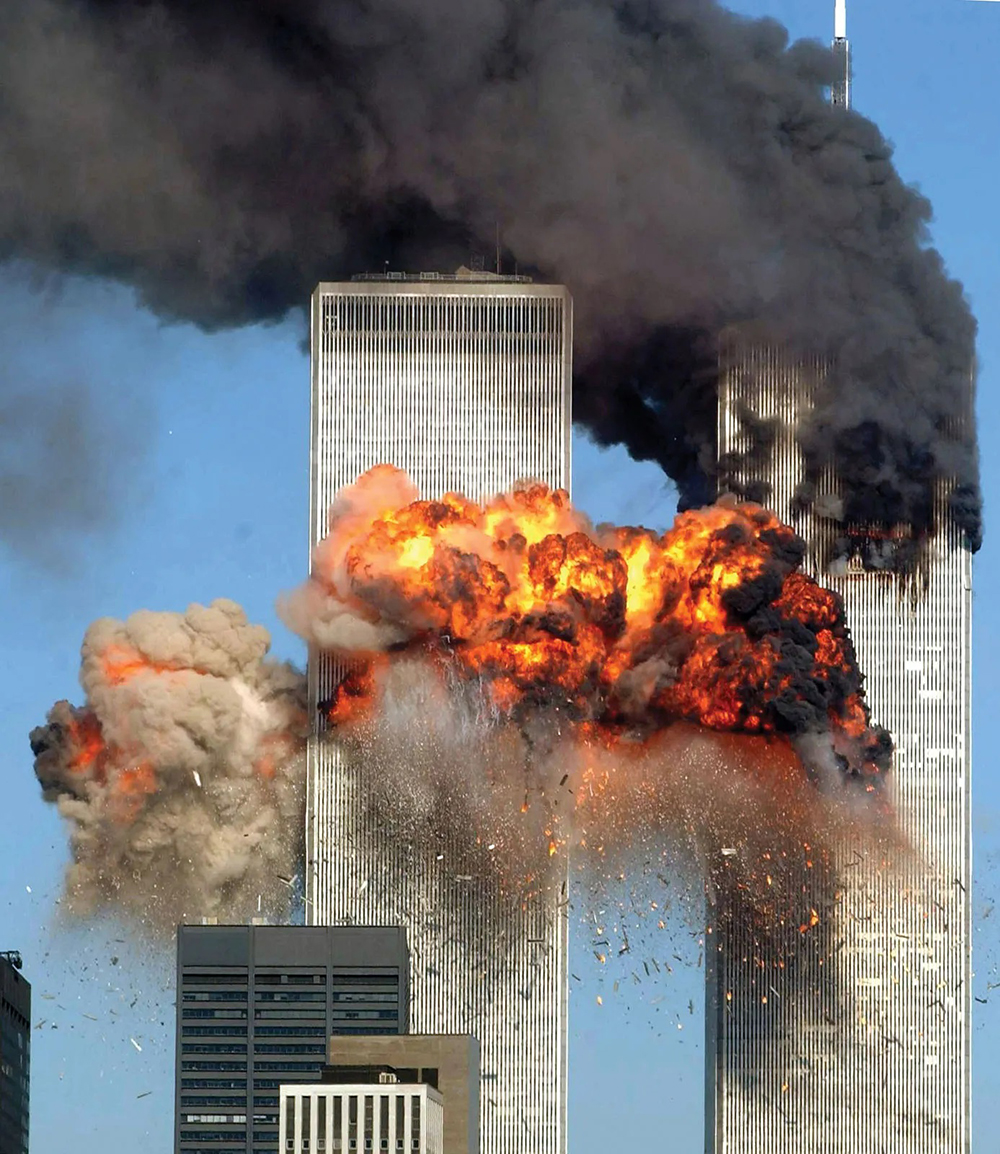
Muslim terrorism is a global phenomenon and if anyone in the world should know this it is New Yorkers who lived through the utter devastation of the September 11th attacks on the World Trade Center.
Yes, Ramadan brings out the absolute worst in those extremists who use this month-long holiday to execute the kind of terrorist plots that make our blood curdle.
This year, however, the possibility that a terror attack of substantial magnitude can occur has become a terrifying reality. With the war for Israel’s existential survival still raging on in Gaza in order that Hamas terrorist infrastructure be completely vanquished, terrorists of all stripes are driven with palpable hatred for the Western world and the ability to act on that disdain.
Several weeks ago, Israeli Defense Minister Yoav Gallant said that Iranian-backed terror groups are plotting to turn the Islamic holy month of Ramadan into the “second phase of October 7th” and set the Middle East and other places on fire.
It would not be surprising at all to learn that Governor Hochul, Mayor Adams and other high ranking city and state officials have been briefed by the Federal Bureau of Investigation or the Central Intelligence Agency about a possible terror attack that would be targeted at the subway in the New York City. The malevolent forces orchestrating such potential devastation are keenly cognizant of the fact that the subways in a city such as New York would be the perfect venue for mass slaughter. The fact that New York City has the largest Jewish population outside of Israel does not escape these sadistic miscreants.
The tragic upshot to this story is that our elected officials are taking an oblique position and are not up front or candid with the people that they serve. This is why the National Guard and state police are out in force. Let’s not kid ourselves. This has little or nothing to do with an upsurge in subway crime but rather, it has more to do with preventing the possibility of yet another 9/11 or October 7th.
If you are still not convinced then listen to the words of terror expert analysts who, since October 7th, have repeatedly said that yet another attack could be in the planning stage with the target being the United States or any Western ally. Just look at who is crossing illegally over the southern border of the US, and you will find that now that our borders are porous, many men from the Middle East and elsewhere are flying to Mexico just for the opportunity to come into the US unrecognized and completely undetected.
