



|
Getting your Trinity Audio player ready...
|
By: Jamie Herndon
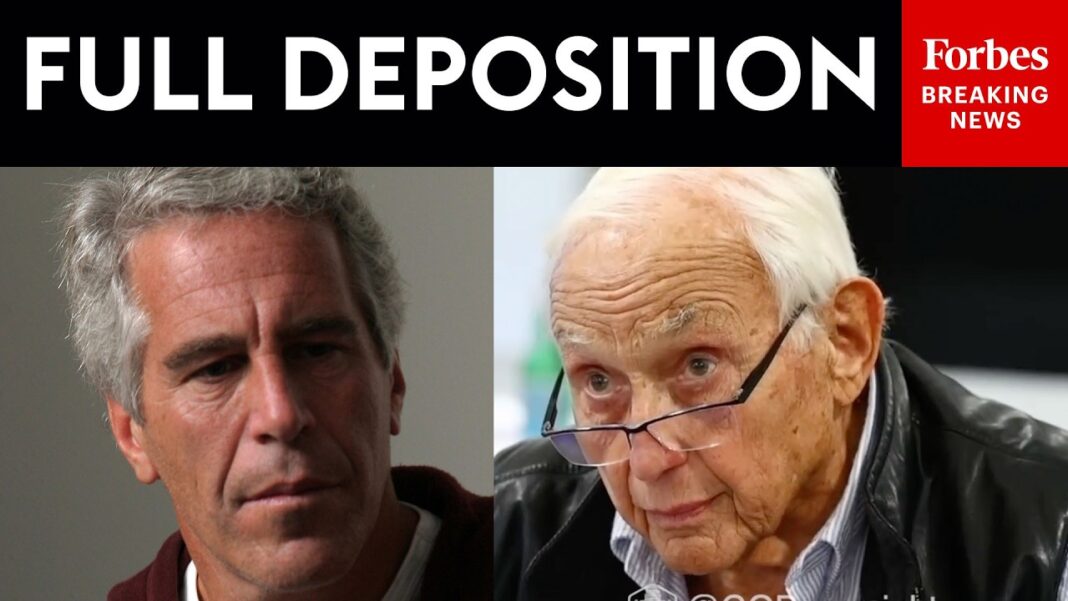
The long shadow cast by Jeffrey Epstein continues to stretch across the American elite, years after the disgraced financier’s death in a federal jail cell. On Wednesday, that shadow fell squarely upon Les Wexner, the former owner of Victoria’s Secret and longtime titan of American retail, as he appeared before a House Oversight Committee panel in Ohio to confront lingering questions about his decades-long financial relationship with Epstein. As The New York Post reported, Wexner, now 88, delivered a sweeping account of betrayal and deception, describing himself as having been “conned” by what he memorably called a “world Olympic con artist,” while emphatically denying any knowledge of, involvement in, or tolerance for Epstein’s criminal activities.
According to sources familiar with the closed-door deposition and a prepared statement reviewed by The New York Post, Wexner testified that Epstein had insinuated himself into his financial affairs with extraordinary cunning, exploiting trust and proximity to siphon off “vast sums” from the retail magnate’s fortune. The relationship, which spanned decades, was framed by Wexner as a strictly professional arrangement that metastasized into a catastrophic misjudgment. In his words, the moment he learned of Epstein’s duplicity and abuse, he severed ties “completely and irrevocably,” insisting that the rupture occurred nearly two decades ago, well before Epstein’s 2008 guilty plea to soliciting a minor.
The portrait that emerged from the deposition, as relayed in The New York Post report, is of a billionaire who believes himself to have been outmaneuvered by a master manipulator. Wexner’s prepared remarks underscored a sense of personal violation, not merely financial but moral. He asserted that he neither witnessed nor condoned any of Epstein’s predatory conduct and that the financier’s criminal life was meticulously concealed from him. “The other life he led,” Wexner reportedly said, “he most carefully and fully hid from me,” adding that he would never have tolerated such behavior had he known of it. The language is striking in its insistence on total ignorance, reflecting the defensive posture of a man whose proximity to Epstein has become, in the public imagination, a stain requiring constant rebuttal.
The financial dimension of their association remains central to the controversy. The New York Post report detailed how, in the period leading up to Epstein’s 2008 plea deal, the financier quietly repaid approximately $100 million to the Wexner family, funds that prosecutors later suggested represented only a fraction of what may have been misappropriated. Federal memoranda compiled from meetings with Wexner’s legal team described a pattern in which Epstein, a failed Wall Street trader by reputation, purchased properties for the retail tycoon and later acquired them himself at reduced prices, effectively converting fiduciary trust into personal enrichment. The mechanics of this alleged theft, labyrinthine and opaque, underscore how deeply Epstein had embedded himself within Wexner’s financial ecosystem.
Yet the deposition was not merely an exercise in financial accounting. It was also a response to political and reputational crossfire ignited by the release of millions of pages of investigative material by the Department of Justice earlier this year. Those documents, referenced extensively by The New York Post, included hundreds of mentions of Wexner, prompting two lawmakers—Reps. Ro Khanna of California and Thomas Massie of Kentucky—to suggest that Wexner was among several men “likely incriminated” by their associations with Epstein.
Wexner’s testimony directly rebuked that insinuation. His legal counsel, he said, had been informed as early as 2019 that federal investigators viewed him not as a target but as a source of information. An internal FBI email included in the DOJ trove reportedly concluded that there was “limited evidence” of Wexner’s involvement in Epstein’s crimes, a finding that Wexner’s defenders have seized upon as exculpatory.
The episode illustrates how proximity to Epstein, even in ostensibly professional contexts, has become radioactive. As The New York Post report noted, the indiscriminate nature of the document dump has ensnared individuals whose names appear in files without substantive evidence of wrongdoing. In several cases cited by lawmakers, four of the five additional figures initially flagged as potentially implicated were later revealed to be random individuals in an FBI lineup, unconnected to Epstein’s activities.
The fifth, an Emirati logistics executive, resigned after a disturbing email surfaced in which Epstein made grotesque references unrelated to Wexner. The conflation of mere mention with culpability has fueled a climate in which reputations are destabilized by association alone.
Wexner’s deposition also touched upon the persistent, and politically charged, question of Epstein’s relationships with other powerful figures. Wexner acknowledged meeting Donald Trump at Victoria’s Secret fashion shows long before Trump’s ascent to the presidency. However, he insisted that he never observed Trump in Epstein’s company, either publicly or at Epstein’s Palm Beach estate, and that he did not regard the two men as friends. He further stated that he had never been aware of Trump engaging in sexual activity with individuals introduced by Epstein or Ghislaine Maxwell. This testimony serves to counter narratives that have sought to conflate all of Epstein’s social acquaintances into a single web of impropriety, a simplification that Wexner’s account resists.
The specter of Ghislaine Maxwell, now serving a lengthy prison sentence for conspiring with Epstein to exploit minors, loomed over the proceedings. Wexner testified that Maxwell never introduced him to women for sexual purposes and had no professional dealings with him. He also rejected the enduring speculation that Epstein functioned as an intermediary connecting elites to women and girls for sexual exploitation or that he maintained ties to intelligence agencies.
Such denials confront a popular mythology that has grown around Epstein, one that casts him as a sinister nexus of espionage, blackmail, and elite corruption. Wexner’s version of events strips away that intrigue, portraying Epstein instead as a solitary predator whose duplicity thrived in the blind spots of those who trusted him.
The emotional tenor of the deposition was one of belated reckoning. Wexner spoke of having been introduced to Epstein in the 1980s by insurance executive Robert Meister, framing their relationship as professional from its inception. The narrative suggests a slow accretion of trust that, in hindsight, appears tragically misplaced. Epstein’s own writings, unearthed in the DOJ files, paint a darker, more cryptic picture. In an undated draft letter to Wexner, Epstein referred obliquely to “gang stuff” over a 15-year period, language that has fueled speculation despite its incoherence.
A 2015 email containing fragmented references to “wexner,” “ohio,” and “34 girls” further complicates the picture, hinting at a psychological fixation that persisted long after Wexner claims to have severed ties. The New York Post report underscored the unsettling nature of these communications, even as their precise meaning remains opaque.
Beyond the personal drama, Wexner’s testimony unfolds within a broader political and social reckoning. Several Ohio officials have chosen to return campaign donations from the billionaire, a gesture reported by The New York Post as emblematic of the moral contagion surrounding Epstein’s former associates. Wexner has donated more than $200,000 to state campaigns since 2020, contributions that, while legal and longstanding, have become politically fraught in the current climate. The symbolic rejection of his money speaks to the enduring stigma attached to his name, regardless of legal findings.
The House Oversight Committee’s interest in Wexner reflects a larger congressional effort to parse the networks that enabled Epstein’s access to wealth and influence. Rep. Robert Garcia, the panel’s top Democrat, reportedly pressed Wexner on whether Epstein had ever sought a sexual relationship with him, a question Wexner flatly denied. The inquiry underscores the committee’s determination to explore not only structural failures but also the intimate dimensions of Epstein’s predation. Such lines of questioning reveal a legislative body grappling with how to assign responsibility in a scandal that blurred the boundaries between personal vice and institutional negligence.
In the end, Wexner’s deposition offers no simple resolution. It presents a portrait of a man who claims to have been deceived, robbed, and morally betrayed by a confidant who lived a double life. Whether that account satisfies a skeptical public remains uncertain. The Epstein saga has eroded trust not only in individuals but in the systems that allowed such abuses to persist. The New York Post has chronicled how each new revelation, each testimony, reopens wounds and provokes fresh questions about complicity, blindness, and the moral responsibilities of those who occupy positions of immense power.
What emerges most starkly is the enduring corrosiveness of Epstein’s legacy. Even in death, he continues to implicate the living, drawing them into a vortex of suspicion and scrutiny. For Les Wexner, the reckoning is as much reputational as it is historical. His insistence that he neither condoned nor enabled Epstein’s crimes may ultimately be corroborated by the evidentiary record, but the association itself remains indelible. The true measure of this reckoning lies not only in legal determinations but in the broader cultural demand for accountability—a demand that shows no sign of abating.
