



|
Getting your Trinity Audio player ready...
|
By: Russ Spencer
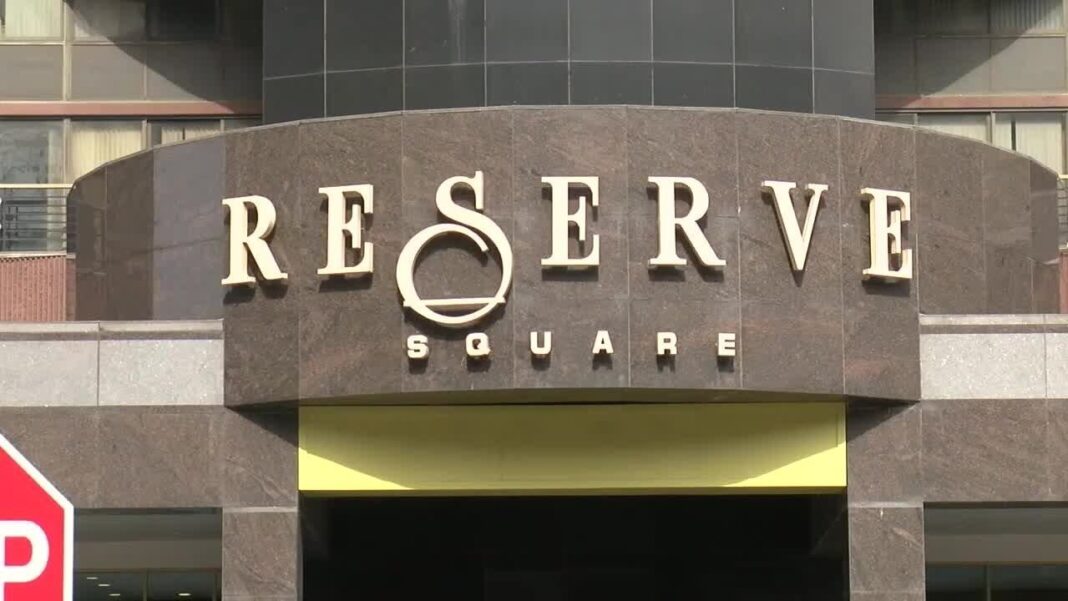
Downtown Cleveland is bracing for a seismic shift in its residential landscape. Reserve Square, a sprawling apartment complex that has long dominated the city’s core with its twin towers and nearly 1,000 units, is now at the center of a foreclosure lawsuit that underscores the fragility of older urban housing stock in an evolving market. As News 5 Cleveland has reported, the foreclosure marks a rare and consequential setback for the K&D Group, a major landlord whose footprint extends across Northeast Ohio.
The case, filed on July 21 in federal court, pits Fannie Mae—one of the nation’s largest government-sponsored mortgage backers—against an affiliate of K&D. The lender contends that the property is in default after the company failed to repay or refinance a loan that matured on January 1. With more than $78 million in principal, interest, and fees outstanding, the foreclosure represents a defining moment for Reserve Square and for downtown Cleveland’s residential sector as a whole.
According to the information provided in the News 5 Cleveland report, the legal complaint requests that a receiver be appointed to manage Reserve Square while the foreclosure proceeds. Fannie Mae has proposed Andrew Hayman of the Michigan-based Hayman Company, an experienced turnaround specialist, to assume control of day-to-day operations. The stated goal is to eventually sell the complex, with proceeds directed to satisfy outstanding claims.
For Doug Price, K&D’s CEO and co-founder, the reality is stark. “We’re out of ideas to fix the problem,” he told News 5 Cleveland in a candid phone interview. Despite years of investment—more than $25 million in renovations since K&D purchased the property in 2005—the company could not stem the tide of vacancies that emerged suddenly in late 2023.
The loan default was not the result of negligence, Price insists, but of an unforeseeable collapse in occupancy. “We were ready to go into closing and then all the vacancy happened, and both of us knew … we would be in default immediately,” he explained to News 5 Cleveland, describing how a planned refinancing deal unraveled as tenants disappeared.
Just a year ago, Reserve Square was nearly 93 percent full. By early 2024, however, more than half of its units sat vacant. As News 5 Cleveland reported, the downturn was driven by a sudden withdrawal of international students—many of whom traditionally attended Cleveland State University and rented apartments at the complex.
Price emphasized that this tenant demographic had become increasingly central to Reserve Square’s business model. But shifts in federal immigration policy disrupted the pipeline of new arrivals. Hundreds of students who were scheduled to move in never appeared, while others left at lease renewal. “A lot of it was the new administration’s stance on immigration,” Price said, referring to the policies of President Donald Trump.
Cleveland State itself has acknowledged declines in international enrollment and is preparing for further decreases as federal visa restrictions take hold. For Reserve Square, which had leaned heavily on this population, the losses were impossible to offset quickly. As the News 5 Cleveland report highlighted, the sudden contraction in the student base exposed vulnerabilities that years of renovations and marketing could not overcome.
Reserve Square’s scale alone makes its foreclosure remarkable. Occupying an entire city block between Chester and Superior avenues, the complex is a relic of early-1970s urban renewal. The towers, built in an era of concrete-heavy, fortress-like design, were once symbols of Cleveland’s downtown revitalization ambitions. Apartments start around $1,100 a month, and the property also contains retail storefronts and office space at the street level—currently about 50 percent occupied, according to the report at News 5 Cleveland.
When K&D acquired Reserve Square in 2005, one of the towers housed an Embassy Suites hotel. The company closed the struggling hotel in 2012, converting the space back into apartments. In statements provided to News 5 Cleveland, K&D has emphasized the extensive resources it poured into improving the property—from upgrading apartments to repairing the massive parking garage. Despite these efforts, Reserve Square “has faced prolonged financial losses and occupancy challenges,” the company admitted.
For current tenants, the foreclosure does not immediately alter daily life. Rent collection, maintenance, and leasing activities are continuing as usual. “We’re running it just as we would, up to the day we’re not there,” Price told News 5 Cleveland. The company has stressed that it intends to hand over a “well-run operation” to whichever receiver the court appoints.
Still, the uncertainty looms large. As the News 5 Cleveland report observed, many tenants have expressed concern about what a change in ownership could mean for rental rates, building upkeep, and long-term stability. The foreclosure also places renewed focus on Cleveland’s ability to sustain its downtown residential growth, a trend that has been celebrated in recent years but now faces visible setbacks.
Reserve Square is not an isolated case. News 5 Cleveland has documented how the nearby Luckman building—constructed around the same time—suffered similar difficulties. That property fell into foreclosure in 2023, was taken over by a New York-based lender, and has since been rebranded as LIV Cleveland. The parallels suggest systemic challenges for Cleveland’s older apartment towers, which often require heavy maintenance and have struggled to compete with newer developments offering modern amenities.
By contrast, K&D’s newer and smaller downtown projects are reportedly thriving. Price told News 5 Cleveland that these properties are less dependent on student tenants and benefit from more diverse renter bases. “It’s a shame for us. It’s a shame for the city. But it’s just one of those things,” he reflected, signaling that Reserve Square may be the exception rather than the rule in K&D’s otherwise strong portfolio.
The Reserve Square foreclosure is more than a real estate story; it is also a reflection of broader economic and policy shifts. As the News 5 Cleveland report explained, federal immigration restrictions have had tangible local impacts—undermining a key demographic for downtown housing. For Cleveland State University, declining international enrollment means lost tuition revenue and diminished cultural diversity. For landlords like K&D, it translates into hundreds of empty apartments and millions in uncollectible rent.
The foreclosure also raises questions about the sustainability of Cleveland’s downtown housing boom, which has been fueled by both private investment and public incentives. Over the past two decades, developers have transformed office buildings into residential spaces, betting on demand from students, young professionals, and empty nesters. But as News 5 Cleveland reports, the Reserve Square case shows how a reliance on narrow tenant segments can expose vulnerabilities in volatile times.
If the court grants Fannie Mae’s request, Andrew Hayman and his team will oversee Reserve Square until the property can be sold. The foreclosure complaint cited by News 5 Cleveland specifies that proceeds from the sale, after taxes and costs, will be applied to Fannie Mae’s outstanding claims.
What happens next remains uncertain. A new owner could seek to reposition the property, invest in further renovations, or adjust pricing strategies to attract a broader tenant base. Alternatively, the towers could face continued financial distress if market conditions fail to improve.
For K&D, this represents unfamiliar territory. Price acknowledged to News 5 Cleveland that the company has never experienced a foreclosure in its four decades of business. “If I knew a path forward, I would have took it,” he said. “The only way I know to do it is to do what we’re doing now.”
Reserve Square’s foreclosure carries symbolic weight for Cleveland. The towers, once envisioned as anchors of downtown revival, now stand as reminders of the challenges facing legacy properties in a shifting urban landscape. As News 5 Cleveland continues to report, the case is not only about one landlord or one loan, but about how cities like Cleveland adapt when economic, demographic, and policy forces converge.
Whether Reserve Square emerges as a revitalized asset under new ownership or becomes a cautionary tale for other landlords will depend on the decisions made in the months ahead. For now, tenants, investors, and city leaders alike are watching closely as Cleveland’s largest apartment complex undergoes one of the most significant transformations in its history.
