



|
Getting your Trinity Audio player ready...
|
Edited by: Fern Sidman
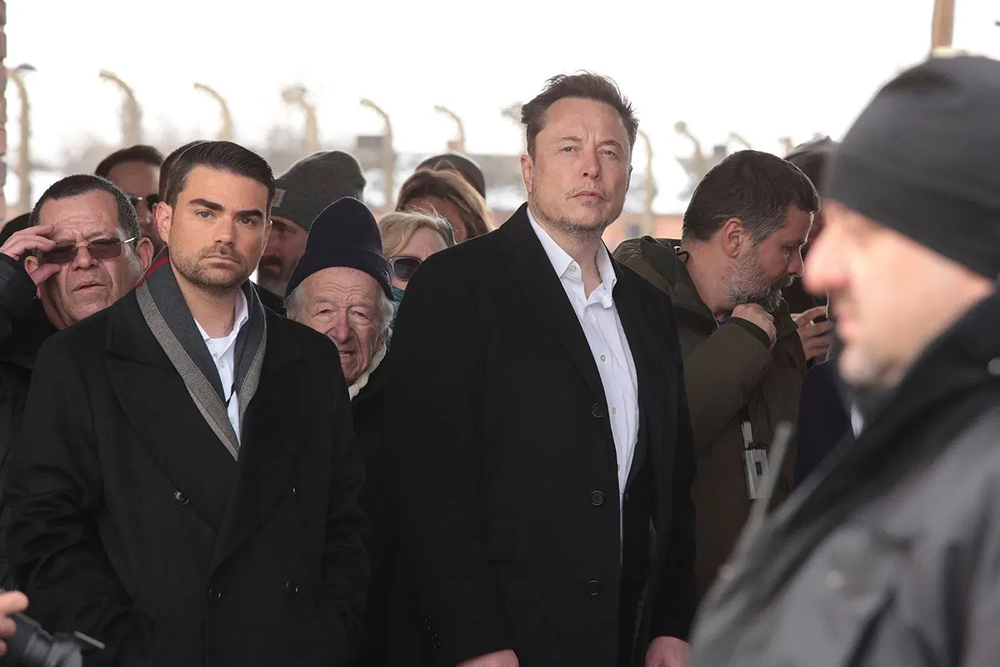
Billionaire tech entrepreneur Elon Musk recently visited the Auschwitz Nazi death camp in Poland on Monday, accompanied by conservative talk show host and political pundit Ben Shapiro, Rabbi Menachem Margolin, and Holocaust survivor Gidon Lev. Musk, the owner of the X social network (formerly Twitter), delivered powerful and thought-provoking remarks during a discussion panel in Krakow, suggesting that free speech could have prevented the atrocities committed at Auschwitz, as was reported by The Times of Israel. This comes amid controversies surrounding Musk’s pro-free speech policies on X and accusations of allowing hate speech, including anti-Semitism, on his platform.
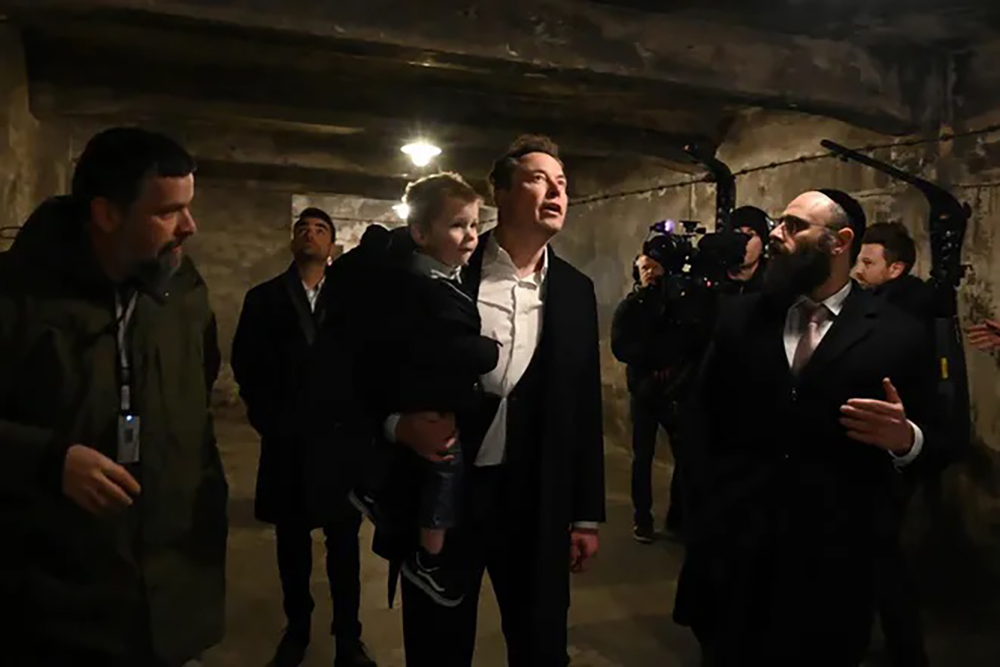
During Musk’s visit to Auschwitz, he carried his 3-year-old son on his shoulders as he toured the grounds alongside Shapiro, Margolin, and Lev. According to the TOI report, the group participated in a solemn memorial ceremony, lighting a candle, observing a moment of silence, and placing a wreath at the Wall of Death — an emotional and historic site within the former death camp.
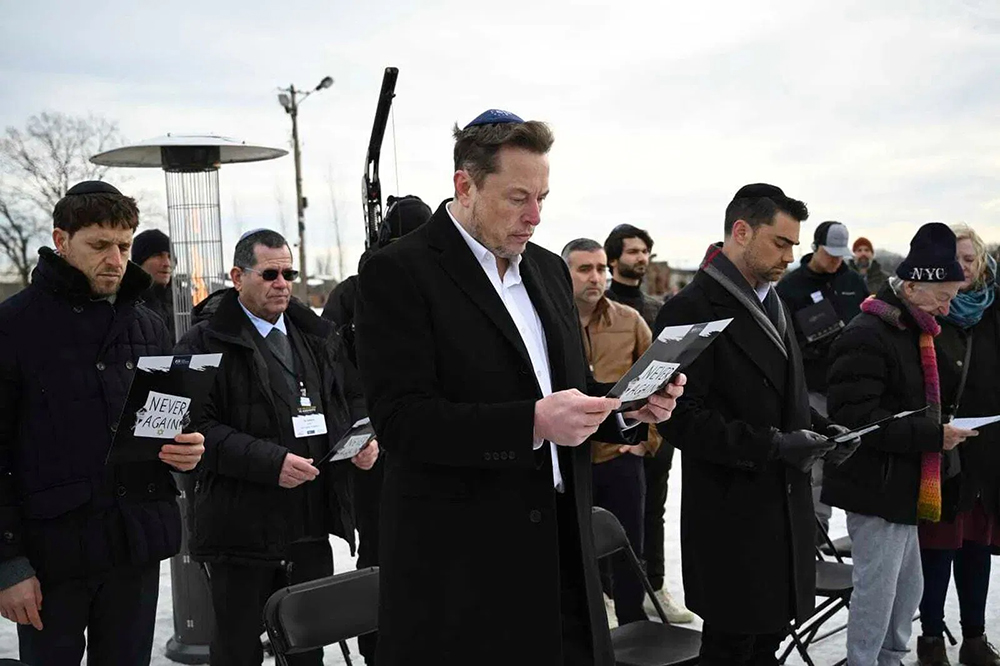
The site, near the town of Oswiecim in southern Poland, is fenced off with barbed wire. Wooden barracks for the prisoners and the ruins of gas chambers endure as evidence of Nazi crimes. There is also a monument to the victims where remembrance ceremonies are held yearly.
“It was incredibly moving and deeply sad and tragic that humans could do this to other humans,” Musk said about the visit, as was reported by the Associated Press. “I’m a student of history, so I had seen the pictures, I’d seen the videos, but … it hits you much more in the heart when you see it in person.”
Musk’s visit occurred only days before the 79th anniversary of the liberation of the Auschwitz-Birkenau death camp on January 27, recognized by the United Nations as International Holocaust Memorial Day, according to report. The camp, built by Nazi Germany in occupied Poland between 1940 and 1945, witnessed the tragic deaths of one million European Jews and over 100,000 non-Jews. The anniversary serves as a somber reminder of the horrors of the Holocaust and the importance of preventing the dissemination of hatred and discrimination.
In a notable statement, Musk expressed his belief that if social media and freedom of speech had existed during the time of the Holocaust, the murders at Auschwitz and other Nazi concentration camps might have been impossible to hide, the TOI report said. This perspective raises complex questions about the role of communication platforms in historical events and the responsibility of free speech in preventing atrocities. Musk acknowledged the deep sadness and tragedy of the inhuman acts committed by humans against each other.
Musk’s comments come in the midst of ongoing controversies surrounding X’s pro-free speech policies. Despite facing criticism for allowing the alleged proliferation of anti-Semitism and other forms of hate speech on his platform, Musk has remained steadfast in his commitment to free speech, as was indicated in the TOI report. The discussion at Auschwitz adds another layer to the debate, bringing historical context to the contemporary challenges of moderating online content.
Rabbi Menachem Margolin, director of the European Jewish Association, invited Musk to Auschwitz for the annual Holocaust commemoration event. During the discussion with Shapiro, Margolin challenged Musk regarding the potential dangers of anti-Semitic incitement on social media. The TOI report noted that he drew a parallel between Musk’s concerns about artificial intelligence (AI) risks and the danger of hate speech fueling historical atrocities, referencing Auschwitz as an example.
Musk, known for his innovations at Tesla and SpaceX, faced scrutiny for a retweet on X that accused some Jews of promoting hatred of whites. The post equated this with hatred of Jews in connection with the war in Gaza and it seemed to reference the “great replacement” theory embraced by white nationalists, as was noted in a report on the Business Insider website. Apple, Disney, and IBM subsequently opted out of advertising on X. Musk later apologized for the posts at the New York Times DealBook Summit but maintained a defiant tone toward advertisers.
The intersection of historical accountability, free speech, and the challenges of moderating online content remains a complex and ongoing discussion.
Musk’s $44-billion purchase of X in October 2022 was followed by a public feud with the Anti-Defamation League (ADL), an organization that is dedicated to meticulously monitoring anti-Semitism as well as racial and ethnic hatred across North America. The report stated that Musk claimed that the ADL attempted to drive advertisers away from X, an accusation the organization vehemently denied. Musk even threatened legal action against the ADL. Additionally, Musk disputed the notion that X has a higher volume of anti-Semitic speech compared to other platforms with stricter content moderation policies.
Addressing the scrutiny faced by X, Musk pointed to legacy media as direct competitors seeking to exploit any angle to cancel his social media platform. As per the TOI report, in a conversation with Ben Shapiro, who defended Musk against allegations of anti-Semitism on his Daily Wire platform, Musk emphasized the lack of gatekeeping by a small number of individuals as a principle he supports. Musk’s stance reflects his commitment to an open platform where diverse voices can be heard, even in the face of controversies.
The controversies surrounding Musk were discussed during a panel in Krakow, following speeches by former leaders of European countries. Musk shared the stage with dignitaries such as Reuven Rivlin, former president of Israel; Sebastian Kurtz, former chancellor of Austria; Manuel Valls, former prime minister of France; and Matteo Renzi, an Italian senator and former prime minister, as was indicated in the TOI report. The speakers reiterated their opposition to anti-Semitism, expressing their support for Israel and European Jewish communities.
Musk also admitted to being “naïve” about the prevalence of anti-Semitism. While he claimed to have witnessed little anti-Semitism within his social circles, he acknowledged the stark reality of pro-Hamas rallies across Western cities and especially on “elite college campuses.” Musk shared his thoughts on the shocking wave of anti-Semitic incidents and proposed solutions to address the deep-rooted issues contributing to the Israeli-Palestinian conflict.
This discussion adds a layer to Musk’s perspective on the challenges posed by anti-Semitic speech being disseminated in educational institutions.
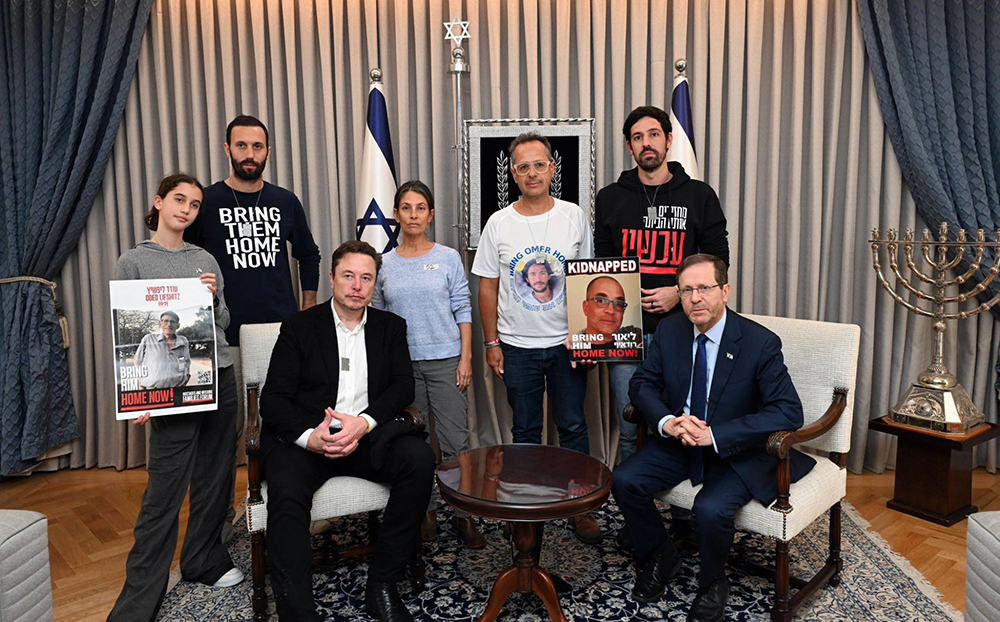
According to the information provided in the TOI report, Musk’s realization was further reinforced during his visit to Israel in November. It was there that he witnessed the aftermath of heinous acts committed by the Hamas terrorists. On October 7, approximately 3,000 Hamas terrorists from Gaza perpetrated atrocities, resulting in the deaths of over 1,200 people, mostly civilians, and the abduction of more than 250 others. Musk expressed shock at the scale of the events and condemned the actions of those responsible.
The Israeli-Gaza conflict not only saw a ground offensive but also triggered a disturbing rise in anti-Semitism globally, both online and on university campuses.
Israel’s ground offensive into Gaza, as reported by the health ministry in Hamas-run Gaza, has resulted in over 25,000 deaths, although these statistics are unverified and do not distinguish between combatants and civilians, as was reported by Business Insider. Israel contends that it has targeted and killed around 10,000 terrorists in the course of the conflict.

Also during the conversation with Ben Shapiro that was organized by the European Jewish Association, Musk referred to himself as “Jewish by association” due to having a significant number of Jewish friends, as was reported on the Business Insider web site. Musk’s decision to visit historical sites associated with the Holocaust and wartime atrocities may indicate his awareness of the historical context and the sensitivity surrounding the topics discussed during the conference, as was suggested in the Business Insider report.
Musk, acknowledged the severity of the recent upsurge in anti-Semitic incidents and described them as a “shocking wakeup call” for any civilized and civil-minded person. The events underscore the complex and interconnected nature of conflicts, online discourse, and real-world consequences.
Elon Musk, known for his candid remarks, addressed potential solutions to the Israeli-Palestinian conflict. He emphasized the need to halt the indoctrination of hate into children in Gaza, viewing it as a crucial step towards fostering a more constructive and peaceful future, as was noted in the Business Insider report. Musk’s recommendation aligns with broader discussions on addressing the root causes of conflicts and promoting understanding and tolerance among younger generations.
As the world remembers the liberation of Auschwitz-Birkenau, the need for collective efforts to combat anti-Semitism and promote understanding remains a crucial imperative for global society.
On November 1, 2005, the UN General Assembly adopted resolution 60/7 to designate January 27th as International Holocaust Remembrance Day (IHRD). The date not only marks the liberation of Auschwitz-Birkenau but is meant to honor the victims of Nazism. The same resolution supports the development of educational programs to remember the Holocaust and to prevent further genocide.
The purpose of International Holocaust Remembrance Day is two-fold: to serve as a date for official commemoration of the victims of the Nazi regime and to promote Holocaust education throughout the world. Since 2010, the UN has designated specific themes for the annual commemorations that focus on topics such as collective experiences and universal human rights. In addition to International Holocaust Remembrance Day, many countries hold national commemoration ceremonies on other dates connected to the Holocaust.
The first commemoration ceremony was held on January 27, 2006, at the UN Headquarters in New York City. Nearly 2,200 people attended in person. Since the ceremony was broadcast live on television, many more people were able to view it throughout the world. The UN Headquarters holds official commemorations each year. UN offices across the world and other state offices also conduct their own ceremonies.
Since 2010, the UN has designated specific themes for the annual commemorations.
On Tuesday, an Associated Press report said that almost 80 years after the Holocaust, about 245,000 Jewish survivors are still living across more than 90 countries.
Nearly half of them, or 49%, are living in Israel; 18% are in Western Europe, 16% in the United States, and 12% in countries of the former Soviet Union, according to a study by the New York-based Conference on Jewish Material Claims Against Germany, also referred to as the Claims Conference, according to the AP report.
Before the publication of the demographic report, there were only vague estimates about how many Holocaust survivors are still alive.
Their numbers are quickly dwindling, as most are very old and often of frail health, with a median age of 86. The AP report said that twenty percent of survivors are older than 90, and more women (61%) than men (39%) are still alive.
The vast majority, or 96% of survivors, are “child survivors” who were born after 1928, says the report “Holocaust Survivors Worldwide. A Demographic Overview’” which is based on figures that were collected up until August.
“The numbers in this report are interesting, but it is also important to look past the numbers to see the individuals they represent,” said Greg Schneider, the Claims Conference’s executive vice president.
“These are Jews who were born into a world that wanted to see them murdered. They endured the atrocities of the Holocaust in their youth and were forced to rebuild an entire life out of the ashes of the camps and ghettos that ended their families and communities,” he told the AP.
Six million European Jews and people from other minorities were killed by the Nazis and their collaborators during the nightmarish Holocaust years of World War II.
As was indicated in the AP report, it is not clear exactly how many Jews survived the death camps, the ghettos or somewhere in hiding across Nazi-occupied Europe, but their numbers were a far cry from the pre-war Jewish population in Europe.
In Poland, of the 3.3 million Jews living there in 1939, only about 300,000 survived.
Around 560,000 Jews lived in Germany in 1933, the year Adolf Hitler came to power. According to the information provided in the AP report, at the end of World War II in 1945, their numbers had diminished to about 15,000 — through emigration and extermination.
Germany’s Jewish community grew again after 1990, when more than 215,000 Jewish migrants and their families came from countries of the former Soviet Union, some of them also survivors. The AP said that nowadays, only 14,200 survivors still live in Germany, the demographic report concluded.
One of them is Ruth Winkelmann, who survived by hiding with her mother and sister in a garden shed on the northern outskirts of Berlin. The report in the AP said that her father was killed in the Auschwitz death camp. Her younger sister Esther died of illness, hunger and exhaustion in March 1945, just weeks before the liberation of Berlin by the Soviet Red Army.
Winkelmann, who is 95 and still lives in Berlin, said there hasn’t been a day in her life when she didn’t remember her beloved father.
“It always hurts,” told the Associated Press. “The pain is there day and night.”
