



|
Getting your Trinity Audio player ready...
|
CCP-Linked Donations to Mikie Sherrill Raise Alarms in N.J. Governor’s Race
By: Jerome Brookshire
New Jersey’s gubernatorial race, already one of the most closely watched contests in the nation, has been jolted by revelations that Rep. Mikie Sherrill (D-NJ), the Democratic nominee, has accepted tens of thousands of dollars in campaign contributions from a Chinese auto executive with deep ties to the Chinese Communist Party. According to a report on Monday in The Washington Examiner, the revelations could complicate Sherrill’s efforts to distance herself from foreign influence at a time when national scrutiny of China’s global reach has never been more intense.
At the center of the controversy is Pin Ni, an auto industry executive who has donated roughly $45,000 to support Sherrill over the course of her political career, including her current bid for New Jersey’s governor’s mansion. As The Washington Examiner reported, Pin is no ordinary corporate donor. Corporate records identify him as a member of the CCP, and during his long tenure at the Wanxiang Group — one of the world’s largest auto parts manufacturers — he has been repeatedly recognized as an “outstanding Communist Party Member.”
Pin currently serves as the president of Wanxiang’s U.S. branch and sits on its board of directors. He has also held prominent roles in organizations such as the U.S.–China Strong Foundation and the China General Chamber of Commerce, groups that analysts have long accused of operating in service to Beijing’s political agenda.
Campaign finance filings examined by The Washington Examiner show that in February of this year Pin wrote a $30,000 check to One Giant Leap PAC, the super PAC backing Sherrill’s gubernatorial campaign. In addition, he contributed $14,500 to her congressional campaign between 2022 and 2024.
Pin’s connection to the CCP is reinforced by his family ties to Wanxiang’s founding dynasty. His late father-in-law, Lu Guanqiu, earned direct praise from Chinese President Xi Jinping for keeping the company “in line with the Party Central Committee” and for always “actively doing what our Party committees and governments at all levels advocate.”
Leadership of the conglomerate now rests with Lu’s son, Lu Weiding, who also emerged as a donor to Sherrill. According to New Jersey campaign finance records, Lu contributed $5,800 to her gubernatorial campaign in November 2024. The Washington Examiner recalled a 2018 speech by Lu in which he declared that “everyone here is a Communist Party member” and that Wanxiang’s corporate culture was rooted in promoting cadres from within the CCP’s ranks.
Sherrill is not the only high-profile Democrat to benefit from Pin’s largesse. As The Washington Examiner noted, Rep. Abigail Spanberger (D-VA), another Democratic gubernatorial candidate, has also received $50,000 in contributions from Pin. Federal campaign records further show that Pin and Lu have donated heavily across the U.S. political spectrum, though overwhelmingly to Democratic causes. Beneficiaries have included President Joe Biden, Sen. Cory Booker (D-NJ), and the nonprofit group that organized the 2024 Democratic National Convention.
The donations have raised urgent legal questions. U.S. campaign law requires that political contributions come only from U.S. citizens or lawful permanent residents. Chinese law, however, typically prohibits CCP members from holding foreign citizenship or permanent residency. As counsel Paul Kamenar of the National Legal and Policy Center told the Washington Free Beacon, “It’s bad enough if Spanberger is taking illegal campaign donations from a foreign source, but outrageous that it’s from a member of the Chinese Communist Party.” The watchdog group has already indicated it intends to file a complaint with the Federal Election Commission, a point amplified by The Washington Examiner in its coverage.
The Sherrill campaign has not responded to repeated requests for comment, according to The Washington Examiner.
The controversy is especially sensitive given Sherrill’s long record of support for electric vehicle (EV) subsidies and other green energy policies. Wanxiang Group, with its significant stake in global automotive supply chains, stands to benefit directly from a U.S. shift toward EV production. The overlap between Sherrill’s policy priorities and the financial interests of her CCP-linked donors, highlighted in The Washington Examiner, has only deepened suspicions that Beijing’s influence is seeping into state-level politics.
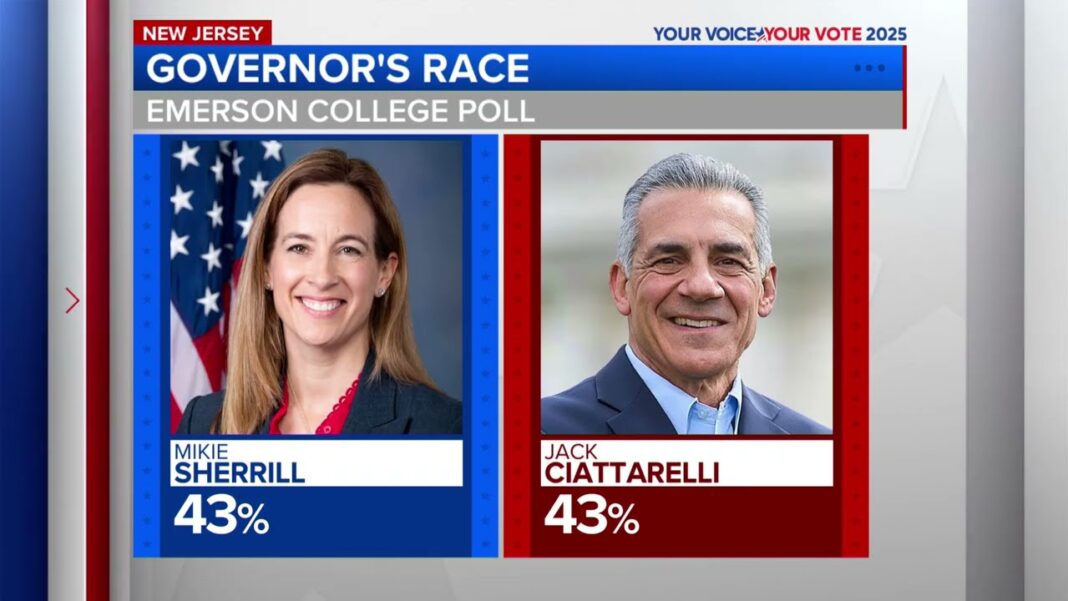
Republican nominee Jack Ciattarelli, who is locked in a statistical tie with Sherrill in the latest polls, has already seized on the scandal. GOP strategists argue that Sherrill’s acceptance of funds from a Party-affiliated figure undermines her credibility on national security and raises doubts about her independence from foreign influence.
For New Jersey voters, the story could prove pivotal. While the state has leaned reliably Democratic in recent cycles, Ciattarelli’s campaign is betting that Sherrill’s association with CCP-linked donors will blunt her advantage. As The Washington Examiner concluded, the revelations strike at the heart of public trust: a candidate who touts herself as a champion of American workers now faces scrutiny over money that originates from a foreign entity aligned with America’s greatest geopolitical rival.
As New Jersey’s gubernatorial race heats up, the spotlight on Mikie Sherrill’s donor base is unlikely to fade. With watchdog groups preparing legal challenges, and with The Washington Examiner continuing to unearth troubling details about Pin Ni and his CCP affiliations, the controversy could redefine the trajectory of the campaign.
In the end, the central question is not merely about legality but about trust: can a candidate accept money tied to Beijing while convincing voters that she will put New Jersey first?
