



|
Getting your Trinity Audio player ready...
|
ADL Rebukes Mehmet Oz for Comments Implicating New York’s Hasidic Community in Health Care Fraud
By: Ariella Haviv
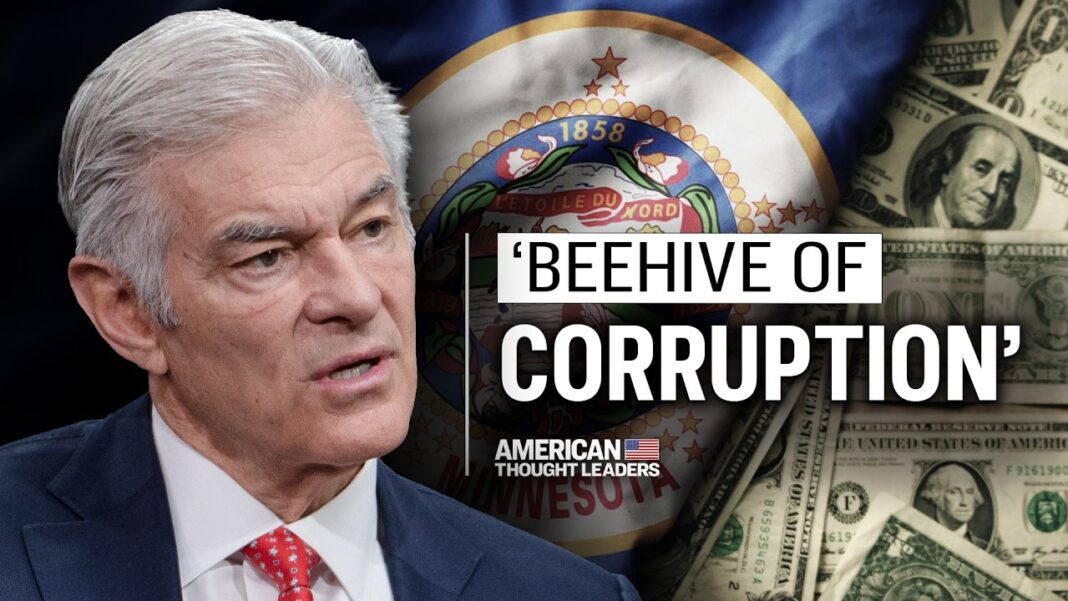
In an era when political language travels faster than its authors often intend and lingers longer than its original context might justify, a set of remarks by Dr. Mehmet Oz has ignited a controversy that speaks less to the mechanics of healthcare policy and more to the enduring power of words to wound, divide, and reshape public climates. As VIN News reported, the Anti-Defamation League (ADL) moved decisively on Wednesday to condemn comments made by Oz in a two-week-old interview with Epoch Times’ “American Thought Leaders,” arguing that the language he employed about Hasidic Jews “fuels harmful stereotypes and discrimination” and risks contributing to the already rising tide of antisemitism.
The episode, as chronicled in the VIN News report, has unfolded at the intersection of governance, identity, and the increasingly porous boundary between policy debate and cultural insinuation. Doctor Oz, currently serving as Administrator of the Centers for Medicare & Medicaid Services, was discussing healthcare fraud investigations in Minnesota and sought to illustrate that such issues are not confined to any single state.
Yet in reaching for a comparative example, he invoked New York’s Hasidic community in a manner that the ADL characterized as prejudicial, portraying a distinct religious population as “foreign, criminal, or ‘not real Americans.’” The organization’s rebuke was swift and unequivocal, and VIN News has underscored that the reaction was not merely about a single interview clip but about the broader implications of rhetoric deployed by public officials in a volatile social climate.
The ADL’s statement, disseminated on X and quoted in the VIN News report, did not mince words. “Casting Hasidic Jews as foreign, criminal, or ‘not real Americans’ is straight out of the antisemitic playbook,” the organization wrote, warning that such framing does not exist in a vacuum. It argued that rhetoric of this kind “fuels harmful stereotypes and discrimination” and pointed to a sobering statistic: New York City had just reported a 182 percent year-over-year spike in antisemitic hate crimes in January. In this context, the ADL contended, language that singles out a minority community—even under the guise of policy illustration—can function less as neutral description and more as an accelerant poured onto an already smoldering fire.
The VIN News report placed particular emphasis on the temporal dissonance of the controversy. The interview in question was not a fresh utterance seized upon in the heat of breaking news; it was two weeks old, resurfaced and recontextualized in a moment of heightened sensitivity to antisemitic incidents nationwide. That delay, civil rights advocates note, is itself instructive. It demonstrates how statements by public figures can acquire new resonance as social conditions shift, and how the circulation of such remarks—through clips, excerpts, and algorithmic amplification—can transform a passing comment into a focal point of national debate.
Dr. Oz is no stranger to public scrutiny. A cardiothoracic surgeon by training, a former Republican Senate nominee in Pennsylvania, and a self-described secular Muslim, he has increasingly positioned himself as a political commentator as well as an administrator. The VIN News report observed that this multifaceted public identity complicates the reception of his words. On the one hand, his medical and administrative credentials lend him an air of technocratic authority; on the other, his political engagements render his language subject to the same interpretive rigor applied to any figure operating in the charged arena of public discourse.
When he attempted to compare fraud cases across states, the intention, according to the contours of the interview, was to argue against the notion that Minnesota’s investigations were anomalous. Yet the choice to single out New York’s Hasidic community, rather than referring to institutions or systems in more abstract terms, is what transformed a policy discussion into a cultural flashpoint.
VIN News reported that advocacy groups were quick to argue that such rhetorical choices are never merely incidental. Civil rights leaders have long emphasized that statements from prominent figures about minority communities can shape social climates in ways that extend far beyond the immediate audience. Language, in this view, is not a passive mirror of reality but an active participant in constructing it. When a public official frames a community in terms that suggest foreignness or criminality, even implicitly, those associations can seep into the broader cultural consciousness, reinforcing biases and legitimizing suspicion.
The ADL’s intervention reflects a broader vigilance in an age when antisemitic incidents are no longer isolated anomalies but recurring features of the national landscape. The organization’s warning that “words matter” is not a platitude but a strategic assertion rooted in historical experience. Antisemitic tropes have, for centuries, relied on the depiction of Jews as outsiders, as perpetual foreigners regardless of citizenship or contribution. To see echoes of that narrative in contemporary discourse, particularly from a figure occupying a senior role in federal healthcare administration, is what lent the controversy its urgency.
Yet the debate is not confined to questions of intent or interpretation. It also touches on the responsibilities that accompany public office in a fragmented media environment. The VIN News report noted that Oz’s remarks were made in the context of discussing fraud investigations, a topic that demands precision and care. Healthcare fraud is a complex, systemic issue that spans jurisdictions and institutional structures. To anchor such a discussion in the image of a specific religious community risks conflating systemic problems with cultural identity, a move that critics argue not only distorts the policy debate but also unfairly stigmatizes those who have no connection to the misconduct being discussed.
Supporters of a more charitable reading might argue that Oz was attempting, however clumsily, to illustrate geographic variation in enforcement or public perception. But as the VIN News report pointed out, the ADL’s critique does not hinge on a presumption of malice; it hinges on the foreseeable consequences of the language used. In a climate where antisemitic incidents are surging, the margin for rhetorical imprecision narrows dramatically. What might once have been dismissed as an awkward analogy now carries the potential to reinforce harmful narratives with real-world repercussions.
The controversy also highlights the evolving role of advocacy organizations in the media ecosystem. The ADL’s decision to circulate clips and issue a public condemnation ensured that the remarks would be scrutinized far beyond the original audience of the “American Thought Leaders” interview. VIN News has observed that this dynamic—where watchdog groups act as both critics and amplifiers—reflects a recognition that silence can be as consequential as speech. By bringing the comments into wider view, the ADL sought not only to censure but to educate, to remind both officials and the public of the historical weight carried by certain tropes.
At the same time, the episode raises questions about how societies should navigate the tension between accountability and dialogue. VIN News has reported that Oz has increasingly engaged in political commentary, a shift that places him squarely within the arena of contested narratives and ideological interpretation. In such a space, the line between critique and condemnation can appear perilously thin. Yet civil rights leaders argue that the point is not to foreclose discussion but to elevate its standards—to insist that debates about policy, fraud, or governance be conducted without resorting to language that marginalizes entire communities.
The broader context, as VIN News has repeatedly emphasized, is one of rising antisemitism across the country. Statistics, such as the reported 182 percent spike in antisemitic hate crimes in New York City, are not abstract figures; they represent lives disrupted, communities shaken, and a sense of security eroded. In that environment, the symbolic power of words is magnified. A remark made in a studio can echo in a subway car or a schoolyard, shaping perceptions in ways that policymakers may never witness directly.
There is also a historical dimension to the scrutiny. The ADL’s reference to the “antisemitic playbook” is not rhetorical flourish but a reminder that certain patterns of speech have been deployed, with devastating effect, across different eras and societies. VIN News has noted that the organization’s warning is rooted in a long memory of how seemingly casual depictions of Jews as outsiders or malefactors have paved the way for discrimination and violence. To invoke that history in response to Oz’s comments is to situate the controversy within a continuum that extends far beyond the present news cycle.
As the debate continues, one of the central questions remains how public officials should recalibrate their language in an age of heightened sensitivity and instant amplification. VIN News has suggested that the answer lies not in rhetorical timidity but in rhetorical responsibility—a willingness to speak with precision, to avoid shortcuts that rely on cultural stereotypes, and to recognize that policy discussions do not occur in a social vacuum. The expectation is not perfection but conscientiousness, an awareness that every public statement contributes, in some measure, to the texture of civic life.
In the end, the controversy surrounding Dr. Mehmet Oz’s remarks is less about a single interview than about the standards by which public discourse is judged in a pluralistic society. It is about whether those entrusted with authority will wield language as a tool of clarity or allow it to become, even inadvertently, a vector of division. As VIN News has chronicled, the ADL’s condemnation serves as both a rebuke and a cautionary tale, reminding the nation that in times of rising tension, the boundaries of responsible speech are not merely ethical guidelines but essential safeguards for social cohesion.
The episode stands as a stark illustration of a truth as old as democracy itself: words do not merely describe the world; they help decide what kind of world we are willing to inhabit.
