



|
Getting your Trinity Audio player ready...
|
By: Ariella Haviv
As the geopolitical temperature across the Middle East rises to a fevered pitch, governments far from the region are beginning to act on what many analysts have warned for weeks: that the current crisis is no longer confined to rhetoric, proxy maneuvering, or the familiar rhythms of diplomatic brinkmanship. It is, increasingly, a prelude to contingency. In a series of quiet but consequential moves this week, Western governments initiated the withdrawal of diplomats’ families and issued urgent advisories to their nationals in Israel and Lebanon, signaling that the possibility of a sudden regional escalation is no longer theoretical but operationally plausible.
World Israel News reported on Wednesday that these steps, taken by Australia, Germany, and the United States in quick succession, reflect mounting concern that the Middle East is approaching a decisive and potentially destabilizing juncture.
On Wednesday, the Australian government instructed the family members of its diplomatic personnel stationed in Israel and Lebanon to depart both countries, citing what Canberra described as a “deteriorating security situation in the Middle East.” The phrasing, carefully calibrated yet unmistakably grave, was accompanied by a broader advisory urging Australian citizens to leave Israel and Lebanon while commercial flight routes remain available.
The implicit warning embedded in that counsel was stark: travel corridors, airspace access, and the capacity of embassies to render assistance could narrow abruptly if the security environment were to collapse into open conflict. The World Israel News report noted that such guidance, while framed as precautionary, is rarely issued without intelligence assessments pointing to a credible risk of imminent disruption.
Australia’s move did not occur in isolation. A day earlier, Germany’s Federal Foreign Office had issued its own advisory to German nationals in Israel and Lebanon, reflecting parallel anxieties in European capitals. According to reporting cited by World Israel News from the German newspaper Bild, Berlin’s guidance went beyond general caution. German citizens were urged to take practical steps to prepare for potential emergencies, including ensuring access to essential supplies and familiarizing themselves with the locations of shelters.
The advisory also warned that embassy services could be curtailed if regional airspace were closed, a scenario that would complicate evacuation efforts and consular support. The language of preparedness, bordering on civil defense, underscored the seriousness with which European governments are now regarding the prospect of sudden instability along Israel’s northern frontier and beyond.
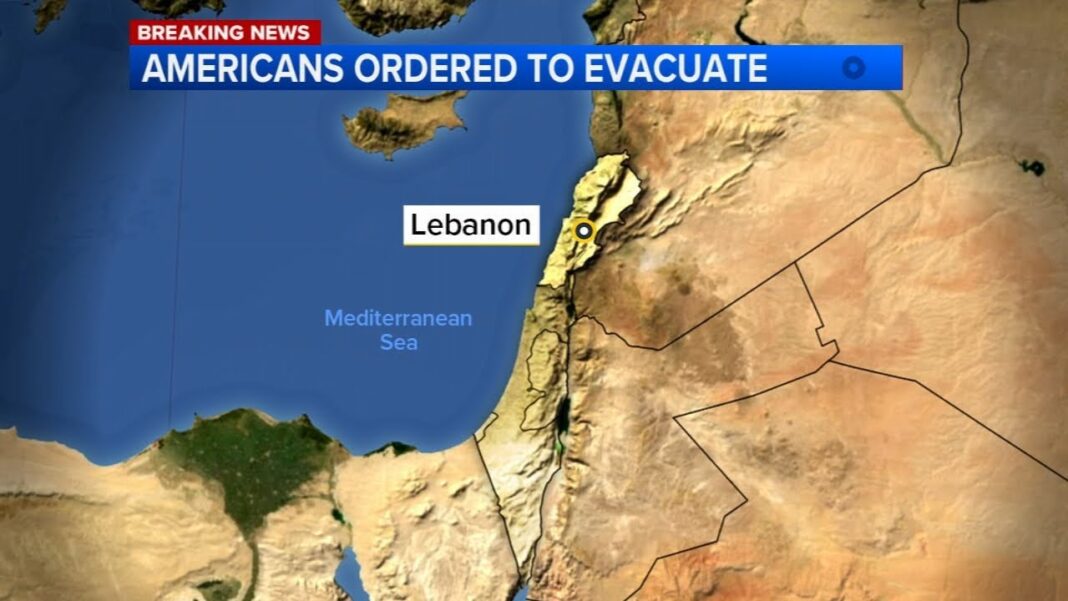
These developments follow earlier measures taken by the United States, which evacuated dozens of staff members from its embassy in Lebanon earlier in the week via Beirut’s airport. Officials characterized the move as precautionary, but World Israel News reported that the withdrawal was widely interpreted in diplomatic circles as an acknowledgment that the security calculus in Lebanon has grown increasingly volatile.
With Hezbollah entrenched along Israel’s northern border and regional tensions exacerbated by the standoff between Washington and Tehran, Lebanon has once again become a focal point of international concern. The presence of American diplomatic personnel in such an environment, long regarded as a stabilizing signal, is now being recalibrated in light of the risk that localized incidents could rapidly metastasize into broader confrontation.
The confluence of these advisories and withdrawals reflects a growing consensus among Western governments that the Middle East has entered a phase of heightened unpredictability. World Israel News has consistently reported on the unprecedented military buildup unfolding across the region, as well as the intensifying rhetoric surrounding Iran’s nuclear ambitions and Washington’s red lines.
With a third round of high-stakes talks scheduled to take place on Thursday, officials have warned that the diplomatic window to avert escalation may be narrowing. The juxtaposition of negotiations and precautionary evacuations captures the paradox of the present moment: diplomacy is still being pursued, yet contingency planning is proceeding as though failure is a plausible outcome.
For Israel, these developments are not merely abstract signals from distant capitals; they resonate within a society already accustomed to living under the shadow of security threats. Israeli authorities have quietly intensified civil defense preparations, even as political leaders continue to project confidence in the country’s deterrent posture.
The advisories issued by Australia and Germany, and the partial evacuation of the U.S. Embassy in Lebanon, may reinforce among Israeli citizens the sense that the international community is bracing for turbulence. Yet they also serve as a reminder of Israel’s centrality to the regional equation: any escalation involving Iran, Hezbollah, or other proxy forces is likely to reverberate first and most acutely along Israel’s borders.
Lebanon, too, stands precariously at the intersection of these tensions. The World Israel News report highlighted the fragility of Lebanon’s political and economic institutions, which have been eroded by years of crisis and compounded by the pervasive influence of armed non-state actors. In such a context, even limited hostilities could have outsized humanitarian and infrastructural consequences. The withdrawal of diplomatic families and the advisories urging civilians to prepare for disruptions reflect a sober assessment that Lebanon’s capacity to absorb further shocks is dangerously limited.
The broader implications of these moves extend beyond immediate safety considerations. Diplomatic withdrawals and travel advisories are, in effect, signals to markets, insurers, and international organizations that the risk environment has shifted. Airlines, already sensitive to the complexities of operating in contested airspace, may reassess routes. Humanitarian agencies may begin contingency planning for potential displacement or access restrictions.
In previous crises, such preparatory measures often presaged cascading effects across multiple sectors, from commerce to energy markets, amplifying the global impact of regional instability.
At the heart of this moment lies the unresolved standoff between the United States and Iran, a confrontation that has increasingly drawn in regional actors and external stakeholders. World Israel News has reported on the escalating warnings from Washington that Iran must not cross the nuclear threshold, as well as Tehran’s insistence on its right to pursue nuclear technology.
The impending round of talks is widely viewed as a final attempt to reconcile these positions through diplomatic means. Yet the simultaneous preparation for worst-case scenarios suggests that policymakers are acutely aware of the fragility of the negotiating process. The evacuation of embassy staff and the advisories to citizens are, in this sense, not expressions of pessimism but acknowledgments of uncertainty, an institutional hedge against the possibility that diplomacy may falter.
For citizens of the countries issuing these advisories, the message is both practical and existential. It is a call to vigilance in a region where the rhythms of daily life can be disrupted by events far beyond individual control. Such warnings are not meant to induce panic but to empower individuals with foresight and preparedness. Yet the psychological impact of being told to leave or prepare for emergency conditions is profound, underscoring the way geopolitical tensions translate into intimate personal decisions about safety, family, and belonging.
As the Middle East approaches what officials describe as a decisive moment, the choreography of diplomacy and deterrence continues with uneasy symmetry. Governments are speaking of peace even as they reposition people and assets in anticipation of turbulence. World Israel News has portrayed this duality as emblematic of a region perennially poised between resolution and rupture. Whether the forthcoming negotiations will succeed in defusing the current crisis remains an open question.
What is increasingly clear, however, is that the international community is no longer treating escalation as a remote possibility. In the quiet departures of diplomats’ families and the urgent advisories to civilians lies an unspoken acknowledgment: the Middle East stands at the threshold of events that could reshape its trajectory, and the world is, cautiously and anxiously, preparing for what may come.
