



|
Getting your Trinity Audio player ready...
|
Titans of Fortune: Inside the Rarefied Circle of Israel’s Wealthiest Power Brokers
By: Jeff Gorman
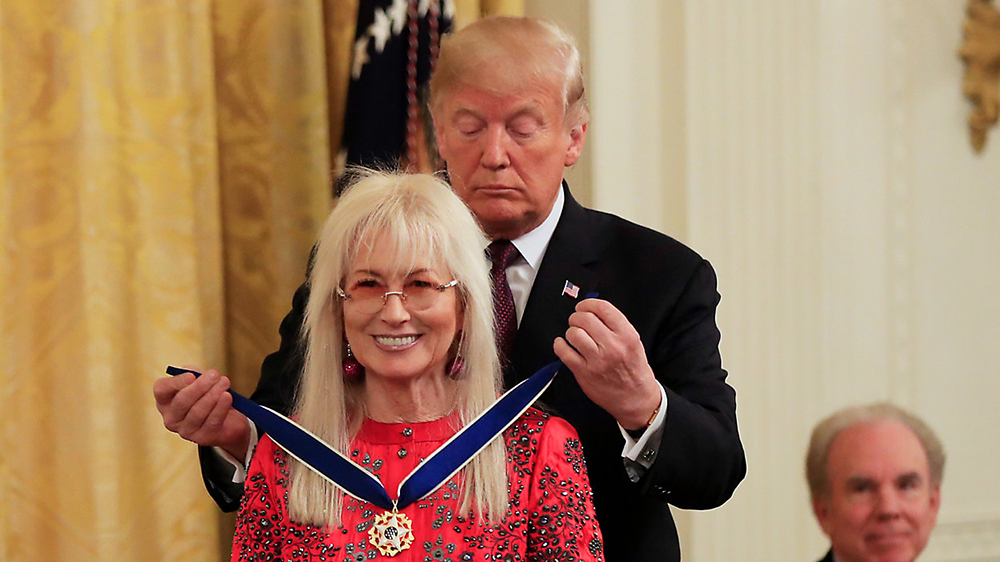
In a nation often defined by its innovations, its strategic anxieties, and its restless political life, the immense private fortunes accumulated by a small cadre of individuals tell another, quieter story—one of capital flows, global networks, and the extraordinary capacity of wealth to shape the contours of modern Israel’s economic presence on the world stage. The latest ranking of Israel’s richest individuals offers a revealing portrait of how fortunes are amassed in the twenty-first century: through energy and shipping empires, digital entertainment platforms, global investment portfolios, and cross-border finance that long ago transcended the boundaries of the Israeli market itself. At the summit of this gilded hierarchy stands Miriam Adelson, whose estimated wealth of $32 billion places her not merely at the pinnacle of Israeli fortunes, but among the most formidable private fortunes anywhere in the world.
Adelson’s ascent to the apex of Israel’s wealth rankings is emblematic of the transnational character of contemporary capital. Her fortune, rooted in the vast casino and resort empire built alongside her late husband Sheldon Adelson, reflects the way Israeli-linked wealth often flourishes not solely within Israel’s borders, but through global enterprises whose revenues are generated across continents. Yet Adelson’s identity as Israel’s wealthiest individual carries symbolic weight beyond the arithmetic of net worth. It situates Israel within the global conversation about elite capital, philanthropy, political influence, and the often uneasy relationship between immense private fortunes and public life. Adelson’s wealth, like that of many of her peers in this ranking, is not merely an economic statistic; it is a locus of influence that reverberates through media, philanthropy, and geopolitics.
Trailing Adelson are brothers Eyal Ofer and Idan Ofer, whose combined fortunes—$28.2 billion and $22.5 billion respectively—form a financial constellation so vast that it effectively constitutes an empire unto itself. The Ofer family legacy is deeply entwined with Israel’s modern economic history, particularly in the realms of shipping, energy, and global logistics. Over decades, the Ofer enterprises have evolved from traditional maritime operations into diversified holdings that span real estate, energy infrastructure, and international investments. Their wealth reflects the enduring importance of shipping and energy to global commerce, even in an era dominated by digital platforms and intangible assets. In a world still reliant on the physical movement of goods and resources, the Ofer brothers’ fortunes underscore the continuing power of old-economy sectors when managed with strategic foresight and global reach.
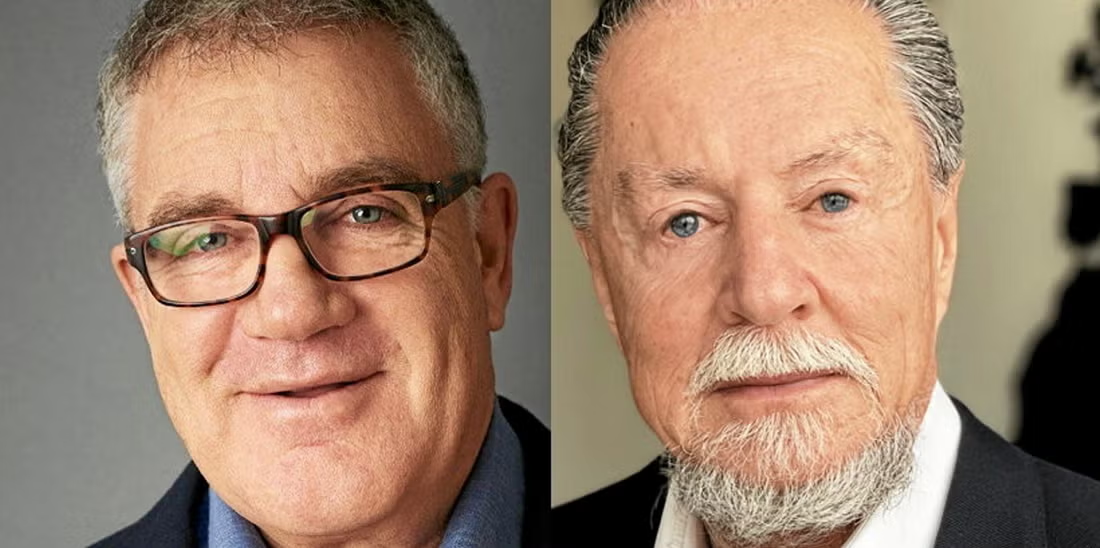
The Ofer brothers’ prominence also highlights a defining feature of Israeli wealth accumulation: the deep integration of Israeli capital into global systems. Their fortunes are not the product of a domestic market alone, but of intricate networks of international trade, maritime logistics, and energy markets that connect Israeli business elites to the arteries of global commerce. In this sense, their wealth serves as a reminder that Israel’s economic elite operates within a planetary economy, one in which the Mediterranean is merely one node in a sprawling web of trade routes and financial flows.
In fourth place, Igor Buchman and Dmitry Buchman, with a combined fortune of $9.8 billion, represent a different archetype of wealth creation: the digital age entrepreneur. The Buchman brothers’ rise is rooted in the explosive growth of online gaming and digital entertainment, sectors that have transformed leisure into a lucrative global industry. Their wealth is emblematic of a generation of tech-driven fortunes that have little dependence on physical infrastructure and are instead powered by intellectual property, user engagement, and the viral dynamics of digital platforms. The Buchmans’ ascent into the upper echelons of Israeli wealth rankings speaks to Israel’s enduring reputation as a technology hub, even when the companies themselves operate on a global scale with user bases scattered across continents.

Their story also illustrates how Israel’s entrepreneurial ecosystem has become a launchpad for ventures whose economic gravity is global from inception. Unlike the industrial titans of earlier generations, whose wealth was anchored in factories, ships, and physical assets, the Buchmans’ fortune is built upon code, data, and the monetization of attention. It is a form of wealth that is lighter, more mobile, and arguably more volatile—yet no less powerful in its capacity to generate capital at unprecedented scale.
Completing the top five is Roman Abramovich, whose estimated fortune of $9.2 billion adds a distinctly geopolitical dimension to Israel’s wealth landscape. Abramovich’s wealth, accumulated through energy and commodities in the post-Soviet era, has long been the subject of international scrutiny and political controversy. His inclusion in the ranking underscores the complex relationship between wealth, nationality, and global politics in an era of heightened sanctions regimes and geopolitical realignments. Abramovich’s financial stature is not merely a testament to entrepreneurial acumen in the chaotic post-Soviet marketplace; it is also a reminder of how wealth can become entangled with questions of political legitimacy, international law, and diplomatic tension.
Together, these five figures form a portrait of Israeli-linked wealth that is striking in both its scale and its diversity. Their fortunes span industries as disparate as gaming and shipping, hospitality and energy, yet they converge in one crucial respect: each is the product of global capitalism rather than parochial markets. This global orientation is not incidental. Israel’s domestic economy, dynamic as it is, could not alone generate fortunes of such magnitude. Instead, these individuals and families have leveraged Israel’s entrepreneurial culture, diaspora networks, and access to international markets to construct empires that operate on a planetary scale.
The concentration of such extraordinary wealth in the hands of a few inevitably raises questions about the broader social and economic implications for Israel itself. While these fortunes contribute to philanthropy, investment, and the international visibility of Israeli-linked enterprise, they also highlight the widening gap between the financial elite and the average citizen. In a country grappling with rising living costs, housing shortages, and persistent socioeconomic disparities, the spectacle of billionaires whose net worths dwarf the national budget invites both admiration and unease. The presence of such colossal private fortunes complicates Israel’s self-image as a society rooted in egalitarian ideals, born of collectivist traditions and shaped by decades of shared sacrifice.

Yet it would be reductive to view these fortunes solely through the prism of inequality. Each of these wealth narratives is also a story of risk, vision, and the capacity to navigate volatile global markets. The Ofer brothers’ maritime empire weathered decades of geopolitical instability and cyclical downturns in global trade. The Buchman brothers built digital platforms in a hyper-competitive global marketplace where technological obsolescence is an ever-present threat. Adelson’s fortune emerged from the notoriously volatile world of hospitality and gaming, industries sensitive to regulatory shifts and economic downturns. Abramovich’s wealth was forged in one of the most tumultuous periods of modern economic history, where fortunes were made and lost in the crucible of post-Soviet privatization.
Moreover, the presence of such immense private wealth has tangible implications for Israel’s international standing. These individuals are not merely private actors; they are nodes in networks of influence that extend into philanthropy, media, and political advocacy. Their resources can shape cultural institutions, educational initiatives, and policy debates, both within Israel and beyond. In an era when soft power is increasingly mediated through private capital, the activities of Israel’s wealthiest individuals become part of the country’s broader diplomatic and cultural footprint.
At the same time, the global nature of these fortunes raises questions about the future relationship between national identity and economic power. As wealth becomes increasingly untethered from geography, the concept of “Israel’s richest individuals” itself becomes more complex. These fortunes are often generated abroad, managed through international financial centers, and invested across multiple jurisdictions. The national label persists, yet the economic reality is profoundly transnational. This tension between national identity and global capital reflects a broader transformation in the nature of wealth in the twenty-first century, where borders constrain politics more than they constrain capital.
Ultimately, the latest ranking of Israel’s richest individuals offers more than a ledger of fortunes. It provides a lens through which to view the evolving architecture of global wealth and Israel’s place within it. Adelson’s commanding lead, the Ofer brothers’ maritime and energy empires, the Buchman brothers’ digital ascendancy, and Abramovich’s geopolitically inflected fortune together compose a narrative of wealth that is at once emblematic of Israel’s entrepreneurial dynamism and illustrative of the profound inequalities that characterize global capitalism. Their fortunes stand as monuments to the extraordinary opportunities of the modern economy—and as reminders of the enduring questions about power, responsibility, and the social contract that arise whenever wealth accumulates on such a monumental scale.
