



|
Getting your Trinity Audio player ready...
|
By: Ariella Haviv
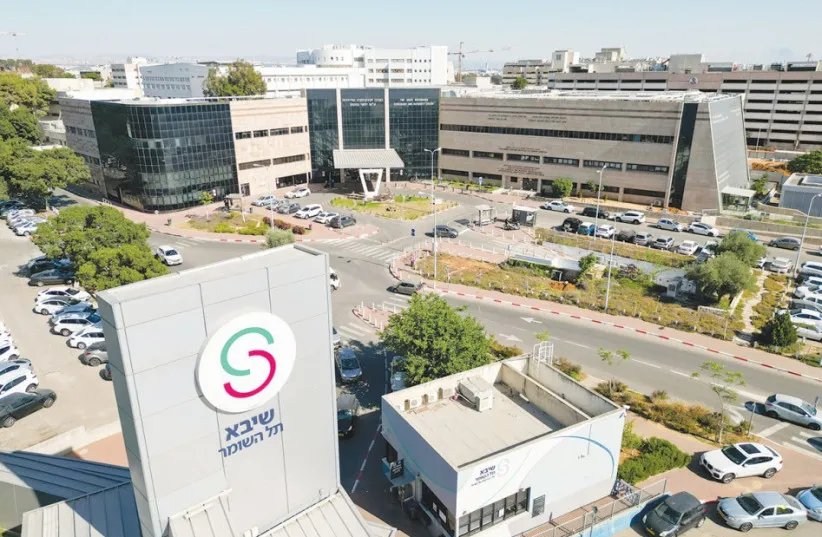
In a milestone that reverberated across Israel’s medical and political spheres alike, Sheba Medical Center at Tel HaShomer in Ramat Gan has been ranked seventh in the world in Newsweek’s prestigious “World’s Best Hospitals 2026” list. The accolade, reported on Thursday by The Jewish News Syndicate (JNS), marks the highest-ever placement for an Israeli institution and solidifies Sheba’s standing among the most elite medical centers on the globe.

The ranking, released on Wednesday, represents not merely incremental progress but a testament to sustained excellence. As the JNS report noted, Sheba climbed one position from its eighth-place ranking last year—already the highest rating ever achieved by an Israeli or Asian hospital in the survey’s history. That ascent places Sheba in rarefied company, following global titans such as the Mayo Clinic in Rochester, the Cleveland Clinic in Ohio, and Johns Hopkins Hospital in Baltimore, which secured sixth place.
For Israel, a nation whose medical system has long punched above its demographic weight, Sheba’s placement carries symbolic and strategic significance. It signals that the country’s healthcare infrastructure is not only resilient but capable of setting benchmarks in innovation, patient care, and research at a global level. According to the information provided in the JNS report, this year’s ranking also marks Sheba’s eighth consecutive appearance in the top ten of Newsweek’s distinguished list—a remarkable streak underscoring both consistency and forward momentum.
Sheba’s leadership attributes its ascent to a deliberate and ambitious transformation strategy. In a statement cited in the JNS report, the hospital emphasized its evolution into an AI-driven medical center, integrating artificial intelligence into clinical practice, research initiatives, and administrative systems. This digital metamorphosis, hospital officials argue, has fundamentally reshaped how care is delivered, data is analyzed, and innovation is cultivated.

Professor Yitshak Kreiss, Sheba’s director-general, articulated the institution’s vision with characteristic clarity. “We decided to position Sheba at the heart of the global digital transformation of medicine,” he stated, according to the JNS report, “and within it to lead at the forefront of the AI revolution.” Kreiss framed the hospital’s strategy not as an opportunistic embrace of technological trends but as a calculated effort to anchor Israel in the vanguard of twenty-first-century medicine.
Artificial intelligence at Sheba is not a peripheral experiment but an integrated framework that informs diagnostics, predictive modeling, patient flow management, and even administrative optimization. As JNS has detailed in prior coverage of Israeli medical innovation, Sheba has pioneered AI-assisted imaging diagnostics capable of identifying pathologies with unprecedented precision. Algorithms now support oncological assessments, cardiological monitoring, and personalized treatment planning, allowing physicians to harness data analytics in real time.
Yet Sheba’s transformation extends beyond technology. The hospital’s leadership insists that digital advancement must complement, rather than supplant, traditional pillars of medical excellence. “The combination of medical excellence, public responsibility and an innovative spirit is what places Sheba at the top tier worldwide,” Kreiss remarked. That fusion of innovation with ethical commitment resonates deeply in Israel, where healthcare institutions operate not only as treatment centers but as national assets.
The political echelon was swift to acknowledge Sheba’s achievement. The Prime Minister’s Office announced that Prime Minister Benjamin Netanyahu personally contacted Professor Kreiss to convey his congratulations. According to a readout cited by JNS, Netanyahu expressed profound appreciation for the hospital’s staff, highlighting their professionalism and dedication to Israeli citizens and to Israel Defense Forces soldiers wounded during recent conflicts.
The prime minister’s remarks reflect Sheba’s dual role as both civilian and military medical hub. During times of war, the hospital has served as a primary treatment center for injured soldiers, blending trauma care expertise with rehabilitative innovation. JNS has frequently underscored Sheba’s pioneering rehabilitation programs, which incorporate advanced prosthetics, neurological therapies, and psychological support frameworks tailored to combat-related injuries.
Indeed, Sheba’s global recognition arrives against the backdrop of regional instability, reinforcing the narrative that Israeli medical institutions operate under extraordinary pressures yet continue to achieve world-class outcomes. The hospital’s capacity to integrate research, acute care, and rehabilitation within a single ecosystem has attracted international collaborations and investment.
The methodology underpinning Newsweek’s rankings further illuminates Sheba’s accomplishment. As JNS reported, the survey evaluated more than 2,500 hospitals worldwide, drawing on recommendations from medical experts, including physicians and hospital administrators, alongside quality metrics, patient experience data, and Statista’s Patient-Reported Outcome Measures Implementation Survey. The rigorous multi-factor assessment suggests that Sheba’s ranking is not a product of narrow specialization but reflects comprehensive excellence across disciplines.
While Sheba’s seventh-place finish commands headlines, other Israeli institutions also featured prominently. Tel Aviv Sourasky Medical Center’s Ichilov Hospital ranked 58th globally, Hadassah Medical Center in Jerusalem’s Ein Kerem campus placed 157th, and Rabin Medical Center’s Beilinson Hospital in Petach Tikvah secured the 165th position. As the JNS report observed, the presence of multiple Israeli hospitals in the top 250 underscores the broader strength of the country’s healthcare system.
Israel’s medical ecosystem benefits from a unique confluence of factors: a universal healthcare framework, robust integration between academia and clinical practice, and a vibrant start-up culture that accelerates technological translation from laboratory to bedside. Sheba, often described as Israel’s flagship hospital, exemplifies this synergy. Its partnerships with biotechnology firms and digital health start-ups have fostered an environment where innovation is not episodic but systemic.
Moreover, Sheba’s international outreach has extended its influence beyond Israel’s borders. The hospital operates a global impact arm, collaborating with medical institutions worldwide to share expertise in digital health and emergency response. Sheba’s disaster-response teams have deployed to crisis zones, reinforcing Israel’s reputation for medical diplomacy.
The emphasis on artificial intelligence is particularly noteworthy in an era when healthcare systems worldwide grapple with rising costs, staffing shortages, and aging populations. AI-driven predictive analytics can optimize resource allocation, identify at-risk patients earlier, and reduce diagnostic errors. Sheba’s integration of such systems positions it as a testbed for scalable solutions that other countries may seek to emulate.
Critics of rapid digital transformation caution that technology must be implemented with vigilance to avoid ethical pitfalls, including data privacy concerns and algorithmic bias. Sheba’s leadership has publicly committed to maintaining stringent oversight mechanisms, ensuring that AI applications align with both Israeli regulations and international best practices. Israel’s regulatory framework for digital health continues to evolve alongside technological innovation.
The hospital’s ranking also carries symbolic resonance for Israel’s national identity. In a region often defined by conflict, achievements in medicine and science offer a counter-narrative of progress and humanitarian contribution. Netanyahu’s congratulatory call, as cited by JNS, highlighted this dimension, portraying Sheba’s accomplishment as not merely institutional but national.
Looking ahead, Sheba’s leadership appears determined to maintain its trajectory. Professor Kreiss has articulated a vision of sustained growth, emphasizing research initiatives in genomics, immunotherapy, and advanced surgical robotics. The hospital’s ambition is to remain at the forefront of global medical innovation, shaping rather than merely adapting to emerging trends.
In the broader context of international healthcare competition, Sheba’s rise illustrates how smaller nations can leverage agility and innovation to rival larger, resource-rich systems. The presence of American powerhouses like Mayo Clinic and Cleveland Clinic at the top of the rankings underscores the formidable competition. Yet Sheba’s ability to secure seventh place affirms that excellence is not the exclusive province of vast budgets but can emerge from strategic vision and disciplined execution.
For Israeli patients and medical professionals alike, the ranking offers a source of pride and reassurance. It affirms that the care delivered within Sheba’s corridors meets—and in many respects exceeds—the highest global standards. As the JNS report observed, Sheba’s ascent stands as a compelling chapter in the nation’s ongoing story of innovation.
In the final analysis, the hospital’s placement on Newsweek’s 2026 list represents more than a numerical accolade. It reflects a philosophy of medicine that integrates technological audacity with compassionate care, national service with global engagement. In a world where healthcare systems confront mounting challenges, Sheba Medical Center’s achievement signals that visionary leadership and adaptive innovation can elevate an institution—and a country—to the summit of international esteem.
