



|
Getting your Trinity Audio player ready...
|
Edited by: Fern Sidman
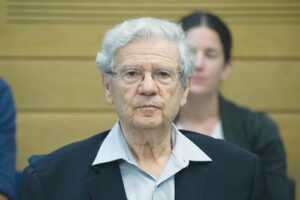
In a significant development, Israel has appointed retired Supreme Court President Aharon Barak as a judge to address South Africa’s application to the International Court of Justice (ICJ) in The Hague, as was reported by the Ha’Aretz newspaper in Israel. South Africa alleges that Israel has engaged in genocide during its conflicts in Gaza. Barak’s appointment is crucial as Israel seeks to defend itself against these claims on the international stage.
The International Court of Justice, comprised of 15 judges from various countries, allows parties involved in cases to appoint an additional judge. Israel, the party implicated in South Africa’s application, has exercised this right by selecting Aharon Barak. Ha’Aretz also reported that Israel’s Attorney General, Gali Baharav-Miara, recommended Barak’s appointment, which was subsequently approved by Prime Minister Benjamin Netanyahu.
Aharon Barak, who served as Supreme Court president from 1995 to 2006, holds a prominent international legal reputation among Israeli jurists. At 87 years old, Barak is a Holocaust survivor and sat on the Israeli Supreme Court for 28 years, with 11 of those years as the court president, according to the Ha’Aretz report. Despite being closely associated with the Israeli legal establishment, Barak is considered by the Justice Ministry as the most suitable candidate to represent Israel and defend against the allegations of genocide.
Barak has faced criticism, particularly from supporters of the Netanyahu government’s judicial overhaul plan aimed at preserving democracy and limiting the court’s intrusion into civil affairs.
Last year, during massive protests against the overhaul plan, demonstrators gathered in front of Barak’s home, considering him one of the leaders of the opposition to the government’s proposals. The report in Ha’Aretz said. Despite this, legal sources suggest that Barak’s extensive legal experience and international recognition make him the best choice to counter South Africa’s accusations.
Gideon Sa’ar, a minister without portfolio and former justice minister from the National Unity Party, welcomed Barak’s appointment, emphasizing his international stature and professionalism. As was noted in the Ha’Aretz report, Karine Elharrar of the opposition Yesh Atid party, a member of the Judicial Appointments Committee, praised Barak’s appointment based on his brilliance and knowledge as a legal scholar admired worldwide.
National Unity Party leader Benny Gantz also supported the decision, highlighting Barak’s patriotism and commitment to Israel. Interior Minister Moshe Arbel of the ultra-Orthodox Shas party viewed the appointment as a unifying moment for the nation, emphasizing the importance of standing together for the country’s sake, the report added.
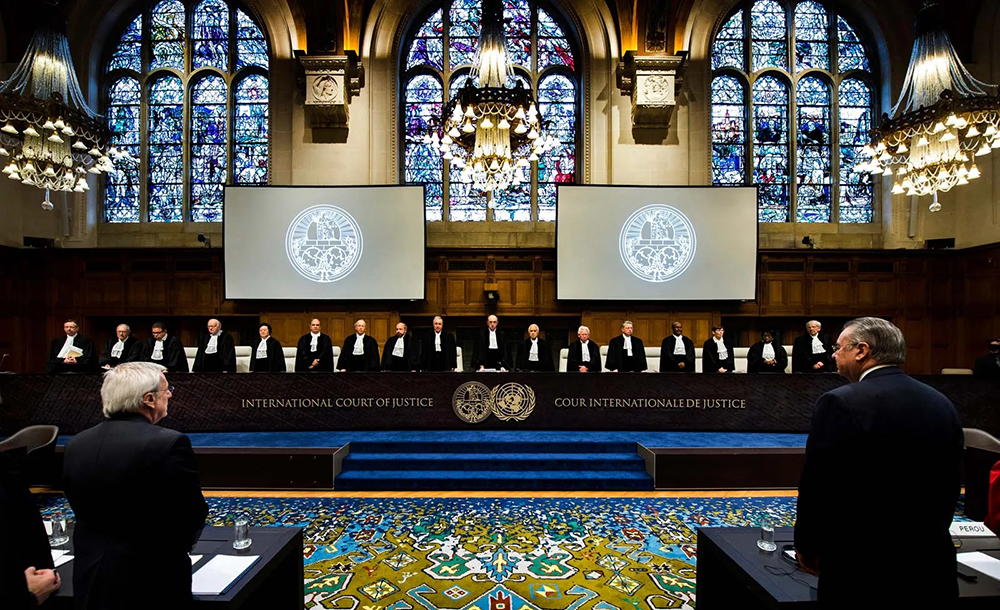
The International Court of Justice (ICJ) has declared that it will conduct hearings this week to address South Africa’s submission, seeking an investigation into Israel’s conduct during the recent conflict in Gaza. The war erupted on October 7 following attacks by Hamas on Israeli border communities, resulting in the tragic loss of 1,200 lives. Ha’Aretz reported that South Africa alleged that Israel’s actions constitute the “indiscriminate use of force and forcible removal of inhabitants” in Gaza, accusing the nation of committing “crimes against humanity and war crimes.” The South African submission goes further, asserting that Israel’s actions meet the criteria for genocide, urging the court to issue an interim order to cease hostilities and protect Palestinians in Gaza from further harm.
In response to the serious charges, Israel has enlisted the expertise of British international legal scholar Professor Malcolm Shaw to represent its position before the ICJ. According to the Ha’Aretz report, Professor Shaw is widely recognized as a leading authority in international law, renowned for his extensive knowledge on a range of issues, including territorial disputes, maritime law, human rights, and international arbitration. His distinguished career includes providing counsel to the United Kingdom, various national governments, and international organizations.
Professor Shaw’s reputation in the field of international law is underscored by his appearances before high-profile tribunals such as the International Court of Justice, the European Court of Human Rights, and the British Supreme Court, as was indicated in the Ha’Aretz report. Beyond his legal practice, he has authored several influential textbooks on international law, contributing significantly to the academic understanding of legal principles on the global stage.
The composition of the ICJ includes President Joan Donaghue of the United States, Vice President Kirill Gavorgian of Russia, and former court presidents from Slovakia, France, and Somalia, as was reported by Ha’Aretz. It is acknowledged that judges’ opinions may sometimes align with the political positions of their respective countries, adding a layer of complexity to the proceedings. The potential political influence on the court’s decisions underscores the intricate nature of international legal disputes.
If the ICJ judges issue an interim order, it theoretically could be enforced through sanctions imposed by the United Nations Security Council. However, the United States, wielding veto power on the Security Council, is expected to block such sanctions. Regardless, the issuance of an interim order would have significant implications for Israel, possibly leading to diplomatic isolation, international sanctions, and boycotts.
Unlike the International Criminal Court, which adjudicates proceedings between private individuals, the ICJ adjudicates disputes between countries. Israel, being a signatory to the Convention on the Prevention and Punishment of the Crime of Genocide, is bound by the court’s jurisdiction in this case, as stated in the Ha’Aretz report. This leaves Israel without the option to claim immunity from the court’s authority, emphasizing the gravity of the proceedings.
The outcome of the ICJ hearings will not only impact the current conflict but may also set a precedent for how similar situations are addressed in the future. The gravity of the allegations, ranging from war crimes to genocide, underscores the significance of this legal battle on the global stage. The proceedings are set to unfold with heightened attention and scrutiny from the international community.
