



|
Getting your Trinity Audio player ready...
|
By: Fern Sidman
In a solemn moment marking the turn of a national odyssey, the Red Cross has successfully delivered a group of Israeli hostages, escorted from Gaza by the Israel Defense Forces (IDF), and reunited them with their waiting families inside Israel. While most are said to be in relatively “normal” condition—somewhat better than expected given the harsh years in captivity—they now face the long road ahead: exhaustive medical evaluation, psychological rehabilitation, and the rediscovery of life after trauma. Tazpit News Service (TPS) has closely tracked every step of this release, and the stories of the hostages read like a mosaic of courage, suffering, and hope.
Who They Are: Stories of Courage, Loss, and Hope
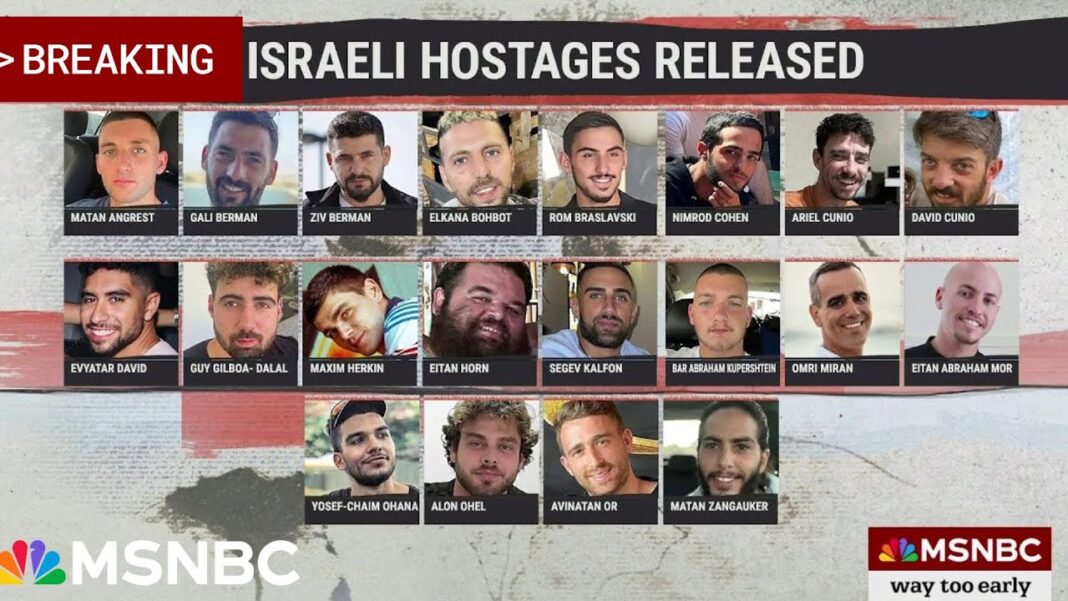
Each of the returnees carries their own harrowing narrative—some heroic, some tragic, all emblematic of modern Israel’s anguish. TPS has compiled the following portraits from family releases, media interviews, and NGO sources:
Matan Angrest, 22: In June, his family released chilling footage showing Matan being dragged from a tank at Nahal Oz military base during the October 7th onslaught. His mother, Anat Angrest, later told CNN it was the hardest video she had ever watched—but she published it to ensure nobody forgot her son.
Gali and Ziv Berman, 28: Twin brothers kidnapped from Kfar Aza kibbutz, their abduction has left a family fractured. Their older brother, Liran Berman, told the media that life “was irreversibly changed after October 7th.” Even release, he warned, “leaves lifelong scars.”
Elkana Bohbot, 36: Taken at the Nova music festival, he reportedly declined opportunities to escape, staying behind to assist wounded civilians. A Hamas propaganda video released in May showed him pleading for reunification, warning that bombardments would kill him.
Rom Braslavski, 21: Also abducted at Nova where he had worked as a security guard. His family said he tried to protect others before capture. In April he appeared in a video, emaciated and distressed, which drew international condemnation.
Nimrod Cohen, 20: Serving as a corporal near Nirim when his unit was overwhelmed, his father spoke this week of the moment he had awaited for years.
Ariel and David Cunio, 28 & 38: From Nir Oz kibbutz, both were abducted along with family members. Ariel’s girlfriend, Arbel Yehoud, was released in January; David’s wife and twin daughters were freed in November 2023. Their father Luis Cunio, in a reflective Haaretz piece, described life living “the unknown” for two years.
Evyatar David, 24: Abducted at Nova, and later shown in propaganda footage claiming starvation and deprivation. His family accused Hamas of willful neglect for the sake of propaganda.
Guy Gilboa-Dalal, 24: Captured while dancing in a grove near Gaza, his kidnapping left family members haunted by the silence that followed.
Maxim Herkin, 37: A Russian-Israeli dual citizen snatched at Nova after accepting a last-minute invitation. With a young daughter and family back home in Ukraine, his ordeal brings an international dimension to the hostage roster.
Eitan and Iair Horn, 38 & 34: Abducted from Nir Oz, Iair was freed earlier and has publicly dedicated his recovery to campaigning for his brother, Eitan, who remained captive until now.
Segev Kalfon, 27: Snatched while caught in a traffic jam at Nova evacuation zones. Before capture, he had been diagnosed with severe anxiety and was medicated.
Bar Kupperstein, 23: Working as security at Nova, his family held fast to hope for years: “The only thing that keeps us going is the hope that Bar is alive.”
Omri Miran, 48: Taken from his home in Kibbutz Nahal Oz, terrorists forced his family to open their safe room at gunpoint. His wife, Lishay, remembers screaming, “Do whatever they want … I want you back.”
Yosef-Haim Ohana, 25: A festivalgoer turned caregiver—he and a friend stayed behind to assist injured attendees before he was taken. He was planning to go to the U.S. to train as a pilot prior to capture.
Alon Ohel, 24: Also kidnapped at Nova, his mother Idit penned a moving letter to editors and leaders, affirming her conviction that “my son will play the piano again”—he was a musician.
Avinatan Or, 32: Abducted at Nova with his girlfriend, Noa Argamani, who was later released after 245 days. She has described him as possessing a quiet strength and faith in justice.
Matan Zangauker, 25: Kidnapped from Nir Oz along with his partner Ilana Gritzewsky, who was released in November 2023. His mother recently wrote a letter describing how she has longed to hold her son for two years.
These are not just names — they are sons, brothers, spouses, caregivers, dreamers. And though they are now free, their journey is only just beginning.
The Health & Psychological Toll
Even before arrival at Re’im, the released hostages underwent preliminary examination by Red Cross medical personnel. Some were labeled “serious,” necessitating immediate triage.
In Re’im and beyond, the medical teams have begun parsing the myriad aftereffects of prolonged captivity:
Severe malnutrition: Many appeared skeletal, with multiple medical assessments highlighting the need for intravenous rehydration, electrolytes, and nutritional rehabilitation.
Muscle and organ atrophy: Years of confinement and immobility have eroded muscle strength, and internal organs (kidneys, liver) show signs of physical stress.
Psychiatric trauma: PTSD, depression, anxiety disorders, nightmares, flashbacks, and survivor’s guilt loom large.
Neurological and sensory damage: Some hostages may suffer from hearing loss, vision deterioration, or peripheral nerve damage due to lack of nourishment, poor environment, or mistreatment.
Infectious diseases: Conditions like pneumonia and gastrointestinal infections may flare in the debilitated state of many returnees.
Hospital teams in Israel have prepared specialized units and multidisciplinary care approaches. Rehabilitation will proceed not in weeks but months or years, including physical therapy, psychological counseling, social reintegration, and ongoing medical surveillance.
The Unfinished Business: Bodies Still Held
The release of the living hostages, while a profound milestone, does not end the anguish. Israeli officials insist that Hamas still holds 28 bodies of deceased hostages who were murdered. The ceasefire agreement stipulated their return alongside the living, but compliance has been erratic. Recent transfers include the remains of Inbar Haiman and Muhammad al-Atrash, handed over in coffins draped in Israeli flags.
Complications have emerged: one body transferred earlier turned out not to be a hostage, raising doubts about Hamas’s transparency and veracity.
Israel has responded by pausing aid shipments to Gaza and threatening renewed hostilities unless full compliance is met. The tension surrounding the body return has become the flashpoint in fragile ceasefire arrangements.
The Path Forward: Healing, Accountability, and Memory
For the freed hostages, the return is only the beginning of an arduous comeback. TPS sources familiar with the rehabilitation framework indicate a multi-phase plan:
Immediate stabilization at Re’im (nutritional, vitals, basic screening)
Acute hospitalization for complex cases (surgery, respiratory support, organ recovery)
Rehabilitation wings (physical therapy, cognitive rehab, psychological care)
Community reintegration (return to homes, education, social support groups)
Memorial and accountability efforts (forensic investigations, tribunals, record of atrocities)
Families of the hostages and public advocates have urged the government to treat the returnees as national sacred assets—protecting their dignity, helping them reclaim their lives, and ensuring no compromises in prosecuting the crimes committed against them.
The triumph of their release has already galvanized the Israeli public. In Tel Aviv’s Hostages Square, triumphant chants, tearful embraces, and poignant banners marked the opening of a new chapter. But families remain vigilant: 20 other living hostages still await return, and the restless roar of accountability continues.
The names above are now etched into the national memory—but the fight for truth, justice, and healing has only just begun.

Why did they boo Netanyahu in Hostages Square? – YouTube
https://www.youtube.com/shorts/Uf4DIuq4O3c
Because in a democracy you don’t worship a leader, you are free to support or display your dislike of said leader. Do you not understand this? Do you want Israel to be North Korea?