



|
Getting your Trinity Audio player ready...
|
By: Fern Sidman
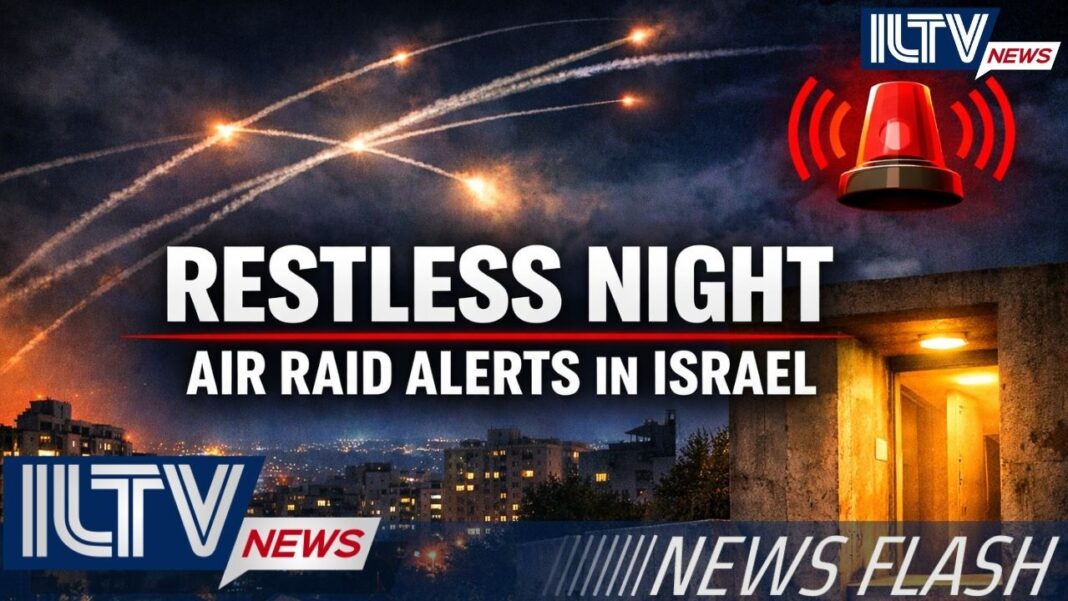
Communities along Israel’s northern frontier found themselves gripped by heightened tension Wednesday evening after regional leaders issued an unusual public warning urging residents to remain close to protected areas amid growing security concerns. The appeal, delivered by senior municipal officials and amplified by widespread public messaging, reflected the fragile atmosphere prevailing across the country’s confrontation line communities as the regional war continues to unfold.
According to a report on Wednesday at Israel National News, Moshe Davidovich, chairman of the Mate Asher Regional Council and head of the Confrontation Line Forum, issued an urgent directive advising residents to significantly curtail non-essential activity and ensure that they remain within immediate reach of bomb shelters and safe rooms.
Davidovich’s call came after what he described as the accumulation of concerning “alerts from security sources,” prompting local authorities to take precautionary steps designed to ensure that residents could reach protective infrastructure within seconds if necessary.
The directive immediately reverberated across communities situated along the sensitive northern corridor bordering Lebanon, an area that has long been considered one of Israel’s most volatile security zones.
The Mate Asher Regional Council encompasses numerous towns and villages scattered along Israel’s northern coastline and inland areas adjacent to the Lebanese border. For decades, these communities have lived under the shadow of potential attacks by Hezbollah and other Iranian-backed terrorist groups operating in southern Lebanon.
Residents are accustomed to living with the reality of rocket sirens and the ever-present need to reach shelters quickly. Still, the tone of Davidovich’s message—described by observers as unusually urgent—has heightened anxiety throughout the region.
As reported by Israel National News, the regional council chairman’s statement emphasized preparedness rather than panic. Nevertheless, the warning reflected growing concern that hostilities along Israel’s northern front could escalate dramatically.
Following the announcement, municipalities within the council’s jurisdiction moved swiftly to implement precautionary measures.
Local authorities circulated notices instructing residents to remain near protected areas and to reduce outdoor activity. Schools and community centers quickly canceled extracurricular programs, evening gatherings, and social events that had been scheduled for the night.
Parents were advised to keep children close to home, and community leaders emphasized the importance of ensuring that families knew the location of their nearest shelters. These steps, though temporary, underscored the seriousness with which local officials were treating the situation.
According to the report on Israel National News, many communities along the confrontation line have spent years strengthening their emergency preparedness infrastructure. Shelters are integrated into residential buildings, public facilities, and educational institutions, allowing residents to reach safety quickly when sirens sound.
Compounding the atmosphere of tension was a wave of messages circulating across social media platforms and private messaging groups. In recent hours, numerous posts on WhatsApp channels and community forums warned that a “significant missile barrage” could occur in the near future. These messages spread rapidly across northern Israel, fueling speculation that intelligence services had identified an imminent threat. However, security officials have cautioned that the information circulating online remains unverified.
Israel National News reported that the Israeli military has not issued any official alert suggesting that a large-scale missile attack is imminent.
In response to the rising speculation, IDF spokesperson Brigadier General Efi Defrin addressed the situation publicly, seeking to reassure the population while emphasizing the importance of following established civil defense protocols. “I am aware of the public discourse in recent hours regarding the possibility of increased shooting,” Defrin said in remarks cited by Israel National News.
He stressed that, despite the heightened concern among local authorities and residents, there had been no formal change in the Home Front Command’s defensive policy. “I want to emphasize that there is no change in the Home Front Command’s defense policy as of this moment,” Defrin said.
The general added that Israeli defense forces remain fully prepared to respond to any potential escalation. “The IDF is prepared for strong defense and will do whatever is necessary to protect the citizens of Israel,” he said.
Defrin’s statement reflected the delicate balance that Israeli authorities must maintain during periods of heightened tension. On the one hand, officials must ensure that civilians remain alert and ready to respond quickly to potential threats. On the other hand, they seek to prevent unnecessary panic or disruption of daily life based on unverified information.
The Home Front Command—Israel’s civil defense authority—plays a critical role in this process. The agency continuously monitors security developments and updates public guidelines when necessary. According to the Israel National News report, the command’s current instructions remain unchanged, meaning that residents should continue their routines while remaining attentive to official alerts.
The heightened vigilance in northern Israel comes amid a broader regional conflict involving Iran, Israel, and the United States. Since the beginning of the war, Israeli officials have repeatedly warned that Iranian-backed groups operating along the Lebanese border could attempt to open an additional front against Israel.
Hezbollah, the powerful Shiite terrorist organization based in Lebanon, possesses an extensive arsenal of rockets and missiles capable of striking deep into Israeli territory. Military analysts estimate that the group maintains tens of thousands of projectiles, many of which are capable of reaching major population centers.
As reported by Israel National News, Israeli defense planners have long considered the northern front one of the most dangerous potential theaters of conflict.
For residents of the Mate Asher region and other northern communities, such warnings are part of an uneasy reality. Over the years, many towns have invested heavily in fortified shelters, early-warning systems, and emergency response training. Residents often keep emergency kits prepared and practice drills designed to ensure rapid response when sirens sound.
Despite these precautions, the psychological strain of living under persistent threat remains considerable. Parents worry about their children’s safety during school hours. Businesses face disruptions when security alerts force closures or cancellations.
Yet many residents also emphasize their determination to continue living normal lives despite the challenges.
In concluding his remarks, Brigadier General Defrin reiterated the importance of adhering to official guidance. “We continue to conduct ongoing situation assessments and will update you on any changes, if any,” he said.
He also emphasized a message frequently repeated by Israeli authorities during periods of tension. “Continue to obey the Home Front Command’s instructions,” Defrin said. “They save lives.”
For now, the evening in northern Israel has passed without the large-scale missile barrage feared by some residents. Yet the episode has served as a reminder of how quickly the situation can shift along Israel’s volatile borders.
As the regional conflict continues to unfold, communities along the confrontation line remain alert, balancing vigilance with resilience as they navigate the uncertain days ahead.

There might be an answer to this threat from Lebanon. It is called CARPET BOMBING. Time to stop fooling around. Israel must show them that Israel means business. Turn each place to another Dresden if needed. It worked for America and the UK during World War Two. It will work now too.