




|
Getting your Trinity Audio player ready...
|
He spoke at the conclusion of an emergency session of the Cabinet.
“The decision of war and peace is exclusively in the hands of the state, which requires limiting Hezbollah’s activities and obliging it to surrender its weapons,” Salam said, according to Beirut-based An-Nahar daily.
“What Hezbollah has done constitutes a departure from the decisions of the Council of Ministers,” he said. The council had decided not to involve Lebanon in the current war. He called Hezbollah’s actions “a violation of the will of the majority of the Lebanese people.”
On March 2, Hezbollah began firing missiles at Israel in retaliation for the killing of Iran’s Supreme Leader Ali Khamenei. Khamanei was slain in an Israeli airstrike at his Tehran compound in the first hours of the war on Feb. 28.
BREAKING:
Lebanese Prime Minister Nawaf Salam announced “the immediate ban of all Hezbollah security and military activities and considering them illegal,” and called on the group to surrender its arms. @Lebanon #Hezbollah pic.twitter.com/VPlmsXpEpB
— The Jewish Voice (@TJVNEWS) March 2, 2026
IDF Chief of Staff Lt. Gen. Eyal Zamir said on Sunday, “Hezbollah opened a campaign against Israel overnight and is fully responsible for any escalation. IDF troops have prepared for such a scenario as part of standard combat preparations for ‘Operation Roaring Lion.’ Any enemy that threatens our security will pay a heavy price.”
Zamir added that the IDF was “now going on the offensive” against Hezbollah, and “we must prepare for many prolonged days of combat.”
The Israel Defense Forces has since carried out numerous strikes against the terrorist group. Most recently, on Monday afternoon, it announced that it had eliminated Hussein Makled, head of Hezbollah’s intelligence headquarters, in an overnight strike.
The IDF had previously announced the elimination of the head of Hezbollah’s parliamentary faction, Mohammad Raad.
On Monday afternoon, the IDF’s Arabic spokesperson warned Lebanese citizens to evacuate buildings near infrastructure belonging to the Al-Qard Al-Hassan Association, a financial entity linked to Hezbollah. The IDF provided an accompanying map of those locations throughout Lebanon.
It is a worst-case scenario for Lebanon’s government, which hoped to avoid being dragged into the regional conflict.
In an effort to de-escalate tensions, Salam requested on Monday that the Lebanese Armed Forces “immediately and firmly implement” a Feb. 16 plan to impose arms control north of the Litani River, “using all means that would ensure the implementation of the plan.”
On Feb. 16, the army had presented to the Cabinet a plan to disarm non-government forces from the Litani River north to the Awali River. Hezbollah Secretary-General Sheikh Naim Qassem immediately rejected that decision, saying that the Lebanese government, by focusing on disarmament, served “the goals of Israeli aggression.”
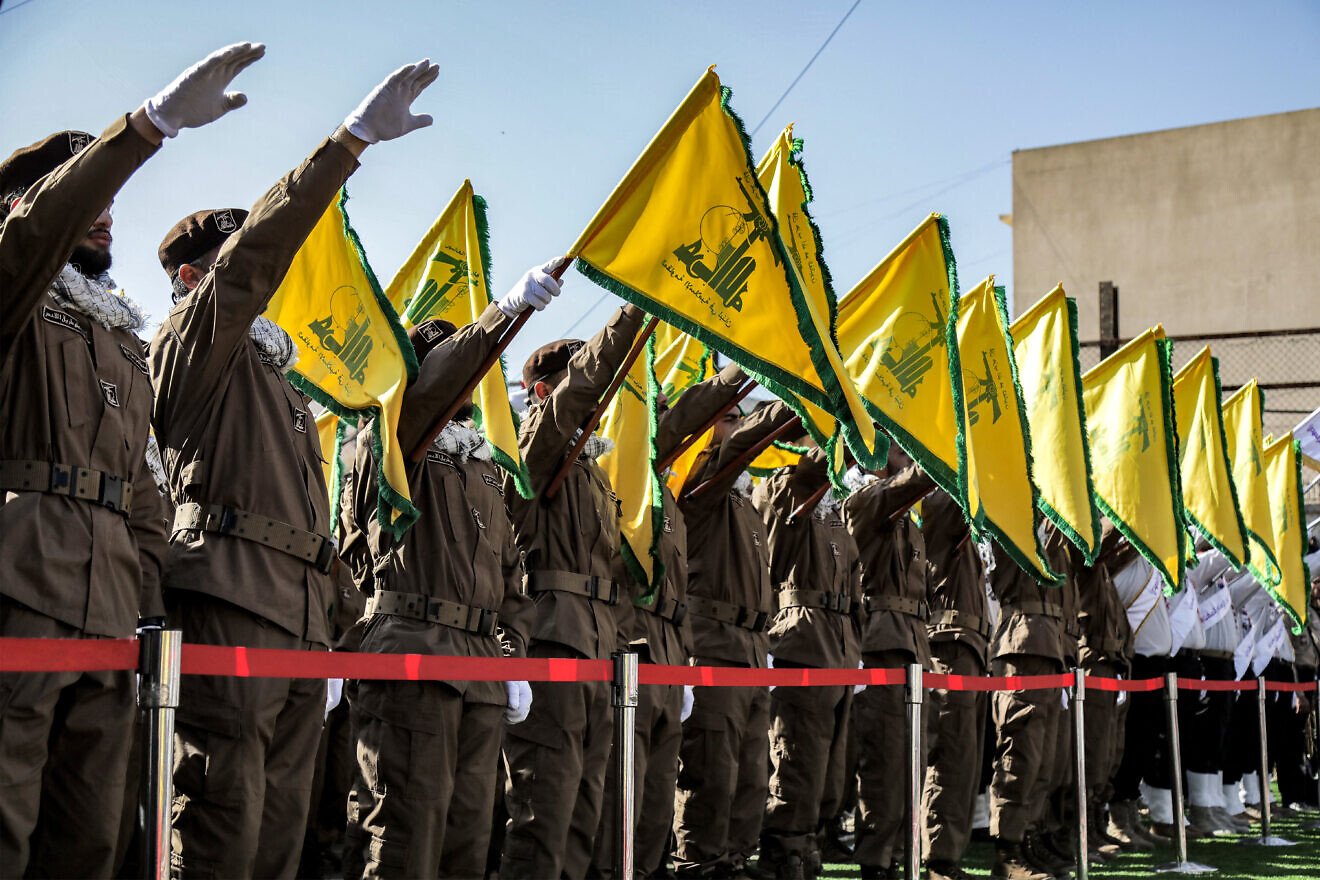
On Nov. 27, 2024, a ceasefire agreement was signed between Israel and Lebanon requiring Hezbollah to move its forces north of the Litani and to disarm in keeping with UN Security Council Resolution 1701, signed on Aug. 11, 2006, following the Second Lebanon War.
However, Israel warned repeatedly that Hezbollah was rebuilding its forces since suffering a heavy defeat at the hands of Israel in October 2024, “in blatant violation of the ceasefire agreement.”
Hezbollah still has 11,000-12,000 rockets in its arsenal, of which 5,000-6,000 are considered within range of reaching Israel, two Israeli intelligence officials told Fox News on Tuesday.

How long will he last?