



|
Getting your Trinity Audio player ready...
|
By: Chaya Abecassis
Jerusalem has once again become the epicenter of a national reckoning over the delicate balance between religious authority, civil law, and the contested meanings of sacred space. On Wednesday, the Knesset advanced, in a preliminary reading, a sweeping piece of legislation popularly referred to as the Western Wall bill, proposed by Noam party chairman MK Avi Maoz.
The bill passed its initial hurdle with 56 lawmakers in favor and 47 opposed, setting the stage for what promises to be one of the most consequential and polarizing legislative debates in recent memory. As VIN News reported on Wednesday, the vote has reverberated far beyond the parliamentary chamber, stirring deep anxieties and competing hopes across Israel’s religious, political, and civil society landscapes.
At its core, the proposed legislation seeks to codify a far-reaching principle: that any conduct at Israel’s holy sites that contradicts the rulings of the Chief Rabbinate of Israel would constitute desecration of the site, a criminal offense punishable by up to seven years’ imprisonment.
The bill’s supporters argue that such a measure is necessary to safeguard the sanctity of Judaism’s most revered locations from practices they regard as profane or disruptive. Critics, however, warn that the legislation risks entrenching the authority of a single religious institution over spaces that are not only sacred but also national symbols, deeply intertwined with the identity of a diverse and pluralistic society.
The VIN News report noted that the bill will now be transferred to a Knesset committee for preparation ahead of its first full reading, a procedural step that opens the door to amendments and clarifications. Yet even at this early stage, the legislation has ignited fierce controversy, particularly over a question that touches the most sensitive nerve in Israel’s religious and political anatomy: whether the law would apply to the Temple Mount. The Mount, revered by Jews as the holiest site in Judaism and venerated by Muslims as the Haram al-Sharif, has long been governed by a precarious status quo designed to minimize friction between faiths. Any legislative initiative perceived as altering that delicate equilibrium inevitably invites scrutiny and alarm.
MK Avi Maoz moved quickly to reject claims that the bill would criminalize Jewish visits to the Temple Mount. He described such assertions as baseless, insisting that the Mount does not appear on the list of holy sites under the Chief Rabbinate’s authority. Maoz framed the controversy as a misinterpretation of the bill’s scope, emphasizing that its primary intent is to fortify the sanctity of the Western Wall and similar sites against conduct deemed offensive to Orthodox religious norms. In his view, the legislation is a corrective to what he and his supporters see as a creeping erosion of reverence at places imbued with profound spiritual meaning.
Yet Maoz’s assurances were immediately complicated by statements from National Security Minister Itamar Ben-Gvir, a figure whose views on the Temple Mount have long drawn attention and controversy. Addressing members of his faction, Ben-Gvir suggested that the law would indeed apply to the Mount, characterizing the bill as a transformative instrument capable of ushering in “dramatic changes” at the site.
VIN News reported Ben-Gvir’s assertion that, if the Western Wall law were enacted and the Temple Mount were deemed a holy site under its provisions, activities such as Arab-run schools or even recreational football games on the Mount would be halted, paving the way for what he described as historic change. His remarks, far from calming concerns, intensified them, suggesting that the bill could become a lever for reshaping the religious and administrative realities of the most contested square meters of land in the world.
The divergent interpretations offered by Maoz and Ben-Gvir have underscored the ambiguity at the heart of the proposed legislation. This ambiguity has fueled apprehension among groups advocating for Jewish access to the Temple Mount. The Beyadenu organization, which campaigns for Jewish rights to ascend and pray on the Mount, issued a pointed warning that the law, as currently framed, could be wielded to restrict Jewish visits.
The organization cited the fact that Israel’s High Court of Justice has, in certain contexts, included the Mount in lists of holy places, raising the possibility that conduct deemed contrary to prevailing halachic rulings could be construed as desecration. In a statement carried by VIN News, Beyadenu called on Ben-Gvir and Constitution Committee Chairman MK Simcha Rothman to honor their commitments to ensure that the law does not harm Jewish access to the Mount, vowing to oppose any measure that would curtail what they view as the Jewish people’s inalienable right to their holiest site.
Coalition sources, speaking to Maariv and cited by VIN News, sought to quell the growing unease by clarifying that there is no intention to criminalize Jewish visits to the Temple Mount. According to these sources, the government recognizes the political and social explosiveness of such a move and is prepared to explicitly clarify the law’s language if necessary to prevent misinterpretation.
Among the options reportedly under consideration is a modification of the bill’s definitional framework, shifting the standard for desecration from the rulings of the Chief Rabbinate to Orthodox halachic law more broadly. Such a change, proponents argue, could preserve the bill’s intent to protect sanctity while avoiding the concentration of interpretive authority in a single institutional body.
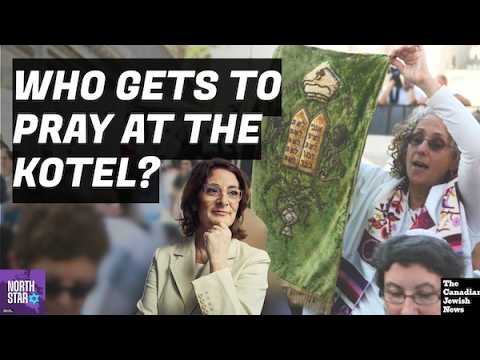
The debate over the Western Wall bill is emblematic of a deeper tension within Israeli society: the struggle to reconcile the Jewish state’s religious character with its democratic and pluralistic aspirations. Disputes over prayer arrangements at the Western Wall itself, particularly regarding egalitarian worship, have long exposed fault lines between Orthodox authorities and more liberal streams of Judaism.
The new legislation, by elevating the rulings of the Chief Rabbinate to the status of criminally enforceable standards, threatens to harden those fault lines, potentially marginalizing non-Orthodox expressions of Jewish practice at sites of shared national significance.
Beyond the immediate religious implications, the bill carries profound political ramifications. The Knesset’s narrow preliminary approval reflects a deeply divided legislature, with coalition and opposition members alike grappling with the potential fallout of endorsing a measure that could reverberate domestically and internationally.
Any perception of altering the status quo on the Temple Mount risks provoking not only internal unrest but also regional and global reaction, given the site’s centrality to Muslim sensibilities and the broader Israeli-Palestinian conflict. In this context, even the suggestion that the bill could be interpreted to affect the Mount has been enough to draw wary attention from security officials and diplomatic observers.
The legal architecture proposed by MK Maoz also raises fundamental questions about the relationship between religious rulings and secular law. By defining desecration in terms of compliance with Chief Rabbinate rulings, the bill effectively grants a religious authority quasi-legislative power over the conduct of individuals in public spaces.
Critics argue that this conflation of halachic interpretation with criminal sanction risks undermining the principle of legal equality before the law, particularly in a society composed of Jews of varying religious commitments, as well as non-Jewish citizens and visitors. VIN News has reported that civil rights advocates are preparing to challenge the bill on constitutional grounds should it advance, warning that it could set a precedent for the criminalization of religious dissent.
Supporters of the legislation counter that Israel, as the nation-state of the Jewish people, has both the right and the obligation to protect the sanctity of its holy places in accordance with Jewish law. They argue that the Western Wall and other sacred sites are not mere tourist attractions but living embodiments of a spiritual heritage that demands respect. From this perspective, the bill represents not an encroachment on civil liberties but a reaffirmation of Israel’s Jewish character, a corrective to what is perceived as the creeping desacralization of sites imbued with transcendent meaning.
As the bill moves to committee, the contours of this debate are likely to sharpen. The VIN News report indicated that lawmakers across the political spectrum are already preparing amendments, clarifications, and, in some cases, outright opposition. The legislative process will become a forum in which competing visions of Israel’s identity are articulated and contested: visions that seek to anchor the state firmly in Orthodox religious authority, and visions that advocate a more inclusive approach to sacred space, one that accommodates the multiplicity of Jewish practice and the sensitivities of other faith communities.
In the end, the Western Wall bill is about far more than legal definitions of desecration. It is a mirror held up to Israeli society, reflecting unresolved questions about who speaks for Judaism in the public sphere, how sacred tradition is translated into state power, and how a nation defined by both ancient covenant and modern citizenship navigates the space between them.
One thing is already clear: the stones of Jerusalem’s holy places have once again become the fulcrum upon which the weight of Israel’s democratic, religious, and national identity is being tested.

I believe that there should be a third area for mixed male/female prayer groups. Many synagogues in the West have this arrangement. Anyone who has a problem with seeing women during prayers needs a shrink. We are living in the 21st century and not the Middle Ages. By the way, during the British Mandate and before that the Ottoman Empire, men and women prayed together at the Western Wall.
The same Haredi rabbis say they don’t want the aliyah of reform, conservative or non-affiliated Jews. In other words, if there is a Holocaust in the West and the US in particular they are condemned to death. What kind of Jews are these rabbis?