



|
Getting your Trinity Audio player ready...
|
By: Fern Sidman
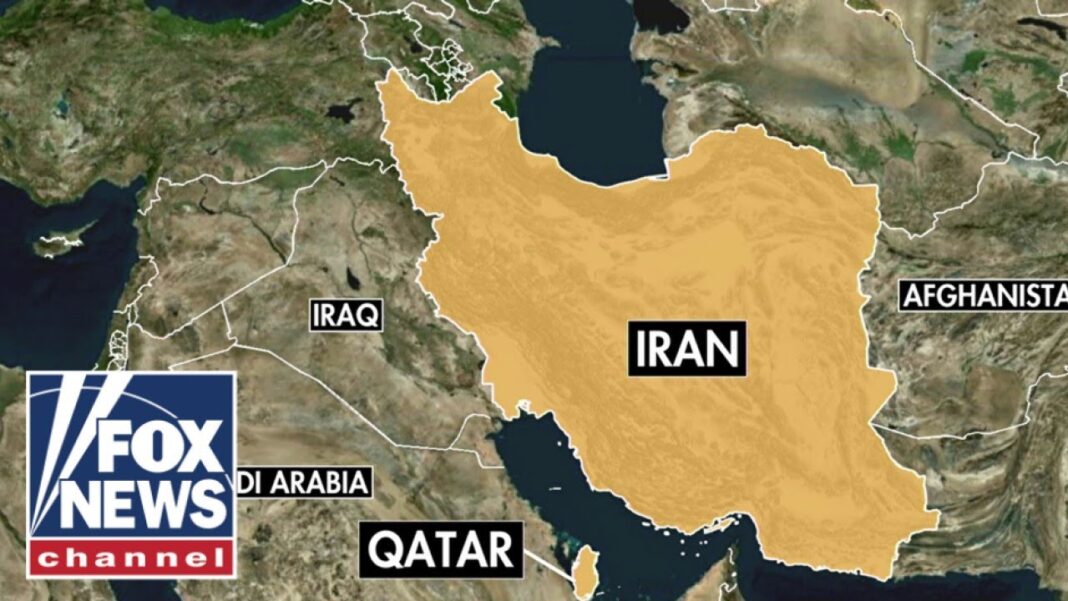
The Israel Defense Forces (IDF) and the Israel Security Agency (Shin Bet) jolted the Middle East and the diplomatic world on Tuesday with the announcement of a targeted strike against senior Hamas leaders operating from Doha, Qatar. According to the IDF, those eliminated had long directed Hamas’s operational, financial, and political machinery, bore direct responsibility for the October 7, 2023 massacre in southern Israel, and continued to orchestrate the war against the Jewish state from their safe haven abroad.
The strike, reportedly codenamed Judgement Gathering, produced a series of explosions in the Qatari capital, striking buildings associated with Hamas’s political bureau. Plumes of smoke rose over Doha’s skyline as Arab media outlets reported that members of Hamas’s leadership were meeting to discuss an American proposal on hostages and a ceasefire when the Israeli attack was launched.
While details of casualties are still emerging, Saudi-owned Al-Arabiya reported that Khalil al-Hayya, a senior Hamas figure and one of its top negotiators, was killed. Other leading operatives known to reside in Doha include Khaled Mashaal, Mousa Abu Marzouk, Zaher Jabarin, Hussam Badran, Mohammad Ismail Darwish, and Tahar Anunu. Israel has not confirmed their status but signaled that the strike achieved significant results.
The IDF underscored that the operation employed precision munitions and extensive intelligence-gathering in order to minimize civilian casualties. Prime Minister Benjamin Netanyahu’s office was unequivocal in asserting Israel’s ownership of the operation.
“Israel initiated it, Israel conducted it, and Israel takes full responsibility,” a statement from his office read, highlighting Israel’s independence in carrying out the strike even though it reportedly had U.S. backing.
As reported by The Jewish News Syndicate (JNS) on Tuesday, Israeli leaders emphasized that the strike was part of a broader doctrine: that no Hamas official, regardless of geography or diplomatic cover, would escape accountability for October 7.
Yitzhak Wasserlauf, Israel’s minister for the development of the periphery, the Negev, and the Galilee, told JNS that the operation carried symbolic and strategic weight. “The Jewish people do not forget, and our foes are not protected anywhere and at any time,” he said. Wasserlauf added that the strike was a prelude to the IDF’s continued ground campaign, including the eventual occupation of Gaza City to dismantle Hamas’s remaining infrastructure.
Amichai Chikli, Minister for Diaspora Affairs and Combating Antisemitism, delivered a particularly blunt message. “The terror architects of the horrific massacre of innocents on October 7th, feasting in luxury hotels after inflicting unprecedented disaster upon their own people, are finally meeting justice,” he told JNS. In a pointed barb aimed at Qatar, he added, “Those who sleep with dogs should not complain when they wake up with fleas.”
Qatar’s Foreign Ministry reacted with outrage. Majed Al Ansari, a senior adviser and spokesperson, accused Israel of committing a “cowardly” act and violating international law. “This criminal assault constitutes a blatant violation of all international laws and norms, and poses a serious threat to the security and safety of Qataris and residents in Qatar,” the statement read.
Qatar has long hosted Hamas’s political bureau, providing funding and diplomatic cover while simultaneously posturing as a mediator in ceasefire negotiations. The strike places Doha in an uncomfortable spotlight, exposing its dual role as both a Western security partner and a patron of the very group responsible for the bloodiest single day in Israel’s history.
According to the information provided in the JNS report, Israel coordinated closely with the Trump administration before the strike, and a greenlight was given. The decision was remarkable given Qatar’s role as host to the U.S.’s Al-Udeid Air Base, one of Washington’s most important assets in the region. For the White House, however, the imperative of punishing Hamas’s leadership evidently outweighed the diplomatic discomfort of striking in a partner nation’s capital.
This coordination sheds light on the depth of U.S.-Israel alignment in the wake of October 7. It also signals Washington’s willingness to back extraordinary measures to degrade Hamas’s leadership structure, even beyond Gaza’s borders.
As the JNS report noted, Israel’s operation in Doha is not without precedent. For decades, the Jewish state has relied on a doctrine of targeted accountability to pursue terrorists wherever they may hide. The message has always been clear: those who orchestrate violence against Israelis will eventually be found and eliminated, regardless of the passage of time or the boundaries of geography.
The Doha strike fits within a lineage of operations that stretches back to the founding years of the state. From the pursuit of Nazi war criminals in South America to the elimination of Palestinian terror chiefs in Europe and the Middle East, Israel has consistently demonstrated global reach.
Historical Precedents
Munich and the Mossad Campaign
One of the most famous precedents was the Mossad’s campaign following the 1972 Munich Olympics massacre, in which 11 Israeli athletes were murdered by the Black September faction of the PLO. In what became known as “Operation Wrath of God,” Israeli agents hunted down the perpetrators across Europe, eliminating them in Beirut, Paris, Rome, and beyond.
The Munich campaign established the principle that Israeli vengeance would be relentless, and it had a profound deterrent effect on terror networks for years afterward.
The Elimination of Abbas al-Musawi
In 1992, Israel targeted Hezbollah Secretary-General Abbas al-Musawi in southern Lebanon. His convoy was struck by helicopter gunships, killing him and several associates. That operation sent shockwaves through Hezbollah and marked Israel’s willingness to strike high-profile leaders to alter the course of conflicts.
The Assassination of Imad Mughniyeh
Perhaps the most striking parallel to the Doha strike was the 2008 assassination of Imad Mughniyeh, Hezbollah’s chief of operations, in Damascus. A car bomb killed Mughniyeh in the heart of Syria’s capital — a city thought to be a safe haven. While Israel never publicly claimed responsibility, most international observers attributed the strike to Mossad in cooperation with U.S. intelligence.
Dubai, 2010
In 2010, Mahmoud al-Mabhouh, a Hamas commander responsible for arms smuggling, was killed in his Dubai hotel room in an operation widely attributed to Israel. The killing demonstrated that even in tightly controlled Gulf states, Hamas operatives could be reached.
By targeting Hamas leaders in Doha, Israel has revived and extended this doctrine for the post-October 7 era. The symbolism is stark: Hamas officials who plotted one of the most devastating terror attacks in modern history cannot assume that five-star hotels in a wealthy Gulf capital will insulate them from Israeli reprisal.
As the JNS report emphasized, the strike not only removes decision-makers from Hamas’s hierarchy but also erodes the perception that Qatar can indefinitely host them without consequence. It is a message to all actors — Iran, Hezbollah, and other terror sponsors — that safe havens will not protect perpetrators of atrocities.
Hamas’s leadership abroad has long been its lifeline. While fighters and mid-level commanders operate within Gaza, strategic direction, financial flows, and diplomatic maneuvering have often been run from Doha and Istanbul. Striking that infrastructure puts pressure on the group at a moment when its command-and-control inside Gaza is already under strain.
Moreover, the optics are devastating. The image of Hamas leaders residing in luxury hotels, far removed from the suffering of ordinary Gazans, has already undermined their legitimacy. Their vulnerability to Israeli strikes compounds that narrative, portraying them not as untouchable leaders but as fugitives on borrowed time.
The strike also thrusts Qatar into a precarious position. For years, Doha has balanced its U.S. alliance with its sponsorship of Islamist movements, particularly Hamas. That balancing act is now harder to sustain. By hosting Hamas leaders, Qatar effectively made itself part of the conflict. Israel’s strike makes clear that such sponsorship carries risks not only for Hamas but also for its patrons.
Finally, the Doha strike serves as a warning to other hostile actors across the region. Hezbollah leaders in Beirut, Islamic Jihad officials in Damascus, and Iranian operatives in Tehran all know Israel has the capability — and increasingly the political backing — to extend its reach.
As JNS reported, Israeli officials have framed the operation as a statement of principle: October 7 will not be forgotten, and justice will be pursued to the ends of the earth.
The Israeli strike on Hamas leadership in Qatar represents a turning point in the Gaza war and in Israel’s broader counter-terrorism strategy. It is not merely a tactical success but a strategic demonstration of reach, resilience, and resolve. It places Hamas on notice, embarrasses Qatar, and signals to the world that Israel will not rest until those responsible for October 7 are held accountable.
In many ways, Judgement Gathering echoes Israel’s most storied operations of the past — from Munich to Damascus to Dubai. But it also sets a new precedent, showing that in the post-October 7 era, even the glittering capitals of allied states are not beyond the theater of conflict.
As the JNS report emphasized, the true meaning of the strike lies in its message: the architects of massacre cannot buy protection with oil money or diplomatic ties. Their reckoning will come, whether in Gaza’s tunnels or in Doha’s hotels.

This is surprising wonderful news. Reportedly with full coordination and support from Trump, Israel has finally struck Hamas where it has been for decades sponsored and protected by the leading Sunni muslim terrorist-supporting country in the world, Qatar. Qatar appeared to be insulated from accountability for its central role and evil duplicity in supporting Muslim terrorism by its massive bribery of powerful Americans and Americans institutions, and permitting an American military base.
The video report from Sky News reflects the international media’s extreme hostility towards Israel, falsely claiming the terrorist attack in Jerusalem took place in “inside Israeli occupied territory”. It here criticizes America and Trump as “manipulable”.