



|
Getting your Trinity Audio player ready...
|
By: Ariella Haviv
As the war between Israel and Iran enters a critical and potentially decisive stage, Israeli officials now acknowledge that the conflict may continue for several more weeks while the Israeli military presses forward with a sweeping campaign to dismantle Tehran’s missile infrastructure. The operation—known as Operation Roaring Lion—has already inflicted substantial damage on Iran’s military capabilities, yet Israeli leaders now concede that early expectations of a rapid political collapse of the Iranian regime appear increasingly unlikely.
According to a report on Tuesday by World Israel News, senior Israeli officials believe the campaign will likely continue for at least two additional weeks as the Israel Defense Forces (IDF) intensify their efforts to destroy the remaining ballistic missile launch systems and military production facilities that form the backbone of Iran’s strategic deterrent.
The recalibration of expectations represents a significant moment in a war that has rapidly reshaped the geopolitical landscape of the Middle East.
When Israel launched Operation Roaring Lion, many analysts and political figures initially speculated that the campaign might precipitate a dramatic collapse of Iran’s ruling clerical establishment. The Islamic Republic has faced waves of domestic unrest over the past decade, including large-scale protests against economic hardship and political repression.
Some Israeli strategists believed that sustained military pressure—combined with popular discontent within Iran—might accelerate internal upheaval.
However, officials speaking in reports referenced by World Israel News now say those expectations have been tempered by the realities of the battlefield and by intelligence assessments indicating that Iran’s leadership remains firmly in control of the country’s security apparatus.
While protests have occurred in several Iranian cities since the outbreak of hostilities, the demonstrations have not taken the form of a widespread anti-regime uprising.
Instead, observers say many public gatherings have consisted primarily of mobilizations by members of the Basij militia, a paramilitary force loyal to Iran’s ruling clerical establishment.
This has led Israeli policymakers to shift their strategic focus away from regime change and toward the more immediate objective of neutralizing Iran’s military capabilities.
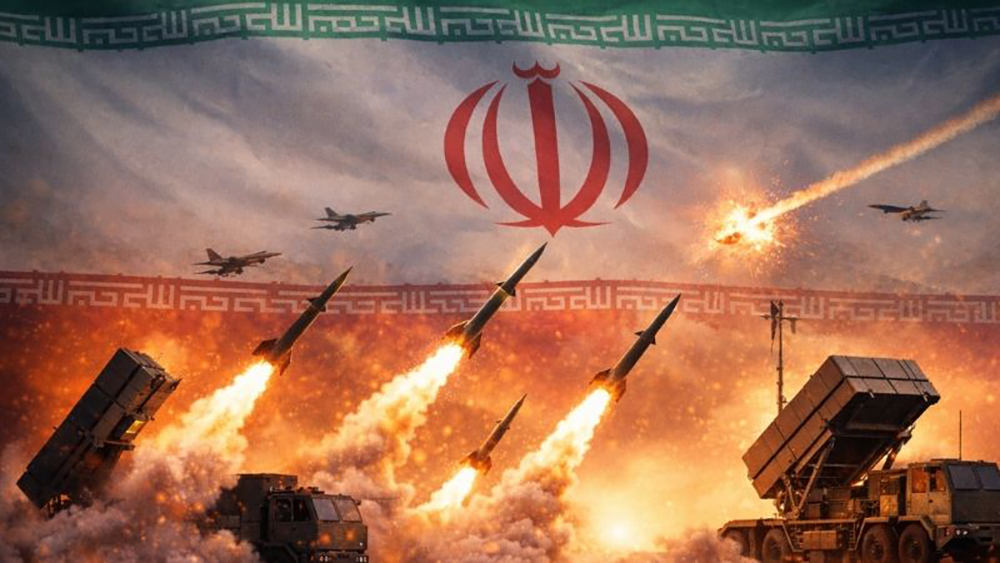
At the heart of Israel’s military campaign lies a single overriding objective: the systematic destruction of Iran’s ballistic missile infrastructure.
Over the past two decades, Iran has invested enormous resources in developing one of the largest missile arsenals in the Middle East. These weapons—capable of striking targets across Israel and much of the region—have long been viewed by Israeli defense planners as one of Tehran’s most dangerous tools of strategic coercion.
Israeli officials estimate that roughly 80 percent of Iran’s missile launchers have already been destroyed since the start of the operation, according to figures reported by World Israel News.
The next phase of the campaign aims to push that figure closer to 90 or even 95 percent before any potential ceasefire is considered.
Such a level of destruction, military planners believe, would significantly degrade Iran’s ability to threaten Israel with sustained missile attacks.
By targeting launch sites, storage facilities, production plants, and logistical networks, Israeli forces are attempting to dismantle the entire ecosystem that enables Iran to manufacture and deploy long-range missiles.
Despite the absence of a dramatic political collapse within Tehran, Israeli officials insist that the war has already inflicted catastrophic damage on Iran’s military infrastructure.
One official familiar with internal discussions described the extent of the destruction in stark terms. “Do not be impressed by statements coming from the Iranians,” the official said in comments reported by World Israel News. “They are fanatics, but their system is in ashes.”
According to the official, Israel’s campaign has severely degraded multiple pillars of Iran’s military capability.
“They have no navy. They have no air force. They have no defense industries,” the official asserted. “We severely damaged the infrastructure.”
While such claims remain difficult to independently verify in full, Western intelligence assessments have likewise suggested that Iran’s air defense systems and missile production networks have suffered extensive losses.
Satellite imagery and battlefield reports indicate that numerous weapons depots, research centers, and military bases have been struck in successive waves of Israeli airstrikes.
Prime Minister Benjamin Netanyahu has adopted a carefully calibrated tone as the war progresses.
While he has repeatedly emphasized the severity of the damage inflicted on Iran’s military apparatus, he has also acknowledged that the removal of Iran’s ruling leadership is not necessarily an immediate outcome of the conflict.
“We aspire to bring the Iranian people to remove the yoke of tyranny,” Netanyahu said in remarks cited by World Israel News. “Ultimately, that depends on them.”
Netanyahu’s comments reflect a longstanding Israeli position that meaningful political transformation in Iran must ultimately come from within Iranian society rather than through external military intervention.
At the same time, the prime minister stressed that Israel’s actions have already fundamentally altered the balance of power in the region.
“There is no doubt that through the actions taken so far, we are breaking their bones,” he said. “Our hand is still extended.”
The unfolding conflict has drawn intense scrutiny from governments across the Middle East and beyond.
Iran’s ballistic missile program has long been viewed as a central pillar of the country’s regional influence. Tehran has used its missile capabilities both as a deterrent against adversaries and as a means of supporting allied militant groups throughout the region.
By targeting that infrastructure directly, Israel is attempting to weaken not only Iran’s ability to strike Israeli territory but also its broader network of proxy forces.
Countries throughout the Persian Gulf, many of which have themselves faced missile threats from Iranian-backed groups, are closely monitoring the outcome of the campaign.
Although Israel is conducting the majority of the operational strikes, the United States remains deeply involved in the broader strategic context of the war. American intelligence, logistical support, and military coordination have played an important role in enabling Israel’s campaign.
At the same time, President Trump has suggested that the conflict could conclude relatively soon.
Israeli officials, however, have expressed a more cautious outlook. According to reporting cited by World Israel News, many Israeli policymakers believe that the ultimate decision regarding when the fighting ends will rest with Washington.
Trump’s administration has thus far signaled support for Israel’s objectives, particularly the dismantling of Iran’s nuclear and missile programs.
Yet the broader geopolitical implications of the conflict—including its impact on global energy markets and regional stability—remain a significant concern for American policymakers.
As the war moves into its next phase, Israeli leaders appear determined to continue operations until Iran’s military capabilities are reduced to a level they consider strategically manageable.
The shift in expectations—from hopes of regime collapse to a more measured focus on military degradation—reflects the complexity of confronting a deeply entrenched political system like the Islamic Republic.
Nevertheless, Israeli officials maintain that the campaign has already reshaped the strategic environment of the Middle East.
Through sustained military pressure, they argue, Israel has dealt a blow to Iran’s ability to threaten its neighbors and project power across the region.
As World Israel News has repeatedly noted in its coverage, the conflict now represents one of the most consequential confrontations in the modern history of the Middle East.
Whether Operation Roaring Lion ultimately produces a lasting transformation in the region—or merely marks another chapter in a long-running struggle between Israel and Iran—remains uncertain.
For now, however, the war continues, and both sides appear prepared for a campaign that may extend far beyond the timelines once imagined.
