



|
Getting your Trinity Audio player ready...
|
Israel Considers Nuremberg-Type Trials for Captured Hamas Jihadists
Edited by: Fern Sidman
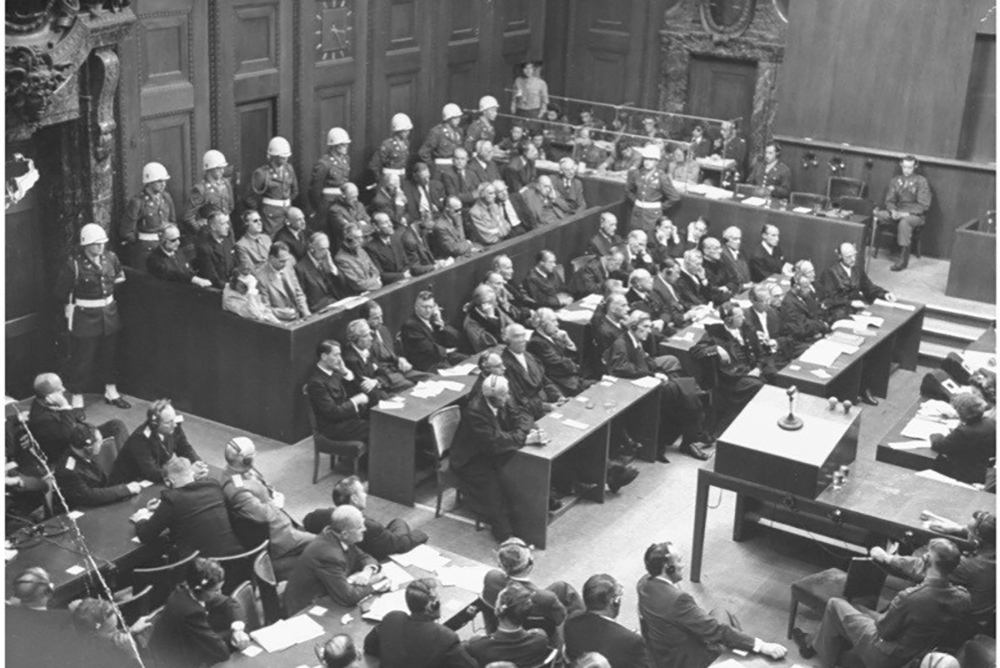
In a significant development following the October 7 attacks that claimed the lives of 1,200 Jews and resulted in nearly 250 hostages, Israel is contemplating Nuremberg-type trials for the approximately 100 Hamas jihadists captured during the violent onslaught, according to a recently published report in The Sun of the UK. The captured terrorists, accused of committing heinous acts, including rape, torture, and beheadings, could face the death penalty if found guilty of violating international rules of war. This move has ignited discussions about the potential implications of such trials and whether they would be the first executions in Israel since Adolf Eichmann’s hanging in 1962, the Sun report added.
Dozens of Hamas jihadists were apprehended during the October 7 attacks, marking a crucial development in Israel’s response to the orchestrated violence, as was reported by The Sun. Intelligence officers are currently interrogating the captured terrorists to gather evidence and assess whether their actions warrant the most severe penalties. The gravity of the charges, coupled with the scale of the attacks, has prompted discussions among Israeli law officials regarding the establishment of a special court to handle these cases.
The Sun also reported that former Israeli ambassador to the United States, Michael Oren, has emphasized the need for a Nuremberg-type trial in this context. Drawing parallels to the post-World War II trials that saw Nazi leaders sentenced to death, Oren suggested that a similar approach is warranted to address the extreme brutality involved in the October 7 attacks, the Sun reported. Richard Pater, head of Britain Israel Communications and Research Centre, supports this notion, advocating for a trial that provides full public exposure of the alleged Hamas war crimes.
One of the captured Hamas terrorists revealed shocking details about the orders given during the bloodbaths at kibbutz communities, a music festival, and other sites. As was indicated in The Sun report, the terrorist disclosed being instructed to engage in acts of rape, torture, and beheadings, underscoring the brutality and severity of the crimes committed during the October 7 attacks.
Amidst these developments, the death of Israeli hostage Sahar Baruch has further fueled tensions. According to the report in The Sun, in a video displaying his body, Hamas claimed he died in a failed rescue operation in Gaza. However, Israel insists that Baruch was murdered by his captors, deepening the complexities surrounding the aftermath of the October 7 attacks.
The possibility of Nuremberg-type trials for the captured Hamas jihadists adds a new dimension to the repercussions of the October 7 attacks. As Israel grapples with the aftermath and seeks justice for the victims, the proposed trials raise questions about the potential implications for international law and how they might shape the narrative surrounding the Israeli response to acts of terrorism. The discussions surrounding these trials underscore the gravity of the situation.
