



By Ilana Siyance
Israeli startups are reaping the benefits of the tiny country’s extensive military experience.
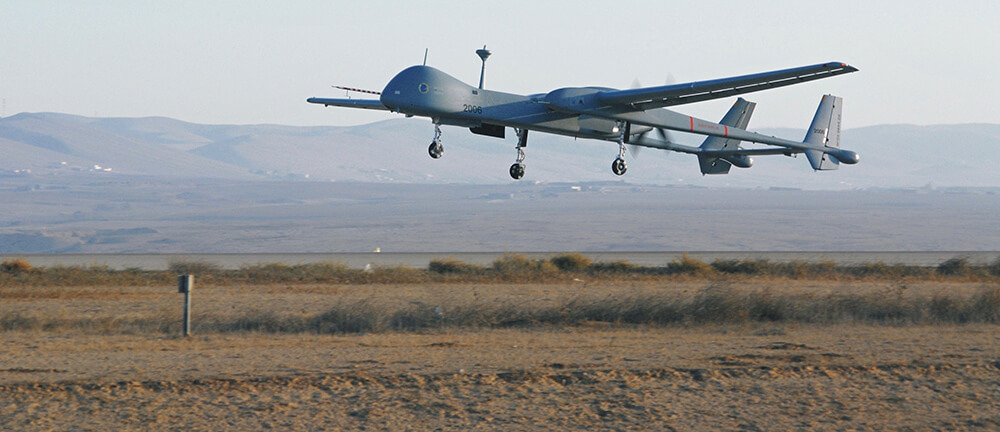
As reported by Breitbart, Israel is now being ranked among the top three across the globe when it comes to market share in the drone industry. What advantage does Israel have, enabling it to compete with the world’s superpowers in the multi-billion dollar industry? It is due to the country’s vast military experience with drones. Unmanned aerial vehicles (UAVs) are used on a daily basis by Israel’s military. The small country, which is surrounded by enemy states on all sides, depends on drones to monitor and sometimes strike to defend its positions. Its vulnerable location has afforded it many opportunities to test and improve its UAVs.
Israel first began using drones in 1969, when the product was as basic as a remote-controlled plane with a camera attached. Over the years, many former Israeli Defense Force officials, went on to become founders or engineers in local startups producing drones. One such man is Ronen Nadir, a military commander specializing in missile development who later established the company, BlueBird Aero Systems. Nadir’s company, established in 2002, now sells combat drones around the world. In 2018, it introduced the WanderB VTol, which takes off and lands vertically like a helicopter, and has added wings for more speed. “You will not believe it, but it took only four and a half months” from the first concept scribbled on a paper, “until this UAV was demonstrated to the first customer,” Nadir said. He attributes the short development cycle to Israel’s military population.
“When an American company develops a mini-UAV and then it is used by the Marines in Iraq or Afghanistan, it takes a few years from the development of the system until it is used on the battlefield,” Nadir said. “In Israel all the people (in the industry) are ex-army soldiers, officers. The engineers who work on the development of the systems are actually operating the UAVs in the (military) reserves, in actual service. Then they come back to the office with actual and real-time feedback.” Israel uses this expedited feedback to compete with global forces, which are unsurmountable in size and capacity.
Currently, the U.S. has the leading share in the industry’s global market. Over the last five years, America’s high-end performance drones, namely the Global Hawk and the Predator, have greatly increased their exports, selling primarily in Europe. China, which specializes in cheaper, lower-quality versions, is said to be the second largest exporter in the drone industry. China sells a lot to countries that the Jewish state does not have trade relations with, explains Philip Finnegan, director of corporate analysis at the American firm Teal Group. Teal Group assesses that the global drone market is worth roughly $12 billion in 2019, and expects that figure to double in the next decade.
“They (Israel) are certainly in the top three, if not the top two,” said Zohar Dvir, the former Israeli Police deputy Commissioner. “In order to be alive we have always to be a stage ahead, including in drones.” Dvir is now a member of the board at Gold Drone, which specializes in agricultural drones. He says that drones are revolutionizing agriculture, being utilized for spraying, harvesting and pollination. Over the past years, Israeli companies similarly pioneered drones for fishing, delivery and inspections, and security.
