



|
Getting your Trinity Audio player ready...
|
By: David Avrushmi
In a striking development that underscores both Israel’s expanding technological prowess and the enduring global demand for advanced defense systems, the Jewish state has risen to become the seventh-largest arms exporter in the world, according to a comprehensive new international report analyzing the global weapons trade. The findings highlight Israel’s growing influence in the international defense market even as it continues to fight a complex, multi-front war and faces intensifying diplomatic pressure from some Western governments.
The data, compiled by the Stockholm International Peace Research Institute, reveals that Israel’s share of global arms exports increased significantly during the period 2021–2025, marking a notable rise from previous years and signaling the country’s transformation into a major global supplier of advanced military technologies.
Reporting on the findings, the international Jewish news outlet The Algemeiner emphasized that Israel’s ascent in the rankings comes despite the intense operational demands placed on its defense industry by ongoing military campaigns in Gaza, Lebanon, and other arenas linked to the broader regional confrontation with Iran and its proxies.
The report paints a portrait of a country whose defense sector has evolved into one of the most sophisticated and influential in the world—an industry forged by decades of existential security challenges and constant technological innovation.
For the first time in modern history, Israel has overtaken the United Kingdom in global arms exports, securing the seventh position worldwide in the SIPRI rankings.
According to the report cited by The Algemeiner, Israel’s share of global weapons sales rose to 4.4 percent during the 2021–2025 period, a substantial increase from 3.1 percent recorded between 2016 and 2020.
This growth occurred even as Israel was simultaneously engaged in major military operations across multiple fronts.
“Despite conducting the war in Gaza and attacks in Iran, Lebanon, Qatar, Syria, and Yemen, Israel still managed to increase its share of global arms exports,” noted SIPRI researcher Zain Hussain, whose comments were highlighted in The Algemeiner report.
The achievement reflects a remarkable expansion of Israel’s defense export sector during a period when its military was under intense operational pressure at home.
Israel’s defense industry has long been shaped by the country’s unique geopolitical environment.
Surrounded by adversaries for much of its history, Israel has invested heavily in developing cutting-edge military technologies capable of offsetting numerical disadvantages and addressing unconventional threats.
Over time, this constant emphasis on innovation produced a robust ecosystem of defense contractors, technology firms, and research institutions that now supply equipment to countries around the world. Companies such as Israel Aerospace Industries (IAI), Rafael Advanced Defense Systems, and Elbit Systems have emerged as global leaders in fields ranging from missile defense to drone technology.
Many of these systems were initially designed to address Israel’s own security challenges before being adapted for international export markets. As The Algemeiner noted in its analysis of the SIPRI report, the demand for Israeli military technology has grown particularly strong in areas where Israel has developed unmatched expertise, including air defense, electronic warfare, and unmanned aerial systems.
The report indicates that Israel’s surge in arms exports has been driven primarily by its air and missile defense systems, which have become increasingly attractive to countries seeking protection against ballistic missiles and drone attacks. These systems have gained global attention following Israel’s repeated demonstrations of their effectiveness in intercepting incoming projectiles during conflicts with Hamas, Hezbollah, and Iranian forces.
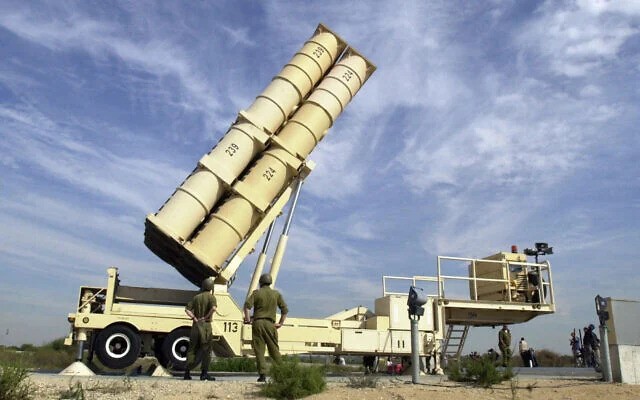
The most prominent of these systems include: Iron Dome, designed to intercept short-range rockets, David’s Sling, which targets medium-range missiles, and Arrow, a high-altitude missile defense system capable of intercepting ballistic missiles outside the atmosphere.
According to the information provided in The Algemeiner report, Germany recently purchased the Arrow missile defense system in what became the largest weapons deal in Israeli history. The sale marked a significant milestone for Israel’s defense industry and underscored the growing recognition of Israeli technology among European allies.
One of the most striking findings of the SIPRI report is the extent to which European countries have increased their purchases of Israeli weapons. In total, 23 European nations now acquire Israeli defense systems, accounting for 41 percent of Israel’s total arms exports.
This surge in European demand reflects the continent’s rapidly changing security environment, particularly following Russia’s invasion of Ukraine and the subsequent deterioration of relations between Moscow and NATO. According to the analysis cited by The Algemeiner, European countries have more than tripled their arms imports in recent years as governments seek to strengthen their defense capabilities.
Despite public criticism of Israeli military operations in Gaza and elsewhere, many European governments have continued to deepen their defense partnerships with Israel. For example, Britain and Germany have both maintained substantial purchases of Israeli military technology even while their political leaders have voiced concerns about Israeli military actions.
Britain now sources 8.2 percent of its arms imports from Israel, making the Jewish state its second-largest supplier after the United States, which accounts for roughly 85 percent.
The broader SIPRI report provides a comprehensive overview of the international arms trade during the last five years. Overall, the global arms market expanded significantly during the period, with the total volume of arms transfers rising by 9.2 percent compared to the previous five-year cycle.
The United States remained the world’s largest exporter, controlling 42 percent of global arms sales, followed by France (9.8 percent), Russia (6.8 percent), Germany (5.7 percent), China (5.6 percent), Italy (5.1 percent) and Israel (4.4 percent).
These figures cited by The Algemeiner, place Israel firmly among the world’s most influential suppliers of military equipment.
Despite its growing export sector, Israel remains heavily reliant on imports for certain categories of advanced military equipment. According to the SIPRI data cited by The Algemeiner, Israel ranks as the 14th-largest arms importer globally. The majority of Israel’s imported weapons come from the United States, which supplies 68 percent of Israel’s acquisitions. Germany accounts for 31 percent, while Italy supplies roughly 1 percent.
This dynamic reflects the close defense relationship between Washington and Jerusalem, which includes extensive military aid, joint development programs, and strategic cooperation.
Israel’s rise in global arms exports comes at a time when the country faces significant diplomatic pressure over its military campaigns. Several European governments have threatened arms embargoes or restrictions in response to Israel’s war against Hamas in Gaza and its strikes against Iranian targets. Yet the SIPRI report suggests that these threats have had little impact on the country’s defense exports.
In fact, Israel’s global market share has continued to expand.
According to analysts cited by The Algemeiner, this resilience reflects the unique capabilities offered by Israeli defense systems. In many cases, countries purchasing Israeli technology have concluded that the operational advantages outweigh political concerns.
Ironically, Israel’s ongoing conflicts may have strengthened its reputation as a defense supplier.
Military systems developed and deployed by Israel are often tested under real-world combat conditions—an attribute that can be highly attractive to potential buyers. The performance of Israeli air defense systems during recent missile attacks from Hamas, Hezbollah, and Iran has provided a dramatic demonstration of their effectiveness.
For governments confronting similar threats, these operational successes serve as powerful endorsements.
Beyond its economic significance, Israel’s defense export sector also plays an important strategic role. Arms exports help strengthen diplomatic relationships with partner nations, deepen security cooperation, and reinforce Israel’s position within global security networks.
They also provide a vital source of revenue that helps sustain Israel’s domestic defense industry.
This industry, in turn, supports the technological innovations that underpin Israel’s military superiority in a volatile region.
Looking ahead, analysts expect Israel’s share of the global arms market to continue expanding. Demand for missile defense systems, counter-drone technologies, and cyber warfare capabilities is likely to grow as governments around the world confront increasingly complex security threats. Israel’s defense sector is well positioned to meet those needs.
As The Algemeiner noted in its coverage of the SIPRI report, the country’s rise in global arms exports represents not merely a commercial success but also a testament to decades of technological innovation driven by necessity. In a world marked by rising geopolitical tensions, Israel’s defense industry has emerged as one of the most dynamic and influential forces in the global security landscape.
And as the Jewish state continues to navigate the challenges of war and diplomacy, its expanding role in the international arms market may prove to be one of the most consequential developments shaping the future of global defense.
