



|
Getting your Trinity Audio player ready...
|
By: Fern Sidman
The Israel Defense Forces (IDF) confirmed on Saturday that it has launched a full-scale investigation into the apparent failure of its multi-layered air-defense systems to fully neutralize a missile launched from Yemen by Iranian-backed Houthi jihadists. According to a report that appeared on Saturday at i24 News, the projectile, intercepted in part, left debris that struck perilously close to Ben Gurion International Airport late Friday evening, underscoring the growing challenges Israel faces as it confronts long-range threats from multiple fronts.
The incident, while resulting in no casualties, rattled both the Israeli security establishment and the civilian population. The fragments of the missile landed in the backyard of a house in the central moshav of Ginaton, barely a dozen kilometers from Israel’s main international airport. As i24 News noted, the strike marked one of the closest calls to Israel’s most critical civilian infrastructure since the outbreak of the ongoing conflict with Hamas and its regional allies.
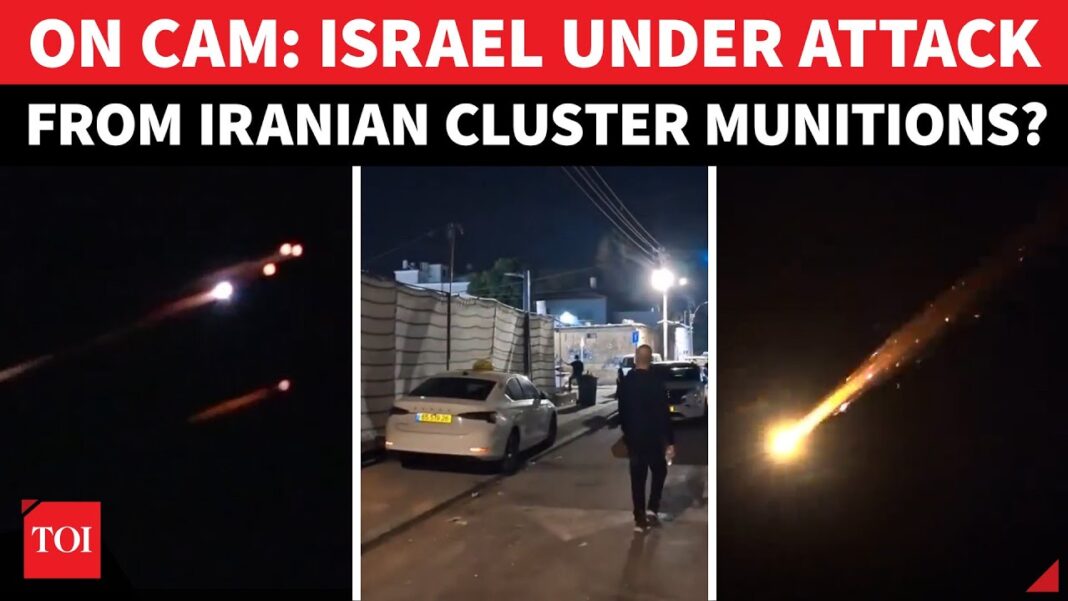
According to the Ynet News website, one working hypothesis being closely examined is that the Houthi-fired missile contained cluster munitions—a technology specifically engineered to defeat missile defense systems. These munitions fragment into dozens, sometimes hundreds, of smaller bomblets that disperse across a wide radius, overwhelming interceptors and increasing the likelihood of damage on the ground.
This hypothesis is especially concerning given Iran’s use of similar weapons during its unprecedented direct missile assault on Israeli cities in June. That 12-day war saw Tehran fire salvos of long-range missiles carrying cluster submunitions designed to maximize civilian harm. i24 News reported at the time that these tactics were intended to saturate Israeli defenses and spread terror among the civilian population.
In Friday’s incident, Israeli authorities revealed that five different interceptor systems engaged the projectile: the American-built THAAD, the long-range Arrow system, the medium-range David’s Sling, and the short-range Iron Dome batteries. Initial findings suggest that while the missile itself was largely destroyed mid-air, it fragmented in such a way that debris rained down over central Israel.
The IDF emphasized in its Saturday statement that the failure was not one of detection or engagement—the missile was tracked, identified, and fired upon—but rather one of complete neutralization. As one defense official told i24 News, “When dealing with cluster payloads, even a successful intercept can leave dangerous fragments that reach populated areas. That is what we are now investigating.”
The location of the strike has amplified public alarm. The fragment that landed in Ginaton, a small moshav in central Israel, fell just outside a residential home, sparing the family from injury. The community lies near the flight paths leading into Ben Gurion Airport, Israel’s busiest international hub and a symbol of the country’s global connectivity.
The report at i24 News indicated the potential ramifications had the debris struck closer to the airport itself: mass disruption of air travel, potential damage to critical infrastructure, and the chilling possibility of casualties among civilians or passengers. Israeli officials stressed that all necessary precautions remain in place to secure the airport, but the episode highlighted vulnerabilities in even the most protected areas of the country.
Friday’s missile launch is the latest reminder of the Houthis’ expanding role in Iran’s regional proxy network. Backed, trained, and supplied by Tehran, the Yemeni group has sought to project power far beyond the Arabian Peninsula. Since the outbreak of the war following Hamas’s October 7 massacre, the Houthis have repeatedly targeted Israeli territory and Red Sea shipping lanes.
While Israel has successfully intercepted many of these projectiles—sometimes with the help of U.S. naval assets—the Houthis’ ability to strike near Tel Aviv demonstrates both technological sophistication and Iran’s growing willingness to escalate through its allies. The report at i24 News observed that the Houthis’ arsenal, once largely confined to short-range rockets and drones, now includes ballistic missiles capable of reaching central Israel, a distance of more than 2,000 kilometers.
The June missile war with Iran served as a crucible for Israel’s air defense systems. During those 12 tense days, Israeli defenses—supported by U.S. and allied forces—intercepted the majority of incoming fire. Yet the use of cluster payloads posed a unique challenge.
i24 News reported extensively on how Iranian missiles carrying dozens of submunitions forced Israel to adapt its interception strategies in real-time. While the majority of the bomblets were neutralized, some penetrated, causing fires and property damage. The lessons of June remain fresh in the minds of Israeli planners, and Friday’s incident will likely be studied in that context.
“The challenge with cluster munitions is that interception often scatters rather than fully eliminates the threat,” one analyst told i24 News. “The system is designed to stop a single projectile. When that projectile splits into many, the calculus becomes exponentially more complex.”
Though no injuries were reported, the psychological impact of Friday night’s strike was palpable. Residents of Ginaton and surrounding communities were startled by the sound of multiple interceptions overhead, followed by the unsettling realization that debris had landed in their neighborhood.
As one local resident told i24 News, “We have faith in the IDF and the air defenses, but when something falls in your backyard, you realize nothing is 100 percent. It’s a reminder that we are living in a war zone, even in the center of the country.”
The sense of vulnerability is particularly acute given the symbolic target area: the heart of Israel’s aviation system. Ben Gurion Airport has historically been both a gateway and a target. During past conflicts, Hamas and Hezbollah sought to disrupt flights, knowing that even near misses could cause economic and psychological damage disproportionate to the physical toll.
For Israel’s defense establishment, the incident raises urgent questions about the sufficiency of even its world-renowned layered defense architecture. The deployment of five interceptor systems against a single missile illustrates both the complexity of the threat and the high cost of defense. Each interceptor fired costs tens of thousands to millions of dollars, while the missile launched from Yemen may have cost a fraction of that to produce.
The i24 News report highlighted this asymmetry as a central challenge of Israel’s defense doctrine: maintaining an impenetrable shield against adversaries who rely on cheap, mass-produced weaponry designed to overwhelm sophisticated systems.
Furthermore, the attack calls attention to the interconnectedness of Israel’s regional enemies. What was once seen as a localized insurgency in Yemen has now become a strategic arm of Iran’s effort to encircle Israel with missile threats—from Hezbollah in Lebanon, Hamas and Islamic Jihad in Gaza, Shiite militias in Iraq, and now the Houthis in Yemen.
The IDF has pledged a comprehensive investigation, which will include technical assessments of the interception process, forensic analysis of the missile fragments, and consultations with American defense partners. Lessons from this probe are expected to inform upgrades to Israel’s defensive posture against long-range ballistic threats.
Analysts told i24 News that one likely avenue of adaptation is further integration of the various defense systems to ensure seamless coordination, as well as enhanced intelligence sharing with U.S. forces monitoring missile activity in Yemen and Iran.
The failed full interception of a Houthi-fired missile on Friday night has jolted Israel’s defense establishment and civilian population alike. While the IDF’s rapid response prevented major loss of life, the debris that struck near Ben Gurion Airport serves as a stark reminder that no defense system is foolproof.
The incident carries both tactical and strategic significance: tactically, in revealing the persistent challenges posed by cluster munitions and long-range strikes; strategically, in highlighting the widening arc of Iran’s proxy threats.
For Israelis, the message is clear: vigilance remains essential, and the struggle to adapt defenses against evolving threats is unending. The outcome of the IDF’s probe will be closely watched not only in Jerusalem but in capitals across the world, where Israel’s air-defense systems are studied as the global gold standard in missile interception.
